- DUI
- Criminal Defense
- Florida DUI
- Traffic Offenses
- Drug Charges
- Marijuana Charges
- Violent Crimes
- Domestic Violence
- Temporary Injunctions
- Weapons Charges
- Theft Crimes
- White Collar Crime
- Juvenile Offenses
- Sex Crimes
- Violation of Probation
- Early Termination of Probation
- Seal or Expunge Criminal Record
- Criminal Appeals
- US Federal Offenses
- Misdemeanor Charges
- Felony Charges
- Co-Defendant Cases
- College Student Defense
- College Student Hearings
- FSU Students
- FAMU Students
- Florida Panhandle Arrests
- Extradition to Florida
- Bench Warrants / Warrants
- Emergency Bond Hearings
- Gambling Charges
- Drone Arrests
- Marsy’s Law
- UAS Infractions
- Introduction of Contraband
- Lying to Police
- Locations
- Case Results
- Our Firm
- Media
- Resources
- Blog
- Contact Us
New Florida 12-Person Jury Case Goes to the U.S. Supreme Court
October 9, 2025 Don Pumphrey, Jr. News & Announcements Social Share
A new Florida case discussing whether there is a constitutional right to a twelve-person jury in criminal cases may be heard by the U.S. Supreme Court.
In Florida, twelve-person juries are not required in criminal cases. Since Williams v. Florida was decided by the U.S. Supreme Court in 1970, the state of Florida has relied upon six-person juries in all criminal cases except for when someone is charged with a capital felony. Williams v. Florida, 399 U.S. 78 (1970)
Though the vast majority of U.S. states (and the federal system) require twelve person juries in most or all criminal cases, Florida is one of only a few states that does not. But that could change with the recent appeal to the U.S. Supreme Court of Minor v. Florida. This blog will discuss Minor v. Florida and its potential impact on criminal law.
Minor was charged and convicted of a felony, and appealed to Florida’s Fourth District Court of Appeal. In March 2025, the 4th DCA affirmed Minor’s conviction without comment on a key issue raised by Minor in his appellate brief – his argument that he was constitutionally entitled to a twelve-person jury.
As the 4th DCA affirmed without comment (which cannot be reviewed by the Florida Supreme Court), Minor appealed to the U.S. Supreme Court via a writ of certiorari. This means that if four out of nine U.S. Supreme Court justices agree to hear Minor’s case, it will be argued before the Court.
In recent years, the U.S. Supreme Court has received various writs of certiorari from lower court appellants in Florida challenging their convictions by six-person juries. Like Minor’s petition, these appellants have asserted that the U.S. Constitution entitles them to a twelve-person jury in felony cases.
Minor’s case has been boosted by a major organization that has filed an amicus brief supporting his claim – the Constitutional Accountability Center. With this brief, which was authored in August of 2025, the CAC likely improves the likelihood that the Supreme Court will choose to resolve Minor v. Florida.
However, this is still an uphill battle. In 2022, the U.S. Supreme Court dealt with a similar appeal in Khorrami v. Arizona. Khorrami was convicted of a felony in Arizona and appealed to the U.S. Supreme Court, arguing he had a right to a twelve-person jury. The Court ultimately denied his writ of certiorari – so the case never went to oral argument.
Khorrami is notable because of Justice Neil Gorsuch’s dissent – objecting to the denial of the writ of certiorari. Khorrami v. Arizona, 143 S. Ct. 22, 23-27 (2022) (Gorsuch, J., dissenting). Gorsuch made a few arguments in his dissent:
- For hundreds of years, English common law has recognized that a twelve-person jury was required in serious criminal cases
- That same common law is the basis of the U.S. Supreme Court’s Ballew and Ramos decisions, which held (respectively) that a five-person jury was too small and that jury verdicts in criminal cases must be unanimous
- Twelve-person juries “deliberate longer, recall information better, and pay greater attention to dissenting voices”
Justice Kavanaugh also dissented from the denial of Khorrami’s writ of certiorari, but did not comment. Because only two of the nine justices wished to hear Khorrami’s case (two short of the required four), it was never argued before the Court.
But there has been increasing pressure on the U.S. Supreme Court to deal directly with the twelve-person jury issue since Khorrami. Though the U.S. Supreme Court denied a similar 12-person jury writ of certiorari in 2024 (Cunningham v. Florida), there has been growing discussion regarding the issue even in the past year.
That’s where Minor comes in. If the Constitutional Advocacy Center’s amicus brief in Minor wins over four or more U.S. Supreme Court justices, allowing the case to be heard by the Court, there is a significant chance that a 12-person jury requirement will be imposed upon the nation in serious criminal cases (overruling Williams).
This is because the U.S. Supreme Court has increasingly relied upon common law as opposed to “judicial efficiency” in resolving disputes regarding whether certain procedural aspects of the justice system are violative of a defendant’s due process rights. Recognizing this, the CAC’s amicus brief in Minor makes four primary arguments urging the Court to hear the case:
- #1: At the founding of the U.S., juries were understood to be composed of 12 members by the primary authors of English common law – which served as the primary ideological foundation for the Bill of Rights (see Blackstone’s Commentaries on the Laws of England).
- #2: The U.S. Supreme Court did not properly consider this history in Williams v. Florida (1970). Instead, the Court noted that the Sixth Amendment did not create a twelve-person jury requirement – echoed by Judge Brad Thomas in Salmon v. State, 387 So.3d 393 (Fla. 1st DCA 2024).
- #3: Given recent developments in U.S. Supreme Court jurisprudence (e.g. Ramos v. Louisiana and Erlinger), allowance of a six-person jury is irreconcilable with the Court’s posture in other cases, which rely upon common law rather than considering “efficiency” (as Williams did) in Sixth Amendment interpretation.
- #4: Empirical studies conducted in the aftermath of Williams have found that 12-person juries are more likely to improve deliberations by amplifying dissenting voices, recall information better, etc. (also discussed by Gorsuch in Khorrami)
So, will Minor be heard by the U.S. Supreme Court? Only time will tell, as the CAC’s amicus brief was filed just weeks ago. It is likely the Court will decide whether to hear oral arguments in Minor in late 2025 or early 2026.
If this does occur, Minor has the potential to mark a seismic shift in American law. If four or more justices elect to hear the case, there is a significant chance that the majority of justices would rule in Minor’s favor.
This is because the Court has shown increasing friendliness towards elevating common law over judicial expediency. As noted, the Court ruled in Ramos v. Louisiana (2020) that criminal juries must reach a verdict unanimously. Only a few states still did not have a unanimity requirement by 2020 – and the U.S. Supreme Court relied on Blackstone in striking down these laws.
That same Blackstone treatise (Commentaries on the Laws of England) discussed the need for the “unanimous suffrage of twelve” to support a conviction. The U.S. Supreme Court has now recognized “unanimous,” but not yet “suffrage of twelve.” If it is heard, Minor could mark the shift to a full embrace of common law on Fifth and Sixth Amendment issues.
Even though a twelve-person jury is not yet required in Florida, an experienced and aggressive defense attorney can file a motion to require the impaneling of a twelve-person jury in a felony case. Without doing so, this issue is likely to be waived if the U.S. Supreme Court does reverse Williams and institute a 12-person jury requirement.
If someone is arrested and formally charged in Florida and concerned about twelve-person juries and jury selection, it is critical to find experienced and trusted legal representation as soon as possible. This decision could make the difference in whether or not someone faces a lengthy prison term and hefty fines.
Criminal Defense Attorney in Tallahassee, FL
Don Pumphrey, Jr. is a Former Prosecutor, Former State Police Officer, Lifetime Member of the Florida Association of Criminal Defense Lawyers; for over 25 years as a private defense attorney who is Trusted, Experienced, Aggressive in Criminal Defense as a Trial Attorney, Criminal Lawyer, Criminal Defense Lawyer for the accused in Florida State Courts located in Tallahassee, Florida but handling cases throughout the State of Florida.
Don Pumphrey, Jr. and the Tallahassee criminal defense lawyers at Pumphrey Law have decades of experience fighting drug charges on behalf of clients and winning. Call Pumphrey Law now at (850) 681-7777 to learn more about what we can do for you. Our lawyers will be happy to provide you with a free consultation.
Don Pumphrey, Jr.
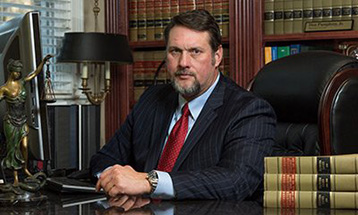
Attorney Don Pumphrey, Jr. is a former prosecutor, former law enforcement officer, and a successful and experienced criminal defense attorney. Don has achieved over 100 not guilty verdicts at trial and over 2,000 dismissals.