- DUI
- Criminal Defense
- Florida DUI
- Traffic Offenses
- Drug Charges
- Marijuana Charges
- Violent Crimes
- Domestic Violence
- Temporary Injunctions
- Weapons Charges
- Theft Crimes
- White Collar Crime
- Juvenile Offenses
- Sex Crimes
- Violation of Probation
- Early Termination of Probation
- Seal or Expunge Criminal Record
- Criminal Appeals
- US Federal Offenses
- Misdemeanor Charges
- Felony Charges
- Co-Defendant Cases
- College Student Defense
- College Student Hearings
- FSU Students
- FAMU Students
- Florida Panhandle Arrests
- Extradition to Florida
- Bench Warrants / Warrants
- Emergency Bond Hearings
- Gambling Charges
- Drone Arrests
- Marsy’s Law
- UAS Infractions
- Introduction of Contraband
- Lying to Police
- Locations
- Case Results
- Our Firm
- Media
- Resources
- Blog
- Contact Us
BREAKING: Major FL Court STRIKES DOWN Florida’s Over-21 Concealed Carry Requirement
June 18, 2026 Don Pumphrey, Jr. Criminal Defense, News & Announcements Social Share
Florida’s 4th District Court of Appeal ruled that an 18-year-old in South Florida was wrongly prosecuted for carrying a concealed firearm, as Florida’s law requiring that residents be at least 21 to carry concealed VIOLATES the 2nd Amendment to the U.S. Constitution.
CASE: Eubanks v. State, 2026 WL 1740598 (Fla. 4th DCA 2026)
Charge(s): Unlawful Concealed Carry of a Firearm
Outcome: Conviction REVERSED, as Florida’s 4th District Court of Appeal found the state’s current concealed carry law – prohibiting 18- to 20-year-olds from carrying concealed firearms – is unconstitutional.
In major news, Florida’s 4th District Court of Appeal just struck down Florida’s concealed carry law – finding that prohibiting residents between the ages of 18 and 20 from carrying concealed firearms is unconstitutional under the Second Amendment. Let’s take a look at how we got here.
Florida’s Concealed Carry Law
In Florida, millions of residents lawfully own firearms. Many carry concealed firearms while in public. This is permitted under Fla. Stat. 790.06, which previously allowed any person age 21 or older to carry a concealed firearm. Though permits were historically required, Florida is NOW a “constitutional carry” state.
Notably, however, adults aged 18 to 20 were not extended the right to carry a concealed firearm. This was largely because of public policy concerns – specifically, a widespread belief that very young adults do not have the “impulse control” necessary to responsibly carry firearms in public.
But an important question lingered in the background of this debate. Is the prohibition on 18- to 20-year-olds carrying concealed firearms even constitutional? After all, the Second Amendment makes clear that the right of the people to keep and bear arms “shall not be infringed.”
This right has been traditionally extended to ALL ADULTS, not just those 21 and older. Because of that, many advocacy groups have lobbied hard for Florida to broaden its concealed carry law, and allow 18- to 20-year-olds to exercise the same gun rights as their fellow citizens.
Despite these protests, the Florida Legislature did not act. As a result, 18- to 20-year-olds did not have the right to carry a concealed firearm in the state – until now.
A Major Ruling From the 4th DCA
In 2024, Jaylen Eubanks was detained by law enforcement officers in Southeast Florida. He was patted down and a firearm was recovered. Eubanks was 18 at the time. As a result, Eubanks was arrested and charged with unlawfully carrying a concealed firearm.
There was no other evidence of criminality on Eubanks’s part. He eventually pled no contest to the charge after the trial judge DENIED his motion to dismiss, which argued that Florida’s law prohibiting young adults (18-20) from concealed carrying was unconstitutional.
When he pled no contest, Eubanks reserved the right to appeal the denial of his motion to dismiss – and ultimately, he did so. Florida’s 4th District Court of Appeal (Southeast FL’s highest court) heard arguments in the case, and were tasked with determining whether Florida’s concealed carry law was UNCONSTITUTIONAL as applied to 18- to 20-year-olds.
Though the 4th DCA may not have otherwise sided with Eubanks, his likelihood of prevailing significantly increased when Florida’s Attorney General – James Uthmeier – announced that the State of Florida AGREED with Eubanks.
Uthmeier concluded that under the U.S. Supreme Court’s Bruen test, requiring courts to examine gun laws in the context of the “history and tradition” of the Second Amendment, Florida’s statute prohibiting 18- to 20-year-olds from carrying concealed firearms was unconstitutional. This was because there was, according to Uthmeier, NO historical precedent for it whatsoever.
On June 17, 2026, the 4th DCA released its landmark ruling in Eubanks’s case – concluding the concealed carry law (as applied to 18- to 20-year-olds) is indeed unconstitutional. Noting that the Second Amendment “presumptively” protects 18- to 20-year-olds – as they are adults – the 4th DCA wrote:
“Because the Second Amendment presumptively protects the right of 18- to 20-year-olds to the public carry of firearms, which includes concealed carry, then the burden shifts to the state to “demonstrate that the regulation is consistent with this Nation’s historical tradition of firearm regulation.” Bruen, 597 U.S. at 17. This burden has not been met here. After considering the “how and why” of this regulation, we find that it impermissibly burdens the right of 18- to 20-year-olds to armed self-defense. A categorical ban on adults aged 18 to 20 who are part of “the people,” “the how,” is not consistent with the history and tradition of firearm regulations. As to the “why,” no historical analogues provided categorically prohibit the public carry, including concealed carry, of firearms for self-defense for those aged 18 to 20, who are a subset of all adults.”
The 4th DCA found that since the only purpose of the law was to deprive younger adults of their Second Amendment right to bear arms, the statute could not stand:
“The regulation here does not apply to all adults, but rather to just a subset of adults who are part of “the people” and, thus, entitled to the same Second Amendment rights as all law-abiding adults. The entire focus of that part of the statute is on regulating based solely on the age of those asserting their Second Amendment rights, and not on the particular action or manner of public carry being regulated. In other words, the thrust of the regulation is on age and not on the manner of carry, that being concealed carry. After all, all other adults 21 and older are eligible for concealed carry. As Rahimi stated: “Even when a law regulates arms-bearing for a permissible reason,” such as concealed carry, the permissible restriction “may not be compatible with the [Second Amendment] if it does so to an extent beyond what was done at the founding.” 602 U.S. at 692. That is exactly what is being done here.”
“We conclude that all those in the age of majority have the same rights to public carry, which includes the right to concealed carry. “A judge who refuses to see new threats to an established constitutional value, and hence provides a crabbed interpretation that robs a provision of its full, fair and reasonable meaning, fails in his judicial duty.” Ollman, 750 F.2d at 996 (Bork, J., concurring). That duty, it is worth repeating, “is to ensure that the powers and freedoms the framers specified are made effective in today’s circumstances.” Id. Finding that weapons covered by the Second Amendment include only muskets or firelocks, or that 18- to 20-year-olds are “infants,” or minors, would suffer from the same “crabbed interpretation” rejected by Heller.”
It’s clear Eubanks v. State, 2026 WL 1740598 (Fla. 4th DCA 2026) has fundamentally changed the legal landscape surrounding gun rights for young adults in Florida. But what impact does this have on the rest of the state?
The Impact of the Pardo Rule
The Pardo rule holds that on issues of first impression (issues which have not been addressed by any other DCA, nor the Florida or U.S. Supreme Courts), a DCA opinion on that issue binds all courts statewide. This is the case unless and until it is overruled by Florida or the U.S. Supreme Court – or another DCA issues a contradictory ruling. Pardo v. State, 596 So. 2d 665 (Fla. 1992)
Because of this, the 4th DCA’s decision is binding on the entire state – unless and until another DCA or the Florida Supreme Court conflicts with it. For now, this is very unlikely, as Florida’s Attorney General (the top law enforcement officer in the state) has openly declared the law to be unconstitutional.
In sum, Eubanks v. State, 2026 WL 1740598 (Fla. 4th DCA 2026) marks a significant change in Florida’s law surrounding concealed carry. Adults between the ages of 18 and 20 – previously prohibited from carrying concealed firearms – may now legally do so.
Notably, the Attorney General has announced that he is working with the Florida Department of Agriculture to “implement the court’s order.” If someone is between the ages of 18 and 20 and wishes to carry a concealed firearm, it would be wise to wait until the administrative go-ahead is given before concealed carrying. For more, click here.
If someone is arrested and formally charged in Florida and concerned about jury selection, it is critical to find experienced and trusted legal representation as soon as possible. This decision could make the difference in whether or not someone faces a lengthy prison term and hefty fines.
Don Pumphrey Jr. is a Former Prosecutor, Former State Police Officer, Lifetime Member of the Florida Association of Criminal Defense Lawyers; for over 25 years as a private defense attorney who is Trusted, Experienced, Aggressive in Criminal Defense as a Trial Attorney, Criminal Lawyer, Criminal Defense Lawyer for the accused in Florida State Courts located in Tallahassee, Florida but handling cases throughout the State of Florida.
Don Pumphrey Jr. and the attorneys at Pumphrey Law have decades of experience fighting to win for clients across the state of Florida. Call now at (850) 681-7777 for a free consultation.
Don Pumphrey, Jr.
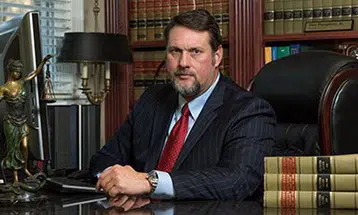
Attorney Don Pumphrey, Jr. is a former prosecutor, former law enforcement officer, and a successful and experienced criminal defense attorney. Don has achieved over 100 not guilty verdicts at trial and over 2,000 dismissals.