- DUI
- Criminal Defense
- Florida DUI
- Traffic Offenses
- Drug Charges
- Marijuana Charges
- Violent Crimes
- Domestic Violence
- Temporary Injunctions
- Weapons Charges
- Theft Crimes
- White Collar Crime
- Juvenile Offenses
- Sex Crimes
- Violation of Probation
- Early Termination of Probation
- Seal or Expunge Criminal Record
- Criminal Appeals
- US Federal Offenses
- Misdemeanor Charges
- Felony Charges
- Co-Defendant Cases
- College Student Defense
- College Student Hearings
- FSU Students
- FAMU Students
- Florida Panhandle Arrests
- Extradition to Florida
- Bench Warrants / Warrants
- Emergency Bond Hearings
- Gambling Charges
- Drone Arrests
- Marsy’s Law
- UAS Infractions
- Introduction of Contraband
- Lying to Police
- Locations
- Case Results
- Our Firm
- Media
- Resources
- Blog
- Contact Us
BREAKING: U.S. Supreme Court Will Hear Challenge To Florida Jury Laws, Decide If 12 Person Jury Required
June 16, 2026 Don Pumphrey, Jr. Criminal Defense, News & Announcements Social Share
The U.S. Supreme Court will hear oral arguments in Kian v. Florida on the issue of whether the U.S. Constitution entitles criminal defendants to a 12-person jury.
In major news for anyone in Florida interested in criminal law, the United States Supreme Court has AGREED to hear a case that will decide if all criminal defendants in the state of Florida (and throughout the U.S.) are entitled to a 12-person jury. Here’s what to know.
Florida’s Current Jury Laws
For decades, Florida has required juries of just six people in all criminal cases, with the SOLE exception of capital murder, which requires juries of twelve. Even capital sexual battery cases, since 1984, have only required juries of six to render a verdict. State v. Hogan, 451 So. 2d 844 (Fla. 1984)
In 1898, the U.S. Supreme Court opined in Thompson v. Utah, 170 U.S. 343 (1898) that the Sixth Amendment jury trial right required juries of twelve members. The Supreme Court reasoned:
- The Sixth Amendment was inspired by English common law – in particular, the writings of Sir William Blackstone
- At the time of the nation’s founding, jury trials were generally understood to require 12 of the defendant’s “peers” to unanimously decide that the defendant was guilty
- Thus, even though the number 12 is technically not written into the Sixth Amendment, a jury of a dozen is a constitutional requirement
Even after Thompson v. Utah, Florida still required juries of twelve only in capital cases. This led to defendants challenging the constitutionality of Florida’s statutory scheme.
When one such challenge made it to the U.S. Supreme Court in 1970 (Williams v. Florida, 399 U.S. 78 (1970)), the Court REVERSED its previous holding and decided no right to a 12-person jury existed. The Court concluded that:
- The U.S. Constitution does not specify how large or small juries must be (no requirement in the Sixth Amendment text of a twelve-person jury)
- Six person juries are more efficient and still serve the “deliberative function” adequately
- The number 12 is a “historical accident” rather than an essential element of the right to a trial by jury
Since Williams was decided, Florida has consistently used 6-person juries in all criminal trials – with the sole exception of capital murder cases. Florida is one of the only states in the nation to consistently rely upon juries of six even when defendants are being tried for serious felonies. Phillips v. State, 316 So. 3d 779 (Fla. 1st DCA 2021)
What’s Changed Since Williams?
Until recently, the debate surrounding the right to a 12-person jury was not prominent in the legal world. That changed when the Supreme Court decided Ramos v. Louisiana, 590 U.S. 83 (2020).
The plaintiff in that case, Ramos, argued that Louisiana’s law requiring just 10 out of 12 jurors to vote in favor of a defendant’s guilt (e.g. a nonunanimous verdict) was UNCONSTITUTIONAL. The U.S. Supreme Court AGREED with him – striking down Louisiana’s non-unanimous verdict law.
The justification was, to many, more interesting than the result. The majority fully acknowledged that the Sixth Amendment to the U.S. Constitution said nothing about whether jury verdicts had to be unanimous.
Instead of relying strictly on the constitutional text, however, the Court turned to Blackstone’s writings to inform its understanding of the Sixth Amendment jury trial right. The majority found Blackstone’s idea of the jury trial right was central to the Sixth Amendment – and Blackstone made clear that a “unanimous suffrage of twelve” was necessary to convict a defendant.
After Ramos v. Louisiana, 590 U.S. 83 (2020) was decided, the debate surrounding the right to a 12-person jury reignited. Because the U.S. Supreme Court indicated that the “rules” surrounding juries at criminal trials should be informed by common law and history, rather than a desire for “efficiency,” many concluded that the logical next step was a return to 12-person juries.
Why Has the U.S. Supreme Court Agreed to Hear a Challenge to Florida’s Jury Laws?
Though many U.S. Supreme Court justices have “steered clear” of addressing the 12-person jury issue since Ramos v. Louisiana, 590 U.S. 83 (2020), a clear exception to that rule is Justice Neil Gorsuch. Gorsuch has consistently urged the Court to hear challenges to state laws that deprive defendants of the right to a 12-person jury. The Court has now agreed to do so.
In 2022, Gorsuch penned a dissent in Khorrami v. Arizona, 143 S. Ct. 22, 23 (2022) (Gorsuch, J., dissenting). Khorrami, who was convicted in Arizona by eight jurors, challenged his convictions on various grounds. One of these was that he did not receive a twelve-person jury – to which he argued he had a constitutional right.
Dissenting from the denial of Khrorrami’s writ of certiorari (petition for the U.S. Supreme Court to hear the case), Gorsuch wrote an opinion applauded by twelve-person jury advocates. Gorsuch argued Williams v. Florida was a mistake, and urged the Court to reverse its holding that no right to a twelve-person jury existed in the Sixth Amendment. Justice Brett Kavanaugh concurred.
Gorsuch repeated his criticism of the U.S. Supreme Court in Cunningham v. Florida, 144 S. Ct. 1287 (2024), arguing Florida’s six-person jury laws were incompatible with the Constitution and reiterating his belief that Williams was wrongly decided.
Florida’s courts have not embraced Gorsuch’s arguments. In Salmon v. State, 387 So.3d 393 (Fla. 1st DCA 2024), for example, Florida’s 1st District Court of Appeal (Tallahassee and North FL’s highest court) rejected Salmon’s challenge to his conviction on the basis that he was deprived of a 12-person jury. The 1st DCA found that:
- The Constitution does not have a 12-person jury requirement, and the Founders could have included such language if they wished for this to be part of the jury trial right
- Twelve-person juries are not necessarily “better” at performing the deliberative function than six-person juries
- The U.S. Supreme Court’s reversal of Williams would “open the floodgates” to many thousands of defendants challenging their convictions on the grounds that they did not receive a 12-person jury
In spite of unfavorable decisions like Salmon, many Florida criminal defendants have continued to appeal their convictions on the grounds that they did not receive a 12-person jury.
One appellant made such an argument was Hamed Kian. Kian was tried for five felonies in South Florida by a six-person jury – and he was convicted. Kian was sentenced to a year and a day in prison for fraudulently practicing chiropractic medicine without a license.
Kian appealed his convictions to Florida’s 4th District Court of Appeal (Southeast FL’s highest court), which affirmed his convictions and sentences per curiam (without comment). The 4th DCA DID NOT address Kian’s 12-person jury argument.
Kian then filed a petititon for a writ of certoirari to the U.S. Supreme Court. In that petition, Kian argued that his conviction was invalid because Florida’s laws requiring just 6 jurors in practically all criminal cases is UNCONSTITUTIONAL (e.g. violative of the Sixth Amendment).
On June 15, 2026, the U.S. Supreme Court GRANTED Kian’s certiorari petition. This means the Court will hear oral arguments in the case in the coming months – and eventually, will render a decision regarding the constitutionality of Florida’s jury laws.
What Will the U.S. Supreme Court Decide?
It is far from certain what the U.S. Supreme Court will decide. Given the increasingly textualist and originalist leanings of the Court relative to its composition in 1970 – when Williams was handed down – the Court may be inclined to consider history and tradition rather than “judicial economy” in evaluating whether Florida’s jury laws are compatible with the Sixth Amendment.
On the other hand, multiple “conservative” justices dissented from the Court’s holding in Ramos v. Louisiana, 590 U.S. 83 (2020). It’s also unclear which of the Court’s justices voted to hear oral arguments in the case. Moreover, other than Justice Gorsuch, the justices have been largely silent on the 12-person jury issue.
Florida’s criminal defense community should keep a close eye on Kian, as if the Court decides in Kian’s favor, this would be a major shake-up in the criminal justice system.
As a practical matter, it is wise to start filing motions for a 12-person jury to preserve the issue for appeal. If the Supreme Court strikes down Florida’s jury laws, many defendants may receive a new trial on the grounds that their Sixth Amendment rights were violated.
If someone is arrested and formally charged in Florida and concerned about twelve-person juries and jury selection, it is critical to find experienced and trusted legal representation as soon as possible. This decision could make the difference in whether or not someone faces a lengthy prison term and hefty fines.
Don Pumphrey Jr. is a Former Prosecutor, Former State Police Officer, Lifetime Member of the Florida Association of Criminal Defense Lawyers; for almost 25 years as a private defense attorney who is Trusted, Experienced, Aggressive in Criminal Defense as a Trial Attorney & Criminal Defense Lawyer for the accused in Florida State Courts located in Tallahassee, Florida but handling cases throughout the State of Florida.
Don Pumphrey Jr. and the attorneys at Pumphrey Law have decades of experience fighting to win for clients across the state of Florida. Call now at (850) 681-7777 for a free consultation.
Don Pumphrey, Jr.
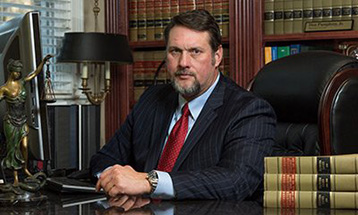
Attorney Don Pumphrey, Jr. is a former prosecutor, former law enforcement officer, and a successful and experienced criminal defense attorney. Don has achieved over 100 not guilty verdicts at trial and over 2,000 dismissals.