- DUI
- Criminal Defense
- Florida DUI
- Traffic Offenses
- Drug Charges
- Marijuana Charges
- Violent Crimes
- Domestic Violence
- Temporary Injunctions
- Weapons Charges
- Theft Crimes
- White Collar Crime
- Juvenile Offenses
- Sex Crimes
- Violation of Probation
- Early Termination of Probation
- Seal or Expunge Criminal Record
- Criminal Appeals
- US Federal Offenses
- Misdemeanor Charges
- Felony Charges
- Co-Defendant Cases
- College Student Defense
- College Student Hearings
- FSU Students
- FAMU Students
- Florida Panhandle Arrests
- Extradition to Florida
- Bench Warrants / Warrants
- Emergency Bond Hearings
- Gambling Charges
- Drone Arrests
- Marsy’s Law
- UAS Infractions
- Introduction of Contraband
- Lying to Police
- Locations
- Case Results
- Our Firm
- Media
- Resources
- Blog
- Contact Us
FL Supreme Court: Discovery Depositions Do NOT Satisfy Confrontation Clause
January 14, 2026 Don Pumphrey, Jr. Criminal Defense Social Share
Florida’s Supreme Court ruled that a discovery deposition did not satisfy a defendant’s right to confront his accuser in a sexual abuse case, but affirmed his conviction on the grounds that it was ‘harmless error.’
In Florida, hearsay is defined as an out of court statement offered in court for the purpose of proving the content of the statement (or record/document) is true. Though hearsay is usually inadmissible in a court of law, there are various exceptions to this rule.
Some hearsay exceptions apply regardless of whether the declarant (speaker or author of the hearsay) is available to testify at trial (Fla. Stat. 90.803), while others only apply if the declarant is unavailable to testify (Fla. Stat. 90.804).
Per 90.803, exceptions allowing for the admission of hearsay regardless of the declarant’s availability include:
- Present Sense Impression: Statement describing or explaining an event made while perceiving it or immediately after.
- Excited Utterance: Statement relating to a startling event made while under stress or excitement from the event.
- Then-Existing Mental, Emotional, or Physical Condition: Statement of current state of mind, emotion, sensation, or physical condition (e.g., intent, pain).
- Statements for Purposes of Medical Diagnosis or Treatment: Statement made for diagnosis/treatment describing medical history, symptoms, or cause.
Under Fla. Stat. 90.804, hearsay exceptions that apply only when the declarant is not available to testify and face cross-examination at trial include:
- Former Testimony: Prior testimony given under oath in a proceeding or deposition where the opposing party had a similar motive and opportunity to develop it.
- Statement Under Belief of Imminent Death: Statement made while believing death was imminent, concerning the cause or circumstances of what the declarant believed to be impending death. (Death must be so close that the declarant proverbially heard “the beating wings of the angel of death.” People v. Sarzano, 212 N.Y. 231 (1914))
- Statement Against Interest: Statement so contrary to declarant’s own interest (e.g., penal, pecuniary, proprietary) that a reasonable person wouldn’t have said it unless true.
For a comprehensive breakdown of Florida’s hearsay exceptions and additional information on hearsay in general, click here.
There are two types of hearsay – testimonial and nontestimonial. This is crucial to understand, as it implicates the Confrontation Clause of the Sixth Amendment (defendant’s right to confront witnesses against them at trial). Crawford v. Washington, 541 U.S. 36 (2004)
Testimonial hearsay is defined as hearsay created (spoken, written, etc.) for the primary purpose of facilitating an ongoing police investigation or prosecution.
Examples of testimonial hearsay may include:
- A child’s interview with a CPT worker disclosing sexual abuse
- A 911 call reporting an incident that was made 2 weeks after a crime occurred
- A written affidavit authored by an alleged crime victim at a police station after it has been reported
Nontestimonial hearsay is hearsay created for the primary purpose of responding to an ongoing emergency (e.g. a crime).
Examples of nontestimonial hearsay may include:
- A child’s initial disclosure that they were an abuse victim to a friend or relative
- A 911 call made while an incident is unfolding (e.g. “He’s shooting at us, send help!”)
- Statements for the purpose of medical diagnosis or treatment
Nontestimonial hearsay can be admitted into evidence so long as it is otherwise compliant with one or more designated hearsay exceptions.
However, testimonial hearsay is inadmissible (even if facially compliant with an exception) unless:
- The declarant is available to testify at trial, and the defendant is given the opportunity to cross-examine them
- If the declarant is unavailable at trial, the defendant must have had a prior opportunity to cross-examine the declarant in a manner that satisfies Crawford (e.g. a Rule 3.190(j) deposition to perpetuate testimony)
One of the most frequently discussed hearsay exceptions under Florida law is the child hearsay exception (Fla. Stat. 90.803(23)). This is a very broad statutory provision that allows hearsay to be introduced if all of the following are true of it:
- The child had a physical, emotional, or developmental age of 17 or less at the time the statement was made
- The statement describes any act of child abuse or neglect, sexual abuse against a child, the offense of child abuse or aggravated child abuse, or any unlawful sexual act, contact, intrusion or penetration performed on or in the presence of the child
- The statement and source through which it is reported are sufficiently trustworthy
- The time, content and circumstances of the statement provide sufficient safeguards as to its reliability
Trial judges must make detailed, on the record findings that child hearsay is sufficiently reliable and trustworthy before it can be admitted into evidence. For more on this, click here.
Though Florida’s child hearsay exception is sweeping in nature, there is no exception to the Confrontation Clause. If a child’s hearsay statements are testimonial in nature (e.g. made for the primary purpose of facilitating a police investigation/prosecution), they must be made available for cross-examination before the hearsay can be admitted at trial under Fla. Stat. 90.803(23).
In cases where a child has been reluctant to testify at trial, the State has sometimes attempted to avoid “face-to-face” confrontation with a defendant accused of physically or sexually abusing the child by making them available for a discovery deposition (rather than cross-examination).
Regulated by Rule 3.220(h) of the Florida Rules of Criminal Procedure, a discovery deposition typically involves the lawyer for the defendant asking an alleged victim questions about the case.
However, discovery depositions are typically:
- Not quite as aggressive as cross-examination at trial
- Not as detailed/comprehensive as cross-examination at trial
- Do not involve the defendant being physically present during the questioning (e.g. only the defendant’s lawyer is questioning the child)
Once an alleged child victim has been “confronted,” their testimonial hearsay statements (e.g. statements to CPT interviewers/law enforcement regarding the abuse) become admissible at the defendant’s trial. But under Crawford, without availability for cross-examination that complies with the Confrontation Clause, testimonial hearsay is inadmissible.
After Crawford was decided, discovery depositions under Rule 3.220 were believed to satisfy the Confrontation Clause by many Florida courts. As a result, if an alleged child victim was deposed during a 3.220 deposition, their testimonial hearsay statements were admitted under 90.803(23) (so long as they otherwise complied with the statute).
However, this changed with a major ruling by the Florida Supreme Court. Let’s take a look at Blanton v. State, 978 So.2d 149 (Fla. 2008) and what it means for the right of defendants to confront child witnesses in Florida.
KEY CASE: Blanton v. State, 978 So.2d 149 (Fla. 2008)
In Blanton, the defendant (Blanton) was accused of various sex crimes against a child victim. This included sexual battery. He was convicted on all counts.
Copious evidence was offered against Blanton, including video and audio tapes documenting the alleged abuse. The State also introduced evidence in the form of the victim’s hearsay statements to a CPT interviewer (testimonial), which were made while police were investigating Blanton.
The introduction of this testimonial hearsay came despite the fact that the victim was not made available for cross-examination at trial. In fact, the victim did not testify at trial at all.
However, the victim was deposed by Blanton’s attorney (without Blanton present) during a Rule 3.220(h) discovery deposition. Over Blanton’s objection at trial, the judge ruled that the victim’s testimonial hearsay statements could be played for the jury, as she had been “confronted” during the Rule 3.220 discovery deposition.
After Blanton was convicted, he appealed. Blanton argued that a discovery deposition did not satisfy Crawford, and that he was deprived of the right to confront the child victim in a manner that complied with the Sixth Amendment.
Blanton argued that since he was not present during the discovery deposition, and the conditions surrounding discovery depositions are different from those of cross-examination (less hostile), a discovery deposition was not “confrontation” at all. Florida’s Supreme Court agreed with him, writing:
“First, rule 3.220(h) was not designed as an opportunity to engage in adversarial testing of the evidence against the defendant, nor is the rule customarily used for the purpose of cross examination. Instead, the rule is used to learn what the testimony will be and attempt to limit it or to uncover other evidence and witnesses. A defendant cannot be “expected to conduct an adequate cross-examination as to matters of which he first gained knowledge at the taking of the deposition.” State v. Basiliere, 353 So.2d 820, 824–25 (Fla.1977). This is especially true if the defendant is “unaware that this deposition would be the only opportunity he would have to examine and challenge the accuracy of the deponent’s statements.””
“Second, a discovery deposition is not intended as an opportunity to perpetuate testimony for use at trial, is not admissible as substantive evidence at trial, and is only admissible for purposes of impeachment. Third, the defendant is not entitled to be present during a discovery deposition pursuant to rule 3.220(h). See Lopez v. State, 888 So.2d at 700. Thus, the exercise of the right to take a discovery deposition under rule 3.220 does not serve as the functional substitute for in-court confrontation of the witness.”
The Court found that because Blanton was deprived of the right to confront his accuser in a manner that complied with Crawford, the testimonial child hearsay statements should not have been admitted at his trial.
But the Court declined to reverse his convictions – finding the evidence (including video and audio of the crimes) was so overwhelming that even the exclusion of the testimonial hearsay would not have changed the outcome:
“Here, Blanton was charged with capital sexual battery and promoting sexual performances by a child. Blanton, 880 So.2d at 799. The evidence of these crimes included a videotaped recording, with an audio track of Blanton’s voice, and numerous photographs depicting the victim in various lewd poses and engaging in sex acts with an adult male. The victim told the police about these images when she reported being sexually abused by Blanton. She also told the police where Blanton kept the images in his home. When the police served a search warrant for Blanton’s home, they found the videotape and the photographs in the location that the victim had specified. … The victim’s out-of-court statement was merely cumulative to this properly admitted evidence. Thus, we find no “reasonable possibility that the error affected the verdict” and conclude that the error was harmless beyond a reasonable doubt.”
In sum, Blanton v. State, 978 So.2d 149 (Fla. 2008) is a significant development in Florida’s corpus of case law surrounding hearsay and the Confrontation Clause. The Florida Supreme Court found:
- The child victim in Blanton’s case was only made available for a discovery deposition under Rule 3.220(h) rather than cross-examination
- A discovery deposition under Rule 3.220 does not satisfy the Confrontation Clause
- Because of this, the testimonial hearsay statements of the child to government agents (e.g. CPT interview) were erroneously admitted at Blanton’s trial
- However, their admission was “harmless error” (since the evidence against Blanton was overwhelming) – so the Court affirmed Blanton’s convictions
Florida’s criminal defense community should take note of Blanton, as it makes clear that routine discovery depositions – including of child victims – do not count as confrontation for purposes of allowing the admission of testimonial hearsay.
If the erroneous admission of testimonial hearsay does occur, reversal is contingent on whether or not the admission of the hearsay statements was “harmless error” (did not influence the jury verdict). For more on this, click here.
If someone is arrested and formally charged in Florida in a case involving child hearsay, it is critical to find experienced and trusted legal representation as soon as possible. This decision could make the difference in whether or not someone faces a lengthy prison term and hefty fines.
Criminal Defense Attorney in Tallahassee, FL
Don Pumphrey, Jr. is a Former Prosecutor, Former State Police Officer, Lifetime Member of the Florida Association of Criminal Defense Lawyers; for over 25 years as a private defense attorney who is Trusted, Experienced, Aggressive in Criminal Defense as a Trial Attorney, Criminal Lawyer, Criminal Defense Lawyer for the accused in Florida State Courts located in Tallahassee, Florida but handling cases throughout the State of Florida.
Don Pumphrey, Jr. and the Tallahassee criminal defense lawyers at Pumphrey Law have decades of experience fighting drug charges on behalf of clients and winning. Call Pumphrey Law now at (850) 681-7777 to learn more about what we can do for you. Our lawyers will be happy to provide you with a free consultation.
Don Pumphrey, Jr.
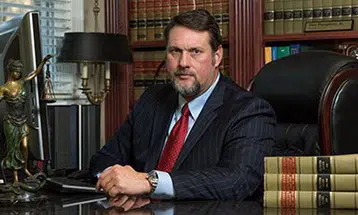
Attorney Don Pumphrey, Jr. is a former prosecutor, former law enforcement officer, and a successful and experienced criminal defense attorney. Don has achieved over 100 not guilty verdicts at trial and over 2,000 dismissals.