- DUI
- Criminal Defense
- Florida DUI
- Traffic Offenses
- Drug Charges
- Marijuana Charges
- Violent Crimes
- Domestic Violence
- Temporary Injunctions
- Weapons Charges
- Theft Crimes
- White Collar Crime
- Juvenile Offenses
- Sex Crimes
- Violation of Probation
- Early Termination of Probation
- Seal or Expunge Criminal Record
- Criminal Appeals
- US Federal Offenses
- Misdemeanor Charges
- Felony Charges
- Co-Defendant Cases
- College Student Defense
- College Student Hearings
- FSU Students
- FAMU Students
- Florida Panhandle Arrests
- Extradition to Florida
- Bench Warrants / Warrants
- Emergency Bond Hearings
- Gambling Charges
- Drone Arrests
- Marsy’s Law
- UAS Infractions
- Introduction of Contraband
- Lying to Police
- Locations
- Case Results
- Our Firm
- Media
- Resources
- Blog
- Contact Us
Florida’s 4th DCA REVERSES Sexual Battery Conviction Over ONE Comment By A Prosecutor… What Was It?
April 24, 2026 Don Pumphrey, Jr. Criminal Defense, Sex Crimes Social Share
Florida’s 4th District Court of Appeal REVERSED a capital sexual battery conviction after the prosecutor accused the defendant in closing arguments of “glaring” at an alleged child victim to intimidate him while he testified.
CASE: Baldez v. State, 679 So.2d 825 (Fla. 4th DCA 1996)
Charge(s): Capital Sexual Battery
Outcome: Conviction REVERSED, as the prosecutor improperly accused Baldez of “glaring” at the alleged child victim to intimidate him as he testified.
Sexual Battery in Florida
In Florida, sexual battery is a VERY serious charge. Sexual battery is often referred to as “rape.” It occurs when a defendant:
- Orally, anally, or vaginally penetrates a victim with a sexual organ or object, or
- Has a victim penetrate them in this way
- WITHOUT the consent of the victim (Seagrave v. State, 802 So. 2d 281 (Fla. 2001))
Consent occurs when someone 18 or older voluntarily engages in a sexual act of their own free will, without being forced or coerced. A person does NOT have to physically resist for a lack of consent to be established. Coley v. State, 616 So.2d 1017 (Fla. 3d. DCA 1993)
The potential penalties for sexual battery are extremely serious, as it’s one of the major FELONY offenses under Florida law. The following potential penalties for sexual battery apply:
- Victim under 12, defendant 18+: Sexual battery is punishable by death or a mandatory minimum of life in prison. Though the Florida and U.S. Supreme Courts have held the death penalty unconstitutional for rape that does not result in death, Florida authorizes it. Kennedy v. Louisiana, 554 U.S. 407 (2008); Buford v. State, 403 So. 2d 943 (Fla. 1981)
- Victim 12 or older but under 18, defendant 18+: A first-degree felony punishable by up to 30 years in prison and a $10,000 fine, or up to life in prison with threat of violence or the use of a weapon.
- Victim under 18, defendant 18+ and in a position of familial or custodial authority: A first-degree felony punishable by life (PBL) in prison.
- Victim over 18, defendant over 18: A second-degree felony punishable by up to 15 years in prison and a $10,000 fine (enhanceable to more severe penalties if actual force or a weapon was used).
Closing Arguments at FL Sexual Battery Trials
Like at all trials, closing arguments are an essential part of Florida sexual battery trials. Closing arguments serve as the “last word” the State and defense get before the jury is instructed on the law and sent to deliberate.
Although closing arguments are not evidence and cannot be considered by the jurors as evidence, this does not change the fact that they can be VERY effective in shaping how the jury views the case. A good closing argument provides a “lens” through which the jury can see (e.g. evaluate) the case, and encourages them to render their verdict accordingly.
A good closing argument from an experienced and aggressive Florida criminal defense attorney will be made with the following goals:
- Making clear to the jury that REASONABLE DOUBT exists
- Drawing attention to any and all vulnerabilities in the State’s case that provide a basis for reasonable doubt
On a procedural note, many individuals believe that closing arguments involve the State (e.g. the prosecutor) speaking, before the defense gets the last word. But this is not entirely correct – as in Florida, closing arguments operate using a “sandwich” structure (Robbins v. State, 891 So.2d 1102 (Fla. 5th DCA 2004)):
- First, the State gives its initial closing
- Second, the defense gives its closing (which often will involve rebuttals of what the State said during its first argument)
- Finally, the State (e.g. prosecutor) gives a REBUTTAL CLOSING (which is the true “last word” before deliberations) to refute the defense’s closing statement
The fact that the defense does not go either first or last makes the quality of the defense’s closing argument especially important. Since the defense only gets one “bite at the apple,” their closing must be particularly effective to maximize the chances of the jury viewing the defense favorably – rather than believing the “last thing they hear” (the prosecutor).
Since popular TV shows display closing arguments as “knock-down, drag-out” fights, it is quite a popular belief that attorneys can say essentially whatever they want. After all, it is argument – right?
Wrong. There are actually many restrictions on the nature of the arguments that can be made by attorneys (both the State and defense) in closings. However, the rules are NOT always honored! Lawyers are people, too – and occasionally, “inflammatory” comments may occur. There is an especially high risk of this occurring in sexual battery cases, as the allegations are so serious.
Some examples of objectionable tactics employed during closing arguments include (Rodriguez v. State, 210 So.3d 750 (Fla. 5th DCA 2017)):
- Impugning the character of opposing counsel by calling them a “liar” or “evil”
- Calling the defendant ugly names/insulting them
- Relying on facts not in evidence or misrepresenting the law
- Commenting on the defendant’s right to remain silent (e.g. “If he wasn’t guilty, he would have said XYZ…”)
- Saying the case is about getting “justice” for the victim (Cardona v. State, 185 So.3d 514, 521 (Fla. 2016))
- GOLDEN RULE arguments (e.g. “Put yourself in the victim’s shoes and think about how scared they were… now find the defendant guilty.”)(Jenkins v. State, 563 So.2d 791 (Fla. 1st DCA 1990))
If the State relies upon one or more of these during closings, this seriously risks a MISTRIAL. And if a mistrial does not occur, a defendant’s conviction may be REVERSED on appeal due to a prosecutor’s improper closing argument. To learn more about mistrials, click here.
The likelihood of a mistrial (or the defendant’s conviction being reversed by a Florida appellate court) significantly increases if the defense OBJECTS during a prosecutor’s closing arguments. This is because:
- WITH AN OBJECTION: Courts apply a “harmless error” analysis (e.g. if there was NO reasonable possibility the jury’s verdict was impacted by the comments) – if the improper remarks were not harmless error, a conviction requires reversal (Petruschke v. State, 125 So.2d 274 (Fla. 4th DCA 2013))
- WITHOUT AN OBJECTION: The improper comments are reviewed for fundamental error, which is a far higher standard (e.g. whether improper comments were so unfairly prejudicial that it made the jury’s verdict inherently illegitimate, per Brinson v. State, 153 So.3d 972 (Fla. 5th DCA 2015))
In one major case heard by Florida’s 4th District Court of Appeal (Southeast FL’s highest court), the defendant was charged with capital sexual battery. This is one of the most serious offenses in Florida – as the victim is age 11 or younger, while the defendant is an adult (18+).
At trial, the defendant and the alleged victim both testified. The defendant denied the allegations. The alleged victim testified that while her mother was gone, she engaged in sexual activity with the defendant. The alleged victim also testified to the fact that her eight-year-old brother – who testified after she did – witnessed this occurring.
During closing arguments, the prosecutor claimed the defendant was “glaring” at the boy (Jesus) as he testified in an effort to intimidate him. The defendant’s lawyer objected, but was overruled by the trial judge. The defendant was ultimately convicted.
On appeal to the 4th DCA, the defendant argued that the prosecutor’s comment was so improper, it may have influenced the jury’s verdict. The defendant claimed that because the jury may have decided the case based on his ostensible “intimidation” of Jesus, rather than the credibility of the evidence and testimony, a new trial was required.
The 4th DCA AGREED and REVERSED his capital sexual battery conviction, remanding the matter to the lower court for a new trial. Let’s take a deeper look at that case – Baldez v. State, 679 So.2d 825 (Fla. 4th DCA 1996) – and discuss what it means for those in Florida concerned about violations of their right to a fair trial.
KEY CASE: Baldez v. State, 679 So.2d 825 (Fla. 4th DCA 1996)
In Baldez, the defendant (Baldez) was charged with capital sexual battery – and was ultimately convicted. At trial, the following was revealed:
- Baldez was the victim’s great uncle, and he lived with the victim’s family
- Occasionally, the mother of the children would leave Baldez alone with them
- The victim testified that in while her mother was away, Baldez would have sex with her
- Baldez denied these allegations, claiming the victim’s family was “badgering” him and the children had a tendency to lie when things didn’t go their way
- In addition to the victim testifying, her brother (Jesus) testified and claimed he witnessed at least one of the encounters
- During closing arguments, the prosecutor said: “You saw the child. She tried to answer the questions. Did she act as someone fabricating a story? No. Why? Because she was telling the truth. Now look at Jesus. Eight-year-old boy, scared. He took that witness stand. You should also consider what he was facing. This defendant leaned forward and glared at Jesus all during his … You saw Jesus cut his eyes towards the Defendant. He was scared. But did it get him shaken about what he saw? He didn’t get shaken. He told what he saw.”
- Baldez’s attorney objected, stating this was improper
- However, the trial judge OVERRULED the objection and the trial continued
- Later the prosecutor told the jurors Baldez was glaring at Jesus, who maintained his story, and again on rebuttal referenced the appellant’s conduct in looking at the witness.
- Baldez was ultimately found guilty
On appeal, Baldez argued that the prosecutor’s improper remarks were NOT harmless error, as there was a reasonable possibility the jury’s verdict was influenced by the allegation that Baldez was trying to “intimidate” Jesus. According to Baldez, this required reversal of his conviction and a new trial.
The 4th DCA AGREED, reversing and remanding the matter to the lower court for a new trial. Discussing the law surrounding the case, the 4th DCA noted:
“It is improper for a prosecutor to comment on the defendant’s demeanor when he is not on the witness stand. Pope v. Wainwright, 496 So.2d 798 (Fla. 1986) (prosecutor’s comments during closing argument that defendant was “grinning from ear to ear” clearly improper, as defendant’s demeanor off the witness stand may not be the subject of discussion in closing arguments), cert. denied, 480 U.S. 951, 107 S.Ct. 1617, 94 L.Ed.2d 801 (1987). Thus, the question is whether the error was harmful or harmless.”
Finding the prosecutor’s remarks were NOT harmless error, the 4th DCA concluded reversal and a new trial was required:
“The effect of these comments within the context of the prosecutor’s closing argument was certainly improper. It suggested to the jury that the appellant was guiltily attempting to intimidate the child witnesses; that he harbored ill will against them; and that the state’s witnesses were telling the truth because they still testified against the appellant despite his attempt to intimidate them. The appellant testified in his own defense and denied all of the children’s allegations against him. Thus, the prosecutor was using the appellant’s demeanor off of the witness stand as a reason to bolster the credibility of the child witnesses whose testimony conflicted on certain points. Bolstering the credibility of the witnesses by reference to matters outside the record is improper in closing argument.”
“We cannot find this error to be harmless. The appellant contradicted the testimony of the child witnesses, who as noted above had some conflicts in their testimony. The medical evidence showed that the victim had been penetrated, but the victim had testified that she had been sexually involved with other people besides the appellant. Given the conflicting evidence, we cannot say that the error was harmless beyond a reasonable doubt. Reversed and remanded for a new trial.”
In sum, Baldez v. State, 679 So.2d 825 (Fla. 4th DCA 1996) marks a significant development in Florida’s corpus of case law surrounding improper closing arguments in sexual battery cases. Florida’s 4th District Court of Appeal (Southeast FL’s highest court) found that:
- The prosecutor’s improper remark about the defendant attempting to silently “intimidate” the child witness was a violation of the rules governing closing arguments
- The error was NOT harmless, since this may have caused the jury to side with the child witnesses over the appellant
- There were inconsistencies in the testimony of the alleged victim/her brother (Jesus) that may have been given less weight due to the prosecutor’s improper remark
- As a result, REVERSAL and a new trial was required in Baldez’s case
Florida’s criminal defense community should take note of Baldez v. State, 679 So.2d 825 (Fla. 4th DCA 1996), as it reveals appellate courts may REVERSE sexual battery convictions due to improper prosecutorial remarks in closing arguments.
If someone is concerned about being charged with sexual battery or a related offense, it is crucial to find experienced and aggressive legal representation as soon as possible. This vital decision could make the difference in whether or not a person is subject to a lengthy prison term and hefty fines.
Criminal Defense Attorney in Tallahassee, FL
Don Pumphrey, Jr. is a Former Prosecutor, Former State Police Officer, Lifetime Member of the Florida Association of Criminal Defense Lawyers; for over 25 years as a private defense attorney who is Trusted, Experienced, Aggressive in Criminal Defense as a Trial Attorney, Criminal Lawyer, Criminal Defense Lawyer for the accused in Florida State Courts located in Tallahassee, Florida but handling cases throughout the State of Florida.
Don Pumphrey, Jr. and the Tallahassee criminal defense lawyers at Pumphrey Law have decades of experience fighting criminal charges on behalf of clients and winning. Call Pumphrey Law now at (850) 681-7777 to learn more about what we can do for you. Our lawyers will be happy to provide you with a free consultation.
Don Pumphrey, Jr.
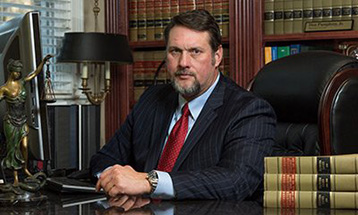
Attorney Don Pumphrey, Jr. is a former prosecutor, former law enforcement officer, and a successful and experienced criminal defense attorney. Don has achieved over 100 not guilty verdicts at trial and over 2,000 dismissals.