- DUI
- Criminal Defense
- Florida DUI
- Traffic Offenses
- Drug Charges
- Marijuana Charges
- Violent Crimes
- Domestic Violence
- Temporary Injunctions
- Weapons Charges
- Theft Crimes
- White Collar Crime
- Juvenile Offenses
- Sex Crimes
- Violation of Probation
- Early Termination of Probation
- Seal or Expunge Criminal Record
- Criminal Appeals
- US Federal Offenses
- Misdemeanor Charges
- Felony Charges
- Co-Defendant Cases
- College Student Defense
- College Student Hearings
- FSU Students
- FAMU Students
- Florida Panhandle Arrests
- Extradition to Florida
- Bench Warrants / Warrants
- Emergency Bond Hearings
- Gambling Charges
- Drone Arrests
- Marsy’s Law
- UAS Infractions
- Introduction of Contraband
- Lying to Police
- Locations
- Case Results
- Our Firm
- Media
- Resources
- Blog
- Contact Us
Florida’s 4th DCA REVERSES Vehicular Homicide Conviction Due to Improper Closing Argument
April 24, 2026 Don Pumphrey, Jr. Criminal Defense, Violent Crimes Social Share
Florida’s 4th District Court of Appeal ruled that a vulgar remark allegedly made by a defendant at the scene of a fatal crash should not have been admitted at his trial – and that the prosecutor’s reliance upon the statement in closing argument required reversal of his conviction.
CASE: Opsincs v. State, 185 So.3d 654 (Fla. 4th DCA 2016)
Charge(s): Vehicular Homicide
Outcome: Conviction REVERSED, as the improper introduction of a defendant’s allegedly vulgar comment at his trial, and the prosecutor’s discussion of this in closing argument, was a violation of the defendant’s right to a fair trial.
Vehicular Homicide in Florida
In Florida, vehicular homicide (Fla. Stat. 782.071) is a very serious felony offense. Vehicular homicide is typically punishable by up to 15 years in prison and a $10,000 fine. However, it is considered a first-degree felony (up to 30 years in prison and a $10,000 fine) if either (or both) of the following are true:
- The defendant has a prior conviction for DUI manslaughter, BUI manslaughter, vehicular homicide or vessel homicide (Trenton’s Law, 2025)
- The defendant fails to give information to authorities, render aid to the victim(s), or leaves the scene of the accident (e.g. fails to stop)
For someone to be guilty of vehicular homicide under Florida law, the State must prove all of the following elements beyond a reasonable doubt:
- The defendant operated a vehicle
- The defendant’s operation of a vehicle caused the death of one or more victims
- The defendant operated their vehicle in a reckless manner (e.g. in a manner they knew or should have known was likely to cause death or great bodily harm)
The two most frequently disputed elements in a vehicular homicide case are whether or not the defendant was reckless, and whether or not they were the cause of the victim’s death. Someone is considered the CAUSE of the victim’s death if they were involved in the collision that resulted in their demise – unless one of the following is true:
- The victim’s conduct was the SOLE CAUSE (e.g. entirely responsible) for their death
- A third party’s unnatural and unforeseeable conduct (either independently or in response to the defendant’s actions) cause the victim’s death (Reaves v. State, 979 So.2d 1066 (Fla. 1st DCA 2008))
Recklessness in a vehicular homicide case does not occur simply because someone violates one or more traffic laws. The following two things must be proven beyond a reasonable doubt for the State to establish someone was reckless in a vehicular homicide case:
- The defendant operated their vehicle in a manner they knew or should have known was likely to cause death or great bodily harm (House v. State, 831 So.2d 1230 (Fla. 2d DCA 2002))
- The defendant did more than simply exceed the speed limit, as this is negligence – not recklessness (Luzardo v. State, 147 So.3d 1083 (Fla. 3d. DCA 2014))
Closing Arguments in FL Criminal Trials
When crimes like vehicular homicide are alleged, this can lead to emotions running high at trial. This is especially the case in CLOSING ARGUMENTS. Closing arguments are “the last word” each party to the case (State and defense) gets before the jury is instructed on the law and sent to deliberate.
The goal of a closing argument should be to give the jury a “lens” through which to view all of the evidence and testimony they have seen/heard over the course of the trial, improving the odds that a favorable verdict for the arguing party will be returned.
Though many believe the State goes first during closings, followed by the defense, this is NOT the entire story. Closing arguments are structured in the following way (Williams v. State, 673 So.2d 974 (Fla. 1st DCA 1996)):
- First, the State gives its initial closing
- Second, the defense gives its closing (which often will involve rebuttals of what the State said during its first closing argument)
- Finally, the State (e.g. prosecutor) gives a REBUTTAL CLOSING (which is the true “last word” before deliberations) to refute the defense’s closing argument
It’s important to note that closing arguments cannot be considered as evidence. But this does not mean closings do nothing – in fact, they can significantly influence the outcome of a case. This is because people tend to think in NARRATIVES.
Thus, an effective closing argument by an experienced and aggressive Florida criminal defense attorney will “tell a story” that makes it more likely the jury will find in favor of the defense (e.g. render a not guilty verdict).
The defense’s closing argument is absolutely critical for a few reasons. The first is that unlike the State, the defense only gets ONE “bite at the apple.” Because the defense is “sandwiched” by the State, its argument must be particularly powerful for the jury to remember it and resonate with it – rather than simply siding with “the last person they hear” (the prosecutor).
Moreover, a closing argument may result in the jury REFRAMING how they view the evidence in the case. As the State may introduce more evidence and testimony than the defense, the jury may initially feel inclined to believe the State’s version of events.
But if the jury already has questions about the State’s case (and they usually do), an experienced, aggressive Florida criminal defense attorney can give voice to their skepticism and explain why it is justified. This can be very effective in pushing the jury towards rendering a NOT GUILTY verdict.
Although many believe closing arguments are “anarchical” (e.g. anything can be said), this is not the case. There are rhetorical lines that cannot be crossed – and if they are crossed, OBJECTING contemporaneously is critical to preserve the issue for appeal (if the defendant gets convicted).
Examples of objectionable tactics employed during closing arguments include (Rodriguez v. State, 210 So.3d 750 (Fla. 5th DCA 2017)):
- Impugning the character of opposing counsel by calling them a “liar” or “evil”
- Relying on facts not in evidence or misrepresenting the law (Pacifico v. State, 642 So.2d 1178 (Fla. 1st DCA 1994))
- Improperly bolstering the testimony of an alleged victim or law enforcement officers (Williams v. State, 673 So.2d 974 (Fla. 1st DCA 1996))
- Calling the defendant ugly names/insulting them
- Saying the case is about getting “justice” for the victim (Cardona v. State, 185 So.3d 514, 521 (Fla. 2016))
- Improperly commenting on the defendant’s right to remain silent
- GOLDEN RULE arguments (e.g. “Imagine how scared the victim was at that moment – so find the defendant guilty!”)((Jenkins v. State, 563 So.2d 791 (Fla. 1st DCA 1990))
The effect of objecting to improper closings at the time they occur is significant. This is because the appellate standard of review changes if this is done:
- WITH AN OBJECTION: Courts apply a “harmless error” analysis (e.g. if there was NO reasonable possibility the jury’s verdict was impacted by the comments) – if the improper remarks were not harmless error, a conviction requires reversal (Petruschke v. State, 125 So.2d 274 (Fla. 4th DCA 2013))
- WITHOUT AN OBJECTION: The improper comments are reviewed for fundamental error, which is a far higher standard (e.g. whether improper comments were so unfairly prejudicial that it made the jury’s verdict inherently illegitimate, per Brinson v. State, 153 So.3d 972 (Fla. 5th DCA 2015))
In one major Florida vehicular homicide case, Florida’s 4th District Court of Appeal (Southeast FL’s highest court) heard a defendant challenge his conviction on the basis that the prosecutor’s improper closing arguments deprived him of the right to a fair trial.
According to the defendant, a vulgar remark he allegedly made AFTER the fatal accident (“Well, shit happens.”) was erroneously admitted into evidence despite having no relevance to any of the elements of the charged offense. The prosecutor then seized on this during closing arguments to claim the defendant was RECKLESS.
The jury found him guilty. However, the 4th DCA REVERSED the defendant’s conviction and remanded the matter to the lower court for a new trial. Why?
Let’s take a look at that case – Opsincs v. State, 185 So.3d 654 (Fla. 4th DCA 2016) – and see what it means for defendants in Florida concerned about violations of their right to a fair trial via improper closing arguments.
KEY CASE: Opsincs v. State, 185 So.3d 654 (Fla. 4th DCA 2016)
In Opsincs, the defendant (Opsincs) was arrested and charged with vehicular homicide after a fatal accident that killed an eleven-year-old girl and injured at least 5 others. He was ultimately convicted. At trial, the following was revealed:
- Opsincs was driving through an intersection and hit a Honda that was turning left – the force of the collision split the Honda into two pieces
- The Honda had 5 occupants – a father and four children
- The oldest child (11) died, while 3 others were injured
- A piece of the Honda hit another vehicle and injured two of its passengers
- After the accident, Opsincs allegedly told people that the light was green – however, the witnesses at the scene began to challenge him on this
- During a conversation with one of those witnesses (who testified), Opsincs was alleged to have said: “Well, shit happens.”
- Before trial, Opsincs moved to exclude his comment (e.g. render it inadmissible) on the basis that it was IRRELEVANT and unfairly prejudicial
- However, the judge denied the motion and allowed the witness to testify to the remark
- During closing arguments, the prosecutor in Opsincs’s case referenced the comment and said that it showed he was acting RECKLESSLY the day of the crash
- Opsincs objected to this, but no mistrial was declared
- Opsincs was ultimately found guilty
On appeal, Opsincs argued that the comment was IMPROPERLY admitted into evidence, as its “probative value” was substantially outweighed by the danger of unfair prejudice. He also argued that the prosecutor’s reference(s) to it during closing arguments violated his right to a fair trial by encouraging the jury to decide the case on an improper basis (e.g. not based on the evidence).
The 4th DCA AGREED with Opsincs and REVERSED his conviction, remanding the matter to the lower court for a new trial. Finding Opsincs’s “shit happens” remark should have never been introduced in evidence, the 4th DCA wrote:
“Even if evidence is relevant, it is inadmissible “if its probative value is substantially outweighed by the danger of unfair prejudice, confusion of issues, misleading the jury, or needless presentation of cumulative evidence.” § 90.403, Fla. Stat. (2013). “The unfair prejudice that section 90.403 attempts to eliminate relates to evidence that inflames the jury or appeals improperly to the jury’s emotions.” State v. Gerry, 855 So.2d 157, 159 (Fla. 5th DCA 2003). In a similar case stemming from a vehicular homicide prosecution, we found that evidence of the defendant’s mental state after the accident was not relevant to the issue of whether the defendant operated the motor vehicle in a reckless manner. See Rubinger v. State, 98 So.3d 659, 663 (Fla. 4th DCA 2012).”
“Even if evidence of appellant’s statement after the accident did have some relevance in the case, any probative value was substantially outweighed by the danger of unfair prejudice. The probative value of the statement, if any, was minimal. On the other side of the balancing test, evidence that appellant said “shit happens” at the scene of an accident that killed an 11–year–old girl was undoubtedly inflammatory. Such evidence was unfairly prejudicial because it was designed to appeal to the jury’s emotions by portraying appellant as callous and uncaring. Therefore, the trial court abused its discretion by admitting evidence of appellant’s statement after the accident. We conclude that the error was not harmless. See State v. DiGuilio, 491 So.2d 1129, 1135 (Fla. 1986).”
“Although the State presented evidence that appellant was driving at an excessive speed, the degree to which appellant was speeding was a contested issue. Moreover, similar to Rubinger, the prosecutor improperly suggested in closing argument that appellant’s “shit happens” statement was proof of reckless driving: “[T]hose words express the reckless disregard he had for anybody that night.” Thus, we find there is a reasonable possibility that the error contributed to appellant’s convictions. … For the foregoing reasons, we reverse and remand for a new trial.”
In sum, Opsincs v. State, 185 So.3d 654 (Fla. 4th DCA 2016) marks a significant development in Florida’s corpus of case law surrounding improper introduction of irrelevant evidence and improper closing arguments in vehicular (and vessel) homicide cases. The 4th DCA (Southeast FL’s highest court) held that:
- Opsincs’s “shit happens” remark should have never been admitted into evidence, as its probative value was substantially outweighed by the danger of unfair prejudice (e.g. the jury convicting him because he seemed “callous” rather than because he drove recklessly)
- The prosecutor’s references to the comment during closing argument may have led to the jury deciding the case on an improper basis
- This required REVERSAL and remanding the matter to the lower court for a new trial
Florida’s criminal defense community should take note of Opsincs v. State, 185 So.3d 654 (Fla. 4th DCA 2016), as it makes clear that improper closing arguments in vehicular/vessel homicide cases can lead to convictions being reversed on appeal.
It is critical to find experienced and trusted legal representation as soon as possible if someone is charged with vehicular homicide, DUI manslaughter, BUI manslaughter or vessel homicide. This decision could make the difference in whether or not someone faces a lengthy prison term and hefty fines.
Criminal Defense Attorney in Tallahassee, FL
Don Pumphrey, Jr. is a Former Prosecutor, Former State Police Officer, Lifetime Member of the Florida Association of Criminal Defense Lawyers; for over 25 years as a private defense attorney who is Trusted, Experienced, Aggressive in Criminal Defense as a Trial Attorney, Criminal Lawyer, Criminal Defense Lawyer for the accused in Florida State Courts located in Tallahassee, Florida but handling cases throughout the State of Florida.
Don Pumphrey, Jr. and the Tallahassee criminal defense lawyers at Pumphrey Law have decades of experience fighting criminal charges on behalf of clients and winning. Call Pumphrey Law now at (850) 681-7777 to learn more about what we can do for you. Our lawyers will be happy to provide you with a free consultation.
Don Pumphrey, Jr.
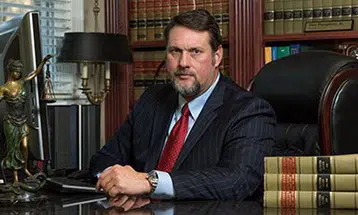
Attorney Don Pumphrey, Jr. is a former prosecutor, former law enforcement officer, and a successful and experienced criminal defense attorney. Don has achieved over 100 not guilty verdicts at trial and over 2,000 dismissals.