- DUI
- Criminal Defense
- Florida DUI
- Traffic Offenses
- Drug Charges
- Marijuana Charges
- Violent Crimes
- Domestic Violence
- Temporary Injunctions
- Weapons Charges
- Theft Crimes
- White Collar Crime
- Juvenile Offenses
- Sex Crimes
- Violation of Probation
- Early Termination of Probation
- Seal or Expunge Criminal Record
- Criminal Appeals
- US Federal Offenses
- Misdemeanor Charges
- Felony Charges
- Co-Defendant Cases
- College Student Defense
- College Student Hearings
- FSU Students
- FAMU Students
- Florida Panhandle Arrests
- Extradition to Florida
- Bench Warrants / Warrants
- Emergency Bond Hearings
- Gambling Charges
- Drone Arrests
- Marsy’s Law
- UAS Infractions
- Introduction of Contraband
- Lying to Police
- Locations
- Case Results
- Our Firm
- Media
- Resources
- Blog
- Contact Us
FL’s 3rd DCA REVERSES Attempted Murder Conviction Based On Improper Closing Argument, Cross-Examination
April 24, 2026 Don Pumphrey, Jr. Criminal Defense, Violent Crimes Social Share
Florida’s 3rd District of Appeal reversed a defendant’s conviction for attempted second-degree murder, finding a prosecutor’s conduct during closing arguments and cross-examination of the defendant rose to the level of “fundamental error.”
CASE: Gomez v. State, 751 So.2d 630 (Fla. 3d DCA 1999)
Charge(s): Attempted Second-Degree Murder
Outcome: Conviction reversed, as the prosecutor’s improper remarks during closing arguments and cross-examination rose to the level of FUNDAMENTAL ERROR.
Closing Arguments at Florida Criminal Trials
In Florida, closing arguments are a key aspect of any criminal proceeding. Closing arguments are the last word each party gets (e.g. the State and defense) before the jury is sent to deliberate.
The goal of any good closing argument is to present the jury with a “lens” through which to view the case (e.g. the evidence and the testimony they have seen and heard). Effective closings aren’t a guaranteed way of “winning” the case, but they do make it more likely that the jury will return a favorable verdict for the “arguing party.”
It is a common misconception that during closing arguments, the State goes first, and the defense gets the last word. But this is not the case. Closing arguments are structured in the following way (Williams v. State, 673 So.2d 974 (Fla. 1st DCA 1996)):
- First, the State gives its initial closing
- Second, the defense gives its closing (which often will involve rebuttals of what the State said during its first closing statement)
- Finally, the State (e.g. prosecutor) gives a REBUTTAL CLOSING (which is the true “last word” before deliberations) to refute the defense’s closing statement
When the State concludes their rebuttal, the jury will be instructed on the law in the case and sent to deliberate. As part of those instructions, the judge will remind the jury that what the attorneys say is NOT evidence and should not be treated as such.
But this does not change the fact that a strong closing argument will be “thought about” during deliberations. This is because people tend to think in narratives. Thus, while a closing argument is not evidence on its own, effective closings will make the jury more likely to view the evidence and testimony in a light more favorable to the argument party.
This is important because during a criminal case, the State will often be the party to put on more evidence/testimony. But an experienced, aggressive criminal defense attorney can and will “poke holes” in the State’s case during closing arguments (and during cross-examinations). This is what provides the basis for reasonable doubt in so many cases in Florida.
The defense’s closing argument is particularly important, for a few reasons. The first of these is the fact that the defense only gets ONE “bite at the apple.” Unlike the State, which has a FIRST CLOSING and a REBUTTAL, the defense is “sandwiched.” As a result, it is critical that closing arguments are delivered well by the defense – as it can make or break a case.
Additionally, the defense’s closing argument is essential because it can result in a jury mentally reframing how they view evidence. If the jury already has “questions” about the State’s case, an experienced and aggressive criminal defense attorney can amplify their skepticism by explaining why it is justified.
Since closing arguments are frequently featured on crime shows, like Law & Order, it is common to think that attorneys can effectively say “whatever they want.” But this is not the case, as there are many rules and regulations prohibiting the parties from “crossing the line” and engaging in misconduct.
A big “no-no” during closing arguments is the GOLDEN RULE ARGUMENT. This involves attorneys asking the jury to put themselves in the position of the defendant or victim in a case – inviting them to base their verdict on personal sympathy rather than evidence. Examples include:
- “Imagine you were that poor girl getting raped – now find the defendant guilty!”
- “Imagine you were Ms. Jones, facing life in prison – she doesn’t deserve that, so find her NOT guilty!”
- “Put yourself in the shoes of the parents of the victim and think about their pain, then find the defendant guilty as charged!”
- Pointing the gun allegedly used in a crime at members of the jury to make them feel like they are “in the shoes” of a victim (Jenkins v. State, 563 So.2d 791 (Fla. 1st DCA 1990))
Examples of other objectionable tactics employed during closing arguments include (Rodriguez v. State, 210 So.3d 750 (Fla. 5th DCA 2017)):
- Impugning the character of opposing counsel by calling them a “liar” or “evil”
- Calling the defendant ugly names/insulting them
- Relying on facts not in evidence or misrepresenting the law (Pacifico v. State, 642 So.2d 1178 (Fla. 1st DCA 1994))
- Improperly bolstering the testimony of an alleged victim or law enforcement officers (Williams v. State, 673 So.2d 974 (Fla. 1st DCA 1996))
- Saying the case is about getting “justice” for the victim (Cardona v. State, 185 So.3d 514, 521 (Fla. 2016))
- Improperly commenting on the defendant’s right to remain silent
If the State relies upon these tactics as part of their closing arguments, it is important to OBJECT. This is because a mistrial may be granted, or a conviction may be reversed on appeal if a mistrial request is denied.
Many see objecting during closing statements as a “faux pax” (e.g. you should never do it). But if the State’s closing veers into “unacceptable” territory (e.g. a prosecutor relies on one or more of the above tactics), an objection from the defense is necessary to preserve the issue for appeal. This is because:
- WITH AN OBJECTION: Courts apply a “harmless error” analysis (e.g. if there was NO reasonable possibility the jury’s verdict was impacted by the comments) – if the improper remarks were not harmless error, a conviction requires reversal (Petruschke v. State, 125 So.2d 274 (Fla. 4th DCA 2013))
- WITHOUT AN OBJECTION: The improper comments are reviewed for fundamental error, which is a far higher standard (e.g. whether improper comments were so unfairly prejudicial that it made the jury’s verdict inherently illegitimate, per Brinson v. State, 153 So.3d 972 (Fla. 5th DCA 2015))
In one case involving an allegation of attempted second-degree murder, these tactics were used by a prosecutor during cross-examination of the defendant, as well as closing arguments.
The defendant objected repeatedly – but these were largely overruled. The objections that were sustained went UNADDRESSED by the judge other than a simple statement acknowledging the objection. The jury was never told to disregard the “egregious” comments of the prosecutor, and the trial judge never admonished the prosecutor at any point.
Ultimately, the defendant was found guilty. Challenging his conviction to Florida’s 3rd District Court of Appeal (Miami FL’s highest court), the defendant argued he was deprived of his right to a fair trial by the prosecutor’s repeated violations of the rules surrounding cross-examination and closing arguments.
As a result, he implored the 3rd DCA to reverse his conviction and grant him a new trial. The 3rd DCA AGREED and did so. But what made the 3rd DCA believe such a remedy was necessary?
Let’s take a look at that case – Gomez v. State, 751 So.2d 630 (Fla. 3d DCA 1999) – and discuss what it means for those in Florida concerned about violations of their right to a fair trial.
KEY CASE: Gomez v. State, 751 So.2d 630 (Fla. 3d DCA 1999)
In Gomez, the defendant (Gomez) was charged with attempted second-degree murder following an incident in which he allegedly stabbed the victim in the back. He was ultimately convicted. At trial, the following was revealed:
- Gomez had an altercation with another man that resulted in Gomez stabbing the man in the back with a knife
- Gomez claimed self-defense, stating this was necessary to avoid him being stabbed in the back himself
- Gomez testified in his own defense at trial
- During cross-examination of Gomez, the prosecutor inferred (without any evidence) that Gomez was a “gang leader,” had “dealt with guns often,” and that the altercation between Gomez and the victim resulted from Gomez’s effort to steal the victim’s watch
- During closing arguments, the prosecutor called Gomez a “liar,” referring to his version of events as “lies” and a “cockamamie story”
- She also insulted Gomez, stating he was a “big zero” and had “no credibility whatsoever”
- Finally, she made a GOLDEN RULE argument, asking the jury to put themselves in the defendant’s shoes and ask if they would have stabbed the victim if they were Gomez
- Gomez’s attorney objected multiple times, but the the trial judge was generally passive (e.g. silent) as the prosecutor made the objectionable remarks
- The prosecutor was never admonished, and the jury was never instructed to disregard any of the objectionable comments
- Gomez was ultimately found guilty as charged
On appeal to Florida’s 3rd DCA, Gomez argued the prosecutorial misconduct in the case was so egregious, it rose to the level of fundamental error. As a result, he urged the 3rd DCA to reverse his conviction and remand for a new trial. The 3rd DCA AGREED and did so, writing:
“Sixteen separate comments were challenged by Gomez. We will discuss the most egregious of them. First, the prosecutor specifically called Gomez, who had testified, a liar, and referred to his version of events as “lies” and as a “cockamamie story.” She also said: “The Defendant is a big zero, he has no credibility whatsoever.” Next, during her cross-examination of Gomez, the prosecutor inferred, without foundation, that Gomez was a gang leader, that he had “deal[t] with guns often,” and that the altercation between Gomez and the victim had sprung from Gomez’s attempt to sell the victim a “stolen” watch. Finally, the prosecutor made “golden rule” arguments during closing, improperly suggesting to the jury that if they placed themselves in the shoes of the defendant, they would not have stabbed the victim in reaction to the circumstances the defendant had faced, and suggesting that if this was really a case of self-defense, that the jurors in Gomez’s place would have acted differently.”
“All of the above comments were improper. It is most troubling to this Court that, especially in an instance where the defendant takes the stand in his own defense, the prosecutor here referred to the defendant as a “liar” and to his version of events as “lies.” With these types of comments, the prosecutor encroached on the jury’s job by improperly weighing in with her own opinion of the credibility of the witnesses. This impropriety was compounded by the prosecutor’s other misconduct-the “golden rule” arguments and the unfounded questions concerning gang membership and familiarity with guns. As we and other Florida Courts have held in the past, these types of improper comments by “overzealous” (read “unprofessional”) prosecutors are unfair to defendants, will not be tolerated, and will continue to result in reversals.”
The 3rd DCA also harshly criticized the judge in the case for failing to intervene and admonish the prosecutor (even after sustaining objections):
“It is not solely the prosecutor who must be admonished here. The trial court retains the ultimate responsibility for the proper conduct of trial counsel and trial proceedings in her courtroom. To quote our Chief Judge Schwartz, speaking in Borden, Inc. v. Young, 479 So.2d 850, 851 (Fla. 3d DCA 1985): “In our view, it is no longer-if it ever was-acceptable for the judiciary to act simply as a fight promoter, who supplies an arena in which the parties may fight it out on unseemingly terms of their choosing….” There comes a point and time in the conduct of a trial that the trial judge should and must intervene in the egregious conduct, whether it has been challenged or not. It is the trial judge who is the central figure in the courtroom especially in the eyes of a jury. The jury looks to the trial judge as the only neutral, impartial, detached participant in the trial. Therefore, what the trial judge says and does in the presence of the jury very often gives the jury a better perspective of the case.”
“When objections are sustained and the trial court considers it proper to admonish counsel, it should be done outside the jury’s presence. However, if counsel continues to engage in improper comments and arguments, the trial judge should admonish counsel and advise them that future improper tactics will cause counsel to be rebuked before the jury. This has a magical effect! Trial counsel realize that for the impartial judge to rebuke him or her in the jury’s presence can seriously undermine their rapport with a jury. Trial counsel that have been improperly rebuked can and should-outside the presence of the jury-object to the improper admonitions and undue incursion into the advocate’s role.”
Put simply, since systematic failures vitiated the proceedings (e.g. both the prosecutor’s and the trial judge’s conduct made his trial unfair), a new trial was required in Gomez’s case.
In sum, Gomez v. State, 751 So.2d 630 (Fla. 3d DCA 1999) marks a significant development in Florida’s corpus of case law surrounding closing arguments at criminal trials – especially when the defendant’s testimony is central to the defense. The 3rd DCA (Miami FL’s highest court) held that:
- The plethora of improper prosecutorial remarks during cross-examination and closing arguments violated Gomez’s right to a fair trial
- These included referring to Gomez repeatedly as a “liar,” fabricating facts that were not in evidence (such as Gomez being a gang leader and trying to rob the victim), and more
- The trial judge’s failure to intervene (by admonishing the prosecutor) paved the way for the prosecutor to engage in what was very clearly misconduct
- This required REVERSAL of Gomez’s conviction and a new trial in his case
Florida’s criminal defense community should take note of Gomez v. State, 751 So.2d 630 (Fla. 3d DCA 1999), as it shows when appellate courts will consider REVERSING convictions on the basis that the State made improper closing arguments.
Sex crimes in Florida can carry lengthy prison sentences and heavy fines. If someone is arrested and formally charged in Florida, it is vital to find experienced and aggressive legal representation as soon as possible.
Criminal Defense Attorney in Tallahassee, FL
Don Pumphrey, Jr. is a Former Prosecutor, Former State Police Officer, Lifetime Member of the Florida Association of Criminal Defense Lawyers; for over 25 years as a private defense attorney who is Trusted, Experienced, Aggressive in Criminal Defense as a Trial Attorney, Criminal Lawyer, Criminal Defense Lawyer for the accused in Florida State Courts located in Tallahassee, Florida but handling cases throughout the State of Florida.
Don Pumphrey, Jr. and the Tallahassee criminal defense lawyers at Pumphrey Law have decades of experience fighting criminal charges on behalf of clients and winning. Call Pumphrey Law now at (850) 681-7777 to learn more about what we can do for you. Our lawyers will be happy to provide you with a free consultation.
Don Pumphrey, Jr.
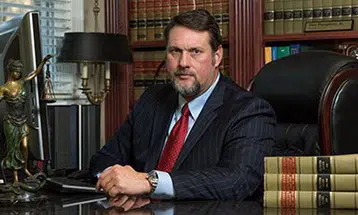
Attorney Don Pumphrey, Jr. is a former prosecutor, former law enforcement officer, and a successful and experienced criminal defense attorney. Don has achieved over 100 not guilty verdicts at trial and over 2,000 dismissals.