- DUI
- Criminal Defense
- Florida DUI
- Traffic Offenses
- Drug Charges
- Marijuana Charges
- Violent Crimes
- Domestic Violence
- Temporary Injunctions
- Weapons Charges
- Theft Crimes
- White Collar Crime
- Juvenile Offenses
- Sex Crimes
- Violation of Probation
- Early Termination of Probation
- Seal or Expunge Criminal Record
- Criminal Appeals
- US Federal Offenses
- Misdemeanor Charges
- Felony Charges
- Co-Defendant Cases
- College Student Defense
- College Student Hearings
- FSU Students
- FAMU Students
- Florida Panhandle Arrests
- Extradition to Florida
- Bench Warrants / Warrants
- Emergency Bond Hearings
- Gambling Charges
- Drone Arrests
- Marsy’s Law
- UAS Infractions
- Introduction of Contraband
- Lying to Police
- Locations
- Case Results
- Our Firm
- Media
- Resources
- Blog
- Contact Us
Major FL Court REVERSES Conviction in Vehicular Homicide, DUI Manslaughter Case For Unexpected Reason
April 24, 2026 Don Pumphrey, Jr. Criminal Defense, Violent Crimes Social Share
Florida’s 4th District Court of Appeal ruled that evidence of a defendant’s post-accident conduct indicating she was behaving “unusually” after a fatal accident should NOT have been used at trial to prove she was reckless, requiring reversal of her conviction.
CASE: Rubinger v. State, 98 So.3d 659 (Fla. 4th DCA 2012)
Charge(s): DUI Manslaughter, Vehicular Homicide, Culpable Negligence
Outcome: Conviction REVERSED, as Rubinger may have been found guilty as a result of the improper introduction of evidence relating to her “unusual” behavior after the accident occurred, not because she was driving recklessly before the crash.
Vehicular Homicide in Florida
In Florida, vehicular homicide (Fla. Stat. 782.071) is a very serious felony offense. Vehicular homicide is typically punishable by up to 15 years in prison and a $10,000 fine. However, it is considered a first-degree felony (up to 30 years in prison and a $10,000 fine) if either (or both) of the following are true:
- The defendant has a prior conviction for DUI manslaughter, BUI manslaughter, vehicular homicide or vessel homicide (Trenton’s Law, 2025)
- The defendant fails to give information to authorities, render aid to the victim(s), or leaves the scene of the accident (e.g. fails to stop)
For someone to be GUILTY of vehicular homicide in Florida, the State must prove the following elements beyond a reasonable doubt:
- The defendant operated a vehicle
- The defendant’s operation of a vehicle caused the death of one or more victims
- The defendant operated their vehicle in a reckless manner (e.g. in a manner they knew or should have known was likely to cause death or great bodily harm)
Operation is not typically disputed in a vehicular homicide case. So long as a defendant was the one behind the wheel at the time of a fatal crash, this element of the offense is satisfied. J.A.C. v. State, 374 So.2d 606 (Fla. 3d. DCA 1979)
The two most commonly debated elements in a vehicular homicide prosecution are whether the defendant was the CAUSE of the victim’s death, and whether they RECKLESSLY operated their vehicle. Someone is considered the CAUSE of the victim’s death if they were involved in the collision that resulted in their demise – unless one of the following is true:
- The victim’s conduct was the SOLE CAUSE (e.g. entirely responsible) for their death
- A third party’s unnatural and unforeseeable conduct (either independently or in response to the defendant’s actions) cause the victim’s death (Reaves v. State, 979 So.2d 1066 (Fla. 1st DCA 2008))
If the defendant disputes causation, the State must prove beyond a reasonable doubt that neither of the above were true in the defendant’s case. If the jury does not believe the State has done so, it is incumbent upon them to render a not guilty verdict.
Perhaps the most frequently contested issue in Florida vehicular (or vessel) homicide cases is the defendant’s recklessness (or lack thereof). The following two things must be proven beyond a reasonable doubt for the State to establish someone was reckless in a vehicular homicide case:
- The defendant operated their vehicle in a manner they knew or should have known was likely to cause death or great bodily harm (House v. State, 831 So.2d 1230 (Fla. 2d DCA 2002))
- The defendant did more than simply exceed the speed limit, as this is negligence – not recklessness (Luzardo v. State, 147 So.3d 1083 (Fla. 3d. DCA 2014))
Under Florida law, there are a few distinctions between vehicular homicide (Fla. Stat. 782.071) and DUI manslaughter. The following are some of them:
- In a vehicular homicide case, the State must prove that the defendant was the proximate cause of the victim’s death – in a DUI manslaughter case, the defendant must only have CONTRIBUTED TO the victim’s death
- In a vehicular homicide case, the State does not have to prove the defendant was drunk or otherwise under the influence – by contrast, this is an element of DUI manslaughter
- In a vehicular homicide case, the conduct of the victim or a third party can occasionally be a defense (as there is a causation requirement) – in DUI manslaughter, this is not the case so long as the defendant was involved in (e.g. “contributed to”) the fatal accident
For more on the differences between DUI manslaughter and vehicular homicide, click here. For more on the similarities and differences between vehicular homicide and vessel homicide in Florida (including the fact that recklessness has the same legal definition in vehicular and vessel homicide cases), click here.
Closing Arguments in FL Criminal Trials
When crimes like vehicular homicide are alleged to have occurred, emotions can sometimes run high at trial. This is especially the case once CLOSING ARGUMENTS begin. As you may be aware, closing arguments are the “last word” each party to the case (e.g. State and defense) gets before the jury is sent to deliberate (and eventually render a verdict).
Though many believe the State goes first during closings, followed by the defense, this is NOT the entire story. Closing arguments are structured in the following way (Williams v. State, 673 So.2d 974 (Fla. 1st DCA 1996)):
- First, the State gives its initial closing
- Second, the defense gives its closing (which often will involve rebuttals of what the State said during its first closing argument)
- Finally, the State (e.g. prosecutor) gives a REBUTTAL CLOSING (which is the true “last word” before deliberations) to refute the defense’s closing argument
The goal of a good closing argument should be to give the jury a lens through which to view all of the evidence and testimony they have heard and seen over the course of the trial – improving the odds that they will render a favorable verdict. In other words, a good defense closing should serve as a “logical roadmap” to finding the defendant not guilty.
It is important to note – closing arguments CANNOT be considered as evidence. However, this does not mean that closings do nothing. In fact, they can significantly influence the outcome of a case, because people tend to think in narratives. If an experienced, aggressive Florida criminal defense attorney “tells the story well,” this can increase the chances of a not guilty verdict.
The defense’s closing argument is absolutely critical for a few reasons. The first is that unlike the State, the defense only gets ONE “bite at the apple.” Because the defense is “sandwiched” by the State, its argument must be particularly powerful for the jury to remember it and resonate with it (rather than simply siding with “the last person they hear,” the prosecutor).
Moreover, a closing argument may result in the jury REFRAMING how they view the evidence in the case. As the State may introduce more evidence and testimony than the defense, the jury may initially feel inclined to believe the State’s version of events.
Many believe due to television/movies that closing arguments are a knock-down, drag-out verbal fight with no rules surrounding them. However, this is not true. There are certain rhetorical lines that cannot be crossed. If they are crossed, OBJECTING contemporaneously is critical for the defense to preserve the issue for appeal (in the event of a conviction).
Examples of objectionable tactics employed during closing arguments include (Rodriguez v. State, 210 So.3d 750 (Fla. 5th DCA 2017)):
- Impugning the character of opposing counsel by calling them a “liar” or “evil”
- Relying on facts not in evidence or misrepresenting the law (Pacifico v. State, 642 So.2d 1178 (Fla. 1st DCA 1994))
- Improperly bolstering the testimony of an alleged victim or law enforcement officers (Williams v. State, 673 So.2d 974 (Fla. 1st DCA 1996))
- Calling the defendant ugly names/insulting them
- Saying the case is about getting “justice” for the victim (Cardona v. State, 185 So.3d 514, 521 (Fla. 2016))
- Improperly commenting on the defendant’s right to remain silent
- GOLDEN RULE arguments (e.g. “Imagine how scared the victim was at that moment – so find the defendant guilty!”)((Jenkins v. State, 563 So.2d 791 (Fla. 1st DCA 1990))
Objections are not just important in the general sense – an objection during an improper closing argument can change the outcome of an appeal. This is because the appellate standard of review CHANGES with a properly-timed objection:
- WITH AN OBJECTION: Courts apply a “harmless error” analysis (e.g. if there was NO reasonable possibility the jury’s verdict was impacted by the comments) – if the improper remarks were not harmless error, a conviction requires reversal (Petruschke v. State, 125 So.2d 274 (Fla. 4th DCA 2013))
- WITHOUT AN OBJECTION: The improper comments are reviewed for fundamental error, which is a far higher standard (e.g. whether improper comments were so unfairly prejudicial that it made the jury’s verdict inherently illegitimate, per Brinson v. State, 153 So.3d 972 (Fla. 5th DCA 2015))
In one major Florida case involving charges of DUI manslaughter and vehicular homicide, the defendant was arrested despite the evidence of her guilt being fairly weak. At trial, the proof that she was “reckless” behind the wheel rested primarily on:
- Testimony from lay witnesses that they saw the defendant speeding before the crash
- Testimony regarding the defendant’s conduct AFTER the collision, including not treating the crash with the “seriousness” a person typically would under the circumstances
The defense objected to the admission of testimony regarding the defendant’s “unconventional” conduct, arguing it was improper character evidence that had no true probative value. However, the judge overruled the objection. The defendant was found NOT GUILTY of DUI manslaughter and vehicular homicide – but guilty of culpable negligence.
Appealing her culpable negligence conviction, the defendant argued this may have resulted from the wrongful admission of the post-crash evidence/testimony regarding her behavior.
She also pointed to the fact that the prosecutor used this during CLOSING ARGUMENTS as evidence of her deficient character, improperly encouraging the jury to find that she had driven “recklessly” on improper (non-evidentiary) grounds.
Florida’s 4th District Court of Appeal (Southeast Florida’s highest court) AGREED with the defendant, reversing her culpable negligence conviction and remanding the matter to the lower court for a new trial.
Let’s take a closer look at the case – Rubinger v. State, 98 So.3d 659 (Fla. 4th DCA 2012) – and discuss what it means for those in Florida concerned about improper admission of evidence and improper closing arguments at DUI manslaughter/vehicular homicide trials.
KEY CASE: Rubinger v. State, 98 So.3d 659 (Fla. 4th DCA 2012)
In Rubinger, the defendant (Rubinger) was charged with DUI manslaughter, vehicular homicide, and culpable negligence after a fatal crash on I-595. She was convicted of culpable negligence. At trial, the following was revealed:
- Rubinger was involved in a two-car accident on Interstate 595, resulting in the death of the driver of the other vehicle
- The victim and his passenger were traveling ahead of Rubinger
- Rubinger struck the back of his vehicle as they were decelerating to exit the highway
- Rubinger’s speed was contested – the State offered lay witness testimony supporting the claim that she was speeding, but the defense offered expert testimony revealing she was NOT speeding
- After the crash, Rubinger spoke with various police officers and EMTs
- They testified that Rubinger spent much of the time immediately after the accident on her phone, applying makeup, and fixing her hair – as she was hoping to get to a party
- Rubinger was described as “distracted, indifferent, and unappreciative of the gravity of the situation”
- Notably, however, Rubinger was unaware the victim had died
- The defense requested to keep the testimony regarding Rubinger’s post-accident conduct out via a motion to exclude, but this was DENIED
- During closing arguments, the prosecutor made reference to Rubinger’s behavior and used this to argue that it showed she was reckless behind the wheel
- Rubinger’s attorney objected, but this was overruled
- The jury acquitted on vehicular homicide and DUI manslaughter, but convicted Rubinger of culpable negligence
On appeal to the 4th DCA, Rubinger asserted that the admission of the EMT/police testimony as to her post-accident behavior was ERROR. This was compounded by the fact that the prosecutor used the testimony in his closing argument to argue Rubinger’s guilt was proven by her conduct (despite little to no evidence she’d actually driven recklessly). She requested a new trial.
The 4th DCA AGREED with Rubinger and REVERSED her culpable negligence conviction – finding she was entitled to a new trial due to the cumulative impact of the procedural error that occurred. The 4th DCA wrote:
“We do, however, agree with Rubinger that evidence of her mental state after the accident was not relevant to the issue of whether she operated her motor vehicle in a reckless manner. Evidence is only relevant if it “[tends] to prove or disprove a material fact.” § 90.401, Fla. Stat. (2006). Here, the evidence at issue did not tend to prove that Rubinger was driving recklessly at the time of the accident. Moreover, even if evidence of Rubinger’s behavior after the accident did have some relevance to the issues of the case, its probative value was far outweighed by its prejudicial effect. When unfair prejudice substantially outweighs the probative value of the evidence, the trial court should exclude the evidence. As the Florida Supreme Court stated in Taylor v. State, 855 So.2d 1 (Fla. 2003): “In weighing the probative value against the unfair prejudice, it is proper for the court to consider the need for the evidence; the tendency of the evidence to suggest an improper basis to the jury for resolving the matter, e.g., an emotional basis; ….” Id. at 22 (citations omitted). Therefore, the trial court abused its discretion by admitting evidence of Rubinger’s behavior after the accident.”
Finding the admission of the evidence was not “harmless error” (and the likelihood of the jury’s verdict being improperly influenced increased because the prosecutor relied upon the testimony during closing arguments), the 4th DCA concluded:
“There is a reasonable possibility that the admission of the evidence affected the jury’s verdict. Although the State presented lay testimony that Rubinger was driving at an excessive rate of speed, this issue was highly contested with expert testimony. The State presented no other direct evidence that Rubinger was driving recklessly, and none of the witnesses testified that she appeared impaired. Finally, during closing the State argued that Rubinger’s behavior after the accident, including her lack of concern for the victim, was evidence of her recklessness in the operation of her vehicle. Thus, it is likely that the jury was greatly influenced by the testimony about her behavior after the accident. Accordingly, the trial court’s admission of the irrelevant, prejudicial evidence of Rubinger’s behavior after the accident was not harmless. For the foregoing reasons, we reverse and remand this matter for a new trial on the charge for which Rubinger was convicted.”
In sum, Rubinger v. State, 98 So.3d 659 (Fla. 4th DCA 2012) marks a significant development in Florida’s corpus of case law surrounding the improper admission of post-accident evidence and improper closing arguments in vehicular homicide and DUI manslaughter cases. Florida’s 4th DCA (Southeast FL’s highest court) found that:
- There was little to no evidence that Rubinger had driven recklessly (or even carelessly, via speeding)
- Her conviction may have been based on improperly admitted evidence of her ostensible “indifference” to the gravity of the situation after the crash
- The error of admitting the testimony as to this issue was compounded by the fact that the prosecutor relied upon it heavily during closing argument
- Because the legal error was not harmless beyond a reasonable doubt (e.g. the verdict may have been influenced), Rubinger’s conviction was REVERSED and a new trial occurred
Florida’s criminal defense community should take note of Rubinger v. State, 98 So.3d 659 (Fla. 4th DCA 2012), as it makes clear that convictions stemming from vehicular homicide and DUI manslaughter cases will be REVERSED if they were (or may have been) the result of improperly admitted evidence and argument(s).
It is critical to find experienced and trusted legal representation as soon as possible if someone is charged with vehicular homicide, DUI manslaughter, BUI manslaughter or vessel homicide. This decision could make the difference in whether or not someone faces a lengthy prison term and hefty fines.
Criminal Defense Attorney in Tallahassee, FL
Don Pumphrey, Jr. is a Former Prosecutor, Former State Police Officer, Lifetime Member of the Florida Association of Criminal Defense Lawyers; for over 25 years as a private defense attorney who is Trusted, Experienced, Aggressive in Criminal Defense as a Trial Attorney, Criminal Lawyer, Criminal Defense Lawyer for the accused in Florida State Courts located in Tallahassee, Florida but handling cases throughout the State of Florida.
Don Pumphrey, Jr. and the Tallahassee criminal defense lawyers at Pumphrey Law have decades of experience fighting criminal charges on behalf of clients and winning. Call Pumphrey Law now at (850) 681-7777 to learn more about what we can do for you. Our lawyers will be happy to provide you with a free consultation.
Don Pumphrey, Jr.
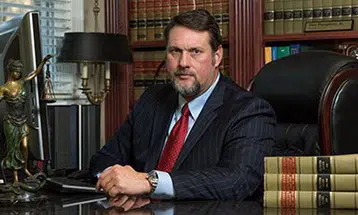
Attorney Don Pumphrey, Jr. is a former prosecutor, former law enforcement officer, and a successful and experienced criminal defense attorney. Don has achieved over 100 not guilty verdicts at trial and over 2,000 dismissals.