- DUI
- Criminal Defense
- Florida DUI
- Traffic Offenses
- Drug Charges
- Marijuana Charges
- Violent Crimes
- Domestic Violence
- Temporary Injunctions
- Weapons Charges
- Theft Crimes
- White Collar Crime
- Juvenile Offenses
- Sex Crimes
- Violation of Probation
- Early Termination of Probation
- Seal or Expunge Criminal Record
- Criminal Appeals
- US Federal Offenses
- Misdemeanor Charges
- Felony Charges
- Co-Defendant Cases
- College Student Defense
- College Student Hearings
- FSU Students
- FAMU Students
- Florida Panhandle Arrests
- Extradition to Florida
- Bench Warrants / Warrants
- Emergency Bond Hearings
- Gambling Charges
- Drone Arrests
- Marsy’s Law
- UAS Infractions
- Introduction of Contraband
- Lying to Police
- Locations
- Case Results
- Our Firm
- Media
- Resources
- Blog
- Contact Us
Major FL Court REVERSES Violation of Injunction Conviction Over Juror’s Pro-Police Bias
April 24, 2026 Don Pumphrey, Jr. Criminal Defense Social Share
Florida’s 4th District Court of Appeal ruled that a defendant was entitled to have a juror stricken for cause when he indicated he would believe law enforcement testimony over testimony of other witnesses in the case, and that the judge’s denial of the defense’s cause challenge was reversible error.
CASE: Henry v. State, 756 So.2d 170 (Fla. 4th DCA 2000)
Charge(s): Violation of Injunction for Protection Against Violence
Outcome: Conviction REVERSED, as a juror who indicated they were biased in favor of law enforcement should have been excused for cause (e.g. not served on the jury).
Jury Selection in Florida
In Florida, jury selection (commonly referred to as voir dire in the legal community) is a critical aspect of any criminal trial. During jury selection, each party to the case is given the opportunity to question potential jurors.
Through this process, the prosecution and defense can identify potential jurors who may not be able to fairly and impartially render a verdict based on the evidence and testimony they see and hear at trial. If and when one of these potential jurors is identified, a cause challenge may occur.
A cause challenge is initiated when the State or defense attempts to convince the trial judge that a potential juror should be EXCUSED from service. This is done because the potential juror has said one or more things during jury selection indicating they would not be able to fairly and impartially render a verdict (e.g. one based solely on evidence/testimony).
Cause challenges are UNLIMITED in number. Examples of cases in which an experienced and aggressive Florida criminal defense attorney is likely to make a cause challenge to a potential juror include:
- A potential juror says they will “absolutely” hold a defendant’s silence against him if he decides not to testify
- A potential juror says they will value the testimony of law enforcement over all other witnesses
- A potential juror says they know the victim in the case and feel a tremendous sympathy for them
In all of the above cases, the potential juror does not hold a bias that can simply be “set aside” if they are instructed to follow the law. Thus, a trial judge would likely be found by an appellate court to have abused their discretion by denying a cause challenge under such circumstances. Often, this is reversible error (requiring a new trial).
It is important to note that just because a potential juror makes an objectionable remark (or appears biased at the start of jury selection), this DOES NOT mean a cause challenge is likely to succeed (or that the trial judge would be abusing his discretion by denying it). This is because the potential juror can be successfully REHABILITATED.
Rehabilitation is a process involving the potential juror being questioned by a party in the case (which may include the trial judge). That questioning involves a determination of whether the potential juror can set aside their bias(es) and follow the law. If the potential juror is confident that they are able to do so, they may be considered rehabilitated. For more, click here.
Once a cause challenge is made, the trial judge can either GRANT it (excusing the potential juror from service) or DENY it (allowing the potential juror to remain in the venire). If a judge denies a cause challenge, it may be tempting to believe that the “end of the road” has been reached, and the potential juror will inevitably be seated on the eventual jury.
However, this is NOT the case – because the potential juror may be subject to a PEREMPTORY strike (formally known as a peremptory challenge). A peremptory strike occurs when one party to the case UNILATERALLY excuses a potential juror from service, without having to consult the court or the opposing party. Walker v. State, 724 So.3d 1232 (Fla. 4th DCA 1999)
But there are a couple of “catches.” The first is that – unlike cause challenges, peremptory strikes are limited in number. Typically, the State and defense are each awarded:
- Three peremptories in misdemeanor cases
- Six peremptories in non-capital/non-life felony cases
- Ten peremptories in capital/life felony cases
Moreover, a party may NOT exercise a peremptory strike based on race, gender, or ethnicity of a potential juror. Batson v. Kentucky, 476 U.S. 79 (1986); J.E.B. v. Alabama ex rel. T.B., 511 U.S. 127 (1994)
It is important to note that a trial judge has broad discretion to grant or deny a cause challenge – but this discretion is NOT UNLIMITED. If a cause challenge is wrongly denied (e.g. the judge “abused their discretion”), a defendant’s conviction may be reversed if they are:
- Out of peremptory strikes and are DENIED an additional peremptory strike to excuse the potential juror that should have been stricken for cause, or
- Are forced to use a peremptory strike on that juror and request another strike for an additional objectionable juror, only to have this request denied (Ibarrondo v. State, 1 So.3d 226 (Fla. 5th DCA 2008))
If a potential juror was clearly biased and NOT rehabilitated, an appellate court is significantly more likely to reverse a conviction if a cause challenge was denied and that juror was impaneled (or another objectionable juror is impaneled because the defense runs out of peremptory strikes). Whitby v. State, 933 So.2d 557 (Fla. 3d DCA 2006)
In one major case heard by Florida’s 4th District Court of Appeal (Southeast FL’s highest court), a defendant was arrested and charged with violating an injunction for protection against domestic violence. He was ultimately convicted.
During voir dire, a potential juror was identified who served as a paramedic and firefighter. He routinely worked closely with law enforcement on the job. When asked if his ties to police would make him less likely to be fair and impartial, he initially responded that it would not.
A few minutes later, however, the potential juror was questioned by the trial judge as to whether he truly thought he could weigh the testimony of a law enforcement officer the same as that of a non-police witness (e.g. if he would/would not be more likely to believe the officer simply due to his status as a member of the police force).
During that colloquy, the potential juror indicated that he WOULD give testimony from police officers more weight (e.g. find it more credible than the testimony of other witnesses). During an additional colloquy with defense counsel, the potential juror indicated a strong belief that officers “don’t lie” because otherwise, they would be fired.
At the conclusion of jury selection, the defense moved to EXCUSE the potential juror for cause (e.g. launched a cause challenge). The defense argued the juror showed clear pro-police bias and had not been rehabilitated. However, the trial judge DENIED the cause challenge.
The defendant was out of peremptory challenges, so the potential juror was seated. The jury was sworn over the defendant’s objection, and the defendant was convicted.
On appeal to the 4th DCA, the defendant claimed that the trial judge REVERSIBLY ERRED by denying the cause challenge of the potential juror (e.g. “abused his discretion”). According to the defendant, the failure of the trial judge to award an additional peremptory strike resulted in the objectionable juror being seated – requiring reversal of his conviction and a new trial in his case.
The 4th DCA AGREED with the defendant, reversing his conviction and remanding the matter to the lower court for a new trial. Let’s take a look at that case – Henry v. State, 756 So.2d 170 (Fla. 4th DCA 2000) – and discuss what it means for defendants concerned about their right to a fair trial being infringed by a biased jury.
KEY CASE: Henry v. State, 756 So.2d 170 (Fla. 4th DCA 2000)
In Henry, the defendant (Henry) was charged with violating an injunction for protection against violence. At trial (e.g. during jury selection), the following occurred:
- Potential jurors were asked about what they did for a living
- One potential juror, Hibbs, said he was a paramedic and firefighter
- Defense counsel asked Hibbs if he worked closely with law enforcement – Hibbs said yes
- The judge interjected and asked Hibbs a series of questions about his potential pro-police bias
- Hibbs indicated he’d be inclined to automatically believe the testimony of a police officer over the testimony of an ordinary witness due to his work
- Hibbs was then asked by defense counsel as to whether he believed officers could get up on the stand and lie
- Hibbs agreed that he wouldn’t necessarily take everything an officer said at face value – but also believed that officers “don’t lie” because they’d lose their job(s) if they perjured themselves
- The defense cause challenged Hibbs on the grounds that he was biased in favor of law enforcement and would improperly assign additional credibility to police testimony
- The trial judge DENIED the cause challenge, and Hibbs was ultimately seated on the jury over the defense’s objection
- Henry was tried and convicted
On appeal, Henry argued to the 4th DCA that REVERSAL of his conviction and a new trial was necessary. According to Henry, this was because:
- The trial judge ABUSED HIS DISCRETION by denying the cause challenge of Hibbs, and
- Hibbs was ultimately selected for the jury, making the denial of the cause challenge (if it was indeed an abuse of discretion) a violation of his right to an impartial jury
The 4th DCA AGREED with Henry and REVERSED his conviction, remanding the matter to the lower court for a new trial. Finding the trial judge should’ve granted Henry’s cause challenge of Hibbs, the 4th DCA wrote:
“Here, Hibbs’ answers demonstrated an inability to lay aside a bias in favor of law enforcement. When questioned about his assumptions concerning his ability to evaluate the testimony, Hibbs gave ambivalent answers indicating that he might give greater weight to a police officer’s testimony, and, when questioned by defense counsel, Hibbs demonstrated a preconceived belief, based on his close working relationship with them, that deputies do not lie. It is significant that, in this case, the officer was to be an important witness to the disputed acts evincing the offense.”
“Hibbs’ responses are similar to those of the juror in Davis v. State, 656 So.2d 560 (Fla. 4th DCA 1995). The credibility of the defendant versus that of the wife was a critical aspect of the case. During voir dire, a prospective juror revealed that he was much more understanding of women than men. He stated that he was sympathetic towards women and would be inclined to give a woman the benefit of the doubt. Reviewing the juror’s responses, this court found that his “initial strong and candid statements displayed unequivocal bias which favored the wife.” Id. at 562. We noted that “[w]here a juror demonstrates a strong bias for or against the credibility of one side or another, which he or she is unsure can be put aside, a challenge for cause should be granted.” Id. at 561. … This court has frequently required that a juror be dismissed for cause where there is reasonable doubt as to his or her impartiality. See, e.g., James v. State, 736 So.2d 1260 (Fla. 4th DCA 1999); Montozzi v. State, 633 So.2d 563 (Fla. 4th DCA 1994); Chapman v. State, 593 So.2d 605 (Fla. 4th DCA 1992); Sydleman v. Benson, 463 So.2d 533 (Fla. 4th DCA 1985). In this case, there is a reasonable doubt as to Hibbs’ ability to be impartial. Accordingly, we reverse and remand for a new trial.”
Put simply, because Hibbs indicated he would trust the testimony of a witness based on the fact that the witness was part of a particular “group,” this required Henry’s cause challenge to have been granted (since there was no rehabilitation).
In sum, Henry v. State, 756 So.2d 170 (Fla. 4th DCA 2000) marks a significant development in Florida’s corpus of case law surrounding the right to a fair and impartial jury – particularly when law enforcement officers will be testifying at trial. The 4th DCA (Southeast FL’s highest court) held that:
- Hibbs’s instinctive trust of police testimony over other (non-police) witnesses required a cause challenge to be granted (unless Hibbs was sufficiently rehabilitated)
- There was no indication that Hibbs would “cast his bias aside” and truly be fair/impartial
- This violated Henry’s right to an impartial jury, as police testimony was key to the State’s case
- As a result, REVERSAL of his conviction was required – and a new trial was ordered in his case
Florida’s criminal defense community should take note of Henry v. State, 756 So.2d 170 (Fla. 4th DCA 2000), as it makes clear appellate courts scrutinize the denial of cause challenges on appeal – especially if the potential juror indicates they will believe testimony of law enforcement officers over non-police witnesses.
If someone is arrested and formally charged in Florida and concerned about jury selection, it is critical to find experienced and trusted legal representation as soon as possible. This decision could make the difference in whether or not someone faces a lengthy prison term and hefty fines.
Criminal Defense Attorney in Tallahassee, FL
Don Pumphrey, Jr. is a Former Prosecutor, Former State Police Officer, Lifetime Member of the Florida Association of Criminal Defense Lawyers; for over 25 years as a private defense attorney who is Trusted, Experienced, Aggressive in Criminal Defense as a Trial Attorney, Criminal Lawyer, Criminal Defense Lawyer for the accused in Florida State Courts located in Tallahassee, Florida but handling cases throughout the State of Florida.
Don Pumphrey, Jr. and the Tallahassee criminal defense lawyers at Pumphrey Law have decades of experience fighting criminal charges on behalf of clients and winning. Call Pumphrey Law now at (850) 681-7777 to learn more about what we can do for you. Our lawyers will be happy to provide you with a free consultation.
Don Pumphrey, Jr.
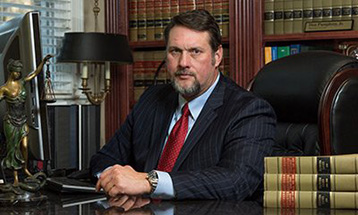
Attorney Don Pumphrey, Jr. is a former prosecutor, former law enforcement officer, and a successful and experienced criminal defense attorney. Don has achieved over 100 not guilty verdicts at trial and over 2,000 dismissals.