- DUI
- Criminal Defense
- Florida DUI
- Traffic Offenses
- Drug Charges
- Marijuana Charges
- Violent Crimes
- Domestic Violence
- Temporary Injunctions
- Weapons Charges
- Theft Crimes
- White Collar Crime
- Juvenile Offenses
- Sex Crimes
- Violation of Probation
- Early Termination of Probation
- Seal or Expunge Criminal Record
- Criminal Appeals
- US Federal Offenses
- Misdemeanor Charges
- Felony Charges
- Co-Defendant Cases
- College Student Defense
- College Student Hearings
- FSU Students
- FAMU Students
- Florida Panhandle Arrests
- Extradition to Florida
- Bench Warrants / Warrants
- Emergency Bond Hearings
- Gambling Charges
- Drone Arrests
- Marsy’s Law
- UAS Infractions
- Introduction of Contraband
- Lying to Police
- Locations
- Case Results
- Our Firm
- Media
- Resources
- Blog
- Contact Us
Major Florida Court Discusses Coerced Confessions in New Ruling
October 9, 2025 Don Pumphrey, Jr. Criminal Defense Social Share
Florida’s 1st District Court of Appeal discusses when police conduct during interrogation crosses (and does not) cross the line into “undue coercion.”
In Florida, someone subject to custodial interrogation must first be read their Miranda rights. But if someone waives their Miranda rights and agrees to speak with law enforcement, does this give officers the right to do whatever they need to get a confession (e.g. threatening a suspect)?
This blog will discuss a major Florida court (Florida’s 1st District Court of Appeal) addressing this issue in a new case, Janssen v. State.
When reading a suspect their Miranda rights, officers must notify them of the following:
- Their right to remain silent
- The fact that anything they say can and will be used against them in court
- The right to an attorney, including to have one present during police questioning
- The fact that if someone cannot afford an attorney, one will be provided for them
This is a requirement by the U.S. Supreme Court stemming from Miranda v. Arizona. For more on the history of that case and Miranda rights, click here.
For someone to validly waive their Miranda rights and agree to speak with police without an attorney present, they must do so knowingly, intelligently, and voluntarily. Someone’s Miranda waiver is valid only if they understand both the nature of the rights they are giving up and the potential consequences of doing so, and do so anyway. Miranda v. Arizona, 384 U.S. 436 (1966)
If someone is read their Miranda rights, the proper next move is to tell the police you are exercising your right to remain silent and ask for an attorney. Say all of that out loud, then say nothing. Do not simply remain quiet, because law enforcement can continue questioning you in the hope that you will “crack.” Berghuis v. Thompkins, 560 U.S. 370 (2010)
Someone who validly waives their Miranda rights agrees that their post-arrest statements can and will be used against them in a court of law (at trial). This includes confessions to the crime.
But even if someone validly waives their Miranda rights, law enforcement has limits on what can be done during interrogation to elicit a confession from a suspect. Though being “mean” to try to get a confession is perfectly legal, certain methods (threatening to kill a suspect, etc.) will taint a confession – rendering it inadmissible in court.
Major New Case: Janssen v. State, Florida 1st District Court of Appeal (August 2025)
In a recent case from Florida’s 1st District Court of Appeal (which covers Tallahassee and Northwest Florida), the court discussed two issues – whether Janssen’s Miranda waiver was valid (knowing, intelligent, voluntary), and whether his post-Miranda confession was so tainted by undue coercion as to render it inadmissible.
This second issue is not as frequently addressed by courts – as the threshold question is typically whether the Miranda waiver was valid.
Courts consider factors in evaluating whether a waiver (agreeing to speak with police without a lawyer) was valid, including:
- The manner in which the Miranda rights were administered (e.g. if cajoling or trickery was used)
- The suspect’s age, intelligence, background and experience (including their experience in the criminal justice system)
- If a juvenile, whether the suspect’s parents were contacted and given an opportunity to speak with them before the interrogation
- The location and conditions of the interrogation (e.g. at a police station)
- Whether police obtained a written waiver of a suspect’s rights
By contrast, the 1st DCA spills much of its ink in Janssen discussing whether law enforcement used impermissible coercion to extract a confession from Janssen (who was later convicted of sexual battery on a minor) following his Miranda waiver.
The court started by rejecting Janssen’s claim that his Miranda waiver was not knowing, intelligent and voluntary. The court noted that Janssen was read his rights in the police car, reminded of them at multiple points during the interrogation, and signed a physical Miranda form without any apparent coercion at the start of questioning.
Janssen also had sufficient education (an associate’s degree) to read and process information without issue. As a result, the court ruled there was no evidence presented by Janssen that his agreement to speak to police post-Miranda was not knowing, intelligent, and voluntary.
Janssen then argued that his Miranda rights should have been read to him as soon as the officer confronted him at work (rather than in the car), because this was the point at which he was in “custody.” The court ruled that because Janssen did not raise this issue at trial, it was waived on appeal.
Next, the court tackled the coerced confession issue. Quotes from officers in the interrogation of Janssen said include the following:
- “So, here’s the deal, you can either start being 100 percent honest with me, and when I ask a question, you give me the answer that is truthful, or I’m fixing to bury you and put you in prison right now. So, tell me about the time you had sex with [the victim].”
- “Hey man, it’s me again. All right so we’re going to discuss a couple of things, okay? Number one, first and foremost, you made the statement to Investigator Merritt that [the victim] came onto you. Let’s cut that bull**** out. Okay?”
- “Here’s what happened–guaranteed. You tried …. And you said, “well hell that’s not going to work.” That’s why. Now, you can sit in here and [deny it happened]––no [it] didn’t because it didn’t [work], because she’s [a minor]. … Well, you knew that it was going to hurt her severely if you did, so you stopped. All right. Now, let’s cut the bull****.”
Before confronting Janssen, one officer intentionally “shut the door hard” when he came into the interrogation room. The 1st DCA included this detail, as it was seemingly done in an effort to rattle Janssen and get him to speak about the alleged crime.
Before trial, the judge denied Janssen’s motion to suppress his post-Miranda statements on grounds of coercion. The 1st DCA affirmed the trial court, upholding Janssen’s convictions for sexual battery on the grounds that he was not subject to undue coercion in violation of his Fifth Amendment rights.
The court noted that Janssen was an adult with an associate’s degree, so was not in an especially vulnerable position to be intimidated by police tactics (like a juvenile, or someone with a serious mental disorder/under the influence would be).
Moreover, the court resisted Janssen’s argument that he suffered from medical conditions that made “particularly vulnerable to coercion.” Janssen alleged he had a serious skull fracture and was sexually abused, making him especially susceptible to coercion. But the court found there was insufficient evidence on the record to resolve this in Janssen’s favor.
The 1st DCA also noted that despite the “scary” nature of some of what was said and done by interrogating officers, Janssen continued to decline to invoke his rights when repeatedly asked. Additionally, the court argued that an “interrogation” is not supposed to be a “friendly chat.” The opinion concluded:
“Certainly, Janssen experienced an interrogation, not a friendly chat. Having a complete picture of the evidence against Janssen, the officers maintained that they wanted him to cooperate and be truthful. [Officer] Merritt, for example, admitted that someone could find his ‘bury you in prison’ remark ‘scary.’”
“But even then, Merritt stressed that he was pushing Janssen for the answer that was ‘100 percent truthful’––not the answer that was subjectively satisfying. The same is true of Mathis’s stern treatment. The goal of any interrogation is to ‘elicit admissions in the pursuit of the public welfare,’ and ‘assist victims of crimes,’ without infringing on a suspect’s constitutional rights.
“On the record before us, the officers’ isolated use of stern tones and hardened language did not render Janssen’s waiver involuntary, unknowing, or unintelligent. Because the trial court did not err in admitting his confessions, we AFFIRM Janssen’s judgment and sentence.”
In essence, the court found that only “unduly coercive” conduct by law enforcement could have invalidated Janssen’s confession after a valid Miranda waiver was obtained. What was described in Janssen’s case, for the 1st DCA, simply did not rise to that level.
But the 1st DCA did acknowledge that an interrogation cannot violate a suspect’s constitutional rights (including their Fifth Amendment rights) via undue coercion that goes beyond acceptable interrogation tactics (per Martin v. State, 107 So. 3d 281 (Fla. 2012)).
With Janssen, the 1st DCA has provided the start of a useful framework in evaluating what kind of post-Miranda waiver conduct is acceptable by officers during interrogations. For now, “stern” and “scary” conduct by officers simply does not contaminate a confession – so long as someone validly waived their Miranda rights and was not especially vulnerable.
Observers should look out for what other DCAs, and the Florida Supreme Court, say about this issue when it comes before them in the future. Where will the “undue coercion” line be drawn?
If someone is arrested and formally charged in Florida in a case involving a Miranda waiver that was not knowing, intelligent, or voluntary, it is CRITICAL to find experienced and trusted legal representation as soon as possible. This decision could make the difference in whether someone faces a lengthy prison term and hefty fines.
Criminal Defense Attorney in Tallahassee, FL
Don Pumphrey, Jr. is a Former Prosecutor, Former State Police Officer, Lifetime Member of the Florida Association of Criminal Defense Lawyers; for over 25 years as a private defense attorney who is Trusted, Experienced, Aggressive in Criminal Defense as a Trial Attorney, Criminal Lawyer, Criminal Defense Lawyer for the accused in Florida State Courts located in Tallahassee, Florida but handling cases throughout the State of Florida.
Don Pumphrey, Jr. and the Tallahassee criminal defense lawyers at Pumphrey Law have decades of experience fighting drug charges on behalf of clients and winning. Call Pumphrey Law now at (850) 681-7777 to learn more about what we can do for you. Our lawyers will be happy to provide you with a free consultation.
Don Pumphrey, Jr.
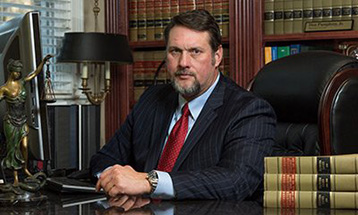
Attorney Don Pumphrey, Jr. is a former prosecutor, former law enforcement officer, and a successful and experienced criminal defense attorney. Don has achieved over 100 not guilty verdicts at trial and over 2,000 dismissals.