- DUI
- Criminal Defense
- Florida DUI
- Traffic Offenses
- Drug Charges
- Marijuana Charges
- Violent Crimes
- Domestic Violence
- Temporary Injunctions
- Weapons Charges
- Theft Crimes
- White Collar Crime
- Juvenile Offenses
- Sex Crimes
- Violation of Probation
- Early Termination of Probation
- Seal or Expunge Criminal Record
- Criminal Appeals
- US Federal Offenses
- Misdemeanor Charges
- Felony Charges
- Co-Defendant Cases
- College Student Defense
- College Student Hearings
- FSU Students
- FAMU Students
- Florida Panhandle Arrests
- Extradition to Florida
- Bench Warrants / Warrants
- Emergency Bond Hearings
- Gambling Charges
- Drone Arrests
- Marsy’s Law
- UAS Infractions
- Introduction of Contraband
- Lying to Police
- Locations
- Case Results
- Our Firm
- Media
- Resources
- Blog
- Contact Us
Major Florida Court Discusses When Witness Bolstering Is Reversible Error
December 19, 2025 Don Pumphrey, Jr. Criminal Defense Social Share
Florida’s 6th District Court of Appeal ruled that a detective improperly bolstered the testimony of a major State witness in a manslaughter case by calling him credible, requiring the defendant to receive a new trial.
In Florida, objections are a key part of a criminal trial. As many of these are waived on appeal if not made during trial, it is critical for an experienced and aggressive defense attorney to make timely and proper objections at trial to inadmissible evidence or statements that violate court rules.
Depending on the facts of a case (and how a trial/other proceeding such a discovery deposition is unfolding), some common objections may include:
- Relevance: Typically on the basis that evidence/the content of the statement is irrelevant or its introduction’s probative value will be substantially outweighed by danger of unfair prejudice (Fla. Stat. 90.402, 90.403)
- Hearsay: Out of court statement offered into evidence to prove that it is true. Generally inadmissible under 90.801 and 90.802 – though certain exceptions allowing its admission exist in 90.803 and 90.804. For more on hearsay, click here.
- Leading: If on direct or re-direct examination, leading the witness (e.g. “So, you went through the red light, correct?”) is not allowed.
- Speculation: Under 90.604, witnesses are not permitted to speculate (e.g. must have personal knowledge as to what they are testifying to).
- Lack of foundation: If evidence has not been sufficiently authenticated or the witness is incompetent to testify about a particular topic/does not have knowledge, this is a proper objection (Fla. Stat. 90.602, 90.604, 90.901)
- Improper character evidence: Generally inadmissible to prove conduct, similar fact evidence may be relevant to issues like motive or intent under Williams rule. Williams v. State, 110 So. 2d 654 (Fla. 1959)
- Argumentative questions: Not permitted (e.g. “You really are a scoundrel, aren’t you?”)
- Asked and answered: The question has already been asked of a witness and answered, making a second “asking” of that same question objectionable.
- Assumes facts not in evidence
- Privileged (e.g. disclosure violates attorney-client privilege, psychotherapist-patient privilege, spousal privilege)
- Improper bolstering by other witnesses of the credibility of another witness (e.g. “He’s a cop, so I believe him!”) Boatwright v. State, 452 So. 2d 666, 668 (Fla. 5th DCA 1984)
If an objection is made, the trial judge has the option to either sustain it (if it is proper/legally supported) or overrule the objection (if it is not proper/legally supported). When an objection is granted, the jury is asked to disregard the objectionable question or answer as if it was never asked/answered. If the judge “gets it wrong” (e.g. should have sustained an objection but instead overruled it), the record is preserved for appeal.
One common objection (if this becomes necessary at trial) is the final one on the list – improper bolstering of a witness. Florida’s courts have been clear that one witness testifying that they find another witness credible is prohibited. It is the jury’s job to evaluate whether or not they found a witness credible, without improper influence. Barnes v. State, 93 So. 2d 863, 864 (Fla. 1957)
This is often referred to as “improper bolstering,” since bolstering is only permitted in a narrow set of circumstances. These circumstances include:
- The opposing party accuses the witness of recently fabricating their testimony (e.g. defense lawyer asks alleged victim, “Didn’t you just make up this story last week?”)
- The party who called the witness rehabilitates the witness after the witness is directly attacked on cross-examination (e.g. “You didn’t make this up last week, did you?”)
If a witness’s credibility has not been called into question, a lawyer or fellow witness bolstering their credibility is objectionable. But if the judge overrules this objection at trial and allows the “bolstering” to be heard by the jury, is this reversible error on appeal (requiring a new trial)?
The answer is YES – unless the State proves beyond a reasonable doubt that the bolstering did not influence the jury’s verdict. Let’s look at a new decision from Florida’s 6th District Court of Appeal – Cochran v. State, 411 So.3d 1278 (Fla. 6th DCA 2025) – and how it dealt with this key issue.
KEY CASE: Cochran v. State, 411 So.3d 1278 (Fla. 6th DCA 2025)
In Cochran, the defendant (Cochran) was charged with burglary and manslaughter. Ultimately, he was convicted and sentenced to prison.
At Cochran’s trial, a State witness (who Cochran allegedly texted prior to the burglary about the offense) testified. Cochran’s defense was that the witness (Ms. Grier) was the one who actually committed the burglary in question. However, the defense did not do anything while Grier was testifying that would allow the State to “bolster” her testimony.
After Grier testified, the State called an investigating officer to the stand. The officer testified that “everything was credible” that Grier had told him, and that he “let the State know” that he believed she was a “credible witness” before trial. Cochran objected to improper bolstering, but this was overruled by the judge (allowing the jury to consider the officer’s testimony).
On appeal, Cochran argued that since either Grier or Cochran was lying (and his defense was that Grier was lying), it was reversible error for the judge to overrule the objection. Cochran asserted that the officer’s testimony was improper bolstering of Grier’s credibility in a “he said, she said” case – and this may have played a role in him being convicted.
Florida’s 6th District Court of Appeal agreed and reversed Grier’s convictions, remanding to the lower court for a new trial. The 6th DCA wrote:
“Almost seventy years ago, the Florida Supreme Court declared that there is no legal principle more firmly established in our system of jurisprudence than that which makes the jury the sole arbiter of the credibility of witnesses. Barnes v. State, 93 So. 2d 863, 864 (Fla. 1957). “Thus, it is an invasion of the jury’s exclusive province for one witness to offer his personal view on the credibility of a fellow witness.” Boatwright v. State, 452 So. 2d 666, 668 (Fla. 5th DCA 1984) (citing Bowles v. State, 381 So.2d 326, 328 (Fla. 5th DCA 1980)). Yet, that is exactly what happened here.”
“The State believes that an exception to this long-standing principle should be made because the detective did not testify that the witness was truthful or credible at trial. Rather, as the State’s argument goes, the detective was only providing his personal opinion on the credibility of her out-of-court statements. In Florida, though, two of our sister courts have already considered similar testimony and found that this is a distinction without a difference.”
Put simply, the 6th DCA did not buy the State’s argument since the officer did not specifically say Grier’s trial testimony was credible, there was no improper bolstering. The 6th DCA found that the general reference to Grier as a “credible witness” constituted improper bolstering.
The 6th DCA also found that the officer’s testimony was not harmless error. Since the State failed to prove beyond a reasonable doubt that the jury verdict was unaffected by the improper bolstering, Cochran’s conviction required reversal:
“At trial, Cochran denied that he participated in any criminal activity. Instead, he argued that Grier did more than just identify the target, she carried out the crime; she, not Cochran, was the second masked intruder that escaped before the police arrived. According to Cochran, Grier wanted revenge against one of the adult children living in the home. In all, Cochran’s case rested upon Grier’s lack of credibility because she had motive to commit the crime, knowledge to carry it out, and an incentive to blame another. Against this backdrop, Detective Spencer’s vouching for the credibility of Grier is harmful.”
Notably, Judge White of the 6th DCA authored a partial concurring opinion. Though Judge White agreed with the majority that the officer did improperly bolster Grier’s testimony, he believed it was “harmless error” due to the amount of evidence presented:
“The trial in this case spanned four days. 21 witnesses testified, including forensic experts, and 101 exhibits were admitted, including a DVD of Cochran’s interviews by law enforcement. Grier testified two days after Detective Spencer. During closing argument, the State did not mention Detective Spencer’s improper testimony. After thoroughly examining the record in its entirety as required by Florida law, I conclude that the trial court’s error was harmless beyond a reasonable doubt. … The majority has thoroughly examined the same record and reached a different conclusion. I respectfully disagree and would affirm the judgment and sentence.”
However, Judge White’s opinion did not rule the day. As a result, Cochran received a new trial due to the improper bolstering.
In sum, Cochran v. State, 411 So.3d 1278 (Fla. 6th DCA 2025) is a major development in Florida’s corpus of case law surrounding improper bolstering of witnesses and the role of objections at criminal trials in the state.
The 6th District Court of Appeal found in Cochran:
- One State witness (a police officer) called another State witness “credible”
- The defense properly objected to improper bolstering, as the officer’s comment was not permissible “rehabilitation” of Grier’s testimony (it was improper)
- The trial judge erred by overruling the objection and allowing the jury to consider the officer’s testimony
- Since Cochran’s theory was that Grier committed the crime, and Grier’s credibility had been impermissibly bolstered, the bolstering was not harmless error – requiring reversal
Florida defense attorneys and defendants should take note of Grier, as it shows the importance of timely objections to improper bolstering at criminal trials.
If someone is arrested and formally charged in Florida in a felony case where testimony could shape the outcome, it is CRITICAL to find experienced and trusted legal representation as soon as possible. This decision could make the difference in whether someone faces a lengthy prison term and hefty fines.
Criminal Defense Attorney in Tallahassee, FL
Don Pumphrey, Jr. is a Former Prosecutor, Former State Police Officer, Lifetime Member of the Florida Association of Criminal Defense Lawyers; for over 25 years as a private defense attorney who is Trusted, Experienced, Aggressive in Criminal Defense as a Trial Attorney, Criminal Lawyer, Criminal Defense Lawyer for the accused in Florida State Courts located in Tallahassee, Florida but handling cases throughout the State of Florida.
Don Pumphrey, Jr. and the Tallahassee criminal defense lawyers at Pumphrey Law have decades of experience fighting drug charges on behalf of clients and winning. Call Pumphrey Law now at (850) 681-7777 to learn more about what we can do for you. Our lawyers will be happy to provide you with a free consultation.
Don Pumphrey, Jr.
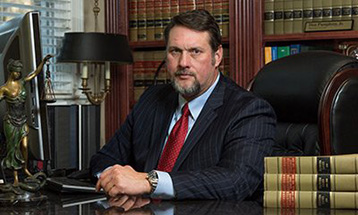
Attorney Don Pumphrey, Jr. is a former prosecutor, former law enforcement officer, and a successful and experienced criminal defense attorney. Don has achieved over 100 not guilty verdicts at trial and over 2,000 dismissals.