- DUI
- Criminal Defense
- Florida DUI
- Traffic Offenses
- Drug Charges
- Marijuana Charges
- Violent Crimes
- Domestic Violence
- Temporary Injunctions
- Weapons Charges
- Theft Crimes
- White Collar Crime
- Juvenile Offenses
- Sex Crimes
- Violation of Probation
- Early Termination of Probation
- Seal or Expunge Criminal Record
- Criminal Appeals
- US Federal Offenses
- Misdemeanor Charges
- Felony Charges
- Co-Defendant Cases
- College Student Defense
- College Student Hearings
- FSU Students
- FAMU Students
- Florida Panhandle Arrests
- Extradition to Florida
- Bench Warrants / Warrants
- Emergency Bond Hearings
- Gambling Charges
- Drone Arrests
- Marsy’s Law
- UAS Infractions
- Introduction of Contraband
- Lying to Police
- Locations
- Case Results
- Our Firm
- Media
- Resources
- Blog
- Contact Us
Major Florida Court: ‘I Don’t Want to Say Nothing’ Not Enough To Stop Police Questioning
October 23, 2025 Don Pumphrey, Jr. Criminal Defense Social Share
In a major case, Florida’s 1st District Court of Appeal held that “I don’t want to say nothing” was not an invocation of the right to remain silent. This article will explain why.
In Florida, someone must be read their Miranda rights before they are subject to custodial interrogation. Those rights include:
- The right to remain silent
- The fact that anything they say can and will be used against them in a court of law
- The right to have an attorney, including during police questioning
- The fact that if someone cannot afford an attorney, one will be provided for them
Miranda rights are named for the U.S. Supreme Court case Miranda v. Arizona, 384 U.S. 436, 479 (1966). This landmark decision requires law enforcement to notify anyone they take into custody and are about to interrogate of the above rights, before interrogation begins.
For more on when someone is considered in custody and subject to interrogation for Miranda purposes, click here.
Prior to speaking with law enforcement after hearing a Miranda reading, someone may choose to knowingly, intelligently and voluntarily waive their Miranda rights and agree to speak with the police. This is generally an unwise decision – instead, tell law enforcement you are remaining silent and ask for an attorney!
Do not simply sit there quietly, as the U.S. Supreme Court has ruled that actually “remaining silent” and not clarifying to police that you are exercising your rights allows them to continue questioning you. Again, after you hear your rights read, tell police that you are exercising your right to remain silent and want an attorney. Berghuis v. Thompkins, 560 U.S. 370 (2010)
If someone is read their Miranda rights and agrees to speak with police, this “waiver” of their rights must be done knowingly, intelligently and voluntarily. Someone must have an appreciation of the rights they have and the potential consequences of choosing not to exercise them. Miranda v. Arizona, 384 U.S. 436 (1966)
At the start of a police interview, when a suspect has not yet waived their Miranda rights, their decision to do so must be unequivocal. A person must affirmatively agree not to exercise their right to remain silent and right to an attorney, and speak with law enforcement. An “equivocal” waiver (e.g. “maybe I want to speak, maybe not”) must be clarified by the police.
But once someone has agreed to waive those rights and consents to the interrogation, any subsequent decision to exercise their rights must be unequivocal and unambiguous. Bailey v. State, 31 So. 3d 809, 815–16 (Fla. 1st DCA 2009). In essence, someone making a half-hearted statement about potentially remaining silent or getting a lawyer does not end the interrogation.
Instead, someone must clearly convey to police that they do not wish to speak anymore, and are exercising the right to remain silent (and/or requesting an attorney). Saying “maybe I don’t want to talk anymore” is insufficient once a police interview (interrogation) is already underway.
Remember – if someone validly waives then does not invoke their Miranda rights clearly, any statements they make can and will be used against them in court (this is part of the Miranda warning).
Defendants in Florida can move to suppress their post-Miranda statements on the basis that they did not knowingly, intelligently, and voluntarily waive their rights. If they are successful in doing so, those statements are considered inadmissible in a court of law (at trial, etc.).
But there is an additional basis for Miranda suppression motion – that even if a defendant did waive their rights initially, they tried to invoke their rights once interrogation was underway. However, officers impermissibly kept questioning them.
This was precisely the argument made in State v. Denson, 387 So. 3d 466 (Fla. 1st DCA 2024), a major new decision by Tallahassee and North Florida’s highest court (Florida’s 1st District Court of Appeal). Let’s break it down:
Major New Case: State v. Denson, 387 So. 3d 466 (Fla. 1st DCA 2024)
In Denson, the defendant (Denson) was arrested and charged with murder. Denson was taken into custody, interrogated by the police, and ultimately confessed to the crime. Approximately 15 minutes into the interrogation, Denson uttered the following:
“Listen man, ‘cause it don’t matter, sh*t, ‘cause I feel like I’m being tricked into it. I just don’t want to say nothing, you feel me?”
The officer sitting across from Denson acknowledged his statement (“I gotcha”), and Denson continued speaking:
“That’s why I know, I know y’all never gonna let me go, you feel me? I’m stuck with all this.”
Approximately half an hour later, Denson confessed to the murder. Before trial, he filed a motion to suppress, arguing that his statement (“I just don’t want to say nothing, you feel me?”) was an unequivocal invocation of his right to remain silent after the interview had begun. As a result, any statements after that point (including the confession) could not be used against him.
The State argued that Denson’s statement was not unequivocal (clear), given he made it softly and immediately continued speaking afterwards. The trial court ultimately agreed with Denson and suppressed the confession on the grounds that Denson properly invoked his right to remain silent.
The State appealed the trial court’s decision to the 1st DCA. The court agreed with the State and reversed the trial court’s ruling – holding that all of Denson’s post-arrest statements (including his confession) could be used against him despite the “invocation” of his right to remain silent. The court wrote:
“Mr. Denson sandwiched the soft-spoken statement ‘I just don’t want to say nothing’ in between expressing that he did not want to be tricked and that he felt stuck with the consequences of the incident… Mr. Denson ‘essentially mumbled’ his statement then continued talking.”
“Like in Owen, Mr. Denson was not necessarily referring to not wanting to say anything at all, and he could have been referring to something specific. … And the fact that Mr. Denson immediately proceeded to talk without the officer’s prompting after saying that he ‘just don’t want to say nothing’ suggests that he did not intend to make a blanket invocation of the right to remain silent. Mr. Denson’s alleged invocation was thus equivocal.”
Essentially, the court held that based on the “totality of the circumstances,” Denson’s statement did not constitute an invocation of his right to remain silent sufficient to terminate the interview. This was both because of the way the statement was made, as well as the fact that interrogation was already underway. The 1st DCA commented:
“Courts are more likely to find that a suspect unequivocally invokes his right to remain silent if the invocation is before substantive questioning.”
The 1st DCA concluded Denson had to express his desire to remain silent and end questioning more clearly than he did (“unequivocally”), as he was mid-interview and had already waived his rights. The court concluded:
Because Mr. Denson’s statement was equivocal, the officer was not required to stop the interview or ask clarifying questions. Mr. Denson’s later confession to murder was therefore legally obtained. Thus, the trial court erred by granting Mr. Denson’s motion to suppress.”
In response to the 1st DCA’s Denson decision, critics may argue that “I just don’t want to say nothing” was a clear invocation of the right to remain silent. As this seemed to be Denson’s way of expressing he did not want to talk, some may frame the decision as placing an unreasonable burden upon suspects to “perfectly” exercise their rights.
Moreover, the ruling may incentivize officers to continue questioning even in cases where the defendant’s desire to end this may be relatively clear. As the interrogating officer in Denson did acknowledge Denson’s statement (“I gotcha”) but did not immediately terminate the interview, critics may say the admission of Denson’s confession subtly erodes Miranda safeguards.
However, defenders of the decision are likely to claim that the full context of Denson’s comment makes the “invocation” equivocal. If he had intended to terminate the interview, proponents of the court’s reasoning may argue, Denson would not have immediately continued speaking with the police. Thus, his statement was more “venting” rather than an invocation of his rights.
Regardless of one’s opinion about Denson, it is clear the ruling will have a significant impact on how post-Miranda waiver invocations (e.g. once an interrogation is underway) are evaluated in Tallahassee and North Florida. This is why it is important to clearly exercise your rights before police questioning begins. Don’t get “hooked”
If someone is arrested and formally charged in Florida in a case involving a Miranda waiver that was not knowing, intelligent, or voluntary, or has questions about their rights, it is critical to find experienced and trusted legal representation as soon as possible. This decision could make the difference in whether or not someone faces a lengthy prison term and hefty fines.
Criminal Defense Attorney in Tallahassee, FL
Don Pumphrey, Jr. is a Former Prosecutor, Former State Police Officer, Lifetime Member of the Florida Association of Criminal Defense Lawyers; for over 25 years as a private defense attorney who is Trusted, Experienced, Aggressive in Criminal Defense as a Trial Attorney, Criminal Lawyer, Criminal Defense Lawyer for the accused in Florida State Courts located in Tallahassee, Florida but handling cases throughout the State of Florida.
Don Pumphrey, Jr. and the Tallahassee criminal defense lawyers at Pumphrey Law have decades of experience fighting drug charges on behalf of clients and winning. Call Pumphrey Law now at (850) 681-7777 to learn more about what we can do for you. Our lawyers will be happy to provide you with a free consultation.
Don Pumphrey, Jr.
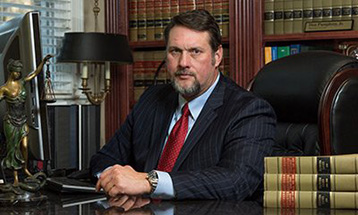
Attorney Don Pumphrey, Jr. is a former prosecutor, former law enforcement officer, and a successful and experienced criminal defense attorney. Don has achieved over 100 not guilty verdicts at trial and over 2,000 dismissals.