- DUI
- Criminal Defense
- Florida DUI
- Traffic Offenses
- Drug Charges
- Marijuana Charges
- Violent Crimes
- Domestic Violence
- Temporary Injunctions
- Weapons Charges
- Theft Crimes
- White Collar Crime
- Juvenile Offenses
- Sex Crimes
- Violation of Probation
- Early Termination of Probation
- Seal or Expunge Criminal Record
- Criminal Appeals
- US Federal Offenses
- Misdemeanor Charges
- Felony Charges
- Co-Defendant Cases
- College Student Defense
- College Student Hearings
- FSU Students
- FAMU Students
- Florida Panhandle Arrests
- Extradition to Florida
- Bench Warrants / Warrants
- Emergency Bond Hearings
- Gambling Charges
- Drone Arrests
- Marsy’s Law
- UAS Infractions
- Introduction of Contraband
- Lying to Police
- Locations
- Case Results
- Our Firm
- Media
- Resources
- Blog
- Contact Us
Major Florida Court Upholds DNA Evidence Despite Confrontation Clause Challenge
October 23, 2025 Don Pumphrey, Jr. Criminal Defense, Violent Crimes Social Share
In Florida and throughout the United States, the Sixth Amendment’s Confrontation Clause gives defendants in criminal cases the right to confront their accusers and challenge evidence against them. If someone’s confrontation rights are violated, this can be grounds for the reversal of a trial verdict, depending on what occurred.
The view Florida’s courts currently have of the Confrontation Clause originates from the U.S. Supreme Court case Crawford v. Washington, 541 U.S. 36 (2004). The Crawford court discussed the use of hearsay evidence (out of court statements or records offered in court for the purpose of proving the truth of the matter asserted within them).
The Crawford majority divided hearsay (including evidence like DNA lab reports) into two categories:
- Testimonial hearsay: Statements made/records prepared in response to an ongoing law enforcement investigation and/or for the primary purpose of use in a future prosecution
- Nontestimonial hearsay: Statements made/records prepared that were not for the primary purpose of use in an investigation or future prosecution
An example of testimonial hearsay is a DNA lab analysis performed by forensic analysts at the behest of law enforcement. An example of nontestimonial hearsay is a 911 call describing an ongoing incident. Courts evaluate whether hearsay is testimonial or nontestimonial based on their “primary purpose.” Davis v. Washington, 547 U.S. 813 (2006)
For more on the differences between testimonial and nontestimonial hearsay in Florida, click here.
If a statement, document or record is considered testimonial in nature (primarily made for investigative/prosecutorial purposes), this is considered inadmissible against a defendant at trial unless:
- The preparing witness/person who made the statement testifies at trial, or
- The witness is unavailable to testify at trial, but the defendant has had a prior opportunity to cross-examine the witness in a manner that satisfies the Confrontation Clause
If neither of these conditions are satisfied, Crawford generally requires the testimonial hearsay be ruled inadmissible (cannot be used in court). Again, this can include recorded statements made by a witness (e.g. a 911 call) or reports prepared for law enforcement (such as a DNA analysis).
In the event that a DNA analysis is performed as part of an ongoing police investigation, this is considered testimonial hearsay. Thus, the preparing analyst of such a report is required to either testify at trial about the results, or in the alternative, face Crawford-compliant cross-examination before trial.
Sometimes, the State may rely on a “surrogate” (substitute) analyst at trial if the original preparer of the testimonial hearsay report (DNA analysis, DUI breath test affidavit, etc.) is not present. But if the preparing analyst was never cross-examined, when does the use of a substitute analyst violate the Confrontation Clause?
The answer is – though this practice typically would violate the Sixth Amendment, there are some cases where courts have allowed it. Florida’s 3rd DCA recently decided such a case, which may have significant implications for how DNA analyses are relied upon and presented in state court.
Major New Case: Robinson v. State, Fla. 3rd DCA (October 8, 2025)
In Robinson, the defendant (Robinson) was convicted of armed sexual battery against a victim between the ages of 12 and 18. He received a life sentence and appealed his conviction to the 3rd DCA.
Robinson was accused of holding a gun to the victim’s head and committing sexual battery. A component of the evidence against him was a DNA analysis of “white fluid” that was found to be running down the victim’s leg a short time after the incident occurred. This was tested by a forensic lab analyst and found to match Robinson’s DNA, indicating it was his semen.
But the forensic lab analyst who performed that analysis did not testify at Robinson’s trial and was never made available for cross-examination before trial. Despite this, the DNA results were still introduced into evidence.
Why? The answer is that the State substituted the original analyst for a surrogate analyst, who testified regarding the “DNA match” of the seminal fluid to Robinson. That testimony (as well as other evidence against Robinson) played a role in securing his conviction.
On appeal, Robinson argued that the “surrogate analyst” testifying violated his Confrontation Clause rights. He asserted that the use of the “surrogate analyst” (Alvarez) rather than the initial DNA tester was erroneous, requiring him to receive a new trial.
But Florida’s 3rd District Court of Appeal disagreed. The 3rd DCA held that the use of Alvarez to testify about the results of the DNA test was permissible – because after the initial analyst (who did not testify) tested the semen sample, Alvarez tested the DNA herself.
Citing the U.S. Supreme Court’s recent ruling in Smith v. Arizona (2024), the 3rd DCA explained that the use of “surrogate analysts” is prohibited if these analysts simply discuss results obtained by another analyst who does not testify and has not been cross-examined. This, said the court, would have violated Robinson’s confrontation rights.
But rather than doing that, Alvarez herself retested the DNA sample to verify the results and testified to her own methodology and conclusions. This made her more than just a “surrogate” (as was the case in Smith), because she personally obtained the results that she testified to.
The 3rd DCA observed this use of surrogate analysts is permitted by the U.S. Supreme Court if the “surrogate” retests the sample and obtains the same result as the first analyst. In Bullcoming v. New Mexico, 564 U.S. 647 (2011), which dealt with a similar issue, the Court ruled that a testimonial hearsay report could not be admitted. But the Court observed:
“New Mexico could have avoided any Confrontation Clause problem by asking [the substitute expert] to retest the sample and then testify to the results of his retest rather than to the results of a test he did not conduct or observe.”
Given Bullcoming, Robinson attempted to distinguish Alvarez’s testimony from what the Court said was acceptable. Robinson argued that Alvarez (the “surrogate”) “relied upon the finding of the serologist that the sample contained semen.” Because of this, Robinson asserted, Alvarez did not “independently obtain” the results – meaning his confrontation rights were violated.
However, the 3rd DCA was not persuaded. The court conceded that although “the first step in testing DNA is to conduct serology testing of the samples to determine if they are presumptively positive for semen or some other bodily fluid” (which was done by the non-testifying analyst), this did not make Alvarez’s testimony inadmissible.
This is because, according to the court:
“Analyst Alvarez utilized the serologist’s preliminary test results for this first step and then used a semen DNA test. However, she expressly testified that if she had not known whether the sample was semen, she could still do her own DNA extraction.
“In fact, she explained upon questioning by the trial court, that because the test she used was specifically for semen, if the sample had not contained semen, the test result would have been negative. Therefore, her testing for semen on the sample was, in effect, a retesting of the serologist’s finding of semen in the sample.”
The court characterized Alvarez’s two-step method as first verifying if there was semen in the sample (there was), then testing the semen once it was found to be there. Because she did “step one” independently, the 3rd DCA treated Alavarez’s DNA analysis as Bullcoming-compliant – a retesting of the sample from scratch.
Critics are likely to argue that the 3rd DCA’s ruling is a way to subtly circumvent Crawford’s strict confrontation requirements for testimonial hearsay. They may assert that because the first (non-testifying) analyst essentially told Alvarez what to look for, Alvarez’s analysis may not have been sufficiently “independent” to allow the results in without the first analyst testifying.
Supporters of the ruling are likely to frame it as a proper application of Bullcoming, arguing that it is clearly distinguishable from Smith v. Arizona (2024), where the “surrogate” analyst did not perform any investigation of their own.
Whatever one’s opinion, there is no doubt that Robinson presents an intriguing new look at how testimonial hearsay (like DNA evidence) can be admitted against a defendant even without the original analyst testifying under certain circumstances.
Those circumstances are quite limited. However, it is important to keep an eye out for subtle expansions of Bullcoming’s narrow rule that may rise to the level of a confrontation violation, even if another analyst technically “verified” the first one’s results.
The admission of testimony without adequate confrontation can change the outcome of a case, so it is critical to find experienced and trusted legal representation as soon as possible if someone is charged with an offense involving a child victim. This decision could make the difference in whether or not someone faces a lengthy prison term and hefty fines.
Criminal Defense Attorney in Tallahassee, FL
Don Pumphrey, Jr. is a Former Prosecutor, Former State Police Officer, Lifetime Member of the Florida Association of Criminal Defense Lawyers; for over 25 years as a private defense attorney who is Trusted, Experienced, Aggressive in Criminal Defense as a Trial Attorney, Criminal Lawyer, Criminal Defense Lawyer for the accused in Florida State Courts located in Tallahassee, Florida but handling cases throughout the State of Florida.
Don Pumphrey, Jr. and the Tallahassee criminal defense lawyers at Pumphrey Law have decades of experience fighting drug charges on behalf of clients and winning. Call Pumphrey Law now at (850) 681-7777 to learn more about what we can do for you. Our lawyers will be happy to provide you with a free consultation.
Don Pumphrey, Jr.
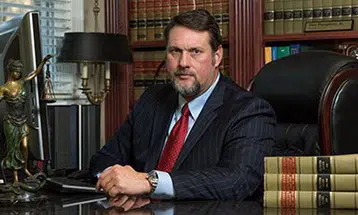
Attorney Don Pumphrey, Jr. is a former prosecutor, former law enforcement officer, and a successful and experienced criminal defense attorney. Don has achieved over 100 not guilty verdicts at trial and over 2,000 dismissals.