- DUI
- Criminal Defense
- Florida DUI
- Traffic Offenses
- Drug Charges
- Marijuana Charges
- Violent Crimes
- Domestic Violence
- Temporary Injunctions
- Weapons Charges
- Theft Crimes
- White Collar Crime
- Juvenile Offenses
- Sex Crimes
- Violation of Probation
- Early Termination of Probation
- Seal or Expunge Criminal Record
- Criminal Appeals
- US Federal Offenses
- Misdemeanor Charges
- Felony Charges
- Co-Defendant Cases
- College Student Defense
- College Student Hearings
- FSU Students
- FAMU Students
- Florida Panhandle Arrests
- Extradition to Florida
- Bench Warrants / Warrants
- Emergency Bond Hearings
- Gambling Charges
- Drone Arrests
- Marsy’s Law
- UAS Infractions
- Introduction of Contraband
- Lying to Police
- Locations
- Case Results
- Our Firm
- Media
- Resources
- Blog
- Contact Us
North Florida’s Highest Court Affirms Child Hearsay Admission In “Close Call” Case
December 4, 2025 Don Pumphrey, Jr. Criminal Defense Social Share
Florida’s 1st District Court of Appeal upheld the admission of a Child Protection Team (CPT) forensic interview with a child in a sexual battery case, finding the trial judge did not abuse his discretion in allowing this to be introduced.
In Florida, hearsay is defined as an out of court statement offered in court for the truth of the matter asserted in that statement. There are two types of hearsay: testimonial and nontestimonial.
Per Davis v. Washington, 547 U.S. 813, 822 (2006), testimonial hearsay occurs when the primary purpose of the hearsay statement is to facilitate an ongoing police investigation or prosecution.
Examples of testimonial hearsay may include:
- Statements made to law enforcement during an investigation
- Statements made to prosecutors before a trial (but not in court)
- CPT interviews (forensic interviews overseen by law enforcement after a child has disclosed physical or sexual abuse)
Testimonial hearsay is only admissible in court if the declarant (person who made the statement) testifies, or they are unavailable but the defendant has had the prior opportunity to cross-examine them in a manner that satisfies the U.S. Constitution’s Confrontation Clause. Crawford v. Washington, 541 U.S. 36 (2004)
By contrast, nontestimonial hearsay occurs when a declarant makes a hearsay statement that was not for the primary purpose of assisting an ongoing investigation or prosecution – but to respond to an ongoing emergency.
Examples of nontestimonial hearsay include:
- A 911 call while a crime is ongoing
- An initial abuse disclosure by a child to a parent or teacher
- Someone screaming out that a person is chasing them with a weapon
Note: A nontestimonial hearsay statement can be admitted in court even if the declarant is never cross-examined if the statement satisfies one of Florida’s hearsay exceptions under Fla. Stat. 90.803 or 90.804. For more on this, click here.
One of the most contentious types of hearsay at Florida criminal trials, the admission of which is often contested, is child hearsay under Fla. Stat. 90.803(23). Pursuant to this exception, a child’s hearsay statement describing an act of physical or sexual abuse they personally experienced or witnessed may be admitted under the following conditions:
- The child had a physical, emotional, or developmental age of 17 or less
- The statement describes any act of child abuse or neglect, sexual abuse against a child, the offense of child abuse or aggravated child abuse, or any unlawful sexual act, contact, intrusion or penetration performed on or in the presence of the child
- The statement and source through which it is reported are sufficiently trustworthy
- The time, content and circumstances of the statement provide sufficient safeguards as to its reliability
Perhaps the most common form of child hearsay the State seeks to admit at a criminal trial if a defendant is accused of child physical or sexual abuse is the CPT interview of that child. This often occurs around the time the defendant is arrested, and involves a trained state employee at a Child Advocacy Center (CAC) asking the child questions about the alleged crime.
Since these are videotaped, the State may seek to admit a CPT interview at trial. Notably, given Crawford’s confrontation requirements, a CPT interview will generally be inadmissible in a court of law (will not be heard at trial) unless the alleged child victim testifies and the defendant has the opportunity to cross-examine them.
But even if an alleged child victim does testify at trial, a CPT interview does not automatically become admissible. It must satisfy every provision of Fla. Stat. 90.803(23) – including being found to be sufficiently reliable and trustworthy to be introduced at trial as evidence against the defendant.
Note: Even if a CPT interview’s contents are found to be reliable, it may not be admissible in some cases on the separate basis that it is being used to impermissibly bolster the child’s trial testimony. For more on this, click here.
Historically, Florida’s courts have considered the following factors (among others) to evaluate whether child hearsay is sufficiently reliable and trustworthy to be admitted:
- The mental and physical age and maturity of the child who made the statement
- Nature and duration of the abuse or offense
- Relationship of the child to the offender
- Vagueness or specificity of the accusation
- Contradictions (if any) in the accusation
- Whether the child uses terminology expected of someone of their age
- Motive or lack thereof to fabricate
- Potential improper influence by parents or other relatives
One of the key cases on this front is Cabrera v. State, 206 So.3d 768 (Fla. 1st DCA 2016). In Cabrera, Tallahassee and North Florida’s highest court (Florida’s 1st District Court of Appeal) affirmed the use of the alleged child victim’s CPT interview tape at trial against the defendant (Contreras) – in spite of the child victim testifying at trial.
Because the case was considered such a “close call,” it is quite instructive on the issue of child hearsay admissibility in Florida. Let’s examine the 1st DCA’s comprehensive child hearsay analysis in Cabrera and what it means for Florida defendants and defense attorneys in cases involving child hearsay going forward.
KEY CASE: Cabrera v. State, 206 So.3d 768 (Fla. 1st DCA 2016)
In Cabrera, the defendant (Cabrera) was accused of sexual battery on a then-5-year-old victim. The alleged victim (P.C.) took part in a taped CPT interview after Cabrera’s arrest.
The State filed a notice to rely upon this (introduce it into evidence) at trial – in addition to having the alleged victim (now 7 years old) actually testify (to satisfy Crawford).
Throughout the interview, the alleged victim gave various answers with terminology that seemed not to make much sense. The alleged victim also misidentified colors and could not distinguish clearly between a truth and a lie.
However, the trial judge in the case ruled that the alleged victim was sufficiently reliable in the interview. The judge said, in part:
“She stumbled a little bit in the beginning about telling the truth as to whether the color of a crayon but by the time—she was asked a few times, she got it right and was able to do that and agreed to tell the truth. So whether she’s mistaken or not would be up to the jury. My initial inclination is that it should be admitted but I’m open to hear anything on the defense side. …Based on what I’ve already outlined, my initial ruling would be it’s admissible but I’ll leave it open if you come to me for other circumstances, because I think it’s in the rule, that show it’s untrustworthy. But given her demeanor, all the other circumstances I pointed to, the way the interview was done, I would find that it meets the requirements of subsection 23.”
Cabrera was ultimately convicted after the CPT tape was played at trial following the alleged victim’s testimony. Cabrera appealed to the 1st DCA, arguing that the interview content was not sufficiently reliable and trustworthy. Thus, he asserted, it should have been excluded (not heard by the jury).
The 1st DCA majority disagreed with Cabrera and upheld the guilty verdict (of sexual battery). The 1st DCA concluded that the trial judge sufficiently made a record of the CPT interview’s reliability, writing:
“Specifically, the trial court made the following findings of fact: P.C. was four years old at the time of the alleged incident and five years old at the time of the disclosure, the abuse allegedly happened one time, the disclosure was made to someone who was not a family member and would have no reason to coach P.C. … P.C. had no motive to fabricate the allegation, P.C. was able to distinguish reality, P.C. eventually got the questions about the truth right and agreed to tell the truth, P.C. gave a child-like description of the incident, the court could not determine when the alleged incident happened, and there was no indication that P.C.’s mother put her up to making the allegation.”
“Based on its findings, P.C.’s demeanor, and the way in which the interview was conducted, the trial court determined that the hearsay statements were admissible. As such, the record contradicts Appellant’s assertion that the trial court was not specific enough in its findings of reliability.
In essence, the majority found that the CPT interview tape was properly admitted over Cabrera’s objection because the judge’s findings were sufficient to make a reliability determination under Fla. Stat. 90.803(23).
Authoring a concurring opinion, 1st DCA Judge Osterhaus reached the same conclusion as the majority. However, Judge Osterhaus noted the case was a “close call,” and that the trial judge could have made a more “comprehensive” record:
“I agree with Judge Lewis’s opinion, but acknowledge the dissent’s point that it would have been better if the trial court’s findings were more comprehensive. It’s a close call. … First, I don’t see a problem with how the court addressed the interview responses of the child victim that seemed nonsensical to adult ears. … Second, I don’t think the trial court’s reliability analysis fails because it didn’t establish a definitive time of the crime. … Finally, it bears mentioning that after the trial court found the statement reliable for purposes of admission as evidence at trial, the defendant remained free to cross-examine the victim before the jury and vigorously attack the statement’s reliability. … In sum, although the issue is a close one, I cannot conclude that the trial court abused its discretion by admitting the victim’s statement into evidence.”
The dissent Judge Osterhaus was referring to was a scathing one written by 1st DCA Judge Winsor. In his dissenting opinion, Judge Winsor asserted that the CPT interview was erroneously admitted because it did not satisfy Fla. Stat. 90.803(23)’s requirements for trustworthiness and reliability based on its “time, content, and circumstances.” Judge Windsor began:
“First among the ‘time, content, and circumstances of the statement’ is time. It is generally accepted that close temporal proximity between a hearsay statement and the event it describes can be an indication of reliability. … In this case, though, the trial court made no meaningful finding regarding the timing. The date of the videotaped interview (July 18, 2013) was not disputed, but the date of the charged abuse remains unknown. The child indicated in the interview that the abuse happened only once, but she could not say when.”
Judge Winsor argued that the trial judge did not properly apply the law (Fla. Stat. 90.803(23)), as he glossed over clear inaccuracies in the CPT interview:
“The more troubling aspect of the trial court’s evaluation of the content is the trial court’s treatment (or nontreatment) of portions of the interview that indicated unreliability—portions that made no sense or were completely unresponsive. The trial court made no effort to explain how these portions and their implications fit into its decision.”
“The court seemed to acknowledge these issues, initially noting that ‘[a]lthough there was some bit of, what do I want to call it, inaccurate, nondescript, general, vague type terms,’ but continuing (without finishing that thought): ‘the problem you have with the State, of course you have a young witness, they’re not going to be the best witness because they don’t quite get the grasp, they’re not as articulate, their cognitive abilities are not as good, but all things considered, she had no motivation to fabricate.’”
“In other words, the fact that the child’s statements included inaccuracies was a factor for the State to consider in deciding whether to introduce the statement—not a factor for the court to consider in deciding whether to allow the statement to be introduced. This is not the law.”
Judge Winsor also indicated that the trial judge’s conclusion that the alleged victim clearly had no motive to fabricate was not supported by the record:
Here, there was significant evidence of familial discord, which the trial court’s order ignored altogether. The investigator knew of allegations of domestic violence, and the child told her that Cabrera had been arrested for hitting her mother. The child told the investigator that Cabrera hits the mother and that the mother hates Cabrera. And at trial, the State offered still more in terms of problems at the child’s home, explaining that the child was in foster care and not with her mother or grandmother. These facts undermine the trial court’s summary conclusion that the child had no motive to fabricate. Regardless, the trial court’s failure to explain its findings limits our review and constitutes an abuse of discretion.”
Judge Wisnor concluded by finding that the “totality of the circumstances” required the reversal of Cabrera’s conviction:
“Any one of the defects identified above considered alone—or even some combination of them considered together—might have allowed the trial court’s ultimate conclusion. The abuse of discretion standard, after all, is a forgiving one. But looking to the totality of the circumstances and considering all of the problems with this order, as we must, our obligation is to reverse. … Ultimately, it is up to the jury to weigh the credibility of this child’s hearsay statements, but only after the trial court has strictly complied with the statute. The court did not do that here, so Bernardino Cabrera deserves a new trial.”
In sum, Cabrera v. State, 206 So.3d 768 (Fla. 1st DCA 2016) is a major development in Florida’s corpus of case law surrounding the admissibility of child hearsay statements, and in particular, CPT interviews.
The 1st DCA majority found that despite inconsistencies and apparent inaccuracies in the alleged victim’s statement, the trial judge made sufficient findings of fact on the record for the CPT tape to have been admitted at Cabrera’s trial.
Though his opinion did not rule the day, Judge Winsor vociferously disagreed. He argued in his dissent that the trial judge in Cabrera’s case:
- Glossed over the alleged victim’s potential motive to fabricate the allegations
- Did not give enough consideration to the amount of time between the alleged incident and the disclosure
- Seemed to imply the reliability determination was being made to answer the question of whether the State should introduce the evidence, rather than if they would be allowed to introduce it
Given this intriguing back-and-forth between Judge Winsor and the 1st DCA majority (and Judge Osterhaus in the middle), this “close call” case is essential reading for Florida defendants and defense attorneys in cases involving the potential introduction of child hearsay under Fla. Stat. 90.803(23).
The admission of child hearsay can change the outcome of a case, so it is critical to find experienced and trusted legal representation as soon as possible if someone is charged with an offense involving a child victim. This decision could make the difference in whether or not someone faces a lengthy prison term and hefty fines.
Criminal Defense Attorney in Tallahassee, FL
Don Pumphrey, Jr. is a Former Prosecutor, Former State Police Officer, Lifetime Member of the Florida Association of Criminal Defense Lawyers; for over 25 years as a private defense attorney who is Trusted, Experienced, Aggressive in Criminal Defense as a Trial Attorney, Criminal Lawyer, Criminal Defense Lawyer for the accused in Florida State Courts located in Tallahassee, Florida but handling cases throughout the State of Florida.
Don Pumphrey, Jr. and the Tallahassee criminal defense lawyers at Pumphrey Law have decades of experience fighting drug charges on behalf of clients and winning. Call Pumphrey Law now at (850) 681-7777 to learn more about what we can do for you. Our lawyers will be happy to provide you with a free consultation.
Don Pumphrey, Jr.
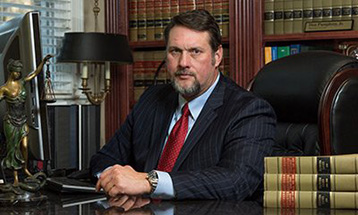
Attorney Don Pumphrey, Jr. is a former prosecutor, former law enforcement officer, and a successful and experienced criminal defense attorney. Don has achieved over 100 not guilty verdicts at trial and over 2,000 dismissals.