- DUI
- Criminal Defense
- Florida DUI
- Traffic Offenses
- Drug Charges
- Marijuana Charges
- Violent Crimes
- Domestic Violence
- Temporary Injunctions
- Weapons Charges
- Theft Crimes
- White Collar Crime
- Juvenile Offenses
- Sex Crimes
- Violation of Probation
- Early Termination of Probation
- Seal or Expunge Criminal Record
- Criminal Appeals
- US Federal Offenses
- Misdemeanor Charges
- Felony Charges
- Co-Defendant Cases
- College Student Defense
- College Student Hearings
- FSU Students
- FAMU Students
- Florida Panhandle Arrests
- Extradition to Florida
- Bench Warrants / Warrants
- Emergency Bond Hearings
- Gambling Charges
- Drone Arrests
- Marsy’s Law
- UAS Infractions
- Introduction of Contraband
- Lying to Police
- Locations
- Case Results
- Our Firm
- Media
- Resources
- Blog
- Contact Us
North FL’s Highest Court: Judge’s Failure to Make Child Hearsay Findings Is Reversible Error
January 14, 2026 Don Pumphrey, Jr. Criminal Defense Social Share
a case of “mutual mistake,” Florida’s 1st District Court of Appeal held that a judge’s failure to issue an order allowing the admission of child hearsay required the guilty verdict against a defendant to be reversed.
In Florida, hearsay is an out of court statement, document, or other record admitted into evidence to prove that its contents are true. Hearsay is generally inadmissible in a court of law, but there are various exceptions to this rule.
Hearsay exceptions are statutory provisions in Florida that allow the admission of hearsay into evidence that would otherwise (usually) be inadmissible. Some exceptions apply regardless of whether the declarant (speaker or author of the hearsay) is available to testify at trial (Fla. Stat. 90.803), while others only apply if the declarant is unavailable to testify (Fla. Stat. 90.804).
Some of the most commonly relied upon hearsay exceptions under Fla. Stat. 90.803 include:
- Present Sense Impression: Statement describing or explaining an event made while perceiving it or immediately after.
- Excited Utterance: Statement relating to a startling event made while under stress or excitement from the event.
- Then-Existing Mental, Emotional, or Physical Condition: Statement of current state of mind, emotion, sensation, or physical condition (e.g., intent, pain).
- Statements for Purposes of Medical Diagnosis or Treatment: Statement made for diagnosis/treatment describing medical history, symptoms, or cause.
Hearsay exceptions under Fla. Stat. 90.804, which allow the admission of hearsay only when the declarant is not available to testify and face cross-examination at trial, include:
- Former Testimony: Prior testimony given under oath in a proceeding or deposition where the opposing party had a similar motive and opportunity to develop it.
- Statement Under Belief of Imminent Death: Statement made while believing death was imminent, concerning the cause or circumstances of what the declarant believed to be impending death. (Death must be so close that the declarant proverbially heard “the beating wings of the angel of death.” People v. Sarzano, 212 N.Y. 231 (1914))
- Statement Against Interest: Statement so contrary to declarant’s own interest (e.g., penal, pecuniary, proprietary) that a reasonable person wouldn’t have said it unless true.
For a full breakdown of Florida’s hearsay exceptions and examples of hearsay statements that are covered by 90.803 and 90.804, click here.
Critically, not every hearsay statement is automatically admissible because it complies with an exception. This is because there are two types of hearsay under Crawford v. Washington, 541 U.S. 36 (2004) – testimonial and nontestimonial.
Testimonial hearsay is a hearsay statement (or document/record) made for the primary purpose of facilitating a government investigation (e.g. law enforcement) or a prosecution.
Some examples of testimonial hearsay include:
- 911 calls reporting a crime days after it occurred
- A CPT (Child Protection Team) interview with an alleged minor abuse victim after a defendant has been arrested
- A written affidavit prepared at a police station
By contrast, nontestimonial hearsay is made for the primary purpose of responding to an ongoing emergency. Examples may include:
- Dying declarations (e.g. someone saying “John shot me” as they bled out)
- 911 calls made during an ongoing criminal incident
- Initial disclosures by a child victim of physical or sexual abuse to a relative, friend, teacher, etc.
If hearsay is testimonial in nature, it is inadmissible in court (even if it complies with one or more of Florida’s designated hearsay exceptions) unless one of the following is true:
- The declarant (speaker/writer of the hearsay) testifies at trial and the defendant has the opportunity to cross-examine them
- The declarant is unavailable to testify at trial, but the defendant had the prior chance to cross-examine them in a manner that satisfies Crawford (and the U.S. Constitution’s Confrontation Clause)
If hearsay is nontestimonial, it is admissible in court regardless of whether the declarant has been made available for cross-examination – so long as it is compliant with one (or more) exceptions under 90.803 and 90.804.
One of the most frequently discussed hearsay exceptions under Fla. Stat. 90.803 is the child hearsay exception (Fla. Stat. 90.803(23)).
This is a very broad statutory provision that allows hearsay to be introduced if all of the following are true of it:
- The child had a physical, emotional, or developmental age of 17 or less at the time the statement was made
- The statement describes any act of child abuse or neglect, sexual abuse against a child, the offense of child abuse or aggravated child abuse, or any unlawful sexual act, contact, intrusion or penetration performed on or in the presence of the child
- The statement and source through which it is reported are sufficiently trustworthy
- The time, content and circumstances of the statement provide sufficient safeguards as to its reliability
Note: Florida previously had an “elderly hearsay” exception that was similarly broad, but this was struck down as unconstitutional. Conner v. State, 748 So.2d 950 (Fla. 1999)
Before child hearsay can be admitted in a court of law (e.g. at a defendant’s trial), the trial judge must make specific factual findings as to the statement’s reliability and trustworthiness. If this does not occur and the hearsay is admitted under Fla. Stat. 90.803(23) anyway, it is typically reversible error. Hyre v. State, 240 So.3d 47 (Fla. 2d. DCA 2018)
Per Cabrera v. State, 206 So.3d 768 (Fla. 1st DCA 2016), courts are to consider a plethora of factors when evaluating if child hearsay (e.g. a CPT interview or other post-abuse disclosure) is reliable and trustworthy enough to be admitted.
These may include, among others:
- The mental and physical age and maturity of the child who made the statement
- Nature and duration of the abuse or offense
- Relationship of the child to the offender
- Vagueness or specificity of the accusation
- Contradictions (if any) in the accusation
- Whether the child uses terminology expected of someone of their age
But what happens when:
- The State files a notice to introduce child hearsay under Fla. Stat. 90.803(23)
- The judge does not make a ruling at all
- All parties at the trial erroneously operate under the assumption that the judge intends to allow the hearsay in
- The hearsay is ultimately admitted at the defendant’s trial
Is the admission of child hearsay still considered reversible error under such circumstances? The answer is yes, as North Florida’s highest court explained. Let’s take a look at Johnson v. State, 76 So.3d 1124 (Fla. 1st DCA 2012) and what it means for trials involving child hearsay in Florida.
KEY CASE: Johnson v. State, 76 So.3d 1124 (Fla. 1st DCA 2012)
In Johnson, the defendant (Johnson) was charged with lewd or lascivious conduct and lewd or lascivious exhibition upon a 6-year-old child. He was ultimately convicted on both counts and sentenced to prison.
Before Johnson’s trial, the State moved to admit the child’s hearsay (out of court) disclosure of the alleged sexual abuse under Fla. Stat. 90.803(23). The first judge in Johnson’s case entered an order allowing for the admission of the hearsay – but then rescinded the order. At that point, the hearsay was no longer admissible.
A new trial judge took over the case. The State amended its notice to introduce child hearsay, specifying that it sought to introduce videotaped testimony of the alleged victim and statements from the child’s therapist as to what the child said about the incident. However, the new judge never ruled on the State’s amended notice.
At trial, all parties proceeded under the mistaken belief that the original judge’s order (which had since been rescinded) allowed for the hearsay’s admission under Fla. Stat. 90.803(23). However, this was not the case. Nevertheless, the child hearsay statements were admitted over Johnson’s renewed objection at trial – and Johnson was convicted.
On appeal, Johnson argued that since the original judge’s order was no longer effective, the new judge had to make his own specific, detailed findings as to the trustworthiness and reliability of the hearsay statements before they could be admitted under 90.803(23). Since this did not occur, Johnson asserted that his convictions must be reversed.
Florida’s 1st District Court of Appeal agreed and reversed Johnson’s convictions, remanding the matter for a new trial. The 1st DCA began by noting that since the State exclusively relied upon the child hearsay exception (90.803(23)) in Johnson’s case, it could not retroactively attempt to use another exception to claim the hearsay was admissible:
“While section 90.803(23) is not the exclusive method of admitting child/victim hearsay in abuse cases and other hearsay exceptions may also apply, Doe v. Broward County School Bd., 744 So.2d 1068 (Fla. 4th DCA 1999), no other hearsay exceptions were advanced by the state in this case. Due to the trial judge’s mistaken assumption that the child hearsay question had been determined prior to trial, which neither party realized was incorrect, the judge disposed of each objection by defense counsel by referring to the “previous ruling,” even though the only previous ruling on a 90.803(23) notice had been rescinded.”
The 1st DCA noted that because Johnson renewed his objection to the admission of the child hearsay at trial, the issue was preserved for appeal:
“The error in admitting the two state witnesses’ testimony about what the child victim told them was preserved by the defense because even though he thought a ruling had previously been made, defense counsel renewed his objection to the hearsay at every opportunity during trial, and afterwards, in his motion for new trial. Given the mutual mistake by all the participants about the predecessor judge’s rulings, or absence thereof, the error here was not invited error. This is not a case where defense counsel “sandbagged” the judge into committing error he knew would result in automatic reversal. See Rosen v. State, 940 So.2d 1155, 1161 (Fla. 5th DCA 2006).”
The 1st DCA then conducted a harmless error analysis. Since the State could not prove beyond a reasonable doubt that the erroneous admission of the child hearsay did not impact the jury’s verdict (e.g. that the jury was not influenced it), a new trial was required:
“The error in allowing the witnesses to testify about the child’s out of court statements without complying with section 90.803(23) was not harmless error. … Here, the child herself testified and was cross-examined by the defense. In addition, the child’s grandmother testified about the child’s demeanor and statements immediately after the incident. Because the child was the only eyewitness to the actions of the appellant, her credibility was critical to the state’s proof of the charges.
“The counselors’ testimony gave significant additional weight and credibility to the child’s testimony. As this court noted in Weatherford v. State, 561 So.2d 629, 633 (Fla. 1st DCA 1990), “[t]o treat this inadmissible hearsay as merely cumulative would ignore the reality of the effect of repeated assertions of a fact on the minds of the jurors.”
In sum, Johnson v. State, 76 So.3d 1124 (Fla. 1st DCA 2012) is a significant development in Florida’s case law surrounding the child hearsay exception. The 1st DCA held that:
- The first judge in Johnson’s case rescinded his order allowing the child hearsay (child’s out of court statements describing abuse, therapist statements) to be admitted at trial
- Because of this, the child hearsay was inadmissible unless the new judge made specific factual findings as to the hearsay’s reliability and trustworthiness (90.803(23)) – but that did not occur
- Since Johnson objected at trial and the admission of the child hearsay was not harmless error, reversal of his convictions and a new trial was required
Florida’s criminal defense community should take note of Johnson, as it emphasizes the importance of reiterating objections to child hearsay at trial to preserve the issue for appeal.
Moreover, it makes clear that if a trial judge fails to make required findings under 90.803(23) before admitting child hearsay, this is reversible error (unless the jury’s verdict can be proven to have not been impacted beyond a reasonable doubt).
If someone is arrested and formally charged in Florida in a case involving child hearsay, it is critical to find experienced and trusted legal representation as soon as possible. This decision could make the difference in whether or not someone faces a lengthy prison term and hefty fines.
Criminal Defense Attorney in Tallahassee, FL
Don Pumphrey, Jr. is a Former Prosecutor, Former State Police Officer, Lifetime Member of the Florida Association of Criminal Defense Lawyers; for over 25 years as a private defense attorney who is Trusted, Experienced, Aggressive in Criminal Defense as a Trial Attorney, Criminal Lawyer, Criminal Defense Lawyer for the accused in Florida State Courts located in Tallahassee, Florida but handling cases throughout the State of Florida.
Don Pumphrey, Jr. and the Tallahassee criminal defense lawyers at Pumphrey Law have decades of experience fighting drug charges on behalf of clients and winning. Call Pumphrey Law now at (850) 681-7777 to learn more about what we can do for you. Our lawyers will be happy to provide you with a free consultation.
Don Pumphrey, Jr.
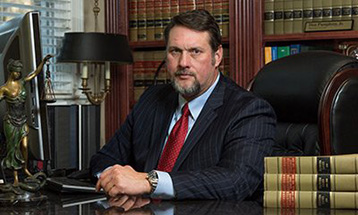
Attorney Don Pumphrey, Jr. is a former prosecutor, former law enforcement officer, and a successful and experienced criminal defense attorney. Don has achieved over 100 not guilty verdicts at trial and over 2,000 dismissals.