- DUI
- Criminal Defense
- Florida DUI
- Traffic Offenses
- Drug Charges
- Marijuana Charges
- Violent Crimes
- Domestic Violence
- Temporary Injunctions
- Weapons Charges
- Theft Crimes
- White Collar Crime
- Juvenile Offenses
- Sex Crimes
- Violation of Probation
- Early Termination of Probation
- Seal or Expunge Criminal Record
- Criminal Appeals
- US Federal Offenses
- Misdemeanor Charges
- Felony Charges
- Co-Defendant Cases
- College Student Defense
- College Student Hearings
- FSU Students
- FAMU Students
- Florida Panhandle Arrests
- Extradition to Florida
- Bench Warrants / Warrants
- Emergency Bond Hearings
- Gambling Charges
- Drone Arrests
- Marsy’s Law
- UAS Infractions
- Introduction of Contraband
- Lying to Police
- Locations
- Case Results
- Our Firm
- Media
- Resources
- Blog
- Contact Us
North FL’s Highest Court REVERSES Conviction Due to Judge’s Failure to Rule on Peremptory Strike Validity
April 20, 2026 Don Pumphrey, Jr. Criminal Defense, Sex Crimes Social Share
Florida’s 1st District Court of Appeal reversed a defendant’s conviction after a judge overruled a defendant’s objection to the State’s peremptory strike of a Black juror without explaining why he found the strike to be race-neutral.
CASE: Smith v. State, 143 So.3d 1994 (Fla. 1st DCA 2014)
Charge(s): Failure to Register as a Sex Offender
Outcome: Conviction REVERSED, as the trial judge failed to rule on WHY he found the State’s peremptory strike of a Black juror permissible when it was challenged by the defense.
Jury Selection in Florida
In Florida, jury selection (also known as voir dire) is a critical aspect of any criminal proceeding. During jury selection, each party to the case (e.g. the State and defense) is given the opportunity to question potential jurors.
The objective of this process is to identify jurors that may not be able to fairly and impartially render a verdict based on the EVIDENCE, and will instead be potentially influenced by personal biases. If a party to the case heavily suspects a potential juror is biased, they are likely to mount a “cause challenge” of that particular juror.
A cause challenge occurs when the State or defense attempts to convince the judge to excuse a potential juror from service – because the potential juror has said one or more things indicating they will not be able to fairly and impartially render a verdict. Cause challenges are unlimited in number.
Examples of cases in which an experienced and aggressive Florida criminal defense attorney is likely to make a cause challenge to a potential juror include:
- A potential juror says they will “absolutely” hold a defendant’s silence against him if he decides not to testify
- A potential juror says they will value the testimony of law enforcement over all other witnesses
- A potential juror says they know the victim in the case and feel a tremendous sympathy for them
It is important to note that just because a potential juror makes an objectionable comment or is biased at the start of voir dire, this does not mean a cause challenge will automatically succeed. This is because that potential juror may be “rehabilitated.”
Rehabilitation is a process involving a potential juror being questioned by a party to the case (including the trial judge) and asked if they can set aside their biases and follow the law. If the potential juror is confident they are able to do so, they may be considered rehabilitated.
Thus, a cause challenge may be denied even if the potential juror was initially biased. For more, click here.
Once a cause challenge is made, the judge can either grant it (sending the potential juror home) or deny it (allowing the potential juror to remain in the venire). If the latter occurs, this DOES NOT mean that the potential juror will automatically be on the actual jury. This is because the potential juror may be the subject of a PEREMPTORY STRIKE.
A peremptory strike (sometimes referred to as a peremptory challenge) occurs when a party to the case unilaterally excuses a potential juror from service for almost any reason. Most of the time, this DOES NOT have to be justified to the trial judge or opposing party (unlike a cause challenge). Walker v. State, 724 So.3d 1232 (Fla. 4th DCA 1999)
Peremptory strikes, unlike cause challenges, are limited in number. Typically, both the State and defense are awarded THREE peremptory strikes in misdemeanor cases, SIX peremptory strikes in non-capital/non-life felony cases, and TEN in capital/life felony cases. The trial judge has the discretion to award a requesting party one or more additional strikes.
Though peremptory strikes almost always occur without controversy, the discretion of a party to use one of these is not entirely unlimited. This is because the U.S. Supreme Court has made clear that a potential juror CANNOT be peremptorily stricken based on their race, sex, or ethnicity. Batson v. Kentucky, 476 U.S. 79 (1986); J.E.B. v. Alabama ex rel. T.B., 511 U.S. 127 (1994)
In the event that the opposing party in a case believes a peremptory strike was motivated by a potential juror’s race, sex, or ethnicity (usually the defense), they may make a Neil challenge of the peremptory strike. A Neil challenge (also known as a Neil inquiry) involves the following:
- #1: The objecting party (e.g. the defense) announces they are performing a Neil challenge of the peremptory strike.
- #2: The State provides the trial judge a race-, sex-, or ethnicity-neutral reason (depending on the basis of the objection) for the peremptory strike
- #3: The trial judge either “buys” the State’s explanation (e.g. finds it is good-faith) and allows the strike – or finds the explanation is pretextual (e.g. B.S.) and denies the strike
These rules apply regardless of the race of the defendant. If a peremptory strike is impermissibly used against a potential juror on a prohibited basis (e.g. because the potential juror was Black) a conviction may be REVERSED even if a defendant was white.
If a Neil challenge occurs, it is not enough for a trial judge to simply rule in favor of or against the party moving for the strike. The judge must, if the peremptory strike is allowed to be used, explain WHY they believe the State is not using the strike pretextually (e.g. coming up with a “fake” reason to strike a juror on a prohibited basis).
In the event that a trial judge fails to address the “genuineness” of the striking party’s motive AT ALL, this is considered reversible error. Put simply, this means that impermissible discrimination in the jury selection process can (and often will) lead a defendant to receive a new trial.
This was made clear in a case heard by Florida’s 1st District Court of Appeal (Tallahassee and North FL’s highest court). There, the State moved to strike a Black female juror peremptorily. The defense objected (e.g. initiated a Neil inquiry), requiring the State to explain a race-neutral reason for the peremptory strike. The State said the following, according to the 1st DCA:
“She’s 18 years old. She’s unemployed. She’s only been in Escambia County for two years. The witness[ ] in this case is a young black female who had a baby with the defendant, and that’s why he was over at her house because he was having a baby with her. I just think—I would rather not run the risk—she would have an emotional relationship or response to the girlfriend in this case.”
The defense resisted this, noting that the potential juror did not have any children. The State said this “didn’t matter.” The trial judge then asked the defense if they had anything further to argue, and the defense replied in the negative. The trial judge overruled the objection without engaging at all on the issue of whether the State’s “race-neutral” explanation for the strike was genuine.
The defendant was ultimately convicted. On appeal to the 1st DCA, he argued the trial judge’s total failure to address the “genuineness” of the State’s ostensibly race- and sex-neutral reason for the peremptory strike required REVERSAL of his conviction as a matter of law.
The 1st DCA agreed, REVERSING the defendant’s conviction and remanding the matter to the lower court for a new trial. Let’s look at that case – Smith v. State, 143 So.3d 1994 (Fla. 1st DCA 2014) – and discuss what it means for those in Florida concerned about jury selection.
KEY CASE: Smith v. State, 143 So.3d 1994 (Fla. 1st DCA 2014)
In Smith, the defendant (Smith) was charged with and convicted of Failure to Register as a Sex Offender. At trial (e.g. during jury selection), the following occurred:
- The State attempted to use a peremptory strike on an 18-year-old Black female juror
- The defense objected, requiring the State to offer a race- and sex-neutral reason for the strike
- The State said: “She’s 18 years old. She’s unemployed. She’s only been in Escambia County for two years. The witness[ ] in this case is a young black female who had a baby with the defendant, and that’s why he was over at her house because he was having a baby with her. I just think—I would rather not run the risk—she would have an emotional relationship or response to the girlfriend in this case.”
- The defense noted that the potential juror did not have any children, so there was nothing she had in common with the witness other than race and sex
- The trial judge then addressed the defense by stating: “The State’s alleging that—neutral reason. So any response?”
- The defense replied in the negative: “No, sir.”
- The trial judge overruled the defense’s objection without further comment, resulting in the potential juror being stricken
On appeal, Smith argued that the judge’s failure to analyze the GENUINENESS of the State’s “race-neutral” explanation for peremptorily striking the potential juror was reversible error. The State countered with two arguments:
- Smith failed to preserve the issue because he failed to object to the composition of the jury immediately before it was sworn
- The trial judge’s genuineness inquiry was “implicit” (e.g. occurred but was not stated out loud), which was permissible
However, the 1st DCA sided with Smith and REVERSED his conviction, remanding the matter to the lower court for a new trial. Addressing the State’s preservation argument first, the 1st DCA wrote:
“The State argues that the peremptory strike issue was not preserved, but we do not agree. Generally, a party must renew an objection to a peremptory strike before affirmatively accepting the jury. Joiner v. State, 618 So.2d 174, 176 (Fla. 1993) (counsel’s acceptance of the jury led to a reasonable assumption that he had abandoned his objection). However, if the jury is sworn only minutes after the initial objection, an explicit renewal of the objection is not necessary. Romero v. State, 105 So.3d 550, 552 (Fla. 1st DCA 2012) (citing to Gootee v. Clevinger, 778 So.2d 1005, 1009 (Fla. 5th DCA 2000)). Here, the jury was sworn only a matter of minutes after the objection. As such, the objection did not need to be renewed, and it is not reasonable to believe defense counsel abandoned the objection. This issue was preserved.”
Next, the 1st DCA turned to the claim that the trial judge did not evaluate the “genuineness” of the State’s ostensibly race- and sex-neutral reason for peremptorily striking the potential juror. Finding that there was NO evidence the judge engaged in an explicit OR implicit genuineness inquiry AT ALL, the 1st DCA wrote:
“A trial court’s genuineness analysis may be implicit. See Fleming v. State, 825 So.2d 1027, 1029 (Fla. 1st DCA 2002) (finding that “by overruling the defense’s objections, the lower court made an implicit finding that the [S]tate’s strikes were genuine”); Bowden v. State, 787 So.2d 185, 188 (Fla. 1st DCA 2001). However, this Court has clarified that if the trial court merely focuses on the fact that a race-neutral reason was offered without making a finding, implicit or otherwise, that the reasons were genuine, the third step cannot be fulfilled. Tetreault v. State, 24 So.3d 1242, 1244 (Fla. 1st DCA 2009)…”
“Here, the record provides no indication that the trial court engaged in a genuineness inquiry. The trial court stated that the reason was neutral, asked for defense counsel’s response, and then overruled the objection. There is no language in the record that reflects the trial court’s consideration of genuineness or pretext. As such, it appears the trial court failed to implicitly or explicitly make a finding regarding the genuineness of the State’s reason. Because we are unable to determine that the trial court satisfied step three, we are required to REVERSE and REMAND for a new trial.”
Put simply, because the judge overruled Smith’s objection WITHOUT addressing the validity of the State’s race-neutral justification when he did so, Smith’s due process rights were violated by potential discrimination in jury selection. Thus, a new trial was required.
In sum, Smith v. State, 143 So.3d 1994 (Fla. 1st DCA 2014) marks a significant development in Florida’s corpus of case law surrounding discrimination in jury selection. The 1st DCA (North FL’s highest court) held that:
- The trial judge failed to address the genuineness of the State’s allegedly “race-neutral” reason for striking the Black female potential juror
- This was required as the final step of the Neil inquiry, since the validity of the State’s explanation was challenged by the defense
- This was REVERSIBLE ERROR under Batson v. Kentucky, 476 U.S. 79 (1986) and its progeny – requiring Smith to receive a new trial (regardless of whether the verdict was impacted)
Florida’s criminal defense community should take note of Smith v. State, 143 So.3d 1994 (Fla. 1st DCA 2014) – as it makes clear a trial judge’s failure to sufficiently address the defense’s objection to a peremptory strike can be REVERSIBLE ERROR.
If someone is arrested and formally charged in Florida and concerned about jury selection, it is critical to find experienced and trusted legal representation as soon as possible. This decision could make the difference in whether or not someone faces a lengthy prison term and hefty fines.
Criminal Defense Attorney in Tallahassee, FL
Don Pumphrey, Jr. is a Former Prosecutor, Former State Police Officer, Lifetime Member of the Florida Association of Criminal Defense Lawyers; for over 25 years as a private defense attorney who is Trusted, Experienced, Aggressive in Criminal Defense as a Trial Attorney, Criminal Lawyer, Criminal Defense Lawyer for the accused in Florida State Courts located in Tallahassee, Florida but handling cases throughout the State of Florida.
Don Pumphrey, Jr. and the Tallahassee criminal defense lawyers at Pumphrey Law have decades of experience fighting criminal charges on behalf of clients and winning. Call Pumphrey Law now at (850) 681-7777 to learn more about what we can do for you. Our lawyers will be happy to provide you with a free consultation.
Don Pumphrey, Jr.
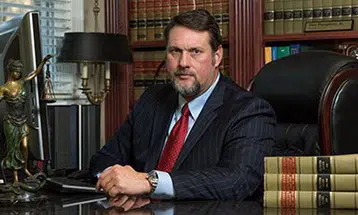
Attorney Don Pumphrey, Jr. is a former prosecutor, former law enforcement officer, and a successful and experienced criminal defense attorney. Don has achieved over 100 not guilty verdicts at trial and over 2,000 dismissals.