- DUI
- Criminal Defense
- Florida DUI
- Traffic Offenses
- Drug Charges
- Marijuana Charges
- Violent Crimes
- Domestic Violence
- Temporary Injunctions
- Weapons Charges
- Theft Crimes
- White Collar Crime
- Juvenile Offenses
- Sex Crimes
- Violation of Probation
- Early Termination of Probation
- Seal or Expunge Criminal Record
- Criminal Appeals
- US Federal Offenses
- Misdemeanor Charges
- Felony Charges
- Co-Defendant Cases
- College Student Defense
- College Student Hearings
- FSU Students
- FAMU Students
- Florida Panhandle Arrests
- Extradition to Florida
- Bench Warrants / Warrants
- Emergency Bond Hearings
- Gambling Charges
- Drone Arrests
- Marsy’s Law
- UAS Infractions
- Introduction of Contraband
- Lying to Police
- Locations
- Case Results
- Our Firm
- Media
- Resources
- Blog
- Contact Us
North FL’s Highest Court REVERSES Convictions Based On Juror Believing Police Over All Other Witnesses
April 24, 2026 Don Pumphrey, Jr. Criminal Defense Social Share
Florida’s 1st District Court of Appeal REVERSED a defendant’s convictions after the trial judge failed to grant the defense’s cause challenge of a potential juror who said he would believe the testimony of law enforcement over other witnesses.
CASE: Clemons v. State, 770 So.2d 296 (Fla. 1st DCA 2000)
Charge(s): Improper Exhibition of a Firearm, Carrying a Concealed Weapon, Resisting Without Violence
Outcome: Convictions REVERSED, as the trial judge erred as a matter of law by DENYING the defendant’s cause challenge of a potential juror who said they’d believe police officers over other witnesses.
Jury Selection in Florida
In Florida, jury selection (also known as voir dire) is a critical aspect of any criminal proceeding. During jury selection, each party to the case is given the opportunity to question potential jurors. The goal of this process is to identify jurors who may not be able to fairly and impartially render a verdict based on the evidence – and to ensure they do not serve on the eventual jury.
If a party to the case (e.g. the State or defense) suspects a potential juror will not be able to fairly and impartially render a verdict based on the evidence and testimony they see and hear at trial, a cause challenge is likely to be initiated.
A cause challenge occurs when the State or defense attempts to convince the judge to excuse a potential juror from service – because the potential juror has said one or more things indicating they will not be able to fairly and impartially render a verdict. Cause challenges are unlimited in number.
Examples of cases in which an experienced and aggressive Florida criminal defense attorney is likely to make a cause challenge to a potential juror include:
- A potential juror says they will “absolutely” hold a defendant’s silence against him if he decides not to testify
- A potential juror says they will value the testimony of law enforcement over all other witnesses
- A potential juror says they know the victim in the case and feel a tremendous sympathy for them
It is important to understand that just because a potential juror makes an objectionable comment (or appears to be biased at the start of voir dire), this DOES NOT mean that a cause challenge is guaranteed to succeed. This is because the potential juror may be REHABILITATED.
Rehabilitation is a process involving the potential juror being questioned by a party in the case (which may include the trial judge). That questioning involves a determination of whether the potential juror can set aside their bias(es) and follow the law. If the potential juror is confident that they are able to do so, they may be considered rehabilitated. For more, click here.
Once a cause challenge is made, it can either be GRANTED (excusing the potential juror from service) or DENIED (allowing the potential juror to remain in the venire). If a cause challenge is denied, however, this does not make it inevitable that the potential juror will actually be seated on the eventual jury.
This is because the potential juror may be the subject of a peremptory strike. A peremptory strike (also known as a peremptory challenge) occurs when one party to the case unilaterally excuses a potential juror from service for almost any reason.
Most of the time, this DOES NOT have to be justified to the trial judge or opposing party (unlike a cause challenge). Walker v. State, 724 So.3d 1232 (Fla. 4th DCA 1999)
Peremptory strikes, unlike cause challenges, are limited in number. Typically, both the State and defense are awarded THREE peremptory strikes in misdemeanor cases, SIX peremptory strikes in non-capital/non-life felony cases, and TEN in capital/life felony cases. The trial judge has the discretion to award a requesting party one or more additional strikes.
Though peremptory strikes almost always occur without controversy, the discretion of a party to use one of these is not entirely unlimited. This is because the U.S. Supreme Court has made clear that a potential juror CANNOT be peremptorily stricken based on their race, sex, or ethnicity. Batson v. Kentucky, 476 U.S. 79 (1986); J.E.B. v. Alabama ex rel. T.B., 511 U.S. 127 (1994)
It is important to note that a trial judge has broad discretion to grant or deny a cause challenge – but this discretion is NOT UNLIMITED. If a cause challenge is wrongly denied (e.g. the judge “abused their discretion”), a defendant’s conviction may be reversed if they are:
- Out of peremptory strikes and are DENIED an additional peremptory strike to excuse the potential juror that should have been stricken for cause, or
- Are forced to use a peremptory strike on that juror and request another strike for an additional objectionable juror, only to have this request denied (Ibarrondo v. State, 1 So.3d 226 (Fla. 5th DCA 2008))
When evaluating if a trial judge abused their discretion in denying a cause challenge, it is critical to ask two questions. The first is – how biased was the potential juror? The second is – was that potential juror rehabilitated?
If a potential juror was clearly biased and NOT rehabilitated, an appellate court is significantly more likely to reverse a conviction if a cause challenge was denied and that juror was impaneled (or another objectionable juror is impaneled because the defense runs out of peremptory strikes). Whitby v. State, 933 So.2d 557 (Fla. 3d DCA 2006)
This principle was demonstrated by a major case heard by Florida’s 1st District Court of Appeal (Tallahassee and North FL’s highest court). There, the defendant was arrested and charged with a variety of firearm-related offenses – including improper exhibition of a firearm.
Before trial (e.g. during jury selection), a potential juror was asked about whether he believed a police officer testifying in uniform would be more credible of a witness in his eyes than someone who was not in law enforcement. The potential juror said that “all things being equal,” he would “tend to” give a police officer’s version of events “more credence.”
The potential juror was never rehabilitated. At the conclusion of jury selection, the defense cause challenged the potential juror, arguing he was predisposed to believe law enforcement officers if they were put on the stand. For the defense, this would create an “uphill battle” to persuade that potential juror to believe witnesses that questioned the State’s narrative.
However, the trial judge DENIED the cause challenge. This resulted in the defense exercising a peremptory strike on the potential juror – but one objectionable juror remained that the defense intended to use the strike on. The judge DENIED the defense’s request for an additional strike, and the jury was sworn over the defendant’s objection. He was ultimately found guilty.
On appeal to the 1st DCA, the defendant argued the trial judge abused his discretion by denying the cause challenge – and that the failure to award an additional peremptory strike constituted REVERSIBLE ERROR. The 1st DCA AGREED, reversing his convictions and ordering a new trial for the defendant.
Let’s look at that case – Clemons v. State, 770 So.2d 296 (Fla. 1st DCA 2000) – and evaluate what it means for defendants concerned about jury selection in Florida.
KEY CASE: Clemons v. State, 770 So.2d 296 (Fla. 1st DCA 2000)
In Clemons, the defendant (Clemons) was arrested and charged with improper exhibition of a firearm, carrying a concealed weapon, and resisting without violence. He was found guilty. At trial (e.g. during jury selection), the following occurred:
- Clemons’s attorney asked potential jurors whether the fact that law enforcement officers were wearing uniforms would cause them to think they were telling the truth
- A potential juror, Gaskin, said: “Well, I don’t think it’s the uniform.”
- When questioned further about this, Gaskin added: “All things being equal, that maybe I would tend to give the police officer’s version, you know, more credence, without any, you know, just—you know, if it’s equal, you know, in the perception.”
- There was no rehabilitation of Gaskin
- At the end of jury selection, Clemons moved for a cause challenge of Gaskin, arguing he was clearly predisposed to believe police testimony (a valid legal basis for excusal in the absence of rehabilitation)
- The trial judge DENIED the cause challenge, resulting in a peremptory strike being used on Gaskin
- The defense intended to use that peremptory strike on another objectionable juror – so asked the judge for an additional peremptory strike
- The judge DENIED this request, resulting in the jury being sworn with an objectionable juror impaneled
- Clemons was ultimately found guilty
On appeal to the 1st DCA, Clemons argued his convictions required REVERSAL due to the trial judge’s failure to grant the cause challenge AND his failure to award the defense an additional peremptory strike (which would have cured the error). The 1st DCA AGREED with Clemons – writing:
“The court denied the defense request to strike Gaskin for cause, therefore the defense used a peremptory challenge to remove Gaskin from consideration. Subsequently, the court denied a defense request for an additional peremptory challenge. The defense identified an objectionable juror it would have struck using that peremptory challenge. The objectionable juror served on the case. We reverse.”
“A challenge for cause should ordinarily be granted where a juror demonstrates a strong bias for or against the credibility of the evidence of one side or another.” See Polite v. State, 754 So.2d 859 (Fla. 3d DCA 2000). … In Henry v. State, 756 So.2d 170 (Fla. 4th DCA 2000), the court ruled that “ambivalent answers indicating [a prospective juror] might give greater weight to a police officer’s testimony” demonstrated a prospective juror’s inability to lay aside a bias in favor of law enforcement. While the juror in question in Henry also stated his belief that officers do not lie, it was significant in that case, as in the present case, that the officer was an important witness to the disputed acts. In our view, Gaskin’s response, without clarification, was sufficiently ambivalent that there was reasonable doubt about his ability to be impartial, and he should have been excused for cause. REVERSED.”
Put simply, even though Gaskin was peremptorily stricken, the trial judge’s failure to grant the defense’s cause challenge and subsequent failure to give the defense an additional peremptory strike required that Clemons receive a new trial.
In sum, Clemons v. State, 770 So.2d 296 (Fla. 1st DCA 2000) marks a significant development in Florida’s corpus of case law surrounding jury selection. Florida’s 1st DCA (Tallahassee and North FL’s highest court) held that:
- Gaskin should have been stricken for cause, as he indicated he’d believe police testimony over other witnesses automatically – and he was not rehabilitated
- The trial judge’s failure to grant the cause challenge could only be cured by awarding the defense an additional peremptory strike
- The judge FAILED to do so, resulting in an objectionable juror that would’ve otherwise been stricken peremptorily being impaneled on the jury
- Because this violated Clemons’s right to a fair and impartial jury, his convictions required REVERSAL
Florida’s criminal defense community should take note of Clemons v. State, 770 So.2d 296 (Fla. 1st DCA 2000), as it makes clear a potential juror should be excused for cause if they indicate automatic belief in police testimony over other witnesses and are not rehabilitated.
If someone is arrested and formally charged in Florida in an entrapment-related case, it is critical to find experienced and trusted legal representation as soon as possible. This decision could make the difference in whether or not someone faces a lengthy prison term and hefty fines.
Criminal Defense Attorney in Tallahassee, FL
Don Pumphrey, Jr. is a Former Prosecutor, Former State Police Officer, Lifetime Member of the Florida Association of Criminal Defense Lawyers; for over 25 years as a private defense attorney who is Trusted, Experienced, Aggressive in Criminal Defense as a Trial Attorney, Criminal Lawyer, Criminal Defense Lawyer for the accused in Florida State Courts located in Tallahassee, Florida but handling cases throughout the State of Florida.
Don Pumphrey, Jr. and the Tallahassee criminal defense lawyers at Pumphrey Law have decades of experience fighting criminal charges on behalf of clients and winning. Call Pumphrey Law now at (850) 681-7777 to learn more about what we can do for you. Our lawyers will be happy to provide you with a free consultation.
Don Pumphrey, Jr.
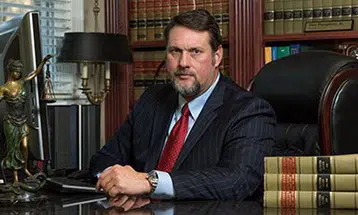
Attorney Don Pumphrey, Jr. is a former prosecutor, former law enforcement officer, and a successful and experienced criminal defense attorney. Don has achieved over 100 not guilty verdicts at trial and over 2,000 dismissals.