- DUI
- Criminal Defense
- Florida DUI
- Traffic Offenses
- Drug Charges
- Marijuana Charges
- Violent Crimes
- Domestic Violence
- Temporary Injunctions
- Weapons Charges
- Theft Crimes
- White Collar Crime
- Juvenile Offenses
- Sex Crimes
- Violation of Probation
- Early Termination of Probation
- Seal or Expunge Criminal Record
- Criminal Appeals
- US Federal Offenses
- Misdemeanor Charges
- Felony Charges
- Co-Defendant Cases
- College Student Defense
- College Student Hearings
- FSU Students
- FAMU Students
- Florida Panhandle Arrests
- Extradition to Florida
- Bench Warrants / Warrants
- Emergency Bond Hearings
- Gambling Charges
- Drone Arrests
- Marsy’s Law
- UAS Infractions
- Introduction of Contraband
- Lying to Police
- Locations
- Case Results
- Our Firm
- Media
- Resources
- Blog
- Contact Us
North FL’s Highest Court REVERSES Major Felony Convictions Due to Prosecutorial Misconduct
April 24, 2026 Don Pumphrey, Jr. Criminal Defense, Theft/Property Crimes Social Share
Florida’s 1st District Court of Appeal REVERSED a defendant’s major felony convictions after a prosecutor made improper remarks during closing arguments. But one 1st DCA judge disagreed.
CASE: Redish v. State, 525 So.2d 928 (Fla. 1st DCA 1988)
Charge(s): Racketeering, Solicitation to Commit Grand Theft
Outcome: Convictions REVERSED, as the prosecutor’s impermissible comments during closing argument may have improperly influenced the jury’s verdict.
Closing Arguments in FL Criminal Trials
In Florida, closing arguments are a critical aspect of criminal proceedings. Closing arguments are the “last word” the State and defense get before the jury is instructed on the law by the trial judge and sent to deliberate.
Closing arguments are not to be considered as evidence by the jury. However, this DOES NOT change the fact that closing arguments – especially if they are delivered effectively – are likely to have at least some influence on deliberations.
This is because people tend to think in narratives. An experienced, aggressive Florida criminal defense attorney knows this. A good closing argument will provide jurors a “lens” through which to view the evidence and testimony they did see and hear.
Many believe that during closing arguments at a Florida criminal trial, the State goes first – then the defense gets the last word. But this is not totally correct. Closing arguments are structured in the following way (Petruschke v. State, 125 So.2d 274 (Fla. 4th DCA 2013)):
- First, the State gives its initial closing
- Second, the defense gives its closing (which often will involve rebuttals of what the State said during its first closing argument)
- Finally, the State (e.g. prosecutor) gives a REBUTTAL CLOSING (which is the true “last word” before deliberations) to refute the defense’s closing argument
The closing argument is especially important to the defense for a few reasons. The first of these is because, as noted above, closing arguments operate using a “sandwich” structure. This means the defense must make their closing ESPECIALLY MEMORABLE for the jury to consider this, rather than siding with “the last person they hear” (e.g. the prosecutor).
Closing arguments are also particularly important for the defense at a criminal trial because they are a chance to reframe the evidence and testimony that has been presented. In certain cases, the State may appear to be “in control” throughout most of the trial because they call more witnesses and/or present more evidence (though this is not universally true).
But after an experienced and aggressive Florida criminal defense attorney “pokes holes” in the State’s case throughout the proceedings, closing arguments are an opportunity to explain to the jury that there is reasonable doubt. This is especially effective if and when jurors have lingering questions about certain aspects of the State’s case.
It is frequently believed (due to television shows and movies) that closing arguments have few to no rules surrounding them. However, this is not true. Though closing arguments are often viewed as a “knock-down, drag-out” rhetorical fight (and it can get close to this in many cases), this does not change the fact that attorneys CANNOT simply say whatever they want.
In some cases, attorneys will go OVER THE LINE by making improper remarks during closings, which can be OBJECTED TO by the opposing party. Objectionable tactics that may be employed during closing arguments include (Rodriguez v. State, 210 So.3d 750 (Fla. 5th DCA 2017)):
- Impugning the character of opposing counsel by calling them a “liar” or “evil”
- Calling the defendant ugly names/insulting them
- Relying on facts not in evidence or misrepresenting the law (Pacifico v. State, 642 So.2d 1178 (Fla. 1st DCA 1994))
- Commenting on the defendant’s right to remain silent
- Improperly bolstering the testimony of an alleged victim or law enforcement officers (Williams v. State, 673 So.2d 974 (Fla. 1st DCA 1996))
- Saying the case is about getting “justice” for the victim (Cardona v. State, 185 So.3d 514, 521 (Fla. 2016))
- GOLDEN RULE arguments (e.g. “Put yourself in the victim’s shoes – she was raped and needs justice!”) ((Jenkins v. State, 563 So.2d 791 (Fla. 1st DCA 1990))
It is important that when the State engages in any of the above misconduct, that a Florida defense attorney contemporaneously object to this on the record. Objecting during an improper closing argument is key, as if the defendant is convicted (e.g. a mistrial is not granted), the standard of review that appellate courts use to determine if a new trial is required CHANGES:
- WITH AN OBJECTION: Courts apply a “harmless error” analysis (e.g. if there was NO reasonable possibility the jury’s verdict was impacted by the comments) – if the improper remarks were not harmless error, a conviction requires reversal (Petruschke v. State, 125 So.2d 274 (Fla. 4th DCA 2013))
- WITHOUT AN OBJECTION: The improper comments are reviewed for fundamental error, which is a far higher standard (e.g. whether improper comments were so unfairly prejudicial that it made the jury’s verdict inherently illegitimate, per Brinson v. State, 153 So.3d 972 (Fla. 5th DCA 2015))
Note: To learn more about mistrials and when these should be granted at a Florida criminal trial, click here.
Although Florida appellate courts are generally reluctant to find harmful or fundamental error due to an improper closing argument, there are some cases in which this has occurred.
One of them was decided by Florida’s 1st District Court of Appeal (Tallahassee and North FL’s highest court). There, the defendant was accused of racketeering, solicitation to commit grand theft, and solicitation to make false and fraudulent insurance claims. He was convicted.
During closing arguments, the prosecutor made a variety of comments personally attacking the defendant and his attorney. The defense objected to these – some were sustained, while others were overruled. Moreover, the trial judge offered a CURATIVE INSTRUCTION (e.g. told jurors to disregard a few of the improper comments/not consider them).
The defendant was found guilty as charged, and appealed. He argued the prosecutor’s myriad of improper remarks during closing arguments required a reversal of his convictions and a new trial in his case.
The State claimed these were “harmless error,” or in the alternative, that any error was CURED by the judge’s instructions to the jury to disregard the comments. However, the 1st DCA did not agree – and REVERSED the defendant’s conviction.
Let’s find out why by taking a look at the case – Redish v. State, 525 So.2d 928 (Fla. 1st DCA 1988) – and analyzing what it means for those in Florida concerned about their right to a fair trial being violated due to improper closing arguments.
KEY CASE: Redish v. State, 525 So.2d 928 (Fla. 1st DCA 1988)
In Redish, the defendant (Redish) was arrested and charged with racketeering and a plethora of additional “white collar crimes.” He was convicted. At trial, the following was revealed:
- The alleged victim testified that Redish committed a variety of financial crimes
- However, the evidence as to this was conflicting, as Redish testified that much of what was claimed by the alleged victim was untrue
- During closing arguments, the prosecutor made four remarks that were objected to by the defense
- First, the prosecutor said: “Of course, Mr. Redish knowing that there was going to be a search of his house or a fifty/fifty chance of it, didn’t leave any notes or loans around that show criminal usury—” (this was objected to as improper shifting of the burden of proof)
- The prosecutor next said: “Now he’s on the stand being tried for this, he’s going to lie to you” (this was objected to as an improper personal attack)
- Third, the prosecutor said: “Gentlemen, if you succumb to the defense argument, you would be in violation of your oath as jurors” (this was objected to because it commanded the jury to find guilt on a basis other than the evidence/testimony)
- Finally, the prosecutor said: ““Despite the attempt to bring religion, to bring race, to bring old age and every other irrelevant issue into this courtroom by the defense and their cheap tactics, I submit that you as jurors with good common sense won’t fall for these tricks” (this was objected to as an additional, improper personal attack)
Objections were made to all four of the remarks. The objection to the second (e.g. calling Redish a liar) was OVERRULED, while the rest were sustained. The trial judge instructed the jurors to disregard the first, third, and fourth comments. No mistrial was granted – and Redish was found guilty.
On appeal, Redish argued his convictions required reversal because the prosecutor’s comments were improper AND were NOT harmless error (e.g. there was a reasonable possibility the jury’s verdict was influenced). Florida’s 1st DCA AGREED with him and REVERSED, remanding the matter to the lower court for a new trial.
The 1st DCA began by noting that it did not find the first two comments to be reversible error, writing:
“We agree with the state that the first two comments do not constitute reversible error. From our examination of the evidence it appears that the first remark was made in response to the appellant’s earlier testimony that he had removed his records from his residence when he went out of town. On cross-examination, the appellant admitted that at the time of his departure he had already been questioned by the police, and he suspected that there was a “fifty-fifty chance” that his home would be searched. Under these facts, the trial court’s curative instruction to the jury to disregard the inference suggested by the state that appellant had removed incriminating evidence was sufficient to avoid a mistrial.”
However, the 1st DCA concluded the final two comments (“violation of your oath” and “cheap tricks”) WERE so egregious that a new trial was warranted. The 1st DCA wrote:
“We do agree, however, that the last two comments made by the state were improper and sufficiently prejudicial to constitute reversible error. The third remark, that the jury would be “in violation of your oath [sic] as jurors” if they “succumb[ed] to the defense argument,” was, in our view, an impermissible attempt by the prosecution to instruct the jury as to its duties and functions… Lastly, we consider the prosecution’s personal attack on defense counsel by referring to his “cheap tricks” to be clearly beyond the bounds of proper closing argument. In Briggs v. State, 455 So.2d 519, 521 (Fla. 1st DCA 1984), this court stated: Verbal attacks on the personal integrity of opposing counsel, rather than appropriate comments on the credibility of witnesses and inferences to be drawn from the evidence before the jury, are wholly inconsistent with the prosecutor’s role.”
Rejecting the State’s contention that the remarks were “harmless error” (requiring affirmance of the convictions), the 1st DCA stated:
“The appellee argues that, regardless of the impropriety of the prosecution’s remarks, there is overwhelming evidence against the appellant which warrants a finding of harmless error. Were only one of the above comments made by the prosecution, we might be inclined to agree. In light, however, of the prosecutor’s repeated misconduct, we cannot say that the trial court’s curative instructions were sufficient to dissipate the statements’ prejudicial effect. … we conclude that it cannot be said beyond a reasonable doubt that the appellant at bar would have been convicted without the taint of the impermissible remarks made to the jury. See State v. DiGuilio, 491 So.2d 1129 (Fla.1986). REVERSED and REMANDED for new trial.”
However, one 1st DCA judge did not agree. Judge Nimmons of the 1st DCA authored a dissent, in which she argued that the third remark (“violation of oath”) was actually PROPER given the context. Arguing this was an “invited response” due to the defense’s closing, Judge Nimmons wrote:
“The third comment objected to by the defense was the following statement which constituted the opening remarks by the prosecutor in the rebuttal stage of his summation: “Gentlemen, if you succumb to the defense argument, you would be in violation of your oath as jurors.” At first blush, this comment appears improper based upon the authorities cited in the majority opinion. However, the record clearly shows that such comment was addressed to and precipitated by defense counsel’s following remarks which were counsel’s final words in the defense summation: Yes, Slater ran his mouth that day and he ran it too much. He shouldn’t have said all the things that he said. But I can guarantee you, Ladies and Gentlemen, he’s paid for it. He and his family have more than paid for it. I’m just saying after sixty years, you know, everybody is entitled to a mistake and he’s made his mistake and he’s learned. I don’t think there’s any need to put him in jail or for any further punishment. Thank you, Ladies and Gentlemen.”
“It would seem grossly unfair to preclude the prosecutor, in response to the above defense argument, from reminding the jurors that they would not be true to their oaths as jurors if they were persuaded to acquit the defendant: (1) because the defendant and his family have already “paid for it”; (2) because of the defendant’s age; (3) because “everybody is entitled to a mistake”; or (4) because defense counsel “[didn’t] think there’s any need to put him in jail or for any further punishment.” To me, the authorities relied upon by the majority with respect to this comment are materially distinguishable.”
Judge Nimmons agreed that the final comment (e.g. “cheap tricks”) was IMPROPER – but it was not so improper that a new trial was required:
“Finally, turning to comment # 4, I agree with the majority that the prosecutor’s remarks were improper as a personal attack on the integrity of opposing counsel. An attorney’s suggestion to the jury of the resort to “cheap tactics” and “tricks” by opposing counsel is so obviously improper as to suggest a woeful lack of understanding of or appreciation for the most fundamental of rules governing the conduct of trial attorneys. Having said that, I am not persuaded that comment # 4, by itself, entitled the defendant to a mistrial. Even the majority would apparently not reverse solely on the basis of comment # 4. I believe the trial court’s curative instruction was sufficient to attenuate the prejudice which the defendant might have otherwise suffered, particularly in view of the overwhelming evidence of guilt. I agree with the majority’s affirmance of the remaining issues raised by the appellant. I would therefore affirm on all issues.”
Put simply, Judge Nimmons agreed the prosecutor was not perfect, but believed the jury’s verdict was not impacted (due to the curative instructions). However, Judge Nimmons’s opinion did not win the day – and Redish received a new trial.
In sum, Redish v. State, 525 So.2d 928 (Fla. 1st DCA 1988) marks a significant development in Florida’s corpus of case law surrounding improper closing arguments, and when they REQUIRE REVERSAL of a conviction. The 1st DCA (Tallahassee and North FL’s highest court) held that:
- The prosecutor in the case made various improper remarks that may have influenced the jury’s verdict
- This included indicating they would be “violating their oath” if they found the defendant not guilty, and urging them not to succumb to “cheap tactics” and “tricks” of the defense
- The trial judge’s curative instruction did not eliminate the possibility that the jury decided the case on an improper basis
- Thus, REVERSAL of Redish’s convictions and a new trial was required
Judge Nimmons penned a dissent, arguing that only the “cheap tactics” comment was improper and that this comment alone was insufficient to mandate reversal.
Florida’s criminal defense community should take note of Redish v. State, 525 So.2d 928 (Fla. 1st DCA 1988), as it makes clear Tallahassee and North Florida’s highest court will sometimes REVERSE convictions due to improper closing arguments from prosecutors.
If someone is concerned about being charged with sexual battery or a related offense, it is crucial to find experienced and aggressive legal representation as soon as possible. This vital decision could make the difference in whether or not a person is subject to a lengthy prison term and hefty fines.
Criminal Defense Attorney in Tallahassee, FL
Don Pumphrey, Jr. is a Former Prosecutor, Former State Police Officer, Lifetime Member of the Florida Association of Criminal Defense Lawyers; for over 25 years as a private defense attorney who is Trusted, Experienced, Aggressive in Criminal Defense as a Trial Attorney, Criminal Lawyer, Criminal Defense Lawyer for the accused in Florida State Courts located in Tallahassee, Florida but handling cases throughout the State of Florida.
Don Pumphrey, Jr. and the Tallahassee criminal defense lawyers at Pumphrey Law have decades of experience fighting criminal charges on behalf of clients and winning. Call Pumphrey Law now at (850) 681-7777 to learn more about what we can do for you. Our lawyers will be happy to provide you with a free consultation.
Don Pumphrey, Jr.
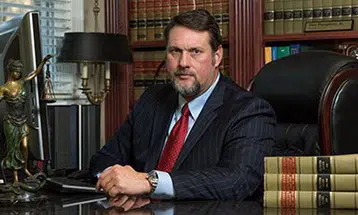
Attorney Don Pumphrey, Jr. is a former prosecutor, former law enforcement officer, and a successful and experienced criminal defense attorney. Don has achieved over 100 not guilty verdicts at trial and over 2,000 dismissals.