- DUI
- Criminal Defense
- Florida DUI
- Traffic Offenses
- Drug Charges
- Marijuana Charges
- Violent Crimes
- Domestic Violence
- Temporary Injunctions
- Weapons Charges
- Theft Crimes
- White Collar Crime
- Juvenile Offenses
- Sex Crimes
- Violation of Probation
- Early Termination of Probation
- Seal or Expunge Criminal Record
- Criminal Appeals
- US Federal Offenses
- Misdemeanor Charges
- Felony Charges
- Co-Defendant Cases
- College Student Defense
- College Student Hearings
- FSU Students
- FAMU Students
- Florida Panhandle Arrests
- Extradition to Florida
- Bench Warrants / Warrants
- Emergency Bond Hearings
- Gambling Charges
- Drone Arrests
- Marsy’s Law
- UAS Infractions
- Introduction of Contraband
- Lying to Police
- Locations
- Case Results
- Our Firm
- Media
- Resources
- Blog
- Contact Us
North FL’s Highest Court REVERSES Sexual Battery Conviction Over Improper Closing Argument
April 23, 2026 Don Pumphrey, Jr. Criminal Defense, Sex Crimes Social Share
Florida’s 1st District Court of Appeal reversed a defendant’s sexual battery conviction over the fact that the prosecutor made a series of “over-the-line” comments during closing arguments that led to a violation of his right to a fair trial.
CASE: Pacifico v. State, 642 So.2d 1178 (Fla. 1st DCA 1994)
Charge(s): Sexual Battery, Kidnapping
Outcome: Conviction REVERSED, as the defendant was deprived of his right to a fair trial by the prosecutor’s highly improper statements during closing arguments.
Sexual Battery in Florida
In Florida, sexual battery is a very serious felony offense – typically referred to as rape. Sexual battery is defined under Fla. Stat. 794.011 as oral, anal, or vaginal penetration by, or union with, the sexual organ of another, without the victim’s consent. This can involve penetration of, or by, the victim.
Consent occurs when someone eighteen or older (an adult) voluntarily engages in a sexual act of their own free will – without being forced or coerced to do so. A person does NOT have to resist physically for a lack of consent to be established.
Someone who is unconscious, asleep, or otherwise physically unable to communicate their unwillingness to engage in a sexual act cannot consent to sex under Florida law. Coley v. State, 616 So.2d 1017 (Fla. 3d. DCA 1993). Minors (individuals under age 18) are similarly incapable of consenting to sex.
Sexual battery is one of the most serious felonies in Florida. Because of this, penalties are VERY severe if someone is convicted. Florida law outlines the following penalties:
- Victim under 12, defendant 18+: Sexual battery is punishable by death or a mandatory minimum of life in prison. Though the Florida and U.S. Supreme Courts have held the death penalty unconstitutional for rape that does not result in death, Florida authorizes it. Kennedy v. Louisiana, 554 U.S. 407 (2008); Buford v. State, 403 So. 2d 943 (Fla. 1981)
- Victim 12 or older but under 18, defendant 18+: A first-degree felony punishable by up to 30 years in prison and a $10,000 fine, or up to life in prison with threat of violence or the use of a weapon.
- Victim under 18, defendant 18+ and in a position of familial or custodial authority: A first-degree felony punishable by life (PBL) in prison.
- Victim 18+, defendant 18+: A second-degree felony punishable by up to 15 years in prison and a $10,000 fine (enhanceable to more severe penalties if actual force or a weapon was used).
If someone is convicted of sexual battery in Florida, they must register as a sex offender and/or a sexual predator. This designation places a series of restrictions on anyone convicted – including on where they can live and work. For more on this, click here.
It is important to note that if someone is drunk or high to the point where they CANNOT legally consent to sexual battery, any sexual intercourse that occurs is considered sexual battery. But just because someone has had a drink does not mean they are automatically incapable of consent.
Florida’s courts establish a “balancing test” to determine if someone was intoxicated to the extent that their capacity to consent to sex was impaired. Consent is invalid, making sexual penetration or union sexual battery, if one or more of the following are true:
- The alleged victim was unable to give knowing or voluntary consent, and this inability was known or apparent to the defendant (Coley v. State, 616 So.2d 1017 (Fla. 3d. DCA 1993))
- The intoxication of the alleged victim was involuntary (e.g. their drink was spiked or they were forced to get drunk) (Buonanotte v. State, 356 So.3d 824 (Fla. 4th DCA 2023))
- The alleged victim was so impaired that they were unaware or unable to comprehend their actions and communicate rationally (Taylor v. State, 316 So.3d 420 (Fla. 1st DCA 2021))
- The alleged victim was physically helpless (e.g. unconscious or asleep, blacked out, or otherwise unable to communicate a desire for the act not to take place)(Clark v. State, 969 So.2d 573 (Fla. 1st DCA 2007))
In a trial involving alleged sexual battery, emotions are likely to run high. Those emotions do not always stay confined to the victim, defendant, and their loved ones in the case. Depending on the circumstances, attorneys may also take things “personally.”
However, there are rules and regulations that guide what lawyers can and cannot say during trial. These restrictions are particularly important when CLOSING ARGUMENTS are made. This is because closing arguments, even though they are not evidence, can influence how jurors evaluate what they have seen and heard (and accordingly, influence their verdict).
A big “no-no” during closing arguments is the GOLDEN RULE ARGUMENT. This involves attorneys asking the jury to put themselves in the position of the defendant or victim in a case – inviting them to base their verdict on personal sympathy rather than evidence. Examples include:
- “Imagine you were that poor girl getting raped – now find the defendant guilty!”
- “Imagine you were Ms. Smith, facing life in prison – she doesn’t deserve that, so find her NOT guilty!”
- “Put yourself in the shoes of the parents of the victim and think about their pain, then find the defendant guilty as charged!”
Examples of other objectionable tactics employed during closing arguments include (Rodriguez v. State, 210 So.3d 750 (Fla. 5th DCA 2017)):
- Impugning the character of opposing counsel by calling them a “liar” or “evil”
- Calling the defendant ugly names/insulting them
- Relying on facts not in evidence or misrepresenting the law
- Saying the case is about getting “justice” for the victim (Cardona v. State, 185 So.3d 514, 521 (Fla. 2016))
Improper conduct during closing arguments is especially risky for prosecutors. This is because a guilty verdict against a defendant may be REVERSED on appeal. Though an isolated remark is unlikely to produce this outcome, multiple improper comments or impermissible themes within the State’s closing argument may lead to a Florida appellate court requiring a new trial.
One case where this occurred was heard by Florida’s 1st District Court of Appeal (Tallahassee and North FL’s highest court). There, the defendant was accused of sexual battery after he took a Florida State University student home from a fraternity party and forced her to have sex against her will.
There was copious evidence offered at trial supporting the allegations against the defendant. But before the jury went to deliberate, the State gave an EXTREMELY OBJECTIONABLE closing argument that involved:
- Calling the defendant various names
- Saying the defendant was a “criminal” who needed to be convicted
- Making various Golden Rule arguments and asking for justice for the victim
- Implying the jury will have done something morally wrong/bad for society if a verdict of not guilty was rendered
The defense repeatedly objected, and the trial judge sustained most of them. The jury eventually went to deliberate and found the defendant guilty as charged.
On appeal to the 1st DCA, the defendant argued that there were FIVE specific areas of improper prosecutorial comments during closing arguments at his trial. He argued the “cumulative error” resulting from the jury hearing these comments vitiated the proceedings, requiring that he receive a new trial.
The 1st DCA AGREED with the defendant and REVERSED his conviction. Let’s take a look at why the 1st DCA sided with by reviewing the case – Pacifico v. State, 642 So.2d 1178 (Fla. 1st DCA 1994).
KEY CASE: Pacifico v. State, 642 So.2d 1178 (Fla. 1st DCA 1994)
In Pacifico, the defendant (Pacifico) was charged with sexual battery after an alleged incident in which he raped an 18-year-old girl after pretending to be a member of a fraternity and taking her to his house. At trial, the following occurred:
- Evidence and testimony corroborating the victim’s allegations was presented
- This included testimony from the victim’s roommates and the examining ER physician
- During closing statements, however, the State made a variety of improper comments that were objected to by the defense
- First, the State (e.g. the prosecutor) said that the jury would be making a mistake if they allowed Pacifico to be a “free man”
- Next, the State engaged in name-calling of Pacifico, including referring to Pacifico as a criminal despite the fact that he had not yet been convicted
- The State also used Pacifico’s criminal record to claim to the jury that he had a propensity to engage in unlawful activity, which was impermissible
- Moreover, the State called Pacifico a “liar” for denying the allegations multiple times
- Finally, the State made various comments about facts not in evidence generalizing about how rapists “always had girlfriends” and that rape is extremely common
- Ultimately, Pacifico was convicted, as no mistrial was granted in the case
On appeal, Pacifico asserted the State’s various violations of closing argument rules amounted to “cumulative error” that undermined the validity of the jury’s verdict. Because the jury may have decided the case based on the State’s inflammatory comments, not the evidence, Pacifico urged the 1st DCA to REVERSE his conviction and order a new trial.
The 1st DCA AGREED with Pacifico and reversed his conviction, remanding the matter to the lower court for a new trial. First addressing the prosecutor’s “free man” comment, which itself was reversible error, the 1st DCA wrote:
“In the instant case, appellant challenges five specific areas of improper prosecutorial comment, contending that the cumulative effect of the improprieties constituted fundamental error. We agree. The first such instance concerns the prosecutor’s “free man” comment. It is improper for a prosecutor to tell or to infer to jurors that it is their duty to convict the accused for the good of society.”
“Here, the prosecutor commented: “If the defendant walks out of here a free man today, that’s your decision,” and, “Now, does he walk out of this courtroom today laughing, or do you make him take responsibility for what he did to __ __ that night?” In isolation, the former comment could be considered a reference to the jurors’ duty to decide appellant’s guilt or innocence. However, when this comment is considered together with the latter comment, it appears to constitute an implicit instruction to the jurors that it was their duty to society to return a verdict of guilty, a practice deemed to be reversible error.”
The 1st DCA also found that the State’s “name-calling” of Pacifico was an independent basis for reversal:
“Here, the prosecutor referred to appellant as a “slick fraternity guy” during her opening remarks to the jury. If there had been no other instance of improper comment, this characterization could be viewed as a statement of the evidence which the state expected to develop at trial. No objection was raised, and the comment by itself was not so inflammatory or prejudicial as to compromise the fairness of the trial. The same cannot be said with regard to the prosecutor’s references to appellant as a “sadistic, selfish bully,” a “criminal,” a “convicted felon,” a “rapist,” and a “chronic liar.” These remarks fall into the realm of character attacks. Although appellant admitted he lied about his age, his status as an F.S.U. student, and his membership in Sigma Pi fraternity, these statements were made with regard to his desire to belong to a fraternity. They did not demonstrate the long duration of untruthful conduct necessary to justify characterizing appellant as a “chronic” liar. Similarly, the repeated references to appellant as a criminal and a convicted felon, while technically correct, were unwarranted in light of the limited nature of appellant’s prior record. Taken as a whole, the prosecutor’s comments were inflammatory and prejudicial, and became such a feature of the trial that they must be considered fundamental error.”
After addressing the impropriety of the other “improper” closing argument tactics of the State – including the improper use of prior convictions to imply guilt, referring to Pacifico as a “liar,” and the prosecutor’s discussion of her general opinions about “rapists” – the 1st DCA concluded:
“Obviously, in situations of this nature, where witness credibility is the pivotal issue, inappropriate prosecutorial comment which might be considered harmless in another context, can become prejudicially harmful. … The failure to object to improper prosecutorial comments will not preclude reversal where the comments are so prejudicial to the defendant that neither rebuke nor retraction would destroy their influence in attaining a fair trial. … Here, the case primarily involved the conflict in testimony between the victim and appellant with respect to the victim’s consent to sexual intercourse. Thus, the pivotal issue was the jurors’ perception of appellant’s credibility. The cornerstone of our system of justice is the right of an accused to be judged fairly by a jury of his or her peers. On the basis of the record before us, we conclude the repetitious and egregious nature of the prosecutorial improprieties in this case became such a feature of the trial as to deprive appellant of that fundamental right. Due to the prejudicial nature of cumulative prosecutorial impropriety, we must reverse the conviction, and remand for a new trial.”
Put simply, because the outcome of Pacifico’s trial may have been different in the ABSENCE of the prosecutorial misconduct, his conviction required reversal.
In sum, Pacifico v. State, 642 So.2d 1178 (Fla. 1st DCA 1994) marks a significant development in Florida’s corpus of case law surrounding improper closing statements and when they serve as a basis for REVERSING a defendant’s conviction(s). The 1st DCA (Tallahassee and North FL’s highest court) found that:
- The prosecutor made at least five kinds of improper statements during closing arguments in Pacifico’s case
- This was objected to by the defense, but no mistrial occurred, and Pacifico was ultimately found guilty
- The prosecutor’s inflammatory remarks may have changed the outcome of the trial, as the primary evidence was the victim’s allegation and the testimony of her friends
- As a result, Pacifico’s conviction required REVERSAL, as it may have been based on the prosecutor’s improper comments rather than the evidence
Florida’s criminal defense community should take note of Pacifico v. State, 642 So.2d 1178 (Fla. 1st DCA 1994), as it makes clear prosecutors do not have unlimited discretion to make improper remarks in closing arguments. In some cases, appellate courts will REVERSE convictions on this basis.
If someone is concerned about being charged with sexual battery or a related offense, it is crucial to find experienced and aggressive legal representation as soon as possible. This vital decision could make the difference in whether or not a person is subject to a lengthy prison term and hefty fines.
Criminal Defense Attorney in Tallahassee, FL
Don Pumphrey, Jr. is a Former Prosecutor, Former State Police Officer, Lifetime Member of the Florida Association of Criminal Defense Lawyers; for over 25 years as a private defense attorney who is Trusted, Experienced, Aggressive in Criminal Defense as a Trial Attorney, Criminal Lawyer, Criminal Defense Lawyer for the accused in Florida State Courts located in Tallahassee, Florida but handling cases throughout the State of Florida.
Don Pumphrey, Jr. and the Tallahassee criminal defense lawyers at Pumphrey Law have decades of experience fighting criminal charges on behalf of clients and winning. Call Pumphrey Law now at (850) 681-7777 to learn more about what we can do for you. Our lawyers will be happy to provide you with a free consultation.
Don Pumphrey, Jr.
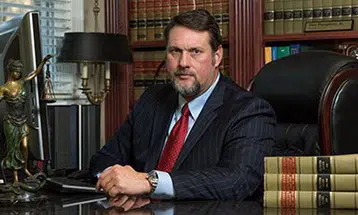
Attorney Don Pumphrey, Jr. is a former prosecutor, former law enforcement officer, and a successful and experienced criminal defense attorney. Don has achieved over 100 not guilty verdicts at trial and over 2,000 dismissals.