- DUI
- Criminal Defense
- Florida DUI
- Traffic Offenses
- Drug Charges
- Marijuana Charges
- Violent Crimes
- Domestic Violence
- Temporary Injunctions
- Weapons Charges
- Theft Crimes
- White Collar Crime
- Juvenile Offenses
- Sex Crimes
- Violation of Probation
- Early Termination of Probation
- Seal or Expunge Criminal Record
- Criminal Appeals
- US Federal Offenses
- Misdemeanor Charges
- Felony Charges
- Co-Defendant Cases
- College Student Defense
- College Student Hearings
- FSU Students
- FAMU Students
- Florida Panhandle Arrests
- Extradition to Florida
- Bench Warrants / Warrants
- Emergency Bond Hearings
- Gambling Charges
- Drone Arrests
- Marsy’s Law
- UAS Infractions
- Introduction of Contraband
- Lying to Police
- Locations
- Case Results
- Our Firm
- Media
- Resources
- Blog
- Contact Us
North FL’s Highest Court: State Did Not Provide “Independent Proof” in Constructive Possession Case
January 14, 2026 Don Pumphrey, Jr. Criminal Defense, Drug Charges Social Share
Florida’s 1st District Court of Appeal found the State failed to prove as a matter of law that a baggie of cocaine found in a vehicle’s center console belonged to the defendant, who was driving a jointly occupied vehicle.
In Florida, there are two types of possession of contraband (e.g. drugs, illegal guns) that can serve as the basis for criminal charges – actual and constructive. It is important to understand the differences between actual and constructive possession if someone is accused of possessing one or more illegal items, as this is critical for developing an effective defense.
Per Sanders v. State, 210 So. 3d 246, 248 (Fla. 2d DCA 2017), someone is considered to be in “actual possession” of contraband (illegal items) if any (or all) of the following are true:
- The contraband is found in the defendant’s hand(s) or on their person
- The contraband is found in a container in the defendant’s hand(s) or on their person
- The contraband is discovered within the defendant’s “ready reach” and exclusively under his dominion and control
In essence, the State is likely to proceed on a theory of “actual possession” when police officers can instantly conclude through their personal observations (e.g. seeing someone with the drugs in their hands) that the contraband in question belongs to a particular person.
A prosecution may also be rooted in an allegation of constructive possession. Even if a person is not in physical custody of a particular item at the time of a search, they may still be found guilty of illegally possessing it if the State can prove all of the following beyond a reasonable doubt:
- The defendant knew about the contraband (found in their presence, on their property, etc.)
- The defendant knew that the contraband was illegal (e.g. if a gun, they knew they were prohibited from owning one)
- The defendant was able to exercise dominion and control over the contraband (T.W. v. State, 666 So.2d 1001, 1002 (Fla. 5th DCA 1996)
Note: The criminal penalties someone faces are typically the same regardless of if a person is accused of actually or constructively possessing the contraband. However, for offenses such as felon in possession of a firearm, a mandatory minimum sentence of three years in prison applies only if someone is found in actual possession (not constructive possession).
For a comprehensive breakdown of actual possession and constructive possession under Florida law, click here.
One of the thorniest legal issues surrounding constructive possession is prosecutions based on drugs (or other contraband) recovered from jointly occupied premises. Examples of this may include:
- Police find drug paraphernalia in the guest room of a house where four people live
- Police find a gun in a secluded area of a home where one felon resides, but they do not have direct evidence it belongs to him/that he knew about it
- Police find drugs in the closed center console of a vehicle containing multiple occupants
In situations like the ones described above, the State may have a harder time proving someone guilty beyond a reasonable doubt of “constructive possession.” This is because “mere proximity” to contraband is legally insufficient for someone to be convicted. Brown v. State, 428 So. 2d 250 (Fla. 1983)
If contraband is discovered by law enforcement on jointly occupied premises, the State must provide “independent proof” that the contraband was the defendant’s (not another person’s) to secure a conviction on a theory of constructive possession. Independent proof can come in various forms, such as:
- A defendant’s incriminating statements (e.g. “The drugs were mine…”)
- Witness testimony (e.g. someone else in the home/vehicle or an uninvolved witness claiming the contraband belongs to the defendant)
- Scientific evidence (e.g. DNA or fingerprints) tying the defendant to the illicit item(s) in question
If the State does not have any of this, someone may not be found guilty as a matter of law if the prosecution rests on a theory of constructive possession on jointly occupied premises. Santiago v. State, 991 So. 2d 439, 442 (Fla. 2d DCA 2008)
In a recent case, Tallahassee and North Florida’s highest court reinforced this time-honored legal principle. Let’s take a look at the 1st DCA’s Jones v. State, 282 So.3d 882 (Fla. 1st DCA 2018) decision and what it means for defendants charged based on a theory of constructive possession in Florida.
KEY CASE: Jones v. State, 282 So.3d 882 (Fla. 1st DCA 2018)
In Jones, the defendant (Jones) was pulled over for following another vehicle too closely. A woman (Lyles) was in the passenger’s seat. Jones was asked for his license, but did not have it. He was asked to step out of the vehicle and complied.
Jones initially gave a false name to officers during a conversation outside the vehicle, which lasted nine minutes. After discovering that Jones was misrepresenting his identity, they grew suspicious. A K-9 (dog) officer was called to the scene and “alerted” to the vehicle, resulting in a search.
Officers recovered various items from the car, including marijuana, cocaine, and Swisher cigars. Both the Swisher cigars and the cocaine were found in the vehicle’s (closed) center console.
Jones admitted that the marijuana was his, but denied knowledge of the cocaine. He also did not (directly) admit to knowledge of the Swisher cigars.
Jones was arrested and charged with felony cocaine possession. At trial, the State argued that although the vehicle was jointly occupied (Jones and Lyles) and the cocaine was not in plain view, there was sufficient “independent proof” of constructive possession to allow a conviction. According to the State, this included:
- Jones “apologizing” to Lyles at or around the time that the arrest took place
- Jones asking to smoke a “Black and Mild” during his conversation with the officer outside the vehicle
- Jones acting nervously while speaking with police and while the search was being conducted
Jones moved for a judgment of acquittal (MJOA) on the possession of cocaine charge at trial, arguing that the State lacked the “independent proof” to support the charge. However, the trial judge denied this request, and Jones was convicted.
On appeal, Florida’s 1st District Court of Appeal (Tallahassee and North Florida’s highest court) reversed Jones’s conviction. The 1st DCA began by noting that because the State relied entirely upon circumstantial evidence, this required that “every reasonable hypothesis of innocence” be excluded as a matter of law for Jones to be convicted:
“The evidence against Jones at trial was circumstantial. The cocaine was not found on his person and he was not seen placing the cocaine in the center console. Thus, in reviewing the trial court’s denial of the motion for judgment of acquittal, we “must determine whether the State presented competent evidence from which the jury could exclude every reasonable hypothesis except guilt.”
The 1st DCA concluded that each piece of “independent evidence” that the cocaine belonged to Jones did not preclude every reasonable hypothesis of innocence. Thus, the conviction could not stand.
The 1st DCA began by discussing Jones’s remark about wanting a “Black and Mild” during his conversation with law enforcement:
“In arguing that Jones had knowledge and control over the cocaine, the State relied heavily on Jones’s multiple requests to the troopers during the time he was questioned outside the vehicle to smoke a “Black and Mild,” along with evidence that “Swisher cigars” were found in the closed center console where the cocaine was found. However, there was no testimony or evidence that a “Black and Mild” cigarette is the same as a “Swisher cigar.” And, while it is true that “[a]n inference of knowledge and dominion and control may arise where the contraband located in a jointly occupied area is found in or about other personal property which is shown to be owned or controlled by the defendant[,]” such an inference cannot be made in this case because the State failed to establish that the “Swisher cigars” found in the center console belonged to Jones.”
Put simply, Jones’s comment could not be cited as independent proof he constructively possessed the cocaine – because the State did not prove Jones actually or constructively possessed the Swisher cigars either. Jones could have been referring to another type of cigar. The 1st DCA continued:
“Even viewing the evidence in a light most favorable to the State and assuming the “Swisher cigars” found in the center console belonged to Jones, such evidence would not be sufficient to establish Jones’s knowledge of the cocaine or rebut Jones’s hypothesis of innocence. Although the cigars were present in the center console at the time of the search, no time frame was established with regard to when the cocaine came to reside in the center console, nor was there any indication of Jones’s present dominion over the cocaine. See Kemp, 166 So.3d at 215; Evans, 32 So.3d at 191. The trooper took Jones’s fingerprints, but the baggie of cocaine was never tested for fingerprints or DNA. The car was a rental vehicle, and the State never presented evidence of the timeline of when Jones gained access to the vehicle and for how long the vehicle was in Jones’s possession before he was stopped.”
The 1st DCA then addressed the remaining two supposed pieces of “independent proof” – Jones’ apology to Lyles and his “nervousness.” Starting with the former, the court wrote:
“The State also argued that while Jones and Lyles were in the back of the trooper’s vehicle, Jones apologized to Lyles “about the process that this is” and indicated his intention to “let them know that, too.” The State contends that these statements support an inference that “that” refers to the cocaine found in the center console and that Jones had knowledge of it. After careful review of the record, we find that Jones’s statements to Lyles are far too vague to support an inference that he had knowledge of the cocaine. Nor do the statements by Jones to Lyles rebut Jones’s reasonable hypothesis that it was Lyles who placed the cocaine in the center console.”
Rejecting the State’s final argument that Jones’s “nervous” demeanor provided independent proof of guilt, the 1st DCA concluded:
“Finally, the State argues that Jones’s nervousness and conduct during questioning by the troopers is independent proof of his knowledge of the cocaine found in the vehicle. But Jones’s nervousness and failure to perceptibly react when he heard about the discovery of the cocaine in the vehicle does not constitute independent proof of Jones’s dominion or control of the cocaine because Jones’s nervousness could equally be attributable to the fact that Jones had been stopped or that he was found with marijuana on the driver’s seat and driving without a license.”
“Because the State failed to rebut Jones’s reasonable hypothesis of innocence or provide independent proof that he had knowledge and control over the cocaine found in the center console, the trial court erred in denying the motion for judgment of acquittal. Jones’s conviction and sentence for possession of cocaine are reversed.”
In sum, Jones v. State, 282 So.3d 882 (Fla. 1st DCA 2018) is a significant development in Florida’s case law surrounding constructive possession of contraband (e.g. drugs) on jointly occupied premises, and which is not in plain view. The court found:
- Jones’s vehicle was jointly occupied and the cocaine was not in plain view, requiring the circumstantial evidence that the cocaine was his to exclude every “reasonable hypothesis of innocence” before he could be convicted
- The State provided no tangible independent proof (e.g. confessions, DNA) specifically tying the cocaine to Jones (as opposed to Lyles)
- None of the “proof” the State claimed to have excluded every reasonable hypothesis of Jones’s innocence (e.g. that the cocaine belonged to Lyles and was placed there while Jones was outside the vehicle)
- Because of this, Jones’s conviction for cocaine possession required reversal as a matter of law
Florida’s criminal defense community should be aware of Jones – as it is a defendant-friendly ruling that provides critical insight into how appeals courts in Florida determine what qualifies as “independent proof” in constructive possession cases.
If someone is concerned about a charge of possession of drug paraphernalia, it is crucial to find experienced and aggressive legal representation as soon as possible. This vital decision could make the difference in whether or not a person is subject to a lengthy prison term and hefty fines.
Criminal Defense Attorney in Tallahassee, FL
Don Pumphrey, Jr. is a Former Prosecutor, Former State Police Officer, Lifetime Member of the Florida Association of Criminal Defense Lawyers; for over 25 years as a private defense attorney who is Trusted, Experienced, Aggressive in Criminal Defense as a Trial Attorney, Criminal Lawyer, Criminal Defense Lawyer for the accused in Florida State Courts located in Tallahassee, Florida but handling cases throughout the State of Florida.
Don Pumphrey, Jr. and the Tallahassee criminal defense lawyers at Pumphrey Law have decades of experience fighting drug charges on behalf of clients and winning. Call Pumphrey Law now at (850) 681-7777 to learn more about what we can do for you. Our lawyers will be happy to provide you with a free consultation.
Don Pumphrey, Jr.
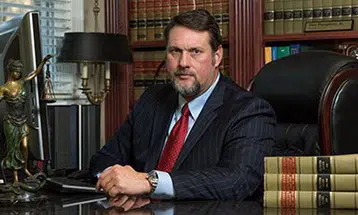
Attorney Don Pumphrey, Jr. is a former prosecutor, former law enforcement officer, and a successful and experienced criminal defense attorney. Don has achieved over 100 not guilty verdicts at trial and over 2,000 dismissals.