- DUI
- Criminal Defense
- Florida DUI
- Traffic Offenses
- Drug Charges
- Marijuana Charges
- Violent Crimes
- Domestic Violence
- Temporary Injunctions
- Weapons Charges
- Theft Crimes
- White Collar Crime
- Juvenile Offenses
- Sex Crimes
- Violation of Probation
- Early Termination of Probation
- Seal or Expunge Criminal Record
- Criminal Appeals
- US Federal Offenses
- Misdemeanor Charges
- Felony Charges
- Co-Defendant Cases
- College Student Defense
- College Student Hearings
- FSU Students
- FAMU Students
- Florida Panhandle Arrests
- Extradition to Florida
- Bench Warrants / Warrants
- Emergency Bond Hearings
- Gambling Charges
- Drone Arrests
- Marsy’s Law
- UAS Infractions
- Introduction of Contraband
- Lying to Police
- Locations
- Case Results
- Our Firm
- Media
- Resources
- Blog
- Contact Us
Northeast Florida’s Highest Court REVERSES Sexual Battery Conviction Over Insults of Defendant, Attorney
April 23, 2026 Don Pumphrey, Jr. Criminal Defense, Sex Crimes Social Share
Florida’s 5th District Court of Appeal REVERSED a defendant’s conviction for sexual battery and lewd assault (now lewd and lascivious molestation) on a child victim – concluding that the prosecutor’s improper comments during closing arguments violated his right to a fair trial.
CASE: Fuller v. State, 540 So.2d 182 (Fla. 5th DCA 1989)
Charge(s): Sexual Battery, Lewd Assault (e.g. Lewd or Lascivious Molestation)
Outcome: Convictions REVERSED, as a prosecutor’s various improper remarks during closing argument violated the defendant’s right to a fair trial.
Sexual Battery in Florida
In Florida, sexual battery is an extremely serious charge. Sexual battery – usually referred to as rape – occurs when someone orally, anally or vaginally penetrates a victim with a sexual organ or object, or has a victim penetrate them in this manner, WITHOUT the victim’s consent (Fla. Stat. 794.011).
Consent exists when someone 18 or older voluntarily engages in a sexual act of their own free will, without being forced or coerced. Someone does NOT have to physically resist for a lack of consent to be established, and minors (under 18 years old) are legally incapable of consenting to sex. Coley v. State, 616 So.2d 1017 (Fla. 3d. DCA 1993)
The potential penalties for sexual battery are extremely serious, as it’s one of the major FELONY offenses under Florida law. The following potential penalties for sexual battery apply:
- Victim under 12, defendant 18+: Sexual battery is punishable by death or a mandatory minimum of life in prison. Though the Florida and U.S. Supreme Courts have held the death penalty unconstitutional for rape that does not result in death, Florida authorizes it. Kennedy v. Louisiana, 554 U.S. 407 (2008); Buford v. State, 403 So. 2d 943 (Fla. 1981)
- Victim 12 or older but under 18, defendant 18+: A first-degree felony punishable by up to 30 years in prison and a $10,000 fine, or up to life in prison with threat of violence or the use of a weapon.
- Victim under 18, defendant 18+ and in a position of familial or custodial authority: A first-degree felony punishable by life (PBL) in prison.
- Victim over 18, defendant over 18: A second-degree felony punishable by up to 15 years in prison and a $10,000 fine (enhanceable to more severe penalties if actual force or a weapon was used).
Closing Arguments in Florida Criminal Trials
Closing arguments are an essential part of Florida criminal trials. Closing arguments serve as the “last word” that the State and defense get before the jury is instructed and sent to deliberate.
Although closing arguments are NOT evidence and cannot be considered by jurors as evidence, this does not change the fact that an effective closing argument can significantly influence how the jury views a case. A good closing argument provides a jury a “lens” through which to view the evidence and testimony in the case – and encourages them to render their verdict accordingly.
In particular, a good closing argument from an experienced, aggressive Florida criminal defense attorney will allow the jury to appreciate the “holes” in the State’s case (e.g. gaps in the evidence and testimony that provide a basis for reasonable doubt), increasing the likelihood that they will find in the defendant’s favor by rendering a not guilty verdict.
Though many believe that closing arguments involve the State speaking, followed by the defense (and then the judge instructing the jury), this is not entirely correct. Closing arguments operate using a “sandwich” structure in Florida (Robbins v. State, 891 So.2d 1102 (Fla. 5th DCA 2004)):
- First, the State gives its initial closing
- Second, the defense gives its closing (which often will involve rebuttals of what the State said during its first closing statement)
- Finally, the State (e.g. prosecutor) gives a REBUTTAL CLOSING (which is the true “last word” before deliberations) to refute the defense’s closing statement
The existence of this structure makes the closing argument especially important to the defense, for a few reasons. First, the defense only gets one “bite at the apple.” This means the defense’s closing argument must be particularly effective to maximize the chances that the jury will view the defense favorably, rather than being inclined to believe the “last thing they hear.”
Moreover, the closing argument is particularly important to the defense because it will (if done properly) allow the jury to appreciate the “problems” with the State’s case. Often, the State will be the party introducing the majority of evidence and testimony at trial. This may give jurors the (mis)impression that the State clearly has a stronger case.
But during closings, the defense can disabuse the jurors of that notion by pointing out where the State has failed to eliminate reasonable doubt. For more, click here.
Since popular television shows show “knock-down, drag-out fights” during closing arguments, it is widely believed that there are no“rules” surrounding what can be said. However, this is NOT the case.
There are many restrictions on the nature of arguments that can be made by attorneys (both State and defense) in closings. But this DOES NOT mean the rules are always honored. Lawyers are human beings, and occasional “inflammatory comments” may occur – especially in violent crime and sex crime cases.
Some examples of objectionable tactics employed during closing arguments include (Rodriguez v. State, 210 So.3d 750 (Fla. 5th DCA 2017)):
- Impugning the character of opposing counsel by calling them a “liar” or “evil”
- Calling the defendant ugly names/insulting them
- Relying on facts not in evidence or misrepresenting the law
- Commenting on the defendant’s right to remain silent (e.g. “If he wasn’t guilty, he would have said XYZ…”)
- Saying the case is about getting “justice” for the victim (Cardona v. State, 185 So.3d 514, 521 (Fla. 2016))
- GOLDEN RULE arguments (e.g. “Put yourself in the victim’s shoes and think about how scared they were… now find the defendant guilty.”)(Jenkins v. State, 563 So.2d 791 (Fla. 1st DCA 1990))
Though defense attorneys may also make objectionable comments during closing arguments, the State has a lot to lose by consistently violating the restrictions surrounding what’s permitted to be said in closings. Pacifico v. State, 642 So.2d 1178 (Fla. 1st DCA 1994)
If the State relies upon one or more of the above tactics during closing arguments, this seriously risks a mistrial – or even the REVERSAL of a conviction on appeal. For more on mistrials, click here.
The likelihood of a mistrial (or the defendant’s conviction being reversed by a Florida appellate court) significantly increases if the defense OBJECTS during a prosecutor’s closing arguments. This is because:
- WITH AN OBJECTION: Courts apply a “harmless error” analysis (e.g. if there was NO reasonable possibility the jury’s verdict was impacted by the comments) – if the improper remarks were not harmless error, a conviction requires reversal (Petruschke v. State, 125 So.2d 274 (Fla. 4th DCA 2013))
- WITHOUT AN OBJECTION: The improper comments are reviewed for fundamental error, which is a far higher standard (e.g. whether improper comments were so unfairly prejudicial that it made the jury’s verdict inherently illegitimate, per Brinson v. State, 153 So.3d 972 (Fla. 5th DCA 2015))
In one major Florida case, a defendant was accused of sexual battery and lewd assault (lewd or lascivious molestation) on a child under 12. He was convicted.
During closing arguments, the State made a variety of objectionable comments. These included:
- Insulting the defendant by calling him “shrewd, cunning and diabolical”
- Attacking the defendant’s attorney for cross-examining the alleged victim at trial
- Arguing that defense counsel was engaged in sinister misconduct by choosing to reserve their opening argument until the State concluded their case (this is a normal aspect of trial strategy)
The defense did NOT object during closing arguments, nor ask the trial judge for a mistrial. On appeal, the defendant argued that despite the lack of objection from his attorney, the prosecutor’s comments rose to the level of FUNDAMENTAL ERROR – vitiating the integrity of his trial (and requiring that he receive a new one, per Rosso v. State, 505 So.2d 611 (Fla. 3d DCA 1987)).
Florida’s 5th District Court of Appeal (Northeast Florida’s highest court) AGREED with him and REVERSED the defendant’s convictions, remanding the matter to the lower court for a new trial.
Let’s take a look at the case – Fuller v. State, 540 So.2d 182 (Fla. 5th DCA 1989) – and discuss what it means for those in Florida concerned about their right to a fair trial being violated during closing arguments in sex crime cases.
KEY CASE: Fuller v. State, 540 So.2d 182 (Fla. 5th DCA 1989)
In Fuller, the defendant (Fuller) was charged with sexual battery and lewd assault (now called lewd or lascivious molestation) on a child under 12. He was convicted on both counts. At trial, the following was revealed:
- Fuller was accused of committing various sex crimes upon an 8-year-old boy
- Fuller testified at trial
- Fuller’s attorney reserved his opening statement until after the State concluded its case (a common trial strategy)
- During closing arguments, the prosecutor called Fuller “shrewd, cunning, and diabolical”
- He further claimed the State should not be “punished” for its witnesses not being as cold and calculated as Fuller
- Moreover, the prosecutor made an appeal that the defendant had committed a wicked and vile act for which he must be held accountable (e.g. a “justice for the victim” argument)
- The prosecutor also blasted the defense for reserving its opening statement, saying this was sinister and improper
- Additionally, the prosecutor criticized Fuller’s attorney for cross-examining the child victim
- Ultimately, Fuller was found guilty
Fuller appealed his convictions, arguing that even though his attorney DID NOT OBJECT to the prosecutor’s improper remarks, these were so egregious that they rose to the level of fundamental error (e.g. made the jury’s verdict inherently invalid). Fuller urged the 5th DCA to REVERSE his convictions and remand the matter to the lower court for a new trial.
The 5th DCA AGREED with Fuller, and did so. Concluding the prosecutor’s improper remarks rose to the level of “fundamental error” due to their cumulatively prejudicial effect, the 5th DCA wrote:
“Additionally, the prosecutor engaged in such inflammatory and impermissible argument as to vitiate the fairness of the proceedings. Although unobjected to, the comments, once made, were of such a character that neither rebuke nor retraction would entirely destroy their sinister character… Here, the prosecutor argued that the State should not be punished because its witnesses were not as “shrewd and as cunning and as diabolical” as defense witnesses (the defendant was the only defense witness to testify). Not content with that jab, he suggested that the defendant had lied, because, unlike the State’s witnesses, the defendant’s story was “the product of a cunning and shrewd mind”; that the defendant had committed a wicked and vile act on the child for which he must be held accountable. To drive the nail in even further, the prosecutor suggested that there was something sinister and improper for defense counsel to reserve opening statement until after the State had presented its evidence, the implication being that the defense would develop its case after it heard the State’s evidence. This attack was unwarranted. It is not improper for the defense to request the reservation of opening argument until the State completes its evidence…”
“So too was it improper to personally attack defense counsel for cross-examining the child victim. Cross-examining a young child is always a delicate tactical problem for an attorney. There is a constant risk that if one is too harsh or insensitive to the feelings of the child the jury will be antagonized by the examination. Counsel therefore walks a thin psychological line during such examination, but it is improper for the prosecutor to castigate him or attempt to hold him in disrepute before the jury for questioning the young witness so that the jury may determine the witness’ credibility and reliability. … The judgments of conviction are reversed and the cause is remanded for a new trial.”
Put simply, the prosecutor’s comments were so “inflammatory and impermissible” that Fuller’s convictions required reversal despite the fact that there was no contemporaneous objection.
In sum, Fuller v. State, 540 So.2d 182 (Fla. 5th DCA 1989) marks a significant development in Florida’s corpus of case law surrounding improper closing arguments in sex crime cases. The 5th DCA (Northeast FL’s highest court) held that:
- The prosecutor’s improper remarks during closing argument were so egregious, they rose to the level of “fundamental error”
- The prosecutor’s personal insults of Fuller and attacks on Fuller’s attorney for reserving opening/cross-examining the child victim (despite there being nothing legally or ethically problematic about this) were “inflammatory” and uncalled for
- As the integrity of the trial was fatally compromised by the prosecutor’s misconduct, the fact that Fuller’s lawyer did not object was not fatal to his appeal
- This required REVERSAL of his convictions and remanding the matter for a new trial
Florida’s criminal defense community should take note of Fuller v. State, 540 So.2d 182 (Fla. 5th DCA 1989), as it makes clear state appellate courts will REVERSE convictions for serious felonies if improper closing arguments seriously undermine the integrity of a trial.
Sex crimes can involve lengthy prison sentences and heavy financial penalties. If someone is arrested and formally charged in Florida, it is critical to find experienced and aggressive legal representation as soon as possible.
Criminal Defense Attorney in Tallahassee, FL
Don Pumphrey, Jr. is a Former Prosecutor, Former State Police Officer, Lifetime Member of the Florida Association of Criminal Defense Lawyers; for over 25 years as a private defense attorney who is Trusted, Experienced, Aggressive in Criminal Defense as a Trial Attorney, Criminal Lawyer, Criminal Defense Lawyer for the accused in Florida State Courts located in Tallahassee, Florida but handling cases throughout the State of Florida.
Don Pumphrey, Jr. and the Tallahassee criminal defense lawyers at Pumphrey Law have decades of experience fighting criminal charges on behalf of clients and winning. Call Pumphrey Law now at (850) 681-7777 to learn more about what we can do for you. Our lawyers will be happy to provide you with a free consultation.
Don Pumphrey, Jr.
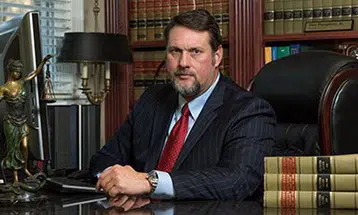
Attorney Don Pumphrey, Jr. is a former prosecutor, former law enforcement officer, and a successful and experienced criminal defense attorney. Don has achieved over 100 not guilty verdicts at trial and over 2,000 dismissals.