- DUI
- Criminal Defense
- Florida DUI
- Traffic Offenses
- Drug Charges
- Marijuana Charges
- Violent Crimes
- Domestic Violence
- Temporary Injunctions
- Weapons Charges
- Theft Crimes
- White Collar Crime
- Juvenile Offenses
- Sex Crimes
- Violation of Probation
- Early Termination of Probation
- Seal or Expunge Criminal Record
- Criminal Appeals
- US Federal Offenses
- Misdemeanor Charges
- Felony Charges
- Co-Defendant Cases
- College Student Defense
- College Student Hearings
- FSU Students
- FAMU Students
- Florida Panhandle Arrests
- Extradition to Florida
- Bench Warrants / Warrants
- Emergency Bond Hearings
- Gambling Charges
- Drone Arrests
- Marsy’s Law
- UAS Infractions
- Introduction of Contraband
- Lying to Police
- Locations
- Case Results
- Our Firm
- Media
- Resources
- Blog
- Contact Us
Right to Argue Entrapment Jury Instruction Has One Exception, Rules North Florida’s Highest Court
December 19, 2025 Don Pumphrey, Jr. Criminal Defense Social Share
Florida’s 1st District Court of Appeal held that even though a defendant is typically entitled for the jury to be instructed on entrapment if it is argued as a defense, there is one exception to this rule.
In Florida, entrapment is a widely known and discussed defense. However, it is sometimes misunderstood. Entrapment occurs when law enforcement misconduct leads a defendant to commit a crime – a crime that would not have otherwise occurred but for police involvement.
There are two types of entrapment: objective entrapment and subjective entrapment. Objective entrapment occurs when law enforcement misconduct in bringing about a crime is so egregious, that prosecuting a defendant would violate their due process rights even if they were predisposed to act criminally. Dippolito v. State, 275 So.3d 653 (Fla 4th DCA 2019)
Note: Entrapment is not solely limited to actual police officers. If government agents (such as confidential informants) rely upon prohibited methods to induce a defendant to act unlawfully, this can also provide a basis for an entrapment defense.
Though objective entrapment is quite rare (as it requires police to go above and beyond what is required to prove subjective entrapment), some examples include:
- Law enforcement manufactures drugs at the police station to sell to people on the street while undercover, only to arrest people when they try to buy them (State v. Williams, 623 So.2d 462, 466 (Fla. 1993))
- A police task force sends child pornography through the mail to arrest someone for possessing it (Farley v. State, 848 So.2d 393, 397-98 (Fla. 4th DCA 2003))
- Undercover law enforcement threatens to kill someone if they do not commit a crime
- A law enforcement officer or informant enters a sexual relationship with the defendant to get them to act criminally (Madera v. State, 943 So.2d 960 (Fla. 4th DCA 2006))
Unlike subjective entrapment, the defendant’s willingness to act is irrelevant in an objective entrapment analysis. The only question is if police violated a defendant’s due process rights. Importantly, the mere existence of a sting operation does not constitute objective entrapment (police are lawfully permitted to conduct undercover activities).
The other form of entrapment recognized by Florida law (under Munoz v. State, 629 So. 2d 90 (Fla. 1993) and Fla. Stat. 777.201) is subjective (e.g. statutory) entrapment.
Subjective entrapment occurs when law enforcement induces a non-predisposed defendant to act unlawfully. It is generally considered the “easier” of the entrapment defenses to prove – though its likelihood of success is highly dependent on the facts of the case.
For a subjective entrapment defense to succeed, a defendant must first prove by a preponderance (majority) of the evidence that police relied upon improper inducement tactics. These are tactics that risk getting even someone who is not “ready and willing, without persuasion” to commit a crime, to act unlawfully.
Per Gennette v. State, 124 So.3d 273 (Fla 1st DCA 2013), prohibited inducement methods include:
- Coaxing, cajoling, or harassment (e.g. “You’re a chicken if you don’t do it…”)
- Promises of friendship with the defendant (e.g. “I’ll be your best friend if…”)
- Promises of monetary reward (e.g. “I’ll pay you $1,000 if…”)
If inducement is shown by a preponderance of the evidence, the burden shifts to the State to prove someone was predisposed to commit the underlying offense beyond a reasonable doubt. This means they were “ready and willing, without persuasion” to act criminally in spite of the inducement. If the State fails, someone may not be found guilty of the charged offenses.
Important: To learn more about what constitutes inducement for entrapment purposes, click here. For more on predisposition, click here.
If someone believes they were entrapped by police in Florida, courts are consistent that they have the right to mount an entrapment defense. The likelihood of an entrapment defense succeeding is heavily dependent on the facts of a case.
But when must a jury be instructed on entrapment (allowing them to find the defendant not guilty on the grounds that they were subjectively or objectively entrapped)? Courts generally hold that any time the defense introduces evidence of entrapment (no matter how “weak or improbable”), an instruction is required. Morgan v. State, 112 So.3d 122 (Fla. 5th DCA 2013)
However, there is one exception to this rule. Let’s discuss the case in which Tallahassee and North Florida’s highest court found a trial judge correctly denied the defendant’s request for the jury to be instructed on entrapment – Ho Yeaon So v. State, 143 So.3d 1189 (Fla. 1st DCA 2014).
KEY CASE: Ho Yeaon So v. State, 143 So.3d 1189 (Fla. 1st DCA 2014)
In Ho Yeaon So, the defendant (Ho Yeaon So) was charged with traveling to meet a minor (Fla. Stat. 847.0135(4)) and unlawful use of a two way communications device (Fla. Stat. 934.215). He was convicted on both counts.
Ho Yeaon So was arrested after he was ensnared in a law enforcement sting arising from a Craigslist advertisement. The ad was posted by an undercover detective posing as a 14-year-old girl. Ho Yeaon So discussed the sexual acts he wished to engage in with the fictional minor “in graphic detail,” and was arrested after traveling to meet her.
Ho Yeaon So filed a motion to dismiss based on subjective entrapment before trial. However, this was denied by the judge – and the case proceeded to trial.
At trial, Ho Yeaon So requested that the jury be instructed on the subjective entrapment defense, as he testified that he was not predisposed to target minors and was induced to act unlawfully. In spite of this, the trial judge denied his request, so the jury was unable to consider the entrapment defense. Ho Yeaon So was convicted.
On appeal, Ho Yeaon So argued that the judge erred in denying his request for an entrapment jury instruction. He cited Morgan v. State, 112 So.3d 122 (Fla. 5th DCA 2013) to support this. Nevertheless, Florida’s 1st District Court of Appeal disagreed with Ho Yeaon So and affirmed his convictions. It wrote:
“On the first issue, we find the case relied on by Mr. Seo—Morgan v. State, 112 So.3d 122 (Fla. 5th DCA 2013)—distinguishable because, unlike the defendant in that case, Mr. Seo’s theory of defense was that he did not commit the charged crimes because he thought that he was communicating with and traveling to meet an adult who was “role-playing,” and not a minor. A material element of the crimes for which Mr. Seo was charged is that the person the defendant is communicating with or traveling to meet is “believed by the [defendant] to be a child.” § 847.0135(3)(a), (4)(a), Fla. Stat. (2011); see also Fla. Std. Jury Instr. (Crim.) 11.17(a), 11.17(c).”
“Thus, contrary to the argument in the concurring in part and dissenting in part opinion, because Mr. Seo testified under oath that he did not believe that the person being portrayed by the undercover officers was actually a child, the trial court properly denied Mr. Seo’s request for a jury instruction on entrapment. See Wilson v. State, 577 So.2d 1300, 1302 (Fla. 1991) (holding that a request for an instruction on entrapment should be refused even if there is evidence to support the defense “if the defendant has denied under oath the acts constituting the crime that is charged”).”
In essence, the 1st DCA found that because Ho Yeaon So claimed under oath that he traveled to meet a person he believed to be an adult, he was not entrapped. Since any alleged inducement did not actually “trick” him into believing he was speaking to a minor, according to Ho Yeaon So, the 1st DCA found he was not entitled to claim he was entrapped (per Wilson).
As the 1st DCA noted, one judge – Judge Benton – dissented from the finding that Ho Yeaon So was not entitled to an entrapment jury instruction. Judge Benton observed:
“Mr. Seo testified that when he first responded to the ad, he thought he was corresponding with someone at least eighteen years of age because the ad was on Craigslist. He testified he had previously responded to ads on Craigslist and had never encountered anybody underage. He also stated that people on such websites “role play” because “you can be anyone you want on the Internet.” … He also testified that, until he received the picture (approximately one hour and fifteen minutes after he and “Maddy” began exchanging messages on Yahoo Messenger), he was not interested in meeting “Maddy” in person.”
“Mr. Seo met his burden of presenting sufficient evidence in support of an entrapment defense to warrant a jury instruction on entrapment. He testified that law enforcement officers induced him to commit the offenses with which he was charged and that he lacked any predisposition to seduce a minor.”
“Because Mr. Seo introduced evidence from which the jury could find he was entrapped, the instruction he sought was appropriate, and necessary to allow the jury to evaluate one of the main issues in the case properly. His version of the facts supported giving the instruction. Mr. Seo presented evidence that, if accepted by the jury, would establish that officers induced or encouraged him to engage in conduct constituting crimes which he was not predisposed to commit.”
In essence, Judge Benton reached the opposite conclusion as the 1st DCA majority. To Judge Benton, Ho Yeaon So’s claim that he believed he was meeting an adult was a critical aspect of him disproving his predisposition to sexually target minors. According to Judge Benton, this did not undermine the request for an entrapment jury instruction – it supported the request.
However, Judge Benton’s dissent did not win the day. As a result, the majority opinion is now binding on this issue in Tallahassee and North Florida.
In sum, Ho Yeaon So v. State, 143 So.3d 1189 (Fla. 1st DCA 2014) is a significant development in Florida case law regarding the entrapment defense and when the jury must be instructed on this.
The 1st DCA found that even though defendants are typically entitled to such an instruction if they introduce evidence of entrapment (under Morgan), an exception occurs when a defendant denies under oath that they committed the charged offense at all.
In other words, the 1st DCA held Ho Yeaon So could not be entrapped to commit a crime he claimed he did not commit at all – since traveling to meet a minor (Fla. Stat. 847.0135(4)) requires actual belief of meeting a minor for sex. Ho Yeaon So claimed he had no such belief.
Judge Benton, however, disagreed. He argued that Ho Yeaon So’s testimony was designed to show that he was induced to act – and rebut any potential State claims that he was predisposed to target minors. Since Ho Yeaon So offered evidence he was entrapped, Judge Benton believed the jury should have been instructed on this.
Florida defense attorneys and defendants in cases involving entrapment claims should be aware of Ho Yeaon So and how sworn testimony denying belief that an undercover officer was a minor (in a traveling case) may undermine an entrapment defense.
Note: Ho Yeaon So v. State, 143 So.3d 1189 (Fla. 1st DCA 2014) has since been reversed on other grounds by the Florida Supreme Court, as his dual convictions violated double jeopardy. However, the Florida Supreme Court did not overrule the 1st DCA’s entrapment analysis.
If someone is arrested and formally charged in Florida in a case and has a potential entrapment defense, it is critical to find experienced and trusted legal representation as soon as possible. This decision could make the difference in whether or not someone faces a lengthy prison term and hefty fines.
Criminal Defense Attorney in Tallahassee, FL
Don Pumphrey, Jr. is a Former Prosecutor, Former State Police Officer, Lifetime Member of the Florida Association of Criminal Defense Lawyers; for over 25 years as a private defense attorney who is Trusted, Experienced, Aggressive in Criminal Defense as a Trial Attorney, Criminal Lawyer, Criminal Defense Lawyer for the accused in Florida State Courts located in Tallahassee, Florida but handling cases throughout the State of Florida.
Don Pumphrey, Jr. and the Tallahassee criminal defense lawyers at Pumphrey Law have decades of experience fighting drug charges on behalf of clients and winning. Call Pumphrey Law now at (850) 681-7777 to learn more about what we can do for you. Our lawyers will be happy to provide you with a free consultation.
Don Pumphrey, Jr.
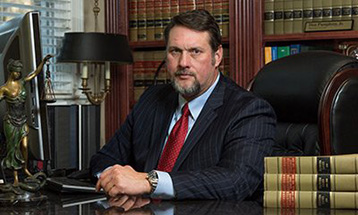
Attorney Don Pumphrey, Jr. is a former prosecutor, former law enforcement officer, and a successful and experienced criminal defense attorney. Don has achieved over 100 not guilty verdicts at trial and over 2,000 dismissals.