- DUI
- Criminal Defense
- Florida DUI
- Traffic Offenses
- Drug Charges
- Marijuana Charges
- Violent Crimes
- Domestic Violence
- Temporary Injunctions
- Weapons Charges
- Theft Crimes
- White Collar Crime
- Juvenile Offenses
- Sex Crimes
- Violation of Probation
- Early Termination of Probation
- Seal or Expunge Criminal Record
- Criminal Appeals
- US Federal Offenses
- Misdemeanor Charges
- Felony Charges
- Co-Defendant Cases
- College Student Defense
- College Student Hearings
- FSU Students
- FAMU Students
- Florida Panhandle Arrests
- Extradition to Florida
- Bench Warrants / Warrants
- Emergency Bond Hearings
- Gambling Charges
- Drone Arrests
- Marsy’s Law
- UAS Infractions
- Introduction of Contraband
- Lying to Police
- Locations
- Case Results
- Our Firm
- Media
- Resources
- Blog
- Contact Us
What Every Florida Appeals Court Says About the Plain Smell Doctrine
October 9, 2025 Don Pumphrey, Jr. Criminal Defense, Drug Charges Social Share
After hemp and medical marijuana legalization, Florida’s District Courts of Appeal have voiced differing opinions on how the “plain smell doctrine” should be applied to the odor of marijuana.
In Florida, the “plain smell doctrine” is a hotly debated legal concept that serves as an extension of the “plain view doctrine.” It allows law enforcement to perform a probable cause search of an automobile if they recognize the obvious odor of illicit drugs (such as marijuana) emanating from the vehicle.
But the plain smell doctrine has come under serious fire in recent years. This is because Florida’s legalization of hemp and medical marijuana have changed the legal landscape. Now, the “plain smell” of marijuana may be insufficient to establish probable cause of a crime because the scent could have a legal explanation (e.g. the scent of legal hemp or residual medical marijuana odor).
Despite this, Florida’s appeals courts are split on the issue. Of the six District Courts of Appeal in the state, only two have ruled directly in recent years (post-hemp and medical marijuana legalization) on whether “plain smell” remains sufficient to establish probable cause for a search.
It is important to understand this evolving legal landscape, as trial courts in these respective jurisdictions are bound by these rulings. This blog will break down how all of Florida’s six District Courts of Appeal currently view the plain smell doctrine in the wake of hemp and medical marijuana legalization.
Florida’s First District Court of Appeal (Northwest Florida, Tallahassee)
The First District Court of Appeal (like all DCAs) previously recognized that the plain smell of marijuana established probable cause to search a vehicle. However, the 1st DCA appeared more equivocal about this in its Hatcher v. State, 342 So. 3d 807 (Fla.1st DCA 2022).
There, Hatcher argued that the police search of his vehicle based on the smell of marijuana was unconstitutional, because “plain smell” could no longer serve as a reliable indicator of unlawful activity. The 1st DCA ruled against him.
But the 1st DCA did not explicitly state that “plain smell alone” was sufficient to establish probable cause. Instead, the court noted that there were other facts that permitted the officer to develop probable cause of criminal activity based on the “totality of the circumstances.” These included:
- Hatcher admitting he had just smoked a blunt while inside the vehicle
- Hatcher’s demeanor “resembling someone who was under the influence”
- Hatcher conceding he did not have a valid driver’s license
Given this, the court ruled that the officer’s search of the vehicle was based on legally adequate probable cause. The court did not expressly overrule its previous findings that “plain smell” can serve as the probable cause basis to perform a search, but did not explicitly affirm this either.
The 1st DCA has not expressly ruled on this issue since Hatcher. Thus, the odor of marijuana can serve as a factor in finding probable cause in Northwest Florida and Tallahassee, but may not be sufficient by itself (in the absence of other evidence of criminal activity).
Florida’s Second District Court of Appeal
For years, Florida’s 2nd District Court of Appeal had been clear – the plain smell of mairjuana alone remained probable cause – even post-hemp and medical marijuana legalization. The 2nd DCA handed down this ruling in Owens v. State, 317 So. 3d 1218 (Fla. 2d. DCA 2021).
But the 2nd DCA has since reversed itself, striking down the plain smell doctrine in an October 2025 ruling: Darrielle Ortiz Williams v. State, — So.3d —- (Fla. 2d. DCA, October 1, 2025).
In Williams, the 2nd DCA ruled the plain smell of marijuana is insufficient to establish probable cause. The court held that due to evolving state and federal laws on marijuana, its odor now has potentially legal explanations (hemp/medical marijuana), unlike in previous decades.
The 2nd DCA observed that the “incriminating nature” of a substance’s smell must be “readily apparent” for it to establish probable cause. As this is no longer the case for marijuana, the plain smell doctrine is dead in the greater Tampa area, which is covered by the 2nd DCA.
However, Williams recognized the odor of marijuana can still be a factor in establishing probable cause. If this is coupled with other indicators of criminal activity (e.g. person looks to be under the influence while driving, erratic behavior, located in an area known for drug activity), the odor of marijuana can be the “tipping point” in establishing probable cause.
Florida’s Third District Court of Appeal
Like the 1st DCA, the 3rd District Court of Appeal has not explicitly addressed whether “plain smell” alone is still probable cause to search a vehicle. However, the court touched on this issue in a 2024 decision – Aldama v. State, 394 So. 3d 148 (Fla. 3d. DCA 2024).
Aldama argued that the warrantless (probable cause) search of his vehicle could not be supported by “plain smell alone” due to legalization of medical marijuana and hemp. But the court ruled against him, because Aldama denied that he was in possession of medical marijuana or hemp before officers searched the vehicle.
The court held that if every lawful explanation for the apparent smell of marijuana is eliminated by officers (e.g. residual scent from smoking medical marijuana or the presence of legal hemp), officers may proceed with a search. However, the court did not address the viability (or lack thereof) of the “plain smell” doctrine.
The court dealt with a similar dispute a year later in Wright-Johnson v. State, 405 So. 3d 501 (Fla. 3d DCA 2025). There, the 3rd DCA again declined to address the “plain smell doctrine” directly. The court permitted the search by citing the “good faith exception” to the exclusionary rule – as the officer at the time of the search was relying upon Owens as binding precedent.
Given the court has explicitly declined to rule whether it still considered plain smell alone sufficient to establish probable cause, the 3rd DCA is in a similar position to the 1st DCA. If someone’s vehicle is searched solely based on the odor of marijuana, it is possible the court would suppress the fruits of such a search. But that was not the case in Aldama.
Florida’s Fourth District Court of Appeal
The Fourth DCA most recently addressed the “plain smell” issue in State v. Fortin, 383 So. 3d 820 (Fla. 4th DCA 2024). But like the 1st and 3rd DCAs, the court declined to rule squarely on the issue of whether the plain odor of marijuana provided probable cause for a vehicle search.
In Fortin, the officer smelled marijuana while standing outside Fortin’s vehicle – but then saw a clear baggie containing marijuana and marijuana flakes in various locations within the car. The vehicle was searched as a result, and Fortin was ultimately arrested and charged.
The court held that since Fortin had marijuana in his vehicle that was within the “plain view” of the officer and not in a designated medical marijuana container, the officer properly developed probable cause of illicit drug use. The court also stated that “generally,” the smell of marijuana alone can serve as probable cause.
But the court also noted that the legalization of hemp and medical marijuana had changed things, and that there could be a case where the smell of fresh (not burning or burnt) marijuana would be insufficient to support a finding of probable cause. For now, however, it is safe to say that the “plain smell doctrine” remains (mostly) intact in the 4th DCA.
Florida’s Fifth District Court of Appeal
As of 2024, the “plain smell doctrine” is dead in the 5th District Court of Appeal. “Plain smell” can no longer serve as probable cause for an automobile search in this district after Baxter v. State, 389 So.3d 803 (Fla 5th DCA 2024).
In Baxter, the officer searched a vehicle in an empty parking lot after smelling marijuana as he approached it. There was no other evidence of unlawful activity on Baxter’s part other than the odor of marijuana at the time of the search. Drugs were found and Baxter was arrested.
The 5th DCA struck down the “plain smell” doctrine, ruling that it no longer applies in the jurisdiction. The court held that the legalization of hemp and medical marijuana means that “plain smell” cannot serve as a probable cause basis (or reasonable suspicion) for a search or detention, without additional evidence of illegal activity.
Florida’s Sixth District Court of Appeal
Florida’s 6th District Court of Appeal took a similar approach to the 1st and 3rd DCAs in the recent case of State v. Simpson, 414 So. 3d 291 (Fla. 6th DCA 2025). The court decided not to address the “plain smell doctrine” directly, and instead, adopted a “totality of the circumstances” approach.
Simpson was driving his car in a high-crime area that was known well for drug activity. Officers stopped the vehicle, and when Simpson rolled down the window, they immediately smelled fresh marijuana. The officers performed a probable cause search and Simpson was arrested.
The court ruled that because the officers had specialized narcotics training and knew that the area where the stop occurred was a hotbed of drug activity, the search of Simpson’s car was supported by probable cause. However, the court did not endorse the “plain smell” doctrine – and indicated that if the facts were different, the ruling may have been the opposite.
Given this, the “plain smell” doctrine’s future is uncertain in the 6th DCA. If someone’s vehicle were to be searched based solely on the odor of marijuana (especially fresh marijuana, which is indistinguishable from hemp), the court may very well rule that this is insufficient without other facts pointing to criminality (as was the case in Simpson).
What about the Florida Supreme Court?
The Florida Supreme Court has not yet ruled on the issue of whether plain smell of marijuana alone can serve as probable cause to search a vehicle. If and when the court does, it will likely be one of three outcomes:
- Plain smell alone is sufficient to establish probable cause (as was held in Owens)
- Plain smell can be a factor in a “totality of the circumstances” analysis (e.g. someone also in a high crime area, acting suspiciously, etc.)
- Plain smell is insufficient as it is no longer an indicator of criminal activity (Baxter)
This is a rapidly developing issue in Florida law, so it is possible the Florida Supreme Court will hear such a case in the next few years. But for now, it is important to understand the positions of Florida’s District Courts of Appeal – as they are currently shaping the legal system’s evolving position on the “plain smell doctrine.”
In the event someone is charged with a marijuana-related offense or is searched based on “plain smell” of marijuana or another substance, it is vital to seek out aggressive and experienced legal counsel as soon as possible. The attorneys at Pumphrey Law have decades of experience fighting to win for clients across Florida who have been charged with marijuana-related crimes.
Criminal Defense Attorney in Tallahassee, FL
Don Pumphrey, Jr. is a Former Prosecutor, Former State Police Officer, Lifetime Member of the Florida Association of Criminal Defense Lawyers; for over 25 years as a private defense attorney who is Trusted, Experienced, Aggressive in Criminal Defense as a Trial Attorney, Criminal Lawyer, Criminal Defense Lawyer for the accused in Florida State Courts located in Tallahassee, Florida but handling cases throughout the State of Florida.
Don Pumphrey, Jr. and the Tallahassee criminal defense lawyers at Pumphrey Law have decades of experience fighting drug charges on behalf of clients and winning. Call Pumphrey Law now at (850) 681-7777 to learn more about what we can do for you. Our lawyers will be happy to provide you with a free consultation.
Don Pumphrey, Jr.
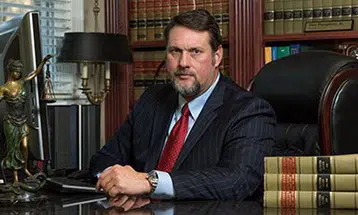
Attorney Don Pumphrey, Jr. is a former prosecutor, former law enforcement officer, and a successful and experienced criminal defense attorney. Don has achieved over 100 not guilty verdicts at trial and over 2,000 dismissals.