- DUI
- Criminal Defense
- Florida DUI
- Traffic Offenses
- Drug Charges
- Marijuana Charges
- Violent Crimes
- Domestic Violence
- Temporary Injunctions
- Weapons Charges
- Theft Crimes
- White Collar Crime
- Juvenile Offenses
- Sex Crimes
- Violation of Probation
- Early Termination of Probation
- Seal or Expunge Criminal Record
- Criminal Appeals
- US Federal Offenses
- Misdemeanor Charges
- Felony Charges
- Co-Defendant Cases
- College Student Defense
- College Student Hearings
- FSU Students
- FAMU Students
- Florida Panhandle Arrests
- Extradition to Florida
- Bench Warrants / Warrants
- Emergency Bond Hearings
- Gambling Charges
- Drone Arrests
- Marsy’s Law
- UAS Infractions
- Introduction of Contraband
- Lying to Police
- Locations
- Case Results
- Our Firm
- Media
- Resources
- Blog
- Contact Us
What is Unnatural and Lascivious Act in Florida? What to Know
September 23, 2025 Don Pumphrey, Jr. Criminal Defense, Sex Crimes Social Share
In Florida, Unnatural and Lascivious Act (Fla. Stat. Section 800.02) is a serious but little-known criminal offense. Charged less commonly than other lewd and lascivious offenses (such as lewd or lascivious molestation, lewd or lascivious conduct, lewd or lascivious exhibition, and lewd or lascivious battery), it is a second-degree misdemeanor punishable by up to 60 days in jail and a $500 fine.
But what is an “unnatural and lascivious act” in Florida, and what are defenses to the charge if someone is accused? This blog will answer these key questions.
For someone to be proven guilty of an unnatural and lascivious act, the State must prove the following beyond a reasonable doubt:
- An act occurred with another person (not merely a thought)
- The act was “unnatural” – contrary to normal feelings or behavior
- The act was also “lascivious” – with lustful, sensual, wicked or unchaste intent
Unnatural and lascivious act is a second-degree misdemeanor punishable by up to 60 days in jail and a $500 fine.
Florida’s ban on “unnatural and lascivious acts” originated over a century ago – the law was considered a “lesser-included” offense of a greater charge: “abominable and detestable crime against nature with mankind or beast.” This law (Fla. Stat. Section 800.01) was a serious felony that was typically used to prosecute sexual activity between members of the same sex. Morris v. State, 261 So. 2d 563 (Fla. 1972).
In 1971, the Florida Supreme Court struck down the “abominable and detestable crime against nature” statute on vagueness grounds (the law originally passed in 1868). However, it upheld the ban on unnatural and lascivious acts (passed in 1917), which it noted were understood to refer to oral and anal intercourse. Franklin v. State, 257 So. 2d 21 (Fla. 1971).
Despite the fact that gay marriage was legalized nationwide by the U.S. Supreme Court in 2015, Florida has continued to enforce the prohibition against “unnatural and lascivious acts” by having the law function as a permissive lesser-included offense of lewd or lascivious crimes.
The difference between a permissible lesser-included offense and a necessary lesser-included offense is as follows:
- Permissive lesser-included offense: A less severe offense than the greater offense, about which the jury may be instructed based on evidence of the case warranting it (and only if the defendant requests this)
- Necessarily included: Elements of the lesser offense are subsumed by the greater offense (for example, online solicitation of a minor is a lesser-included offense of traveling to meet a minor, as the elements of the former are subsumed by the latter)
Under Florida law, unnatural and lascivious act functions as a permissive lesser-included offense for felony lewd or lascivious charges under Fla. Stat. Section 800.04, which include:
- Lewd or lascivious battery in cases where no intercourse occurs (State v. Knighton, 235 So. 3d 312 (Fla. 2018)).
- Lewd or lascivious molestation
- Lewd or lascivious conduct or exhibition
Based on its statutory definition under Fla. Stat. Section 800.02, some examples of unnatural and lascivious acts may include:
- Sex in a public park: Not a “normal” setting for the activity and it is of a lewd/lascivious nature (sexual intent)
- Public fondling in a crowded area: A lustful/unchaste act around many others
- Simulated sex or dry-humping in front of a crowd
A requirement of an unnatural and lascivious act is that the offensive behavior must be engaged in with another person. For example, someone pleasuring themselves in a vehicle who is seen by a passerby is not guilty of an unnatural or lascivious act (but may be charged under other statutes, such as 800.03). Conforti v. State, 800 So.2d 350 (Fla. 4th DCA 2001)
Potential defenses to a charge of an unnatural of lascivious act may include:
- The act was only engaged in by a single person (Conforti)
- The act was not unchaste or lustful in nature (such as a clothing malfunction)
- Breastfeeding in public (not a crime as a matter of law)
Note: Consent is not an automatic defense to an accusation of an unnatural and lascivious act. This is because the setting in which the act occurs is generally an essential component of the charge (sex in private with consenting adults is not a crime).
Moreover, the other involved party being an adult is not a defense to a charge under Fla. Stat. Section 800.02. While this does provide a defense to a felony lewd or lascivious charge (victim must be under 16 years old), an unnatural and lascivious act can involve consenting adults.
In sum, an unnatural and lascivious act in Florida is an act that occurs with another person involving lustful intent, that is contrary to normal feelings or behavior. Though this statute was generally viewed as a prohibition on oral and anal sex at the time of its passage, it has since been used to prosecute a wider range of conduct.
Unnatural and lascivious act is a permissive lesser-included offense of lewd or lascivious felonies in Florida, and is a second-degree misdemeanor punishable by up to 60 days in jail and a $500 fine. Defenses to an allegation of an unnatural and lascivious act may include a lack of lustful or unchaste intent, no involvement of another person, and more.
In the event someone is charged with a lewd or lascivious offense, it is vital to seek out aggressive and experienced legal counsel as soon as possible. The attorneys at Pumphrey Law have decades of experience fighting to win for clients across Florida.
Criminal Defense Attorney in Tallahassee, FL
Don Pumphrey, Jr. is a Former Prosecutor, Former State Police Officer, Lifetime Member of the Florida Association of Criminal Defense Lawyers; for over 25 years as a private defense attorney who is Trusted, Experienced, Aggressive in Criminal Defense as a Trial Attorney, Criminal Lawyer, Criminal Defense Lawyer for the accused in Florida State Courts located in Tallahassee, Florida but handling cases throughout the State of Florida.
Don Pumphrey, Jr. and the Tallahassee criminal defense lawyers at Pumphrey Law have decades of experience fighting drug charges on behalf of clients and winning. Call Pumphrey Law now at (850) 681-7777 to learn more about what we can do for you. Our lawyers will be happy to provide you with a free consultation.
Don Pumphrey, Jr.
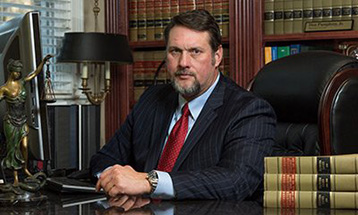
Attorney Don Pumphrey, Jr. is a former prosecutor, former law enforcement officer, and a successful and experienced criminal defense attorney. Don has achieved over 100 not guilty verdicts at trial and over 2,000 dismissals.