- DUI
- Criminal Defense
- Florida DUI
- Traffic Offenses
- Drug Charges
- Marijuana Charges
- Violent Crimes
- Domestic Violence
- Temporary Injunctions
- Weapons Charges
- Theft Crimes
- White Collar Crime
- Juvenile Offenses
- Sex Crimes
- Violation of Probation
- Early Termination of Probation
- Seal or Expunge Criminal Record
- Criminal Appeals
- US Federal Offenses
- Misdemeanor Charges
- Felony Charges
- Co-Defendant Cases
- College Student Defense
- College Student Hearings
- FSU Students
- FAMU Students
- Florida Panhandle Arrests
- Extradition to Florida
- Bench Warrants / Warrants
- Emergency Bond Hearings
- Gambling Charges
- Drone Arrests
- Marsy’s Law
- UAS Infractions
- Introduction of Contraband
- Lying to Police
- Locations
- Case Results
- Our Firm
- Media
- Resources
- Blog
- Contact Us
When is Hearsay Admission Harmless Error in a FL Sexual Battery Case?
April 23, 2026 Don Pumphrey, Jr. Criminal Defense, Sex Crimes Social Share
Florida’s 4th District Court of Appeal ruled that although a nurse’s testimony about the injuries allegedly sustained by a sexual battery victim was largely inadmissible on hearsay grounds, the defendant’s conviction required affirmance because this was HARMLESS ERROR.
CASE: Henderson v. State, — So.3d —- (Fla. 4th DCA 2026)
Charge(s): Armed Sexual Battery
Outcome: Conviction AFFIRMED, as even though a nurse’s testimony was wrongly admitted at trial, the evidence was so strong against Henderson that it did not influence the outcome.
Sexual Battery in Florida
In Florida, sexual battery is an extremely serious charge. Sexual battery – usually referred to as rape – occurs when someone orally, anally or vaginally penetrates a victim with a sexual organ or object, or has a victim penetrate them, WITHOUT the victim’s consent (Fla. Stat. 794.011).
Consent occurs when someone 18 or older voluntarily engages in a sexual act of their own free will, without being forced or coerced. Someone does NOT have to physically resist for a lack of consent to be established, and minors (under 18 years old) are legally incapable of consenting to sex. Coley v. State, 616 So.2d 1017 (Fla. 3d. DCA 1993)
The potential penalties for sexual battery are extremely serious, as it’s one of the major FELONY offenses under Florida law. The following potential penalties for sexual battery apply:
- Victim under 12, defendant 18+: Sexual battery is punishable by death or a mandatory minimum of life in prison. Though the Florida and U.S. Supreme Courts have held the death penalty unconstitutional for rape that does not result in death, Florida authorizes it. Kennedy v. Louisiana, 554 U.S. 407 (2008); Buford v. State, 403 So. 2d 943 (Fla. 1981)
- Victim 12 or older but under 18, defendant 18+: A first-degree felony punishable by up to 30 years in prison and a $10,000 fine, or up to life in prison with threat of violence or the use of a weapon.
- Victim under 18, defendant 18+ and in a position of familial or custodial authority: A first-degree felony punishable by life (PBL) in prison.
- Victim over 18, defendant over 18: A second-degree felony punishable by up to 15 years in prison and a $10,000 fine (enhanceable to more severe penalties if actual force or a weapon was used).
Attempted sexual battery is charged one degree below the completed offense. Because the “least severe” potential penalty for sexual battery (if the statutory maximum sentence occurs) is fifteen years in prison, it is CRITICAL to contact an experienced, aggressive Florida criminal defense attorney if accused.
If someone is convicted of sexual battery, they are required to register as a sex offender/predator in Florida (designation depends on statute allegedly violated). This places a series of restrictions on that person, including where they can work and live. For more on this, click here.
There is no statute of limitations at all when it comes to initiating a sexual battery charge against someone accused of committing sexual battery against a minor (under age 18). This is a result of “Donna’s Law,” which passed in 2020.
If the victim was not a minor and is not being charged as a capital or life felony, the statute of limitations follows standard Florida law unless designated otherwise by statute. These limits are:
- For a first-degree felony, four years from the time of the alleged event
- For a second or third-degree felony, three years
- For a first-degree misdemeanor, two years (though sexual battery is never charged as a first-degree misdemeanor)
- For a second-degree misdemeanor, one year (though sexual battery is never charged as a second-degree misdemeanor)
Note: For a comprehensive breakdown of sexual battery under Florida law (including ten of the most frequently asked questions about it), click here.
In a sexual battery prosecution, the State may attempt to introduce inadmissible hearsay during trial. In Florida, hearsay is an out of court statement, document or record that is offered in court (e.g. offered into evidence) to prove that its contents are true. Hearsay is usually inadmissible in a court of law, though they are various exceptions to this rule.
Some exceptions apply regardless of whether the declarant (speaker or author of the hearsay) is available to testify at trial (Fla. Stat. 90.803). Others only apply if a declarant is unavailable to testify (Fla. Stat. 90.804).
Some of the most commonly relied upon hearsay exceptions under Fla. Stat. 90.803 include (Johnson v. State, 76 So.3d 1124 (Fla. 1st DCA 2012)):
- Present Sense Impression: Statement describing or explaining an event made while perceiving it or immediately after.
- Excited Utterance: Statement relating to a startling event made while under stress or excitement from the event.
- Then-Existing Mental, Emotional, or Physical Condition: Statement of current state of mind, emotion, sensation, or physical condition (e.g., intent, pain).
- Statements for Purposes of Medical Diagnosis or Treatment: Statement made for diagnosis/treatment describing medical history, symptoms, or cause.
Hearsay exceptions under Fla. Stat. 90.804, which allow the admission of hearsay only when the declarant is not available to testify and face cross-examination at trial, include:
- Former Testimony: Prior testimony given under oath in a proceeding or deposition where the opposing party had a similar motive and opportunity to develop it.
- Statement Against Interest: Statement so contrary to declarant’s own interest (e.g., penal, pecuniary, proprietary) that a reasonable person wouldn’t have said it unless true.
- Statement Under Belief of Imminent Death: Statement made while believing death was imminent, concerning the cause or circumstances of what the declarant believed to be impending death. (Death must be so close that the declarant proverbially heard “the beating wings of the angel of death.” People v. Sarzano, 212 N.Y. 231 (1914))
If hearsay is wrongly admitted at a defendant’s sexual battery trial and this is “prejudicial” (e.g. hurts the defendant), many tend to believe this is automatically a basis to reverse their conviction (if they are found guilty). But this is NOT the case – because the wrongful admission of hearsay is subject to a harmless error analysis.
Harmless error occurs when there is a legal error during the defendant’s trial (e.g. something is admitted into evidence that shouldn’t have been), but an appellate court determines BEYOND A REASONABLE DOUBT that the remaining evidence was so overwhelming, the jury’s verdict would not have changed even in the absence of the error. For more, click here.
This principle was demonstrated in a recent major Florida sexual battery case heard by Florida’s 4th District Court of Appeal (Southeast FL’s highest court). There, overwhelming evidence of a defendant’s guilt of armed sexual battery on a 16-year-old was introduced. He was convicted and sentenced to life in prison.
On appeal, the defendant argued that the testimony of a medical professional, a nurse, about the victim’s injuries was largely inadmissible hearsay. The nurse quoted large portions of the sexual assault report prepared at the hospital after the incident without this report being formally offered into evidence.
Because of this violation of hearsay rules that went unremediated, the defendant claimed that his convictions required REVERSAL and that a new trial should take place in his case. However, the 4th DCA DID NOT AGREE, and AFFIRMED his convictions on the basis that any “error” was HARMLESS beyond a reasonable doubt.
Let’s take a look at that case – Henderson v. State, — So.3d —- (Fla. 4th DCA 2026) – and see what it means for defendants in Florida charged with sexual battery.
KEY CASE: Henderson v. State, — So.3d —- (Fla. 4th DCA 2026)
In Henderson, the defendant (Henderson) was charged with and convicted of 2 counts of armed sexual battery. At trial, the following was revealed:
- The victim was a 16-year-old girl who testified she was stopped by Henderson as she was walking home from school, and Henderson held a box cutter to her ankle and neck as he sexually battered her
- The victim’s mother testified, corroborating the victim’s extreme distress when she got home from school, leading her to be taken in for a rape kit
- A DNA analyst testified that there was a strong DNA “match” to Henderson when the victim was swabbed (sample was 5.88 billion times more likely to be explained by the victim and Henderson than the victim and an unknown, unrelated individual)
- The State also presented Williams Rule testimony of a second 16-year-old girl who was allegedly approached by Henderson that same day – except that she was able to escape
- The facts of what happened to the second girl were almost identical to what happened to the victim, except Henderson was unable to complete that sexual battery
- The State introduced texts between the second girl and her mother (from the day after the alleged offense) referencing the incident
- Both victims identified Henderson as the assailant
- Finally, a nurse practitioner testified that she was not the person who examined the victim in the case, but nevertheless proceeded to discuss the sexual assault report in the case
- The defense objected to a portion of the nurse’s testimony that described the injuries, as the nurse did not have the report in front of her and she had not personally examined the victim (making it inadmissible hearsay)
- The trial judge admitted the testimony anyway
- The jury ultimately CONVICTED Henderson
On appeal to the 4th DCA, Henderson argued that the nurse’s testimony was largely inadmissible hearsay – and that its admission was not harmless error. The 4th DCA agreed on the first point – but not the second, and AFFIRMED Henderson’s convictions.
Addressing the admissibility of the nurse’s testimony regarding the victim’s injuries without the report being offered into evidence, the 4th DCA wrote:
“Here, Nurse’s recounting of the sexual assault report was inadmissible hearsay. Virtually every time Nurse was asked a question, she began by stating that she was reading her answer from the report. Indeed, she agreed with defense counsel that she had no “independent knowledge of any of these things” and would not know anything about this patient or case without referencing the report. As Nurse was acting as a mere conduit for the hearsay statements in the report, her testimony recounting the report’s contents was inadmissible hearsay. Specifically, the pieces of evidence that should not have been admitted were: (I) the sexual assault report’s clinical description of the Victim’s vaginal injury and bleeding; and (II) the report’s description of which of the Victim’s body parts were swabbed. Nurse read these observations of physical phenomena verbatim from the report. In contrast, her statements about the clinic’s ordinary procedures and her own expert opinions (such as whether injuries are typical and how frequently they are seen) were admissible.”
However, the 4th DCA determined that because there was no reasonable possibility that the error impacted the jury’s verdict in Henderson’s case, his convictions required AFFIRMANCE:
“Error is harmless if there is no reasonable possibility the error affected the verdict. Special v. W. Boca Med. Ctr., 160 So. 3d 1251, 1255-57 (Fla. 2014). “Application of the test requires not only a close examination of the permissible evidence on which the jury could have legitimately relied, but an even closer examination of the impermissible evidence which might have possibly influenced the jury verdict.” State v. DiGuilio, 491 So. 2d 1129, 1138 (Fla. 1986).”
“Here, the jury could have legitimately relied on a substantial amount of properly admitted evidence in convicting Henderson of armed sexual battery. Foremost, of course, is the Victim’s testimony. She testified about the way Henderson had approached her, her visits to the hospital, crime scene, and sexual assault center, and the battery itself. Her account of Henderson’s unusual interest in her shoes and feet and whether she ran track matched perfectly with the Williams Rule witness’s testimony, which was itself corroborated by contemporaneous texts with the witness’s mother. The two girls’ testimony about Henderson’s predation was compelling, highly consistent evidence of his modus operandi and lewd motives. The jury also listened to Henderson’s interview with police, in which he first denies having anything to do with a teenage girl, and then ultimately admits to having encountered the Victim, engaging in sexual conversation with her, and even to exposing his penis in the Victim’s presence. Add in the DNA evidence showing Henderson’s DNA in the Victim’s perianal and buttocks swabs, and no reasonable doubt could arise. Notably, defense counsel did not even mention the anal DNA evidence in closing argument, presumably because no credible argument could be made against that highly compelling scientific evidence. In contrast, the two pieces of evidence that should have been excluded were not central to the case.”
“We see no reasonable possibility that a jury confronted with the Victim’s account of her vaginal pain during the battery, her account of bleeding in the shower and feeling pain during the vaginal swabs, the corroborating account by her mother, the chillingly similar and contemporaneously corroborated testimony by the Williams Rule witness, Henderson’s incredible and incriminating half-confession, and the uncontroverted evidence of Henderson’s DNA in the Victim’s perianal and buttocks swabs, would reach a different verdict because it lacked the clinical description of the vaginal injury which the Victim separately testified to enduring. No logical reason explains why this one omission would change the verdict. Accordingly, we affirm.”
In sum, Henderson v. State, — So.3d —- (Fla. 4th DCA 2026) marks a significant development in Florida’s corpus of case law on the issue of hearsay’s admissibility in sexual battery cases. The 4th DCA (Southeast FL’s highest court) found that:
- The nurse’s testimony regarding the victim’s injuries was inadmissible hearsay, as she did not prepare the sexual assault report and did not personally examine the victim
- However, there was overwhelming evidence of Henderson’s guilt
- Although the hearsay’s introduction was erroneous, there was NO reasonable possibility that the outcome would have changed (e.g. Henderson would’ve been found not guilty) in the absence of the nurse’s testimony
- As a result, his convictions were affirmed (pursuant to State v. DiGuilio, 491 So. 2d 1129 (Fla. 1986))
Florida’s criminal defense community should take note of Henderson v. State, — So.3d —- (Fla. 4th DCA 2026), as it makes clear that the erroneous introduction of hearsay WILL NOT automatically lead to reversal of a conviction.
If someone is charged in a case involving alleged sexual battery, including by a family member or person in custodial authority, it is critical to seek out experienced and trusted legal representation as soon as possible. This vital decision could make the difference in whether or not a person is subject to hefty fines and prison time.
Criminal Defense Attorney in Tallahassee, FL
Don Pumphrey, Jr. is a Former Prosecutor, Former State Police Officer, Lifetime Member of the Florida Association of Criminal Defense Lawyers; for over 25 years as a private defense attorney who is Trusted, Experienced, Aggressive in Criminal Defense as a Trial Attorney, Criminal Lawyer, Criminal Defense Lawyer for the accused in Florida State Courts located in Tallahassee, Florida but handling cases throughout the State of Florida.
Don Pumphrey, Jr. and the Tallahassee criminal defense lawyers at Pumphrey Law have decades of experience fighting criminal charges on behalf of clients and winning. Call Pumphrey Law now at (850) 681-7777 to learn more about what we can do for you. Our lawyers will be happy to provide you with a free consultation.
Don Pumphrey, Jr.
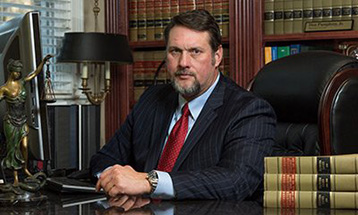
Attorney Don Pumphrey, Jr. is a former prosecutor, former law enforcement officer, and a successful and experienced criminal defense attorney. Don has achieved over 100 not guilty verdicts at trial and over 2,000 dismissals.