- DUI
- Criminal Defense
- Florida DUI
- Traffic Offenses
- Drug Charges
- Marijuana Charges
- Violent Crimes
- Domestic Violence
- Temporary Injunctions
- Weapons Charges
- Theft Crimes
- White Collar Crime
- Juvenile Offenses
- Sex Crimes
- Violation of Probation
- Early Termination of Probation
- Seal or Expunge Criminal Record
- Criminal Appeals
- US Federal Offenses
- Misdemeanor Charges
- Felony Charges
- Co-Defendant Cases
- College Student Defense
- College Student Hearings
- FSU Students
- FAMU Students
- Florida Panhandle Arrests
- Extradition to Florida
- Bench Warrants / Warrants
- Emergency Bond Hearings
- Gambling Charges
- Drone Arrests
- Marsy’s Law
- UAS Infractions
- Introduction of Contraband
- Lying to Police
- Locations
- Case Results
- Our Firm
- Media
- Resources
- Blog
- Contact Us
Conviction REVERSED After FL Judge Limits Jury Questioning on Presumption of Innocence, Burden of Proof
March 5, 2026 Don Pumphrey, Jr. Criminal Defense Social Share
Case Summary
Florida’s 5th District Court of Appeal reversed a defendant’s convictions after a judge prevented attorneys from questioning potential jurors about their understanding of and attitude towards the presumption of innocence and the right to remain silent.
- CASE: Mendez v. State, 898 So.2d 1141 (Fla. 5th DCA 2005)
- Charge(s): Sexual Battery and Lewd or Lascivious Molestation
- Outcome: Convictions REVERSED, as the judge prevented attorneys from questioning potential jurors about basic concepts like the burden of proof, presumption of innocence, and the right to remain silent.
Florida’s Jury Selection Process
In Florida, jury selection (also known as voir dire) is a critical aspect of any criminal proceeding. Jury selection allows both parties to the case (e.g. State and defense) to ask potential jurors about their attitudes towards relevant issues to evaluate if they will be able to evaluate the evidence and testimony fairly and impartially (and render a verdict accordingly).
If a party to the case strongly suspects that a potential juror is biased (based on one or more of their responses), they may move to “cause challenge” that potential juror. Cause challenges are limited in number and occur when the moving party successfully argues to the trial judge that a potential juror should be excused from service due to concerns about their fairness/impartiality.
In the event that a cause challenge occurs, the other party to the case may either stipulate to it (e.g. agree and allow the potential juror to be excused), or argue to the trial judge that there is an insufficient legal basis to excuse the potential juror for cause. Fleming v. State, 366 So.3d 1179 (Fla. 1st DCA 2023). The trial judge then has two options:
- Grant the cause challenge, sending the potential juror home (e.g. excusing them from service)
- Deny the cause challenge, allowing the potential juror to remain on the panel (for now)
Examples of cases in which an experienced and aggressive Florida criminal defense attorney is likely to cause challenge a potential juror include:
- A potential juror says they will automatically believe law enforcement testimony over the testimony of any other witness
- A potential juror has a personal tie to (or sympathy with) the victim
- A potential juror has an unwavering belief that if someone is sitting at the defendant’s table, they are guilty
A judge is given broad legal discretion to grant or deny cause challenges. But in some cases (e.g. when it is clear the potential juror is extremely biased), a denial of a cause challenge is reversible error on appeal. For more, click here.
It is important to note that just because a “cause challenge” fails, does not mean a potential juror will be seated on the eventual jury. This is because each party is given a number of peremptory challenges (known as peremptory strikes) that can be used in the event that a cause challenge is denied.
A peremptory strike occurs when a party to the case unilaterally sends a potential juror home – without having to explain why to the trial judge or the other party. In most cases, this is as simple as saying: “I’m exercising a peremptory strike on Juror #5.”
Peremptory strikes, unlike cause challenges, are limited in number. Each party is awarded three peremptories in misdemeanor cases, six peremptories in non-capital/life felony cases, and ten in capital and life felony cases. A judge has the discretion to award additional peremptory strikes, if they are requested (by either party).
Though the vast majority of peremptory strikes occur without any issue, the non-striking party may move for a Neil challenge if they believe a peremptory strike is impermissibly based on a potential juror’s race, sex, or ethnicity. For more on this, click here. Batson v. Kentucky, 476 U.S. 79 (1986); J.E.B. v. Alabama ex rel. T.B., 511 U.S. 127 (1994)
If a party suspects a peremptory challenge is being exercised on a prohibited basis (e.g. that one of the above characteristics is the reason for the strike), the following “three-step” inquiry will occur (Neil challenge):
- #1: Defense announces they are performing a Neil challenge of the State’s peremptory strike on a potential juror (which they believe is due to race/sex/ethnicity)
- #2: The State provides a race/sex/ethnicity-neutral explanation for the strike
- #3: The judge can either “buy” the State’s explanation and allow the peremptory strike, or find it is pretextual (e.g. think the State is “full of it”) and deny the strike
Since cause challenges are unlimited, unlike peremptory strikes, an experienced and aggressive Florida criminal defense attorney is likely to try to “cause challenge” as many potential jurors as possible. Because a cause challenge will not always be successful, however, it is wise to place “objectionable” potential jurors into two buckets:
- Group A jurors: Potential jurors that have made one or more comments that serve as the basis for a cause challenge (e.g. a cause challenge is likely to succeed)
- Group B jurors: Potential jurors that the defense wishes to strike on a non-racial, sexual or ethnic basis – but that have not yet said anything that would lead the judge to grant a cause challenge
It is also critical to note that just because a potential juror appears biased, this does not mean they will be excused from service. A key aspect of jury selection is rehabilitation, during which any party to the case (including the trial judge) can engage in a colloquy with a potential juror to evaluate if they are able to set aside their bias(es) and follow the law. For more, click here.
For example, a potential juror may indicate they were once a victim of a crime – which would indicate an anti-defendant bias. However, if that potential juror maintains this will not influence how they view the case once they have been rehabilitated (e.g. they can “follow the law”), it is unlikely that the judge will grant a cause challenge of that potential juror. For more, click here.
All defendants at a Florida criminal trial have the right not just to participate in voir dire – but to comprehensively question potential jurors about matters that may be relevant to how they view the case and render their verdict (so long as they do not delve into the facts of the specific case). McMath v. State, 409 So.3d 1271 (Fla. 1st DCA 2025)
Sometimes, however, a trial judge will be “too quick” to restrict defense questioning of potential jurors on a particular issue. This is especially hazardous if a defendant (though their counsel) is unable to ask potential jurors about their attitudes towards basic legal concepts like the right to remain silent and the presumption of innocence.
In one major case, a defendant was charged with lewd or lascivious battery. The trial judge read the potential jurors (also known as the venire) a “boilerplate” instruction regarding the right to remain silent and the presumption of innocence at the start of jury selection. The trial judge then asked the potential jurors if they understood the concepts – and they indicated that they did.
But when the defendant’s attorney began to question potential jurors about how they would apply these principles when evaluating the evidence and rendering a verdict, the trial judge cut him off. The trial judge said that he “already discussed” those issues with the potential jurors (through the instruction) – and required the defense not to ask further questions about it.
The defendant was convicted. On appeal to Florida’s 5th DCA (Northeast FL’s highest court), he argued he was deprived of his right under the Florida Rules of Criminal Procedure (as well as the Florida and U.S. Constitutions) to adequately conduct voir dire (e.g. identify biases of the potential jurors) by the judge.
The 5th DCA agreed, reversing the defendant’s convictions due to the judge’s error and granting him a new trial. Let’s take a look at that case – Mendez v. State, 898 So.2d 1141 (Fla. 5th DCA 2005) – and discuss what it means for defendants in Florida concerned about jury selection.
KEY CASE: Mendez v. State, 898 So.2d 1141 (Fla. 5th DCA 2005)
In Mendez, the defendant (Mendez) was convicted of sexual battery on a person less than twelve years of age and lewd or lascivious molestation. He appealed, arguing the judge impermissibly restricted his ability to conduct a comprehensive voir dire of the potential jurors on relevant legal issues. According to the 5th DCA:
“Once the jury venire was seated for Mendez’s trial, the trial court conducted a brief, general voir dire directed to the entire panel. In very broad terms, the trial court discussed the concepts of the presumption of innocence, Mendez’s right not to testify, and the State’s burden of proof. After the trial judge discussed each topic, the panel as a whole was asked, “[A]nybody have a problem with that, think they can’t handle that?” None of the jurors responded to the court’s questions. Later, when both the State and defense counsel attempted to question the prospective jurors regarding these general topics, the trial judge responded “[W]e’ve already talked about that. Move on to something else.” Mendez’s attorney then attempted to proffer several questions she wished to ask the prospective jurors, but the trial judge made it clear that he thought defense counsel was “wasting time.”
Mendez claimed to the 5th DCA that the trial judge “abused his discretion” by not allowing his attorney to question the potential jurors regarding those legal principles. The 5th DCA agreed and reversed Mendez’s conviction. Reviewing the case law that guided its finding, the 5th DCA noted:
“Rule 3.300(b) provides that “[c]ounsel for both the state and defendant shall have the right to examine jurors orally on their voir dire…. The right of the parties to conduct an examination of each juror orally shall be preserved.” The purpose of voir dire is to ensure a fair and impartial jury. See Davis v. State, 461 So.2d 67, 69-70 (Fla. 1984). A trial judge has “considerable discretion in determining the extent of counsel’s examination of prospective jurors.” Williams v. State, 424 So.2d 148, 149 (Fla. 5th DCA 1982). However, a trial court abuses its discretion when it unreasonably limits counsel’s ability to conduct a meaningful voir dire. O’Hara v. State, 642 So.2d 592, 593-94 (Fla. 4th DCA 1994).”
“A trial judge must allow counsel the opportunity to ascertain latent or concealed prejudgments by prospective jurors.” Miller v. State, 683 So.2d 600, 602 (Fla. 2d DCA 1996). In this case, due to the court’s restrictions, Mendez suffered the loss of his fundamental right to probe the jury’s understanding of several core issues, including burden of proof principles. Campbell v. State, 812 So.2d 540, 543 (Fla. 4th DCA 2002). As has been stated many times, prospective jurors do not respond in the same manner to inquiry by a judge as they do to questions by counsel, particularly when the trial court asks the jurors to volunteer a response to collective examination.”
Finding the trial judge essentially “opened the door” to questioning on the issues he discussed with the jury, the 5th DCA concluded:
“We do not suggest that trial judges do not have considerable discretion in controlling and limiting voir dire. To the contrary, decisional law acknowledges the court’s broad discretion in this area. Nonetheless, a trial judge cannot question prospective jurors on such crucial areas as the presumption of innocence, the State’s burden of proof, and the defendant’s right not to testify, and then prevent counsel from further examination under the guise that it would be repetitive. Miller, 785 So.2d at 663. “Even though trial judges may question prospective jurors, their role in jury selection must not impair counsel’s right and duty to question the venire.”
““[W]hat is a meaningful voir dire which will satisfy the constitutional imperative of a fair and impartial jury depends on the issues in the case to be tried. The scope of voir dire therefore ‘should be so varied and elaborated as the circumstances surrounding the juror under examination in relation to the case on trial would seem to require…. ’ ” Measured against this yardstick, we conclude the trial court abused its discretion by unreasonably limiting voir dire in this case. REVERSED AND REMANDED.”
In sum, Mendez v. State, 898 So.2d 1141 (Fla. 5th DCA 2005) is a significant development in Florida’s corpus of case law surrounding the limits judges can (and cannot) place on questioning during jury selection. Florida’s 5th District Court of Appeal found that:
- Concepts like the burden of proof, presumption of innocence, and right to remain silent were key issues that the defense had the right to question potential jurors about
- The fact that the trial judge read a general “instruction” to the potential jurors detailing these concepts did not mean they automatically understood them and/or that their biases would not influence how they applied them
- Because Mendez was unable to question the potential jurors about these legal principles, his right to meaningfully participate in voir dire was infringed upon by the trial judge
- This required reversal of Mendez’s convictions and a new trial
Florida’s criminal defense community should take note of Mendez v. State, 898 So.2d 1141 (Fla. 5th DCA 2005), as it makes clear that trial judges cannot prevent defense attorneys from asking potential jurors about their feelings towards legal concepts like the right to remain silent and the presumption of innocence. If they do, it is reversible error.
If someone is arrested and formally charged in Florida and concerned about jury selection, it is critical to find experienced and trusted legal representation as soon as possible. This decision could make the difference in whether or not someone faces a lengthy prison term and hefty fines.
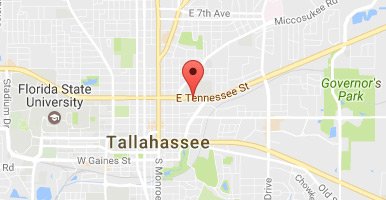
Criminal Defense Attorney in Tallahassee, FL
Don Pumphrey, Jr. is a Former Prosecutor, Former State Police Officer, Lifetime Member of the Florida Association of Criminal Defense Lawyers; for over 25 years as a private defense attorney who is Trusted, Experienced, Aggressive in Criminal Defense as a Trial Attorney, Criminal Lawyer, Criminal Defense Lawyer for the accused in Florida State Courts located in Tallahassee, Florida but handling cases throughout the State of Florida.
Don Pumphrey, Jr. and the Tallahassee criminal defense lawyers at Pumphrey Law have decades of experience fighting criminal charges on behalf of clients and winning. Call Pumphrey Law now at (850) 681-7777 to learn more about what we can do for you. Our lawyers will be happy to provide you with a free consultation.
Don Pumphrey, Jr.
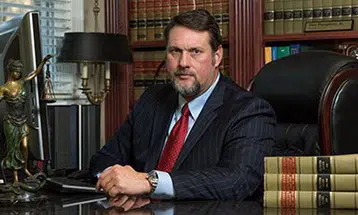
Attorney Don Pumphrey, Jr. is a former prosecutor, former law enforcement officer, and a successful and experienced criminal defense attorney. Don has achieved over 100 not guilty verdicts at trial and over 2,000 dismissals.