- DUI
- Criminal Defense
- Florida DUI
- Traffic Offenses
- Drug Charges
- Marijuana Charges
- Violent Crimes
- Domestic Violence
- Temporary Injunctions
- Weapons Charges
- Theft Crimes
- White Collar Crime
- Juvenile Offenses
- Sex Crimes
- Violation of Probation
- Early Termination of Probation
- Seal or Expunge Criminal Record
- Criminal Appeals
- US Federal Offenses
- Misdemeanor Charges
- Felony Charges
- Co-Defendant Cases
- College Student Defense
- College Student Hearings
- FSU Students
- FAMU Students
- Florida Panhandle Arrests
- Extradition to Florida
- Bench Warrants / Warrants
- Emergency Bond Hearings
- Gambling Charges
- Drone Arrests
- Marsy’s Law
- UAS Infractions
- Introduction of Contraband
- Lying to Police
- Locations
- Case Results
- Our Firm
- Media
- Resources
- Blog
- Contact Us
Judge On North Florida’s Highest Court Writes In Support of Twelve-Person Jury
October 23, 2025 Don Pumphrey, Jr. Criminal Defense Social Share
A judge who served on Florida’s 1st District Court of Appeal indicated his strong support for twelve-person juries in criminal cases in a major concurring opinion.
In Florida, unlike most other U.S. states, a six-person jury is seated in the vast majority of criminal trials. The sole exception to this is capital felonies (punishable by death), which require a twelve-person jury to be impaneled.
For decades, Florida’s jury laws have been the subject of controversy. In a landmark decision, Williams v. Florida, 399 U.S. 78 (1970), the U.S. Supreme Court upheld the state’s practice of impaneling six-person juries in nearly all criminal cases. The Court ruled this was permissible, as the Sixth Amendment jury trial right does not require a certain number of jurors to be seated.
In Williams, the Court receded from its tacit acknowledgment of a twelve-person jury right in felony cases in Thompson v. Utah, 170 U.S. 343 (1898). Though the U.S. Supreme Court did not explicitly require twelve-person juries in Thompson, the majority opinion noted twelve jurors have been the historical norm, particularly in felony cases.
Since Williams was decided in 1970, Florida’s practice of routinely impaneling six-person juries has remained controversial. And calls to overturn Williams have reached a crescendo in recent years – particularly after U.S. Supreme Court Justice Neil Gorsuch advocated for its reversal in Khorrami v. Arizona, 143 S. Ct. 22, 23-27 (2022) (Gorsuch, J., dissenting).
Support for scrapping Williams and requiring a twelve-person jury in criminal trials (particularly in felony cases) has grown partially in response to the U.S. Supreme Court’s ruling in Ramos v. Louisiana (2020). There, the Court struck down state laws allowing for non-unanimous jury verdicts in criminal cases, which was permitted by Apodaca v. Oregon (1972).
Apodaca embraced a “functionalist” interpretive approach. The majority in Apodaca argued that since the Sixth Amendment does not expressly require a unanimous jury, states should be able to author laws that permit non-unanimous guilty verdicts if they so desire (e.g. 9-3, 10-2, 11-1 votes would still lead to a verdict of guilty, despite some jurors opposing the finding).
But Ramos openly rejected this “functionalism,” finding that it prioritized social science and “judicial efficiency” over the true meaning of the Sixth Amendment. The Supreme Court cited Sir William Blackstone, an English jurist whose writings partially inspired the Bill of Rights.
Blackstone wrote that a criminal defendant should be judged by a “unanimous suffrage of twelve of his peers” in his magnum opus, Commentaries on the Laws of England. As a result, the Court held that even though the Sixth Amendment did not technically mandate unanimity in its text, history and tradition made this an integral part of the U.S. Constitution’s jury trial right.
Of course, the logical conclusion many drew after Ramos is that Williams v. Florida may be the next “functionalist” domino to fall. This is because the U.S. Supreme Court applied very similar logic in both Apodaca and Williams, arguing that states should be given latitude in how they conduct jury trials in the absence of explicit Sixth Amendment language.
As Ramos cited Blackstone’s “unanimous suffrage of twelve” as the foundation of the jury trial right, some have asked – why is “unanimous” now required, but not twelve? The U.S. Supreme Court has not yet provided an answer, as it has twice (since Ramos) denied the opportunity to hear oral arguments from convicted defendants asserting they had a right to a twelve-person jury.
But even before Ramos, some Florida judges were beginning to express skepticism towards Williams v. Florida. Though this was uncommon, one such judge sat on Tallahassee and North Florida’s highest court until 2023.
In 2017, Judge Scott Makar wrote a concurring opinion in Lessard v. State, 232 So. 3d 13 (Fla. 1st DCA 2017), which represented a departure from how most Florida jurists were thinking about state jury laws at the time. Let’s discuss Judge Makar’s opinion and its impact on how many judges and lawmakers viewed twelve-person juries.
Key Case: Lessard v. State, 232 So. 3d 13 (Fla. 1st DCA 2017)
In Lessard, the defendant (Lessard) was charged with one count of capital sexual battery (victim under 12, defendant 18 or older) and three counts of lewd or lascivious molestation. Lessard was convicted and received life in prison.
On appeal, Lessard argued that he had a right to a twelve-person jury. The 1st DCA denied this and affirmed the verdict, holding that Lessard’s crimes (including capital sexual battery at the time) were not punishable by death. As a result, a six-person jury was permissibly impaneled for his trial.
Though Judge Scott Makar agreed with the 1st District Court of Appeal’s decision (as it was in line with Florida law), he wrote a 10-page concurring opinion outlining his criticism of Williams v. Florida, 399 U.S. 78 (1970). In that opinion, he described Williams as a “historical accident”:
“To begin, it is obvious that Williams, which dismissed the centuries-old common law practice of twelve-member juries as a mere ‘historical accident’ and replaced it with an ad hoc ‘functional’ approach, was based on dubious anecdotal assertions and demonstrably incorrect statistical and sociological principles that have plagued this body of jurisprudence ever since.”
Judge Makar’s criticisms of the “statistical and sociological” problems with the Williams ruling were echoed by Justice Gorsuch in Khorrami v. Arizona, 143 S. Ct. 22, 23-27 (2022) (Gorsuch, J., dissenting). Elaborating on Makar’s point, Gorsuch noted:
“An array of studies … suggest that 12-member juries deliberate longer, recall information better, and pay greater attention to dissenting voices.”
After arguing that six-person juries fail to perform the “deliberative function” as effectively as twelve-person juries, Judge Makar criticized Williams and its progeny as “ad hoc (as needed) line-drawing” based on “efficiency” rather than the best understanding of what the Constitution requires. Judge Makar commented:
“And thus the ad hoc line-drawing continued, most often based on the perception of whether judicial efficiencies were at the expense of a criminal defendant’s right to a fair trial (Louisiana said, for example, that its smaller, non-unanimous juries shortened deliberation time and reduced the number of hung juries).”
Judge Makar also noted that Florida is the only remaining state in the country that requires only a six-person jury even in cases where a defendant is facing life in prison. He stated:
“Connecticut, though requiring six-member juries, provides that no person accused of an offense punishable by ‘life imprisonment without the possibility of release or life imprisonment, shall be tried by a jury of less than twelve without such person’s consent…’”
“That leaves Florida with the distinction of being the only state that requires six-member juries for non-capital crimes punishable by life imprisonment, which is the sentence that Lessard received on the capital sexual battery count (life in prison without parole) and the lewd and lascivious molestation of a minor count (life in prison with a minimum mandatory of twenty-five years).”
However, Judge Makar concluded that the U.S. Supreme Court and all other Florida courts had consistently affirmed the use of six-person juries in such cases. Thus, even though he personally sympathized with Lessard’s argument, he wrote that he could not vote to reverse his sentence because the U.S. Supreme Court must first overrule Williams, or state jury laws must change:
“As Judge Altenbernd’s scholarly opinion noted almost a decade ago, an argument in favor of twelve-member juries for felonies involving mandatory life sentences without parole ‘is worthy of consideration, but this court has no authority to overrule the precedent from the United States Supreme Court that endorsed the use of a jury with only six members as constitutional, nor the Florida law that authorizes and perhaps compels the use of six-member juries in non-capital criminal cases.’”
Though Judge Makar’s opinion did not have any binding effect (by his own acknowledgment), it was a significant and memorable example of a judge on Tallahassee and North Florida’s highest court signaling opposition to Williams v. Florida. Many of Makar’s points have been echoed by other judges (as well as legal advocates) who have argued for twelve-person juries.
Importantly, Florida’s 1st District Court of Appeal has recently affirmed Williams, holding in Salmon v. State, 387 So.3d 393 (Fla. 1st DCA 2024) that there is no twelve-person jury right in non-capital Florida criminal cases. As a result, it does not appear that Tallahassee and North Florida criminal defendants will be getting twelve-person juries any time soon.
But given Judge Makar’s opinion, which amplified many of the strongest arguments against Williams, it seems that modern support for Florida’s current jury laws is weakening. Will state legislators or the U.S. Supreme Court ever do away with these procedures in favor of requiring twelve-person juries – especially in serious felony cases?
Though the answer to this question remains unclear for now, it will be intriguing to see how the twelve-person jury debate unfolds in the coming years.
If someone is arrested and formally charged in Florida and concerned about twelve-person juries and jury selection, it is critical to find experienced and trusted legal representation as soon as possible. This decision could make the difference in whether or not someone faces a lengthy prison term and hefty fines.
Criminal Defense Attorney in Tallahassee, FL
Don Pumphrey, Jr. is a Former Prosecutor, Former State Police Officer, Lifetime Member of the Florida Association of Criminal Defense Lawyers; for over 25 years as a private defense attorney who is Trusted, Experienced, Aggressive in Criminal Defense as a Trial Attorney, Criminal Lawyer, Criminal Defense Lawyer for the accused in Florida State Courts located in Tallahassee, Florida but handling cases throughout the State of Florida.
Don Pumphrey, Jr. and the Tallahassee criminal defense lawyers at Pumphrey Law have decades of experience fighting drug charges on behalf of clients and winning. Call Pumphrey Law now at (850) 681-7777 to learn more about what we can do for you. Our lawyers will be happy to provide you with a free consultation.
Don Pumphrey, Jr.
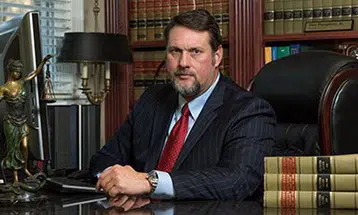
Attorney Don Pumphrey, Jr. is a former prosecutor, former law enforcement officer, and a successful and experienced criminal defense attorney. Don has achieved over 100 not guilty verdicts at trial and over 2,000 dismissals.