- DUI
- Criminal Defense
- Florida DUI
- Traffic Offenses
- Drug Charges
- Marijuana Charges
- Violent Crimes
- Domestic Violence
- Temporary Injunctions
- Weapons Charges
- Theft Crimes
- White Collar Crime
- Juvenile Offenses
- Sex Crimes
- Violation of Probation
- Early Termination of Probation
- Seal or Expunge Criminal Record
- Criminal Appeals
- US Federal Offenses
- Misdemeanor Charges
- Felony Charges
- Co-Defendant Cases
- College Student Defense
- College Student Hearings
- FSU Students
- FAMU Students
- Florida Panhandle Arrests
- Extradition to Florida
- Bench Warrants / Warrants
- Emergency Bond Hearings
- Gambling Charges
- Drone Arrests
- Marsy’s Law
- UAS Infractions
- Introduction of Contraband
- Lying to Police
- Locations
- Case Results
- Our Firm
- Media
- Resources
- Blog
- Contact Us
Two Times the U.S. Supreme Court Has Ruled on 12-Person Juries in Florida
October 9, 2025 Don Pumphrey, Jr. Criminal Defense Social Share
The U.S. Supreme Court has ruled on two challenges to Florida’s jury laws – once in 1970, and once in 2024.
In Florida, many may believe that if they are arrested and tried for a criminal offense, they will receive a jury of twelve. However, this is not the case. Under Florida law, the vast majority of cases are tried by a six-person jury.
Florida is one of only a few states in the entire nation that still routinely empanels six-person juries in criminal cases, including serious felonies. The only exception is if someone is charged with a capital felony (e.g. first-degree murder, capital sexual battery, capital human trafficking). In that case, a defendant in Florida is entitled to a jury of twelve.
The idea of a twelve-person jury has roots in English common law, particularly the writings of William Blackstone. Blackstone argued that in criminal cases, a “unanimous suffrage of twelve” citizens should decide a defendant’s fate (Blackstone’s Commentaries on the Laws of England).
Since America’s founding, the 12-person jury has been a staple of the justice system in many states. But Florida has not been one of them. As more and more states have embraced twelve person juries (and many have always had these), Florida continues to try defendants with juries of six members (except in capital cases).
This culminated in the first case that the U.S. Supreme Court heard on Florida’s lack of twelve person juries: Williams v. Florida, 399 U.S. 78 (1970). Williams was convicted by a six-person jury and sentenced to life in prison. He appealed to the U.S. Supreme Court on multiple grounds, one of which was that he was entitled to a twelve-person jury.
Confronted with this issue, the U.S. Supreme Court ruled against Williams. It held that the Sixth Amendment (which guarantees a right to a jury trial) does not require that there be 12 members of that jury. The majority reasoned:
- There is no minimum number of jurors outlined by the Sixth Amendment, even though this could have been included
- The essential function of the jury is to provide an impartial cross-section of the community and to promote group deliberation, which can be done with juries smaller than twelve members
- Requiring twelve jurors may be needlessly inefficient, given this is not constitutionally mandated
Notably, Williams did not opine on whether a twelve-person jury is constitutionally required in a trial for a capital offense (when the crime is punishable by death). However, all 50 states and the federal system currently require a jury of (at least) twelve for such cases.
Two of the U.S. Supreme Court’s nine justices disagreed – Justice Harlan and Justice Marshall. Justice Marshall specifically addressed the majority’s refusal to require a twelve-person jury in criminal cases in his dissent, arguing this was mistaken given the historical roots of the Sixth Amendment.
Since Williams v. Florida, the state’s laws regarding the number of jurors required in criminal cases have remained unchanged. Twelve jurors remains the requirement when a capital offense is charged – just six are required for non-capital crimes (felonies and misdemeanors).
However, the twelve-person jury debate has raged on in the more than fifty years since Williams was decided. In recent years, the calls for reversing Williams have grown louder. This is because the Supreme Court has increasingly rooted its Fifth and Sixth Amendment jurisprudence in common law, rather than prioritizing “efficiency.”
The U.S. Supreme Court decided in Ramos v. Louisiana, 40 S. Ct. 1390 (2020) that all jury verdicts in criminal cases must be unanimous. States like Louisiana had previously allowed a conviction by juries voting 10-2 or 11-1. But this was struck down in Ramos, with the Court ruling the Sixth Amendment requires a unanimous vote.
Given that the “unanimity requirement” (all jurors agreeing) is nowhere to be found in the text of the Sixth Amendment (only in common law), many began to argue that the next domino to fall should be Williams v. Florida. The Court rooted its Ramos ruling in common law (Blackstone), which provides for a “unanimous suffrage of twelve.”
With this considered, many asserted that the U.S. Supreme Court should embrace a full common law-friendly interpretation of the Sixth Amendment right to a jury trial by reversing Williams and requiring twelve-person juries. However, the Court has so far refused to do so.
One of these refusals came in 2024 – when the U.S. Supreme Court ruled on its first challenge to Florida’s jury laws since Williams in 1970: Cunningham v. Florida, 602 U.S. ___, 144 S. Ct. 1287 (2024). There, the U.S. Supreme Court denied Natoya Cunningham’s writ of certiorari urging the Court to hear her case.
The U.S. Supreme Court did not formally hear oral arguments in Cunningham v. Florida, as it did in Williams. In fact, only one justice issued an opinion on how he would have ruled in the case if it had been heard by the Court: Justice Neil Gorsuch.
Gorsuch was also the sole justice to vote to hear the case; an additional three out of nine justices would have had to vote to grant Cunningham’s writ for oral arguments to be held. In dissenting from the denial of Cunningham’s writ of certiorari, Justice Gorsuch voiced his opposition to Williams v. Florida, arguing Florida’s current jury laws are unconstitutional.
Lamenting that the U.S. Supreme Court wrongly allowed Florida to continue to use six-person juries in criminal trials in violation of the Sixth Amendment, Gorsuch wrote:
“Florida does what the Constitution forbids because of us. In Williams v. Florida, this Court in 1970 issued a revolutionary decision approving for the first time the use of 6-member panels in criminal cases. … In doing so, the Court turned its back on the original meaning of the Constitution, centuries of historical practice, and a ‘battery of this Court’s precedents.’”
Gorsuch further argued Williams relied on “bad social science” to support the idea that 6-person juries would function just as effectively as twelve-person juries:
“Yet Williams made the unthinkable a reality. In doing so, it substituted bad social science for careful attention to the Constitution’s original meaning. Pointing to academic studies, Williams tepidly predicted that 6-member panels would ‘probably’ deliberate just as carefully as 12-member juries. But almost before the ink could dry on the Court’s opinion, the social science studies on which it relied came under scrutiny.”
“Soon, the Court was forced to acknowledge ‘empirical data’ suggesting that, in fact, ‘smaller juries are less likely to foster effective group deliberation’ and may not produce as reliable or accurate decisions as larger ones.”
Justice Gorsuch wrote that the Court should have granted Cunningham’s writ of certiorari because “the right to trial by jury should mean no less today, and afford no fewer protections for individual liberty, than it did at the Nation’s founding.” He concluded:
“If there are not yet four votes on this Court to take up the question whether Williams should be overruled, I can only hope someday there will be. In the meantime, nothing prevents the people of Florida and other affected States from revising their jury practices to ensure no government in this country may send a person to prison without the unanimous assent of 12 of his peers.”
Justice Gorsuch’s Cunningham dissent echoes his prior dissent in Khorrami v. Arizona, 143 S. Ct. 22 (2022) (Gorsuch, J., dissenting). There, Gorsuch laid out a similar argument that the right to a jury of twelve was embedded in the Sixth Amendment given its roots in common law. As he did in Cunningham, Gorsuch derided Williams’s allowance for six-person juries.
Since Cunningham v. Florida, the U.S. Supreme Court has not directly addressed a challenge to Florida’s law permitting six-person juries in non-capital cases. As of 2025, there are not four justices on the Court that have expressed a willingness to reconsider Williams.
But this could change in the future. With the U.S. Supreme Court’s increasing prioritization of common law over “judicial efficiency” (see Ramos and Erlinger), it is possible the Court will eventually reconsider Williams and embrace Justice Gorsuch’s logic, leading to a 12-person jury requirement.
But for now, Williams v. Florida, 399 U.S. 78 (1970) remains good law, and this does not appear likely to change in the near future. Nevertheless, it may be wise in serious felony cases to request a twelve-person jury via pretrial motion. If the U.S. Supreme Court ever strikes down Florida’s jury laws, this issue may be waived on appeal unless preserved.
If someone is arrested and formally charged in Florida and concerned about twelve-person juries and jury selection, it is critical to find experienced and trusted legal representation as soon as possible. This decision could make the difference in whether or not someone faces a lengthy prison term and hefty fines.
Criminal Defense Attorney in Tallahassee, FL
Don Pumphrey, Jr. is a Former Prosecutor, Former State Police Officer, Lifetime Member of the Florida Association of Criminal Defense Lawyers; for over 25 years as a private defense attorney who is Trusted, Experienced, Aggressive in Criminal Defense as a Trial Attorney, Criminal Lawyer, Criminal Defense Lawyer for the accused in Florida State Courts located in Tallahassee, Florida but handling cases throughout the State of Florida.
Don Pumphrey, Jr. and the Tallahassee criminal defense lawyers at Pumphrey Law have decades of experience fighting drug charges on behalf of clients and winning. Call Pumphrey Law now at (850) 681-7777 to learn more about what we can do for you. Our lawyers will be happy to provide you with a free consultation.
Don Pumphrey, Jr.
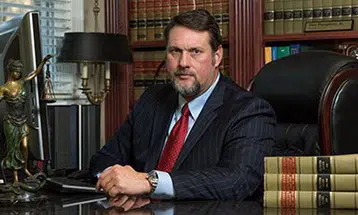
Attorney Don Pumphrey, Jr. is a former prosecutor, former law enforcement officer, and a successful and experienced criminal defense attorney. Don has achieved over 100 not guilty verdicts at trial and over 2,000 dismissals.