- DUI
- Criminal Defense
- Florida DUI
- Traffic Offenses
- Drug Charges
- Marijuana Charges
- Violent Crimes
- Domestic Violence
- Temporary Injunctions
- Weapons Charges
- Theft Crimes
- White Collar Crime
- Juvenile Offenses
- Sex Crimes
- Violation of Probation
- Early Termination of Probation
- Seal or Expunge Criminal Record
- Criminal Appeals
- US Federal Offenses
- Misdemeanor Charges
- Felony Charges
- Co-Defendant Cases
- College Student Defense
- College Student Hearings
- FSU Students
- FAMU Students
- Florida Panhandle Arrests
- Extradition to Florida
- Bench Warrants / Warrants
- Emergency Bond Hearings
- Gambling Charges
- Drone Arrests
- Marsy’s Law
- UAS Infractions
- Introduction of Contraband
- Lying to Police
- Locations
- Case Results
- Our Firm
- Media
- Resources
- Blog
- Contact Us
Major FL Court: Judge’s Failure to Excuse Biased Juror Required Reversal of Guilty Verdict
January 14, 2026 Don Pumphrey, Jr. Criminal Defense Social Share
Florida’s 2nd District Court of Appeal reversed a guilty verdict against a defendant after the trial judge wrongly denied the defense’s attempt to strike “for cause” a juror who said they would believe a defendant that did not testify was guilty.
In Florida, jury selection (commonly referred to as voir dire) is a critical part of any criminal trial. Jury selection is very important, as eliciting honest answers from potential jurors who will be rendering a verdict in the case is critical to making sure the jury is fair and impartial.
During jury selection, both the State (prosecution) and defense have an unlimited number of “for-cause” strikes (also known as “cause challenges”). If a potential juror makes a comment or series of comments in response to questioning that indicates bias, either side may move to strike that potential juror “for cause” (e.g. excuse them from service and send them home).
If a cause challenge occurs, the trial judge has one of two options, as they get the final say as to whether a potential juror is sent home or not:
- Approve the cause challenge and strike the potential juror “for cause”
- Deny the challenge, forcing the State or defense to rely upon a peremptory strike to send the juror home (or not strike them at all)
A peremptory strike occurs when one side unilaterally “strikes” a potential juror, without having to articulate the reason for doing so to the opposing party or the judge. This can have any legally valid justification, so long as it is not because of the race or sex of the potential juror. Batson v. Kentucky, 476 U.S. 79 (1986); J.E.B. v. Alabama ex rel. T.B., 511 U.S. 127 (1994)
Note: A party to the case may challenge the other’s suspected impermissible use of peremptory strikes in what is called a “Neil challenge.” State v. Neil, 457 So. 2d 481 (Fla. 1984). For more, click here.
Each side receives a set number of peremptory strikes during jury selection – 3 in misdemeanor cases, 6 in non-capital felony cases (e.g. not punishable by death), and 10 in capital felony cases. Due to the limited number of peremptory strikes, an experienced and aggressive Florida criminal defense attorney will attempt to strike as many biased potential jurors as possible “for cause.”
However, since the decision as to whether a cause challenge is successful is made by the trial judge, the judge may sometimes deny the defense’s request to excuse a juror “for cause.” On appeal, a court may find that a judge erred (“abused their discretion”) by denying the challenge, especially if a potential juror was clearly biased.
In the event a juror appears to be obviously biased against a defendant from the start, a defense attorney will likely wish to strike this juror “for cause.” If this does not succeed, however, they will almost certainly wish to use a peremptory strike on that potential juror to avoid them being picked to serve on the actual jury.
But when a peremptory strike is used, that’s one fewer peremptory strike reserved for a potential juror who may be “questionable” (e.g. potentially biased), but not so biased as to be successfully cause-challenged.
The result is that one or more of those “questionable” jurors that the defense intended to excuse via peremptory strike, will now not be excused because the defense has run out of peremptory strikes. If that occurs, the defense can ask for more peremptory strikes, which may be awarded by the judge.
Sometimes, a judge will wrongly deny one or more cause challenges of potential jurors.
If the judge does so and the defense requests a peremptory strike for each of the denied “for-cause” strike requests, the judge has two options:
- Give the defense the chance to strike the remaining “questionable” jurors (via awarding additional peremptory strikes)
- Deny the defense request for additional peremptory strikes (or give the defense fewer than requested)
If the judge chooses to do the latter, this risks reversal of the defendant’s conviction on appeal. If a Florida appeals court finds that a judge wrongly denied the defense’s cause challenge of one or more jurors, the judge must award the defense an additional peremptory strike for each wrongly denied cause challenge.
If the judge awards a smaller number of additional peremptory strikes to the defense (when they are requested) than the number of cause challenges the judge erroneously denied (e.g. 2 wrongly denied cause challenges, but only 1 additional peremptory strike awarded), this is reversible error on appeal.
As long as the defendant objects to the swearing in of the jury in its current (biased) form right before the start of trial, their conviction must be reversed (a new trial is required). Greathouse v. State, 371 So. 3d 406 (Fla. 2d. DCA 2023)
One case from Florida’s 2nd District Court of Appeal illustrates this principle well. Let’s take a look at Caldwell v. State, 50 So.3d 1234 (Fla. 2d DCA 2011) and what it means for jury selection in Florida.
KEY CASE: Caldwell v. State, 50 So.3d 1234 (Fla. 2d DCA 2011)
In Caldwell, the defendant (Caldwell) was charged with and convicted of felony murder and armed robbery. Caldwell appealed on the grounds that the trial judge wrongly denied his cause challenge of a potential juror (Juror E) – and failed to award additional peremptory strikes to remedy the error.
Caldwell intended to use a cause challenge on Juror E, and use his remaining peremptory strikes on three other jurors. During jury selection, Juror E stated a defendant would not refuse to testify unless they were guilty of the charged crime (despite the rule that silence at trial cannot be held against a defendant).
Concerned that Juror E would be biased if Caldwell chose not to testify, he moved to strike Juror E for cause. The State objected and the trial judge denied the cause challenge. Caldwell was then forced to use a peremptory strike on Juror E that he intended to use on another potential juror.
At the conclusion of jury selection, Caldwell asked for an additional three peremptory strikes (for three remaining objectionable jurors). However, this request was denied – the judge awarded none. One of the potential jurors Caldwell objected to (e.g. would have used a peremptory strike on) ended up serving on the jury.
Immediately before the jury was sworn, Caldwell objected to the composition of the jury. This was overruled and the trial went on. Caldwell was found guilty.
On appeal, Caldwell argued that the trial judge had erred (abused his discretion) by denying the cause challenge of Juror E. He also asserted that the failure of the judge to award any additional peremptory strikes made this reversible error. Caldwell noted he objected to the composition of the jury immediately before trial, preserving the issue for appeal.
The 2nd DCA (Greater Tampa area) agreed with Caldwell and reversed his conviction. The court first discussed its belief that the trial judge had indeed erred by failing to strike Juror E for cause when Caldwell requested this:
“Here, even after defense counsel informed the potential jurors that a defendant has an absolute right to not testify, Juror E stated that she did not understand why somebody would not want the opportunity to speak the truth. When asked by defense counsel why someone might not want to testify, Juror E stated “[u]nless they are guilty.” As in Mitchell, Juror E’s comments created a reasonable doubt regarding her ability to be fair and impartial.”
The 2nd DCA rejected the State’s argument that Juror E had been “rehabilitated” by the defense attorney’s discussion of the fact that the defendant (Caldwell) had the right to remain silent:
“The State argues that Juror E was rehabilitated by defense counsel’s general questions to the voir dire regarding a defendant’s right to remain silent, as well as Juror E’s recognition of other applicable criminal principles. Although Juror E had earlier acknowledged that the charging document is not evidence and that a defendant is presumed innocent until proven guilty, a question arose about her ability to be impartial to a defendant who might not testify once she indicated her belief that a defendant would not testify because he is guilty. …Defense counsel twice asked the panel if a decision to not testify would prevent them from finding the person not guilty, but Juror E did not respond to this question. “[A] juror’s silence to a question asked of the entire panel” is not sufficient to overcome a concern about the impartiality of that juror caused by the juror’s earlier comments.”
As the judge abused his discretion by failing to excuse Juror E after the cause challenge and did not award Caldwell additional peremptory strikes, the 2nd DCA reversed Caldwell’s convictions and remanded the matter for a new trial:
“We conclude that the trial court abused its discretion in denying Caldwell’s challenge for cause to Juror E. We accordingly reverse Caldwell’s convictions and remand for a new trial.”
In sum, Caldwell v. State, 50 So.3d 1234 (Fla. 2d DCA 2011) is a significant development in Florida’s case law surrounding jury selection – and what happens when judges wrongly fail to excuse potential jurors for cause who are clearly biased. The 2nd DCA held:
- The judge erroneously denied Caldwell’s cause challenge of Juror E, forcing him to use a peremptory strike
- The judge failed to award Caldwell any additional peremptory strikes, resulting in an objectionable juror that Caldwell would’ve stricken using an extra peremptory sitting on the jury
- Because the objectionable juror sat on the jury due to the trial judge’s error, Caldwell’s convictions required reversal
Florida’s criminal defense community should take note of Caldwell, as it is a clear warning to courts that they should err on the side of caution and grant defense cause challenges when there is a clear basis for them. Otherwise, a defendant’s conviction may be reversed on appeal.
If someone is arrested and formally charged in Florida and concerned about jury selection, it is critical to find experienced and trusted legal representation as soon as possible. This decision could make the difference in whether or not someone faces a lengthy prison term and hefty fines.
Criminal Defense Attorney in Tallahassee, FL
Don Pumphrey, Jr. is a Former Prosecutor, Former State Police Officer, Lifetime Member of the Florida Association of Criminal Defense Lawyers; for over 25 years as a private defense attorney who is Trusted, Experienced, Aggressive in Criminal Defense as a Trial Attorney, Criminal Lawyer, Criminal Defense Lawyer for the accused in Florida State Courts located in Tallahassee, Florida but handling cases throughout the State of Florida.
Don Pumphrey, Jr. and the Tallahassee criminal defense lawyers at Pumphrey Law have decades of experience fighting drug charges on behalf of clients and winning. Call Pumphrey Law now at (850) 681-7777 to learn more about what we can do for you. Our lawyers will be happy to provide you with a free consultation.
Don Pumphrey, Jr.
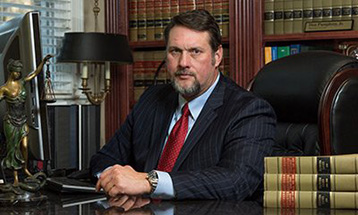
Attorney Don Pumphrey, Jr. is a former prosecutor, former law enforcement officer, and a successful and experienced criminal defense attorney. Don has achieved over 100 not guilty verdicts at trial and over 2,000 dismissals.