- DUI
- Criminal Defense
- Florida DUI
- Traffic Offenses
- Drug Charges
- Marijuana Charges
- Violent Crimes
- Domestic Violence
- Temporary Injunctions
- Weapons Charges
- Theft Crimes
- White Collar Crime
- Juvenile Offenses
- Sex Crimes
- Violation of Probation
- Early Termination of Probation
- Seal or Expunge Criminal Record
- Criminal Appeals
- US Federal Offenses
- Misdemeanor Charges
- Felony Charges
- Co-Defendant Cases
- College Student Defense
- College Student Hearings
- FSU Students
- FAMU Students
- Florida Panhandle Arrests
- Extradition to Florida
- Bench Warrants / Warrants
- Emergency Bond Hearings
- Gambling Charges
- Drone Arrests
- Marsy’s Law
- UAS Infractions
- Introduction of Contraband
- Lying to Police
- Locations
- Case Results
- Our Firm
- Media
- Resources
- Blog
- Contact Us
Major FL Court REVERSES Lewd or Lascivious Conviction Due to Improper Closing Argument
April 23, 2026 Don Pumphrey, Jr. Criminal Defense, Sex Crimes Social Share
Florida’s 4th District Court of Appeal ruled that a prosecutor’s many improper comments during closing arguments deprived the defendant of his right to a fair trial, requiring REVERSAL of his convictions and a new trial in the case.
CASE: Petruschke v. State, 125 So.2d 274 (Fla. 4th DCA 2013)
Charge(s): Lewd or Lascivious Molestation
Outcome: Conviction REVERSED, as the prosecutor’s many improper comments during closing arguments deprived the defendant of his right to a fair trial.
Closing Arguments in Florida Criminal Trials
In Florida, closing arguments are a key aspect of criminal trials. Closing arguments are the “final word” that each party (e.g. the State and defense) has to persuade the jury to render a verdict that aligns with the evidence and testimony that has been presented.
Though many believe that closing arguments involve the State speaking, then the defense, this is an incomplete picture of the reality of the situation. Closing arguments at Florida criminal trials are structured in the following way:
- First, the State gives its initial closing
- Second, the defense gives its closing (which often will involve rebuttals of what the State said during its first closing statement)
- Finally, the State (e.g. prosecutor) gives a REBUTTAL CLOSING (which is the true “last word” before deliberations) to refute the defense’s closing statement
After closing arguments occur, the jury is instructed by the judge and sent to deliberate. As part of those jury instructions, the trial judge will make clear that the arguments of the attorneys (e.g. closing arguments/opening statements) are NOT evidence and should not be considered as such.
But this does not change the fact that a strong closing argument can be very powerful and impact how the jury evaluates (and even decides) the case. Although the jury must focus on the evidence and testimony when determining whether or not the defendant is guilty, closing arguments assist the jury in mentally “framing” the evidence – which informs their eventual verdict.
The closing argument is especially important to the defense – for a few reasons. The first of these is the fact that the defense only gets ONE closing argument, while the State gets two. As a result of the fact that the State also gets a “rebuttal,” it is critical for a closing argument to be informed and well-structured (to maximize the impact on jurors).
Closing arguments are also especially important to the defense because it’s the defense’s chance to reframe the evidence and testimony that has been presented at trial. In some cases, the State will appear to be “in control” for the duration of the trial by calling more witnesses/introducing more evidence than the defense.
But if an experienced, aggressive Florida criminal defense attorney “pokes holes” in the State’s case during cross-examination of witnesses (e.g. challenges the State’s narrative), these can be pointed out during closing arguments – and may cause jurors to reconsider their position if they were leaning towards voting “guilty.”
It is also important to note that there are RULES surrounding closing arguments. Though these can often be emotionally “heated,” especially in cases involving violent crimes and alleged sex crimes, courts are clear that certain comments go OVER THE LINE and can be objected to by the opposing party.
Some examples of objectionable tactics employed during closing arguments include (Rodriguez v. State, 210 So.3d 750 (Fla. 5th DCA 2017)):
- Impugning the character of opposing counsel by calling them a “liar” or “evil”
- Calling the defendant ugly names/insulting them
- Relying on facts not in evidence or misrepresenting the law (Pacifico v. State, 642 So.2d 1178 (Fla. 1st DCA 1994))
- Commenting on the defendant’s right to remain silent
- Improperly bolstering the testimony of an alleged victim or law enforcement officers
- Saying the case is about getting “justice” for the victim (Cardona v. State, 185 So.3d 514, 521 (Fla. 2016))
The State – in particular – has a lot to lose by consistently violating the rules surrounding closing arguments. This is because, in some Florida cases, a prosecutor’s comments may be so unfairly prejudicial that a mistrial is warranted. Pacifico v. State, 642 So.2d 1178 (Fla. 1st DCA 1994). For more on mistrials, click here.
Moreover, if a defendant’s objection(s) during closing arguments are OVERRULED and the jury is sent to deliberate after a prosecutor clearly “crosses the line,” a guilty verdict may be reversed by appellate courts, and a new trial may take place in the defendant’s case.
The standard for whether a new trial is required in a Florida criminal case if a prosecutor “breaks the rules” of closing arguments depends on whether the defendant OBJECTS to the problematic remarks.
If the defendant DOES object, the issue is preserved for review. As a result, the appellate court will evaluate if the prosecutor actually did make improper comments during closing. Brinson v. State, 153 So.3d 972 (Fla. 5th DCA 2015)
If this is found to have occurred, a Florida appellate court will determine if there is a reasonable possibility that the jury’s verdict was influenced (e.g. “harmless error” analysis), and REVERSE if the answer is “yes.”
If no objection occurs, the only way the conviction will be reversed is if the improper comments rose to the level of “fundamental error,” vitiating the proceedings (e.g. making the guilty verdict inherently illegitimate).
Improper closing arguments are especially likely in cases involving sex crimes where the alleged victims were young children. As a result of the fact that such offenses elicit nearly unparalleled moral opprobrium, a prosecutor may “cross the line” and make one or more improper remarks criticizing the defendant (or even a defense attorney) in highly personal, derogatory terms.
In one major Florida case involving alleged lewd or lascivious molestation of a 3-year-old child, the defendant was convicted after a prosecutor gave a very emotional closing argument. During that closing argument, the prosecutor:
- Told the jury that 3-year-olds (the age of the alleged victim) were mentally incapable of fabricating an allegation of sexual abuse
- Called the defendant a “pedophile” repeatedly
The defendant objected, but these were overruled, and he was found guilty as charged. He then appealed his conviction to Florida’s 4th District Court of Appeal (Southeast FL’s highest court).
The defendant argued, among other things, that his objections to the “improper” remarks made by the prosecutor should’ve been sustained – and that because the error was not harmless (e.g. the jury’s verdict may have been impacted), he was entitled to a new trial.
The 4th DCA AGREED with him, REVERSING his convictions and remanding the matter to the lower court for a new trial. Let’s take a look at the case – Petruschke v. State, 125 So.2d 274 (Fla. 4th DCA 2013) – and discuss what it means for defendants in Florida concerned about their right to a fair trial being violated by improper closing arguments.
KEY CASE: Petruschke v. State, 125 So.2d 274 (Fla. 4th DCA 2013)
In Petruschke, the defendant (Petruschke) was arrested and charged with two counts of lewd or lascivious molestation. He was convicted. At trial, the following occurred:
- The victim testified about the incident, alleging Petruschke touched him against his will on his “PP” and “butt”
- The victim’s parents also testified, including to the fact that the victim allegedly “wet his bed” almost every night and woke up “crying in terror” since the incident
- During closing arguments, the State said that a three-year-old (age of the victim) lacked the ability to fabricate an allegation of sexual abuse
- The defense objected and asked for a mistrial
- The objection was sustained, but the request for a mistrial was overruled
- The State also said that Petruschke was a “pedophile” who would “touch kids whenever he felt like it”
- The defense objected again, but this was overruled
- Petruschke was found guilty by the jury
On appeal to the 4th DCA, Petruschke argued that the State’s improper closing argument entitled him to a new trial. Petruschke argued that the State’s repeated references to him as a “pedophile” as well as the claim that 3-year-olds cannot fabricate sexual abuse allegations were improper and not harmless error – requiring a new trial in his case.
The 4th DCA agreed with Petruschke on both points and reversed his convictions, remanding the matter to the lower court for a new trial. First addressing the State’s claim that three-year-olds are incapable of fabricating abuse allegations, the 4th DCA wrote:
“Here, although the trial court initially sustained defense counsel’s objection to the prosecutor’s argument that a three-year-old does not have the capacity to fabricate allegations of sexual abuse, the court ultimately denied appellant’s motion for mistrial and then ruled that the prosecutor could argue that a three-year-old does not have the mental ability to fabricate allegations of sexual abuse. Allowing this type of argument was an abuse of discretion. Contrary to the state’s argument in this appeal, the prosecutor’s remark was not a “fair inference” from the evidence.”
“There was absolutely no evidence presented at trial that a three-year-old child lacks the mental ability to fabricate allegations of sexual abuse. The prosecutor simply invented this claim in closing argument. While it might be permissible for a prosecutor to argue that a child of three would be unlikely to fabricate allegations of sexual abuse out of self-interest, there was no evidence to support a blanket assertion that a three-year old lacks the ability to fabricate allegations of sexual abuse. Here, the allegations of sexual abuse were not spontaneous, but rather were in response to questioning by an adult, and there was no evidence presented at trial that a three-year-old child lacks the mental ability to fabricate allegations of sexual abuse in such circumstances. In short, the prosecutor’s argument that C.V. lacked the mental ability to fabricate the allegations was unsupported by the evidence and was not a reasonable inference from the evidence. It was therefore improper.”
After finding the trial judge “abused his discretion” by denying the motion for a mistrial, the 4th DCA then turned to the State’s repeated references to Petruschke as a “pedophile,” writing:
“Here, the prosecutor’s repeated references to appellant as a pedophile were clearly designed to inflame the prejudices of the jury and constituted an impermissible general attack on appellant’s character. Referring to appellant as a pedophile improperly suggested that he may have committed prior illegal sexual acts involving children and further suggested an improper “pedophile profile” argument. Although defense counsel objected only to the first reference to appellant as a pedophile, the court immediately overruled that objection, making it clear that the prosecutor would be permitted to pursue that line of argument…”
“To be sure, defense counsel himself used the term “pedophile” in his closing argument and tried to suggest that appellant’s conduct was inconsistent with what a pedophile would do, but it is important to note that defense counsel made this argument only after the prosecutor, over defense objection, was permitted to characterize appellant as a pedophile. Furthermore, the prosecutor’s remarks during rebuttal closing argument, although somewhat responsive to defense counsel’s remarks, were simply too inflammatory to constitute a fair reply to defense counsel’s argument. We conclude that the prosecutor’s remarks were an impermissible attack on appellant’s character.”
The 4th DCA concluded that Petruschke was entitled to the reversal of his convictions and a new trial because the improper comments were not harmless error:
“The improper comments cannot be considered harmless. “The harmless error test … places the burden on the state, as the beneficiary of the error, to prove beyond a reasonable doubt that the error complained of did not contribute to the verdict or, alternatively stated, that there is no reasonable possibility that the error contributed to the conviction.” … The accusations against appellant came from a three-year-old, there were no other witnesses to the alleged touching, and there was no physical evidence against appellant. Further, although appellant made the incriminating statement that he was “sorry,” this statement does not necessarily constitute a “confession.” Appellant made this statement as C.V.’s father was about to assault him. On this record, the prosecutor’s numerous improper remarks were collectively so egregious that appellant was deprived of a fair trial. We caution the state to avoid these types of improper arguments on retrial.”
In sum, Petruschke v. State, 125 So.2d 274 (Fla. 4th DCA 2013) marks a significant development in Florida’s corpus of case law surrounding improper closing arguments at criminal trials. The 4th DCA (Southeast FL’s highest court) found that:
- Petruschke was entitled to a mistrial after the prosecutor said the victim was incapable of fabricating a sex abuse allegation due to his age
- The prosecutor’s repeated reference to Petruschke as a pedophile were also objectionable
- The defense properly objected and preserved the issue for appellate review, so a harmless error analysis was necessary
- The jury’s verdict was potentially impacted by the improper comments, so the error was not harmless
- As a result, Petruschke’s convictions were REVERSED and a new trial occurred
Florida’s criminal defense community should take note of Petruschke v. State, 125 So.2d 274 (Fla. 4th DCA 2013), as it makes clear that Florida appellate courts will REVERSE convictions if prosecutorial misconduct during closing arguments is sufficiently “egregious” (and objected to at trial).
If someone is concerned about being charged with sexual battery or a related offense, it is crucial to find experienced and aggressive legal representation as soon as possible. This vital decision could make the difference in whether or not a person is subject to a lengthy prison term and hefty fines.
Criminal Defense Attorney in Tallahassee, FL
Don Pumphrey, Jr. is a Former Prosecutor, Former State Police Officer, Lifetime Member of the Florida Association of Criminal Defense Lawyers; for over 25 years as a private defense attorney who is Trusted, Experienced, Aggressive in Criminal Defense as a Trial Attorney, Criminal Lawyer, Criminal Defense Lawyer for the accused in Florida State Courts located in Tallahassee, Florida but handling cases throughout the State of Florida.
Don Pumphrey, Jr. and the Tallahassee criminal defense lawyers at Pumphrey Law have decades of experience fighting criminal charges on behalf of clients and winning. Call Pumphrey Law now at (850) 681-7777 to learn more about what we can do for you. Our lawyers will be happy to provide you with a free consultation.
Don Pumphrey, Jr.
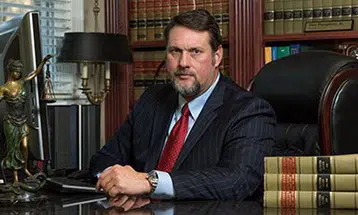
Attorney Don Pumphrey, Jr. is a former prosecutor, former law enforcement officer, and a successful and experienced criminal defense attorney. Don has achieved over 100 not guilty verdicts at trial and over 2,000 dismissals.