- DUI
- Criminal Defense
- Florida DUI
- Traffic Offenses
- Drug Charges
- Marijuana Charges
- Violent Crimes
- Domestic Violence
- Temporary Injunctions
- Weapons Charges
- Theft Crimes
- White Collar Crime
- Juvenile Offenses
- Sex Crimes
- Violation of Probation
- Early Termination of Probation
- Seal or Expunge Criminal Record
- Criminal Appeals
- US Federal Offenses
- Misdemeanor Charges
- Felony Charges
- Co-Defendant Cases
- College Student Defense
- College Student Hearings
- FSU Students
- FAMU Students
- Florida Panhandle Arrests
- Extradition to Florida
- Bench Warrants / Warrants
- Emergency Bond Hearings
- Gambling Charges
- Drone Arrests
- Marsy’s Law
- UAS Infractions
- Introduction of Contraband
- Lying to Police
- Locations
- Case Results
- Our Firm
- Media
- Resources
- Blog
- Contact Us
North FL’s Highest Court Affirms Guilty Verdict Despite Juror Concern About Defendant Remaining Silent
March 5, 2026 Don Pumphrey, Jr. Criminal Defense Social Share
Case Summary
Florida’s 1st District Court of Appeal affirmed a defendant’s conviction in a case where 2 jurors indicated they would be more likely to think the defendant was guilty if they did not testify. Why?
- CASE: Fleming v. State, 366 So.3d 1179 (Fla. 1st DCA 2023)
- Outcome: Guilty verdicts AFFIRMED, as the trial judge did not err by refusing to grant cause challenges of two potential jurors.
In Florida, jury selection (also known as voir dire) is a critical aspect of any criminal proceeding. Jury selection is an opportunity for both parties to the case (e.g. State and defense) to question potential jurors to determine whether they will truly be fair and impartial – or if preexisting bias may color their verdict/how they view the case.
If a potential juror makes one or more remarks that heavily indicate they are biased, a party may move to “cause challenge” that potential juror. A cause challenge occurs when a party to the case asks the trial judge to excuse the potential juror (e.g. send them home) on the basis that they will not be able to fairly and impartially assess the evidence and render a verdict.
Examples of cases in which an experienced and aggressive Florida criminal defense attorney is likely to cause challenge a potential juror include:
- The potential juror says they will automatically believe law enforcement testimony over the testimony of any other witness
- The potential juror has a personal tie to (or sympathy with) the victim
- The potential juror has an unwavering belief that if someone is sitting at the defendant’s table, they are guilty
In the event of a cause challenge (which are unlimited in number), the opposing party may object and attempt to convince the trial judge that the potential juror should remain in the venire (e.g. not be excused from service). The judge then has two options:
- Grant the cause challenge, excusing the potential juror from service
- Deny the cause challenge, allowing the potential juror to remain seated (eligible to be impaneled on the eventual jury)
A judge is given broad legal discretion to grant or deny cause challenges. But in some cases (e.g. when it is clear the potential juror is extremely biased), a denial of a cause challenge is reversible error on appeal. For more, click here.
It is important to note that just because a “cause challenge” fails, does not mean a potential juror will be seated on the eventual jury. This is because each party is given a number of peremptory challenges (known as peremptory strikes) that can be used in the event that a cause challenge is denied.
A peremptory strike occurs when a party to the case unilaterally sends a potential juror home – without having to argue the reasoning for this to the trial judge or the other party. In most cases, it’s as simple as saying: “I’m exercising a peremptory strike on Juror #9.”
Unlike cause challenges, peremptory strikes are limited in number. In Florida, each side (State and defense) receives 3 peremptories in misdemeanor cases, 6 in non-capital/life felony cases, and 10 in capital/life felony cases. A judge may award additional peremptory strikes to either party, if requested.
Though the vast majority of peremptory strikes occur without objection, this is not always the case. The U.S. Supreme Court has made clear that a peremptory strike can occur for essentially any reason except if it is being done on the basis of someone’s race, sex, or ethnicity. Batson v. Kentucky, 476 U.S. 79 (1986); J.E.B. v. Alabama ex rel. T.B., 511 U.S. 127 (1994)
If a party (usually the defense) suspects that a potential juror is being peremptorily stricken on any of these prohibited grounds, they can perform a Neil challenge (or Neil inquiry). This is a three-step process:
- #1: Defense announces they are performing a Neil challenge of the State’s peremptory strike on a potential juror (which they believe is due to race/sex/ethnicity)
- #2: The State provides a race/sex/ethnicity-neutral explanation for the strike
- #3: The judge can either “buy” the State’s explanation and allow the peremptory strike, or find it is pretextual (e.g. B.S.) and deny the strike
If an experienced and aggressive Florida criminal defense attorney (or defendant) is participating in jury selection, a useful heuristic can be used to categorize jurors that they wish to strike:
- Group A jurors: Potential jurors that have made one or more comments that serve as the basis for a cause challenge (e.g. a cause challenge is likely to succeed)
- Group B jurors: Potential jurors that the defense wishes to strike on a non-racial, sexual or ethnic basis – but that have not yet said anything that would lead the judge to grant a cause challenge
A key aspect of jury selection is rehabilitation. It is commonly believed that when a potential juror says something that indicates bias, this is automatically grounds for a cause challenge. However, one or more comments by a potential juror indicating a lack of fairness/impartiality will not guarantee a successful cause challenge – if the potential juror is rehabilitated.
Rehabilitation occurs when a party to the case (or the trial judge) asks a potential juror who has indicated bias a series of questions to determine whether they can truly set this aside and render a verdict fairly and impartially.
For example, a potential juror may indicate that they trust law enforcement. But if the potential juror is instructed by the judge that they must not weigh police testimony more “heavily” simply because the witness wears the uniform – and the potential juror agrees they can faithfully abide by this command – a “cause challenge” based on their previous comment is likely to fail.
Florida’s 1st District Court of Appeal (Tallahassee and North Florida’s highest court) recently decided a case in which this principle was illustrated quite well. Let’s take a look at that case – Fleming v. State, 366 So.3d 1179 (Fla. 1st DCA 2023) – and discuss what Fleming means for defendants concerned about jury selection in Florida.
KEY CASE: Fleming v. State, 366 So.3d 1179 (Fla. 1st DCA 2023)
In Fleming, the defendant (Fleming) was convicted and appealed. Fleming argued that the trial judge erred as a matter of law (e.g. “abused his discretion”) by failing to grant two of Fleming’s cause challenges of potential jurors. Fleming urged the 1st DCA to reverse his conviction as a result.
During voir dire, Fleming’s lawyer asked potential jurors: “Who here, if accused of a crime they did not commit, would absolutely get up there on that stand, raise their right hand and testify?” Several potential jurors raised their hand and indicated they would wish to testify if they were innocent. According to the 1st DCA:
“Two of them were James and Bennett. After posing the question, the following exchange occurred between Bennett and defense counsel. A: I feel like I could have been in the wrong place at the wrong time and something appeared that it was not. Q: Okay. So, you would absolutely want to testify in that case. A: Uh-huh, I would. Defense counsel then asked the venire, if Fleming decided not to testify, if they would take that into consideration during deliberations. Bennett said that she would. After further questioning, however, she admitted that she did not “watch a lot of court shows” or “know a lot about the law.” She stated that she thought “both people had to present a case.””
Fleming’s attorney then turned to Ms. James (the other potential juror) and asked if she would consider a potential lack of testimony from Fleming in rendering her verdict (assuming Fleming did not testify). The following exchange occurred:
“Q: And if you don’t hear from Mr. Fleming, is that something that’s going to come across your mind when you’re deliberating? A: Like I said, I would wonder why that person — whoever it is, right — would not want to put their words and fight for themself. Q: So, it does sounds like that’s something that you’re going to consider when you’re back deliberating. I just want to make sure I’m clear with your answer. A: I mean, it depends on all the evidence. Q: Okay. So, you’re not sure? It could affect you. A: That’s fair to say I’m not sure.”
After this colloquy occurred, Fleming’s attorney moved to strike James and Bennett for cause – arguing they would be likely to assume Fleming’s guilt if he remained silent (which jurors are instructed not to do). But before Fleming’s attorney did so, the judge attempted to “rehabilitate” James:
“The trial court then intervened and instructed the venire on the presumption of innocence and the burden of proof. Among other things, the trial court explained that Fleming did not have to prove his innocence or disprove anything. James then said that she would follow the law.”
The trial judge denied Fleming’s cause challenges of both potential jurors, finding that Bennett effectively “rehabilitated” herself when she said she didn’t “know a lot about the law” – and that James indicated she could follow the law in response to the trial judge’s questioning.
Fleming was forced to exhaust two peremptory strikes on James and Bennett. Eventually, he ran out of peremptories – and requested that the judge give him one more. This was denied, and the jury was impaneled with a juror Fleming would’ve stricken if he had one of the two peremptories remaining that he was forced to use on James and Bennett.
Because his request for an additional peremptory strike was denied, Fleming argued to the 1st DCA that if either of his cause challenges were wrongly denied (e.g. of James or Bennett), he was entitled to a new trial. (For more on this, click here.)
However, the 1st DCA rejected Fleming’s argument, finding that the trial judge did not “abuse his discretion” by denying either cause challenge. The 1st DCA began by addressing James:
“After examining the record, we find that the trial court did not abuse its discretion in denying the cause challenges to James and Bennett. Neither met the standard for a cause challenge. While James expressed that she would personally take the stand if accused of a crime, she never stated that she would require testimony from Fleming. When pressed by defense counsel on this point, she stated that a juror is supposed to consider “all of the evidence” before them. And the trial court rehabilitated James by explaining the applicable law and asking if she could follow it. See Conde v. State, 860 So. 2d 930, 941 (Fla. 2003) (“[W]here a prospective juror’s answers suggest incompetency to be a juror, rehabilitation by the prosecutor or judge is the proper next step.”). James’ later answers show that she could follow the law and that she would not consider Fleming’s decision not to testify during deliberations. Her responses simply do not express the prejudice required to grant a cause challenge.”
Next, the 1st DCA turned to the cause challenge of Bennett – and concluded the trial judge was well within his right to deny this:
“Bennett’s responses similarly do not rise to the level of bias required to grant a cause challenge. She said that she would testify if accused of a crime. But she also emphasized that she was not familiar with the criminal justice system and that, before voir dire, she was under the mistaken impression that both sides had to present a case. “[I]t is necessary for courts to distinguish between those biases and beliefs that define a prospective juror … and those in which information and explanation may provide a prospective juror with the ‘requisite familiarity’ and insight into the judicial process that will render him or her competent to serve.” … Bennett’s unfamiliarity with the court system did not rise to the level of a bias or belief that would “define” her. Any potential bias she expressed was attributed to her lack of knowledge about courtroom procedures. And Bennett’s other answers to defense counsel’s various questions throughout voir dire demonstrated that she understood the presumption of innocence and the State’s burden of proof.”
Because “both jurors stated they could set aside their personal views and follow the law,” (Lusk v. State, 446 So. 2d 1038, 1041 (Fla. 1984)), the 1st DCA found that neither of Fleming’s cause challenges was erroneously denied – requiring that his conviction be affirmed.
In sum, Fleming v. State, 366 So.3d 1179 (Fla. 1st DCA 2023) marks a major development in Florida’s corpus of case law surrounding jury selection and cause challenges. The 1st District Court of Appeal (Tallahassee and North FL’s highest court) found that:
- The trial judge did not abuse his discretion by denying the cause challenges of James or Bennett
- Both potential jurors stated they could set aside their bias and follow the law
- Because of this, Fleming was not entitled to an additional peremptory strike (to excuse the “objectionable” juror that was ultimately seated)
- Since there was no legal error, Fleming’s conviction was affirmed
Florida’s criminal defense community should take note of Fleming v. State, 366 So.3d 1179 (Fla. 1st DCA 2023), as it makes clear when trial judges abuse (and don’t abuse) their discretion by denying cause challenges.
If someone is arrested and formally charged in Florida and concerned about jury selection, it is critical to find experienced and trusted legal representation as soon as possible. This decision could make the difference in whether or not someone faces a lengthy prison term and hefty fines.
Criminal Defense Attorney in Tallahassee, FL
Don Pumphrey, Jr. is a Former Prosecutor, Former State Police Officer, Lifetime Member of the Florida Association of Criminal Defense Lawyers; for over 25 years as a private defense attorney who is Trusted, Experienced, Aggressive in Criminal Defense as a Trial Attorney, Criminal Lawyer, Criminal Defense Lawyer for the accused in Florida State Courts located in Tallahassee, Florida but handling cases throughout the State of Florida.
Don Pumphrey, Jr. and the Tallahassee criminal defense lawyers at Pumphrey Law have decades of experience fighting criminal charges on behalf of clients and winning. Call Pumphrey Law now at (850) 681-7777 to learn more about what we can do for you. Our lawyers will be happy to provide you with a free consultation.
Don Pumphrey, Jr.
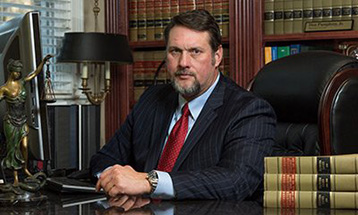
Attorney Don Pumphrey, Jr. is a former prosecutor, former law enforcement officer, and a successful and experienced criminal defense attorney. Don has achieved over 100 not guilty verdicts at trial and over 2,000 dismissals.