- DUI
- Criminal Defense
- Florida DUI
- Traffic Offenses
- Drug Charges
- Marijuana Charges
- Violent Crimes
- Domestic Violence
- Temporary Injunctions
- Weapons Charges
- Theft Crimes
- White Collar Crime
- Juvenile Offenses
- Sex Crimes
- Violation of Probation
- Early Termination of Probation
- Seal or Expunge Criminal Record
- Criminal Appeals
- US Federal Offenses
- Misdemeanor Charges
- Felony Charges
- Co-Defendant Cases
- College Student Defense
- College Student Hearings
- FSU Students
- FAMU Students
- Florida Panhandle Arrests
- Extradition to Florida
- Bench Warrants / Warrants
- Emergency Bond Hearings
- Gambling Charges
- Drone Arrests
- Marsy’s Law
- UAS Infractions
- Introduction of Contraband
- Lying to Police
- Locations
- Case Results
- Our Firm
- Media
- Resources
- Blog
- Contact Us
Major FL Court Reverses DUI Conviction Due to Biased Jury
January 14, 2026 Don Pumphrey, Jr. Criminal Defense, Drunk Driving/DUI Social Share
Florida’s 5th District Court of Appeal reversed a defendant’s DUI conviction due to the judge’s failure to excuse a potential juror, who said he would give more credibility to a testifying police officer than any other witness.
In Florida, jury selection (also known as voir dire) is a critical part of any criminal trial. Picking jurors that are impartial (e.g. unbiased) is essential to ensuring that a defendant receives a “fair shake,” rather than being presumed guilty from the start.
During jury selection, both the State and the defense are given an unlimited number of “cause challenges.” A cause challenge occurs when one side (e.g. State or defense) seeks to excuse a potential juror because they have made one or more comments during questioning that indicate potential bias.
If the State or defense challenge a potential juror for cause, a trial judge has two options:
- Grant the cause challenge and “strike” the potential juror for cause, excusing them from service
- Deny the cause challenge (e.g. due to insufficient evidence of bias)
If a trial judge denies a cause challenge of a potential juror, the State or defense (depending on who initiated the cause challenge) may exercise a peremptory strike on that potential juror. A peremptory strike involves one party to the case unilaterally excusing a juror, without needing the judge’s approval.
Unlike cause challenges, peremptory strikes are limited in number. The State and defense both receive three peremptory strikes at the start of jury selection in misdemeanor cases, six strikes in non-capital felony cases (e.g. not punishable by death), and ten strikes in capital felony cases.
Note: Though these are the “baseline” numbers of peremptory strikes awarded to each side, the trial judge is given discretion to award additional peremptories to the State or defense if this is requested. Additional peremptory strikes are frequently asked for if a cause challenge fails and the party moving to strike the potential juror for cause has already used up their peremptories.
As previously noted, in the event a peremptory strike is used, the State or defense may declare that they are exercising a peremptory strike and send the potential juror home.
Though this can be for almost any reason (e.g. does not have to be “justified” to the judge like a cause challenge), someone can’t be lawfully stricken due to their race, sex, or ethnicity. Batson v. Kentucky, 476 U.S. 79 (1986); J.E.B. v. Alabama ex rel. T.B., 511 U.S. 127 (1994).
Jury selection is especially important at DUI trials. If someone is accused of driving under the influence (DUI), the verdict at trial may largely be informed by how much credibility the jury assigns to law enforcement’s testimony (e.g. regarding the defendant’s alleged “intoxication”) compared to other witnesses.
As a result, an experienced and aggressive Florida criminal defense attorney will deliberately ask questions during jury selection to identify potential jurors who are likely to automatically assign more credibility to police officer testimony.
If a potential juror announces that they are likely to find police officers more credible than other witnesses (e.g. the defendant/other “defense” witnesses), a defense attorney is likely to challenge that potential juror for cause (cause challenge).
As a police officer’s testimony is not supposed to be given “more weight” simply because they are a member of law enforcement, a potential juror identifying that they would be predisposed to believe officer testimony can be a strong basis for a successful cause challenge.
In one major Florida DUI case, however, a trial judge denied the defense’s cause challenge of a potential juror who said he would give police testimony “more weight.” The judge also denied the defense’s request for an additional peremptory strike to exercise on that potential juror (as the defense had run out of them).
On appeal, a top Florida court reversed the defendant’s DUI conviction and remanded the matter for a new trial due to the erroneous seating of the biased juror. Let’s take a look at Ibarrondo v. State, 1 So.3d 226 (Fla. 5th DCA 2008) and what this case means for jury selection in Florida.
KEY CASE: Ibarrondo v. State, 1 So.3d 226 (Fla. 5th DCA 2008)
In Ibarrondo, the defendant (Ibarrondo) was charged with driving under the influence (DUI). He was convicted at a jury trial, and appealed. At Ibarrondo’s trial, a key part of the State’s case was testimony from law enforcement regarding how Ibarrondo appeared (and his conduct) the night of his arrest.
During voir dire, Ibarrondo asked potential jurors if they would assign more credibility to a law enforcement officer’s testimony simply because they wear the uniform.
One potential juror (Donahue) said that he would. When the State attempted to “rehabilitate” the potential juror, the following exchange occurred:
PROSECUTOR: “Would you still give that same level of belief to somebody you don’t know that could be a state witness, just the same as the law enforcement officer, but just doesn’t wear the uniform the law enforcement does? Does that make sense?”
- DONAHUE: “It does. I guess if you put them on a scale, I would say probably I would tend to give the officer more creed-more credible [sic] than someone (inaudible). (Inaudible) on a scale, so to speak, but if you put them on a scale (inaudible) I would side with the officer.”
As jury selection was wrapping up, Ibarrando’s attorney asked Donahue a final question on this issue. Donahue reiterated that an officer’s testimony is “more believable or carries greater weight than the testimony of someone who is not wearing a uniform.”
At the end of jury selection, Ibarrondo challenged Donahue for cause. He pointed out (through his attorney) that Donahue was likely to find a police officer’s testimony more credible simply because the officer wears the uniform. As his “fairness and impartiality” was compromised by this fact, Ibarrondo asked for Donahue to be excused.
However, the trial judge denied Ibarrondo’s cause challenge, finding Donahue was“rehabilitated” by the prosecutor (e.g. could put his bias aside).
Unfortunately for Ibarrondo, he had run out of peremptory challenges – so Donahue would be seated on the jury if the judge did not award him another peremptory strike. Ibarrondo requested one additional peremptory strike to send Donahue home, but this was denied by the judge.
Donahue was seated on the jury. Before the jury was sworn and the trial commenced, Ibarrondo objected to the composition of the jury (e.g. on the grounds that it was biased). But the trial judge overruled the objection, and Iborrando was tried and convicted by a six-person jury that included Donahue.
On appeal to Florida’s 5th DCA (Northeast Florida), Ibarrondo reiterated his claim that Donahue was clearly biased – and should have been excused for cause. Because he was seated, Ibarrando claimed, he was found guilty by a biased jury (requiring reversal of his conviction).
The 5th DCA agreed and reversed Ibarrondo’s DUI conviction, remanding the matter to the lower court for a new trial. The 5th DCA wrote:
“The Florida Supreme Court has warned that the “statement of a juror that he can readily render a verdict according to the evidence, notwithstanding an opinion entertained, will not alone render him competent if it otherwise appears that his formed opinion is of such a fixed and settled nature as not readily to yield to the evidence.” See Hill, 477 So.2d at 555-556 (citing Singer, 109 So.2d at 22) (quoting Olive v. State, 34 Fla. 203, 206, 15 So. 925, 926 (1894)). Nonetheless, because the trial court is in the best position to observe the attitude and demeanor of the juror and to gauge the quality of the juror’s responses, if there is competent evidence in the record for the trial court’s conclusions regarding rehabilitation, an appellate court should generally defer to the judge with the better vantage point. Dufour v. State, 905 So.2d 42, 54 (Fla.2005) (citing Johnson v. State, 660 So.2d 637, 644 (Fla.1995)).”
“Here, the prospective juror initially stated that he would give more credibility to a testifying police officer than to other witnesses addressing the same subject. He was then rehabilitated to some extent by the prosecution, but upon examination by the defense, restated his partiality for police officers. This is precisely what occurred in Henry v. State, 756 So.2d 170 (Fla. 4th DCA 2000). Our sister court noted there that it has “frequently required that a juror be dismissed for cause where there is a reasonable doubt as to his or her impartiality.” Id. at 172. As there is reasonable doubt respecting the ability of the challenged juror to be impartial, we conclude that the trial court erred in seating that person as a juror, and that, accordingly, a reversal is required.”
In essence, the 5th DCA found the prosecutor’s colloquy with Donahue did not “rehabilitate” him – as a reasonable doubt remained as to his impartiality at the conclusion of jury selection. Because of this, the trial judge erred by seating Donahue on the jury – requiring reversal of Ibarrondo’s conviction.
In sum, Ibarrondo v. State, 1 So.3d 226 (Fla. 5th DCA 2008) is a major development in Florida case law on the issue of jury selection – particularly in DUI trials. The 5th DCA found that:
- The potential juror (Donahue) said multiple times during questioning that he would give more weight to a police officer’s testimony than the testimony of others simply because the officer was wearing the uniform
- Though the State attempted to “rehabilitate” Donahue, it was clear his bias persisted – raising a reasonable doubt as to his ability to be fair and impartial (e.g. consider all the evidence rather than just believing officer testimony)
- Because the jury was potentially biased against Ibarrondo from the start, the 5th DCA reversed Ibarrondo’s conviction
Florida’s criminal defense community should take note of Ibarrondo v. State, 1 So.3d 226 (Fla. 5th DCA 2008), as it is a key case on jury selection, particularly at DUI trials.
Note: It is critical for the defense to object to the composition of the jury immediately before the jury is sworn – otherwise, the issue of a biased jury is waived on appeal. For more, click here.
If someone is arrested and formally charged in Florida and concerned about jury selection, it is critical to find experienced and trusted legal representation as soon as possible. This decision could make the difference in whether or not someone faces a lengthy prison term and hefty fines.
Criminal Defense Attorney in Tallahassee, FL
Don Pumphrey, Jr. is a Former Prosecutor, Former State Police Officer, Lifetime Member of the Florida Association of Criminal Defense Lawyers; for over 25 years as a private defense attorney who is Trusted, Experienced, Aggressive in Criminal Defense as a Trial Attorney, Criminal Lawyer, Criminal Defense Lawyer for the accused in Florida State Courts located in Tallahassee, Florida but handling cases throughout the State of Florida.
Don Pumphrey, Jr. and the Tallahassee criminal defense lawyers at Pumphrey Law have decades of experience fighting drug charges on behalf of clients and winning. Call Pumphrey Law now at (850) 681-7777 to learn more about what we can do for you. Our lawyers will be happy to provide you with a free consultation.
Don Pumphrey, Jr.
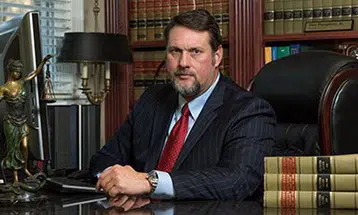
Attorney Don Pumphrey, Jr. is a former prosecutor, former law enforcement officer, and a successful and experienced criminal defense attorney. Don has achieved over 100 not guilty verdicts at trial and over 2,000 dismissals.