- DUI
- Criminal Defense
- Florida DUI
- Traffic Offenses
- Drug Charges
- Marijuana Charges
- Violent Crimes
- Domestic Violence
- Temporary Injunctions
- Weapons Charges
- Theft Crimes
- White Collar Crime
- Juvenile Offenses
- Sex Crimes
- Violation of Probation
- Early Termination of Probation
- Seal or Expunge Criminal Record
- Criminal Appeals
- US Federal Offenses
- Misdemeanor Charges
- Felony Charges
- Co-Defendant Cases
- College Student Defense
- College Student Hearings
- FSU Students
- FAMU Students
- Florida Panhandle Arrests
- Extradition to Florida
- Bench Warrants / Warrants
- Emergency Bond Hearings
- Gambling Charges
- Drone Arrests
- Marsy’s Law
- UAS Infractions
- Introduction of Contraband
- Lying to Police
- Locations
- Case Results
- Our Firm
- Media
- Resources
- Blog
- Contact Us
North FL’s Highest Court Discusses Neil Challenges and Peremptory Strikes in Major Case
March 5, 2026 Don Pumphrey, Jr. Criminal Defense Social Share
Case Summary
Florida’s 1st District Court of Appeal affirmed a defendant’s convictions, finding that the State offered ‘race-neutral’ explanations for peremptorily striking potential jurors – and that the judge did not abuse his discretion by accepting these. However, one judge (partially) disagreed.
- CASE: Files v. State, 586 So.2d 352 (Fla. 1st DCA 1991)
- Charge(s): Dealing in Stolen Property (3x)
- Outcome: Convictions affirmed, as the State did not impermissibly strike potential jurors based on their race.
In Florida, jury selection (also known as voir dire) is a critical part of any criminal proceeding. Jury selection allows the State and defense to ask questions of potential jurors to determine if they will truly be fair and impartial – or if preexisting biases may interfere with their ability to render a verdict based solely on the evidence and testimony presented.
If a party to the case heavily suspects a potential juror is not fair and impartial, they are likely to “cause challenge” that potential juror. Unlimited in number, cause challenges occur when a party to the case urges the trial judge to excuse a potential juror (e.g. send them home) because they’ve shown they are at serious risk of not being fair and impartial. For more, click here.
Examples of cases in which an experienced and aggressive Florida criminal defense attorney will be likely to move for a cause challenge include:
- A potential juror says that they will be very likely to automatically believe everything a police officer testifies to, and will immediately discredit witnesses who disagree with the officer
- A potential juror says they personally know a victim in the case and feel a tremendous amount of sympathy for them
- A potential juror says they believe prosecutors are “right” most of the time and that the defendant has done “something wrong” if they are sitting in the courtroom
It is important to note that just because a potential juror indicates they may be biased, this does not automatically mean a cause challenge will be successful. Every party to the case (including the judge) may “rehabilitate” the potential juror – and if that potential juror indicates they can set aside the bias(es) they’ve expressed, a cause challenge may be denied. For more, click here.
In the event that a cause challenge is made, a trial judge has one of two options:
- Grant the cause challenge, excusing the potential juror (e.g. sending them home)
- Deny the cause challenge, allowing the potential juror to stay seated in the venire (for now)
But just because a cause challenge is denied, this does not mean the “objectionable” juror will be seated to hear the case. This is because another type of “challenge” exists: peremptory challenges (also known as peremptory strikes).
A peremptory strike occurs when a party to the case unilaterally excuses a potential juror without having to explain to the judge or opposing party why they are doing so. This can be for a reason as simple as the potential juror’s hairstyle being too “wacky.”
Note: Unlike cause challenges, peremptory challenges are limited in number. Each side receives 3 in misdemeanor cases, 6 in non-capital/life felony cases, and 10 in capital/life felony cases. A trial judge may award additional peremptory strikes to either side, if requested. For more on this, click here.
However, a party’s discretion to exercise peremptory strikes is not entirely unlimited. A strike can be used for any reason other than on the basis of a potential juror’s race, sex, or ethnicity. Batson v. Kentucky, 476 U.S. 79 (1986); J.E.B. v. Alabama ex rel. T.B., 511 U.S. 127 (1994)
If an experienced and aggressive Florida criminal defense attorney suspects that a potential juror is being stricken by the State on the basis of race, sex, or ethnicity, they may decide to perform a Neil challenge of the peremptory strike. The Neil challenge is a three-step process:
- First, the defense announces they are launching a Neil challenge of the State’s peremptory strike
- Second, the State must provide a race-neutral (or ethnicity/sex-neutral) reason for the peremptory strike (e.g. “I didn’t like how they answered my question about…”)
- Third, the trial judge will decide if they “buy” the State’s explanation (e.g. if the strike was truly for a race/sex/ethnicity-neutral purpose). If the explanation passes muster, the trial judge will allow the peremptory strike – if not, the strike will be denied.
- If a Neil challenge takes place, this is quite a “big deal.” Although the judge has broad discretion in deciding whether the State’s race/sex/ethnicity-neutral explanation for the peremptory strike is legally sufficient (or not), the trial judge may err in allowing the peremptory strike if the State’s excuse is very weak or inconsistently applied.
For example, if the State moves to peremptorily strike a Black, divorced mother of three on the basis that she is divorced – but did not move to strike two white women who also revealed that they were divorcees – the trial judge allowing the strike would likely be reversible error (e.g. entitling the defendant to a new trial due to racial discrimination in jury selection).
A few decades ago, a major case involving Neil challenges that were denied by the trial judge (e.g. the judge allowed the State’s peremptory strikes) was heard by Florida’s 1st District Court of Appeal (Tallahassee and North FL’s highest court).
There, a defendant was charged with and convicted of three counts of dealing in stolen property. During jury selection, the State exercised two peremptory strikes of Black jurors. Although the “race-neutral” explanations for the strikes (in response to a Neil challenge) were questionable, the trial judge allowed the peremptory strikes (e.g. excused the jurors from service).
The defendant (who was also Black) appealed his convictions to the 1st DCA, arguing (pursuant to Batson v. Kentucky, 476 U.S. 79 (1986)) that racial discrimination contaminated jury selection in his case – and this entitled him to a new trial.
Florida’s 1st District Court of Appeal ruled against him – but one judge dissented, finding the State’s “race-neutral” explanations for the peremptory strikes did not pass the smell test. Let’s look at that case – Files v. State, 586 So.2d 352 (Fla. 1st DCA 1991) – and discuss what Files means for defendants in Florida concerned about Neil challenges during jury selection.
KEY CASE: Files v. State, 586 So.2d 352 (Fla. 1st DCA 1991)
In Files, the defendant (Files) was convicted of three counts of dealing in stolen property. Files appealed to the 1st DCA, arguing that racial discrimination against potential jurors required that he receive a new trial. According to the 1st DCA, the following took place:
“During the course of voir dire examination, the prosecutor excused two black prospective jurors. Defense counsel objected to the state’s use of peremptory challenges on these prospective jurors suggesting that they were racially motivated. The court then inquired as to the state’s reasons for the exercise of these challenges. The prosecutor responded that although his information sheet indicated that the first black prospective juror challenged had been convicted of DUI, that juror had failed to respond when he asked if any prospective juror had been convicted of any offense.”
“His articulated reasons for striking the other prospective juror were that she was divorced, had five children, was unemployed and that he preferred jurors who worked or had other visible means of support. After the state’s response, defense counsel, calling the stated reasons “superfluous,” moved to strike the jury panel. The trial court denied the motion. A jury was seated and sworn and appellant’s trial commenced. He was found guilty as charged, adjudicated and sentenced. This appeal then ensued.”
Files claimed on appeal that the peremptory strikes in the case were “pretextual” (e.g. truly based on race but ostensibly done for another reason), and that the trial judge abused his discretion by failing to deny the State’s peremptory challenges (once a Neil inquiry had occurred).
But the 1st DCA majority disagreed and affirmed Files’s convictions. Addressing the standard of review in the case and addressing each peremptory strike individually, the 1st DCA wrote:
“It is clear that in conducting a Neil inquiry, the trial judge is engaged primarily in fact finding. This court’s review of such a case is therefore limited to determining whether the basis for the judge’s findings of fact “appear of record” and whether the complaining party has shown a clear and palpable abuse of discretion by demonstrating the judge’s conclusions to be clearly erroneous…”
“As to the first prospective black juror challenged, it is apparent from the record that the prosecutor asked not only whether any of the jurors had had dealings with the state attorney’s office or contacts with law enforcement officials, but also whether anyone present or any of their relatives had ever been arrested for any type of crime. Although several jurors admitted having previous convictions or experiences with law enforcement officers, this prospective juror said nothing. Although the prosecutor did not produce the information sheet indicating that the juror had actually been convicted of DUI, his representation of a prior felony conviction was a valid reason for exercising a peremptory challenge…”
“As to the second prospective black juror challenged, it is apparent from the record that while two other jurors were divorced and one other juror was unemployed, none of the other jurors selected were both unemployed and divorced with five children. Had the prosecutor offered only unemployment or divorce as an explanation for the exercise of this peremptory challenge, we may have been required to find that the trial judge abused his discretion by accepting the reason as nondiscriminatory. … But, because the combination of unemployment, and divorce may arguably indicate some prospect of a level of detachment from the proceedings not based on race, we cannot say that reasonable persons would not differ as to the propriety of this reason for excusing the juror.”
In essence, the 1st DCA found that “reasonable persons” could disagree as to whether the State’s race-neutral excuse for the strikes were valid. This meant the judge did not abuse his discretion (e.g. did not clearly err by allowing the strikes) – so Files’s convictions were affirmed.
But one judge on the 1st DCA partially disagreed. Judge Erwin expressed his belief that one of the “race-neutral” explanations provided for the peremptory challenges was legally insufficient. Concurring that the trial judge did not err by accepting the explanation as to the first peremptory strike, Judge Erwin wrote:
“In regard to the first juror, the state gave the following reason: Mr. Jefferson, his record shows a prior DUI conviction. I specifically asked if anybody had any convictions and he didn’t volunteer that. So that alone is sufficient in my mind. I don’t want him on the jury if he is not giving me truthful answers. The record clearly shows that the prosecutor asked whether anybody had had any dealings with the state attorney’s office, and whether any prospective juror or relative of theirs had ever been arrested for any type of crime. Consequently, it cannot be said that the reason proffered was not supported in the record. Moreover, the weight of authority has held that such a reason for striking a juror is valid without requiring the prosecutor to produce a certified copy of the conviction for the record.”
But Judge Erwin rejected the State’s “race-neutral” explanation for striking the Black, divorced mother of five (Williams):
“In reviewing the reason proffered by the state, we are limited to the reason actually tendered by the state, and in this case, the basic objection was that Ms. Williams was unemployed and divorced with five children. These reasons, while supported by the record, have nothing to do with the particular case being tried: appellant was charged with three counts of dealing with stolen property. No connection between the facts involved, the parties, or the witnesses and the status of an unemployed divorcee with five grown children appears in the record…”
“Moreover, if indeed this particular status typified some objectionable basis, the state failed to develop it in the record. Additionally, the record clearly shows that the prosecutor accepted other jurors who were likewise unemployed or divorced. … To summarize, because the state’s reasons for striking juror Williams are not supported by competent, substantial evidence in the record, I conclude that the reasons advanced were pretextual. … I would reverse and remand the case for a new trial.”
Put simply, because the State’s “race-neutral” explanation for striking Williams had no logical “nexus” to the facts of the case, Judge Erwin believed the trial judge abused his discretion by allowing her to be stricken. To Judge Erwin, this required a new trial in Files’s case.
However, Judge Erwin’s opinion did not win the day. As a result, Files v. State, 586 So.2d 352 (Fla. 1st DCA 1991) remains “good law” in Tallahassee and North Florida.
In sum, Files v. State, 586 So.2d 352 (Fla. 1st DCA 1991) is a major development in Florida’s corpus of case law on jury selection and Neil challenges. Florida’s 1st District Court of Appeal (Tallahassee and North FL’s highest court) held that:
- The trial judge permissibly allowed the State to strike the first Black potential juror, as he had a criminal record
- The trial judge permissibly allowed the State to strike the second Black potential juror (Williams), as “the combination of unemployment and divorce” provided a race-neutral basis to excuse her from service
- Since the trial judge did not “abuse his discretion” in allowing either peremptory strike, Files’s convictions were affirmed
Judge Erwin of the 1st DCA disagreed (in part) with the majority’s conclusions, writing that:
- The peremptory strike of the first Black potential juror was permissible (as he seemed to conceal his criminal record)
- The peremptory strike of the second Black potential juror (Williams) was not permissible, as the State’s reasoning was clearly inconsistent and the stated grounds for the strike were totally irrelevant to the case
- Because the trial judge erred by allowing Williams to be peremptorily stricken (according to Judge Erwin), Judge Erwin would have reversed Files’s convictions and remanded for a new trial
Florida’s criminal defense community should take note of Files v. State, 586 So.2d 352 (Fla. 1st DCA 1991), as it makes clear how judges on Florida’s District Courts of Appeal (especially the 1st DCA) are likely to analyze claims of racial discrimination during jury selection.
If someone is arrested and formally charged in Florida and concerned about jury selection, it is critical to find experienced and trusted legal representation as soon as possible. This decision could make the difference in whether or not someone faces a lengthy prison term and hefty fines.
Criminal Defense Attorney in Tallahassee, FL
Don Pumphrey, Jr. is a Former Prosecutor, Former State Police Officer, Lifetime Member of the Florida Association of Criminal Defense Lawyers; for over 25 years as a private defense attorney who is Trusted, Experienced, Aggressive in Criminal Defense as a Trial Attorney, Criminal Lawyer, Criminal Defense Lawyer for the accused in Florida State Courts located in Tallahassee, Florida but handling cases throughout the State of Florida.
Don Pumphrey, Jr. and the Tallahassee criminal defense lawyers at Pumphrey Law have decades of experience fighting criminal charges on behalf of clients and winning. Call Pumphrey Law now at (850) 681-7777 to learn more about what we can do for you. Our lawyers will be happy to provide you with a free consultation.
Don Pumphrey, Jr.
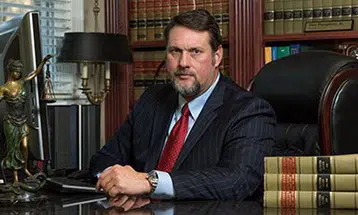
Attorney Don Pumphrey, Jr. is a former prosecutor, former law enforcement officer, and a successful and experienced criminal defense attorney. Don has achieved over 100 not guilty verdicts at trial and over 2,000 dismissals.