- DUI
- Criminal Defense
- Florida DUI
- Traffic Offenses
- Drug Charges
- Marijuana Charges
- Violent Crimes
- Domestic Violence
- Temporary Injunctions
- Weapons Charges
- Theft Crimes
- White Collar Crime
- Juvenile Offenses
- Sex Crimes
- Violation of Probation
- Early Termination of Probation
- Seal or Expunge Criminal Record
- Criminal Appeals
- US Federal Offenses
- Misdemeanor Charges
- Felony Charges
- Co-Defendant Cases
- College Student Defense
- College Student Hearings
- FSU Students
- FAMU Students
- Florida Panhandle Arrests
- Extradition to Florida
- Bench Warrants / Warrants
- Emergency Bond Hearings
- Gambling Charges
- Drone Arrests
- Marsy’s Law
- UAS Infractions
- Introduction of Contraband
- Lying to Police
- Locations
- Case Results
- Our Firm
- Media
- Resources
- Blog
- Contact Us
North FL’s Highest Court REVERSES Conviction Due to Improper Bolstering of Police Testimony
April 23, 2026 Don Pumphrey, Jr. Criminal Defense, Drug Charges Social Share
Florida’s 1st District Court of Appeal reversed a defendant’s conviction for cocaine possession, finding that a prosecutor’s impermissible “bolstering” of a testifying police officer’s credibility during closing arguments may have led to the defendant being convicted.
CASE: Williams v. State, 673 So.2d 974 (Fla. 1st DCA 1996)
Charge(s): Possession of Cocaine
Outcome: Conviction REVERSED, as the prosecutor improperly “bolstered” the testimony of a law enforcement officer during his closing argument, which may have led to the guilty verdict.
Closing Arguments in Florida Criminal Trials
In Florida, closing arguments are a key aspect of criminal trials. Closing arguments are the “final word” that each party (State and defense) has before the jury is instructed and sent to deliberate.
The objective of closing arguments is to provide a “lens” through which the jury will (hopefully) view the evidence and testimony they saw and heard, so that they will render a verdict in favor of the arguing party.
Though many believe that closing arguments involve the State then the defense speaking, this is not the whole picture. Closing arguments in Florida are structured in the following way:
- First, the State gives its initial closing
- Second, the defense gives its closing (which often will involve rebuttals of what the State said during its first closing statement)
- Finally, the State (e.g. prosecutor) gives a REBUTTAL CLOSING (which is the true “last word” before deliberations) to refute the defense’s closing statement
After the State gives its rebuttal closing, the jury is instructed by the judge (e.g. about elements of the offense/rules governing the jury’s behavior during deliberations) – and sent to deliberate. The judge will also tell the jurors that closing arguments are NOT evidence and should not be viewed as such.
However, this doesn’t change the fact that a strong closing argument can shape how the jury sees (and by extension, decides) a case. Though the jury is required to focus on the evidence and the testimony when they deliberate, a compelling closing argument helps the jury mentally “frame” it in a way that will inform their eventual verdict.
Closing arguments are especially important for the defense in a Florida criminal trial – for a few reasons. The first of these is the fact that the defense gets only ONE bite at the apple (e.g. there is no rebuttal closing). Thus, the defense must make their one closing argument strong to maximize the chances of the jury returning a favorable verdict (since the defense does not get a rebuttal).
Closing arguments are also vital for the defense because it is the defense’s chance to REFRAME how the evidence and testimony is currently being viewed by the jurors. In some cases, the State may appear to be “in control” at trial by presenting evidence that seems damaging to the defense.
However, in a strong closing statement, an experienced and aggressive Florida criminal defense attorney can use “holes” they’ve poked in the State’s case throughout trial to make it clear that the State has NOT proven the defendant guilty beyond a reasonable doubt. This may cause the jurors to reconsider their position(s), if they were leaning towards voting guilty.
Though attorneys have wide “latitude” to say what they want during closing arguments, there are RULES that govern what can and cannot be done. Though closing arguments often get “heated,” especially in cases involving alleged violent crimes and sex crimes, Florida courts are clear that certain comments go OVER THE LINE and may even be grounds for a mistrial.
Some examples of objectionable tactics employed during closing arguments include (Rodriguez v. State, 210 So.3d 750 (Fla. 5th DCA 2017)):
- Impugning the character of opposing counsel by calling them a “liar” or “evil”
- Calling the defendant ugly names/insulting them
- Relying on facts not in evidence or misrepresenting the law (Pacifico v. State, 642 So.2d 1178 (Fla. 1st DCA 1994))
- Commenting on the defendant’s right to remain silent
- Improperly bolstering the testimony of an alleged victim or law enforcement officers
- Saying the case is about getting “justice” for the victim (Cardona v. State, 185 So.3d 514, 521 (Fla. 2016))
If a defendant is CONVICTED despite the State making an improper closing argument, there is a chance their conviction will be REVERSED on appeal. Petruschke v. State, 125 So.2d 274 (Fla. 4th DCA 2013)
Generally, the likelihood of a mistrial (or the defendant’s conviction being reversed by a Florida appellate court) significantly increases if the defense OBJECTS contemporaneously (e.g. during a prosecutor’s closing arguments). This is because:
- WITH AN OBJECTION: Courts apply a “harmless error” analysis (e.g. if there was NO reasonable possibility the jury’s verdict was impacted by the comments) – if the improper remarks were not harmless error, a conviction requires reversal (Petruschke v. State, 125 So.2d 274 (Fla. 4th DCA 2013))
- WITHOUT AN OBJECTION: The improper comments are reviewed for fundamental error, which is a far higher standard (e.g. whether improper comments were so unfairly prejudicial that it made the jury’s verdict inherently illegitimate, per Brinson v. State, 153 So.3d 972 (Fla. 5th DCA 2015))
In one major Florida case involving an allegedly improper closing argument, the defendant was charged with cocaine possession after officers recovered a matchbox he was allegedly holding. The interior of the matchbox contained cocaine.
There was no evidence presented at trial that the matchbox was ever in the physical custody of the defendant, other than the word of the officer. Law enforcement did NOT test for fingerprints. As a result, the only “proof” the State had was the testimony of the arresting officers that they saw the defendant holding the matchbox before it was seized and tested positive for cocaine.
The problem for the State was that FOUR other witnesses testified they didn’t see the defendant with the matchbox in his hand (as the officer claimed) during the incident.
As a result of the fact that his “star witnesses” were being scrutinized, the prosecutor made an improper closing argument in which he urged jurors to believe the officers simply because they were police officers. The defense immediately OBJECTED to this – and requested a mistrial. But the motion for a mistrial was denied, and the defendant was convicted.
Challenging his conviction to Florida’s 1st District Court of Appeal (Tallahassee and North FL’s highest court), the defendant asserted that the jury’s verdict may have been influenced by the prosecutor’s improper bolstering of the law enforcement officers’ credibility.
The defendant argued that because every witness except for the police officers said the defendant was NOT holding the matchbox, the jury may have found him guilty because they concluded the officers could not be lying (due to the fact that he was in law enforcement).
The 1st DCA agreed with the defendant and REVERSED his conviction, remanding the matter to the lower court for a new trial. Let’s take a look at that case – Williams v. State, 673 So.2d 974 (Fla. 1st DCA 1996) – and discuss what it means for those in Florida concerned about improper State comments during closing arguments.
KEY CASE: Williams v. State, 673 So.2d 974 (Fla. 1st DCA 1996)
In Williams, the defendant (Williams) was arrested and charged with possession of cocaine. He was ultimately convicted. At trial, the following was revealed:
- Several Jacksonville Sheriff’s Office deputies were on patrol when they noticed the odor of marijuana
- As the officers approached Williams, who was smoking at the time, Williams dropped his “cigar” and began to walk away
- Officers caught up to him and placed him under arrest
- When officers had Williams empty his pockets, Williams allegedly placed a soda can and a matchbox on a window sill
- The matchbox tested positive for cocaine – however, Williams denied that it was his/that he had placed it there
- At trial, the two arresting officers testified that they saw Williams with the matchbox (and thus, the cocaine therein was his)
- However, Williams testified the matchbox was not his – AND 4 other witnesses testified they never saw Williams with the matchbox
- During closing arguments, the prosecutor said: “The defense would have you believe that they made all this stuff up and that they were sloppy, or criminal themselves; that they lied on the stand and that they planted drugs on the defendant, or collected evidence or drugs from someplace else and insisted, attributed those drugs to Keith Williams. … I submit to you that it’s not reasonable to consider that sworn police officers, doing their job, could come into court and perjure themselves.”
- The defense objected on the basis of improper bolstering and moved for a mistrial in the case, but the trial judge OVERRULED these
- Williams was ultimately found guilty
On appeal to the 1st DCA, Williams argued that the trial judge erred as a matter of law by failing to sustain his objection to improper bolstering and/or grant a mistrial. Williams claimed the error was NOT harmless (the standard of review since it was preserved by objection), requiring that he receive a new trial in the case.
The 1st DCA AGREED, reversing Williams’s conviction and remanding the matter to the lower court for a new trial. The 1st DCA wrote:
“An attempt by the prosecuting attorney to bolster the credibility of police officers testifying in the case is improper argument entitling the defendant to a new trial. Robinson v. State, 637 So.2d 998 (Fla. 1st DCA 1994); Clark v. State, 632 So.2d 88, 91 (Fla. 4th DCA 1994). Prior to the portion of the state’s argument above quoted, the prosecutor had stressed the lack of credibility of the defense witnesses, and expressed the opinion that “[w]hat this case boils down to, in short, is a swearing contest.” In fact, the state had vigorously attacked the credibility of all defense witnesses by establishing their prior conviction of crimes involving dishonesty and untruthfulness.”
“[I]n the present case the critical issue was the credibility of the witnesses. Thus, it was crucial to the state’s case for the jury to believe the officers’ testimony, and the prosecutor’s remarks clearly were calculated to impress upon the jury that it must believe the police officers because they were police officers. In view of our reversal on the issue above discussed, we find it unnecessary to reach appellant’s contention that the trial court erred in its rulings concerning the state’s impeachment of defense witnesses because of their prior criminal convictions. REVERSED and REMANDED for new trial.”
Put simply, because the prosecutor’s improper remark during closing arguments may have been central to the jury believing the law enforcement officers over the defense’s witnesses, a NEW TRIAL was required in Williams’s case.
In sum, Williams v. State, 673 So.2d 974 (Fla. 1st DCA 1996) marks a significant development in Florida’s corpus of case law surrounding improper closing arguments and when they serve as a basis for a new trial. The 1st DCA (North FL’s highest court) held that:
- The State improperly bolstered the credibility of testifying law enforcement officers – claiming that they were telling the truth (e.g. could not perjure themselves) because of their line of work
- Williams’s objection should’ve been sustained/a mistrial should have occurred
- The relative credibility of the witnesses was central to the outcome of the trial, as there was a dearth of forensic evidence
- As the prosecutor’s improper closing statement may have led to Williams’s conviction, REVERSAL was required and a new trial was ordered
Florida’s criminal defense community should take note of Williams v. State, 673 So.2d 974 (Fla. 1st DCA 1996), as it makes clear that in Tallahassee and North Florida, a prosecutor’s improper closing argument can lead to reversal of a defendant’s conviction(s).
If someone is arrested and formally charged in Florida in a drug crimes case, it is critical to find experienced and trusted legal representation as soon as possible. This decision could make the difference in whether or not someone faces a lengthy prison term and hefty fines.
Criminal Defense Attorney in Tallahassee, FL
Don Pumphrey, Jr. is a Former Prosecutor, Former State Police Officer, Lifetime Member of the Florida Association of Criminal Defense Lawyers; for over 25 years as a private defense attorney who is Trusted, Experienced, Aggressive in Criminal Defense as a Trial Attorney, Criminal Lawyer, Criminal Defense Lawyer for the accused in Florida State Courts located in Tallahassee, Florida but handling cases throughout the State of Florida.
Don Pumphrey, Jr. and the Tallahassee criminal defense lawyers at Pumphrey Law have decades of experience fighting criminal charges on behalf of clients and winning. Call Pumphrey Law now at (850) 681-7777 to learn more about what we can do for you. Our lawyers will be happy to provide you with a free consultation.
Don Pumphrey, Jr.
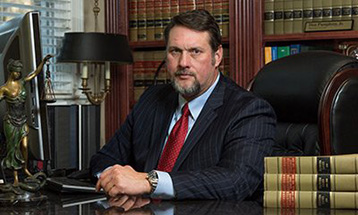
Attorney Don Pumphrey, Jr. is a former prosecutor, former law enforcement officer, and a successful and experienced criminal defense attorney. Don has achieved over 100 not guilty verdicts at trial and over 2,000 dismissals.