- DUI
- Criminal Defense
- Florida DUI
- Traffic Offenses
- Drug Charges
- Marijuana Charges
- Violent Crimes
- Domestic Violence
- Temporary Injunctions
- Weapons Charges
- Theft Crimes
- White Collar Crime
- Juvenile Offenses
- Sex Crimes
- Violation of Probation
- Early Termination of Probation
- Seal or Expunge Criminal Record
- Criminal Appeals
- US Federal Offenses
- Misdemeanor Charges
- Felony Charges
- Co-Defendant Cases
- College Student Defense
- College Student Hearings
- FSU Students
- FAMU Students
- Florida Panhandle Arrests
- Extradition to Florida
- Bench Warrants / Warrants
- Emergency Bond Hearings
- Gambling Charges
- Drone Arrests
- Marsy’s Law
- UAS Infractions
- Introduction of Contraband
- Lying to Police
- Locations
- Case Results
- Our Firm
- Media
- Resources
- Blog
- Contact Us
North FL’s Highest Court REVERSES Sexual Battery, Kidnapping Conviction Due To Miranda Rights Violation
April 16, 2026 Don Pumphrey, Jr. Criminal Defense, Sex Crimes Social Share
Florida’s 1st District Court of Appeal reversed a defendant’s conviction for sexual battery with a deadly weapon and kidnapping, finding that law enforcement violated his Miranda rights.
CASE: Miles v. State, 60 So.3d 447 (Fla. 1st DCA 2011)
Charge(s): Sexual Battery with a Deadly Weapon, Kidnapping
Outcome: Convictions REVERSED, as the defendant’s invocation of his right to remain silent was not honored by law enforcement (e.g. his Miranda rights were VIOLATED).
Miranda Rights in Florida
In Florida and throughout the U.S., someone must be advised of their Miranda rights before they are subject to custodial interrogation by law enforcement. These rights, per Miranda v. Arizona, 384 U.S. 436 (1966), include:
- The right to remain silent
- The fact that anything they say can and will be used against them in court
- The right to an attorney, including to have one present during police questioning
- The fact that if they cannot afford an attorney, one will be provided for them
If someone is notified of their Miranda rights, the SMART next move is to EXERCISE them! Tell law enforcement that you will be remaining silent and request an attorney. If you simply sit there quietly and do not say you are invoking your rights out loud, officers can keep questioning you. Berghuis v. Thompkins, 560 U.S. 370 (2010)
Though many believe (due to television shows and social media) that law enforcement must read a person their Miranda rights any time they put them in handcuffs, this is not the case. Miranda is only required to be read AFTER someone is taken into custody, but BEFORE they are subject to interrogation. For more, click here. Moore v. State, 798 So.2d 50 (Fla. 1st DCA 2001)
But what are custody and interrogation? For Miranda reading purposes, custody exists when both of the following conditions are met:
- Law enforcement restrains a suspect’s freedom of movement in a manner consistent with a formal arrest
- A reasonable person in the suspect’s position would not feel free to leave
Interrogation occurs when law enforcement subjects a suspect to questioning – or its “functional equivalent” – that is reasonably likely to elicit an incriminating response from a suspect. Rhode Island v. Innis, 446 U.S. 291 (1980). For more on interrogation, click here.
If and when someone is read their Miranda rights, they have two choices:
- Exercise their rights and tell law enforcement that they will be remaining silent/want an attorney (DO THIS!)
- Waive their rights and agree to speak with law enforcement, without an attorney present
Note: If someone has already waived their Miranda rights, they can invoke them (e.g. exercise them) during interrogation at any time. But this must be unambiguous and unequivocal for law enforcement to be required to stop interrogation (once it has started). Statements like “I think I may need a lawyer” will not suffice. For more, click here.
In the event that someone does waive their Miranda rights, this must be knowing, intelligent, and voluntary. This means both of the following must have been true when the suspect waived their rights (e.g. chose not to invoke them and spoke with law enforcement):
- The defendant understood the nature of their rights (e.g. what they were)
- The defendant understood the potential consequences of not invoking them (e.g. the fact that any inculpatory statements could/would be used against them in court)
Examples of situations where law enforcement acts in a manner that renders a Miranda waiver (and subsequent confession) involuntary include:
- Law enforcement does not read someone their full Miranda rights (e.g. omits one or more rights when notifying a suspect of them, such as not disclosing the right to an attorney)
- Law enforcement minimizes Miranda (e.g. “This is all just a formality…”)
- Law enforcement reads someone their rights in a language that is not their own (e.g. reads a clear Spanish-speaker their rights in English)
- Law enforcement uses threats, coercion, or trickery to get someone to waive their rights – even once they have chosen to exercise them
Note: To learn more about when a waiver of someone’s Miranda rights is (and is not) considered knowing, intelligent, and voluntary, click here.
But why does the “voluntariness” of a Miranda waiver matter? The answer is that if someone did not waive their rights validly – and they CONFESS during interrogation – their statements can’t be used against them in a court of law (because their Fifth/Sixth Amendment rights have been violated). Miranda v. Arizona, 384 U.S. 436 (1966)
If someone believes their Miranda rights were violated (e.g. their waiver was legally invalid), an experienced and aggressive Florida criminal defense attorney can (and SHOULD) file a motion to suppress their post-Miranda statements.
If that motion is granted, a defendant’s post-arrest statements cannot be used against them at trial (e.g. the jury will never hear it). Especially when a confession is a key piece of evidence against a defendant, this can be devastating for the State’s case.
Another basis to suppress someone’s post-Miranda statements is when they clearly attempted to invoke their right to remain silent/an attorney, but law enforcement ignored this and questioned the defendant anyway.
This is exactly what happened in one case heard by Florida’s 1st District Court of Appeal. There, the defendant was charged with sexual battery with a deadly weapon and kidnapping. After law enforcement took him into custody and interrogated him, he confessed.
At the start of interrogation (both before and after he was read his Miranda rights), the defendant in the case indicated to law enforcement that he did not wish to speak with them. Nevertheless, they continued to question him – and he eventually made an inculpatory statement.
Before trial, the defendant filed a motion to suppress his post-Miranda statements (e.g. to prevent them from being admitted at his trial). He argued that officers ignored his attempts to exercise his right to remain silent – and that because his confession was “fruit of the poisonous tree” (e.g. the product of a violation of his Miranda rights), it was inadmissible in a court of law.
The trial judge disagreed and denied the defendant’s motion to suppress. He was found guilty of both charges (sexual battery and kidnapping).
On appeal to Florida’s 1st District Court of Appeal (Tallahassee and North FL’s highest court), the defendant argued the trial judge erred as a matter of law by denying his motion to suppress. He further argued that because this was HARMFUL ERROR (e.g. introduction of his confession may have impacted the jury’s verdict), reversal of his convictions and a new trial was required.
The 1st DCA AGREED with the defendant – holding that despite strong evidence of his guilt, he was entitled to a new trial because his Miranda rights were violated when law enforcement failed to honor his request(s) to remain silent.
Let’s look at that case – Miles v. State, 60 So.3d 447 (Fla. 1st DCA 2011) – and discuss what it means for your Miranda rights in Florida.
KEY CASE: Miles v. State, 60 So.3d 447 (Fla. 1st DCA 2011)
In Miles, the defendant (Miles) was charged with sexual battery with a deadly weapon and kidnapping. He was already in custody for unrelated crimes. According to the 1st DCA, the following facts were revealed at trial/in Miles’s pretrial motion:
- DNA from the crime scene was tested, and it was a match to Miles
- While Miles was in custody (e.g. incarcerated), Gainesville Police Department detectives interviewed him
- Before he was read his rights, Miles made a statement indicating he did not wish to talk with them about the case (“Actually, I don’t know nothing about this, so I’m not fixing to say nothing about this.”)
- Despite this statement, the detectives continued speaking with him, telling him they had his DNA and that it was as good as a signed confession
- The detectives then read Miles his rights
- Feeling pressured to refute the detectives’ insinuations of his guilt, Miles told them: “It wasn’t like I raped this girl or nothing like that. It ain’t like what she’s saying…. What can I possibly tell you? We had sex. Just—that’s that.”
- Though this was not a direct confession to the crime, Miles’s admission that he had sex with the victim (alongside victim testimony/DNA evidence) was used as evidence of his guilt – and he was ultimately convicted
As noted previously, Miles filed a pretrial motion to suppress his post-Miranda statements, where he argued:
- Law enforcement ignored his repeated invocations of his right to remain silent (and kept interrogating him until he confessed)
- His eventual Miranda waiver was NOT knowing, intelligent, and voluntary – as he felt pressured to resist the detectives’ accusatory statements (which came AFTER he told the detectives he did not want to speak, but before he was read his rights)
The trial judge denied Miles’s motion to suppress – and he was convicted after his admission to having sex with the victim was introduced into evidence at trial.
On appeal to the 1st DCA, Miles renewed his argument that his post-Miranda statements should not have been used against him. Miles claimed the trial judge erred as a matter of law by denying his motion to suppress – and this was harmful error (e.g. may have influenced the verdict) that entitled him to a new trial.
The 1st DCA AGREED – reversing Miles’s convictions and remanding the matter to the lower court for a new trial. Finding that his Miranda rights were violated, the 1st DCA wrote:
“Here, at the very outset of the interview of Miles by detectives and before he was advised of his Miranda rights, Miles made a statement indicating his reluctance to talk to the police … The trial court determined that this statement by Miles was not an unequivocal invocation of his right to remain silent, and therefore, denied Miles’ motion to suppress statements he made later in the interview. This was error. Under binding precedent from the Supreme Court, we are unable to conclude that the statement was equivocal. See Cuervo v. State, 967 So.2d 155, 163 (Fla.2007). In Cuervo, the Florida Supreme Court held that Cuervo’s statement “I don’t want to declare anything” was a “clear invocation of the right to remain silent.”
“Miles’ statement to the detectives in this case is indistinguishable from the statement at issue in Cuervo. Because Miles’ statement indicating that he did not want to discuss the case was unequivocal, the detectives were required to terminate the interrogation. Id. at 163–65. Even if the statement could be construed as an equivocal request to remain silent, because Miles had not yet waived his Miranda rights, the detectives were required to clarify his intent before proceeding further with the interrogation. Based on the facts of this case and the binding authority of Cuervo and Owen and its progeny, we are compelled to hold that the trial court erred by denying Miles’ motion to suppress statements he made to police after he invoked his right to remain silent.”
The 1st DCA then assessed whether the violation of Miles’s Miranda rights was “harmful error” (e.g. may have influenced the jury’s verdict) – requiring that he receive a new trial. Finding the erroneous admission of his post-Miranda statements may have contributed to Miles being found guilt, the 1st DCA concluded:
“The trial court’s ruling is subject to harmless error analysis. The harmless error test places the “burden on the state, as the beneficiary of the error, to prove beyond a reasonable doubt that the error complained of did not contribute to the verdict or, alternatively stated, that there is no reasonable possibility that the error contributed to the conviction…”
“Although the evidence of Miles’ guilt is compelling, the standard we must apply in reviewing the error here is not a “sufficiency-of-the-evidence” or “an overwhelming evidence” test. DiGuilio, 491 So.2d at 1139. Instead, this court is required under the controlling precedent of DiGuilio to examine whether the improperly admitted statements and testimony concerning those statements contributed to the jury’s verdict. Id. Under the facts of this case, we are unable to conclude to the exclusion of all reasonable doubt that the erroneously admitted statements did not contribute to the jury’s verdict. Id. Accordingly, we reverse Miles’ conviction and sentence and remand for a new trial.”
Since the admission of Miles’s inculpatory statement was not clearly “harmless” (e.g. may have influenced the jury’s verdict) the 1st DCA found that he was entitled to a new trial.
One 1st DCA judge – Judge Marstiller – authored a partially concurring and partially dissenting opinion. Though Judge Marstiller agreed that the trial judge erred in denying Miles’s motion to suppress, he thought the error WAS harmless beyond a reasonable doubt. Judge Marstiller wrote:
“I concur with the majority that the trial court neither erred in denying Appellant’s motion in limine or in imposing sentence. Further, I agree Appellant’s statement to police (“I’m not fixing to say nothing about this.”) sufficed to invoke his right to remain silent and is indistinguishable from the statement made in Cuervo. Because the facts do not show Appellant validly waived his right, the trial court should have suppressed Appellant’s subsequent statements.”
“But I do not find the error harmful and respectfully dissent from the majority opinion on that point. Police interrogating Appellant told him he was about to be charged with rape, robbery and kidnapping because “there would be no other reason why your DNA would be in this girl from 1990.” They neither identified “this girl” nor gave Appellant any details about the crimes. Appellant’s only statements to police in response were: It wasn’t like I raped this girl or nothing like that. It ain’t like what she’s saying. … What could I possibly tell you? We had sex. Just—that’s it. … I mean, it ain’t like I raped nobody or kidnapped nobody.”
“The victim testified she was kidnapped and raped. The DNA evidence collected from the victim immediately after the rape matched Appellant’s DNA profile in FDLE’s database. The cheek swab Appellant consented to during the police interview confirmed the match. Testimony established that there is a one–in–900 quadrillion chance the DNA belongs to someone other than Appellant. … I have no trouble, under the circumstances of this case, concluding that the trial court’s error in admitting Appellant’s statements denying guilt did not contribute to the guilty verdicts. … Accordingly, I would not reverse Appellant’s convictions and life sentences.”
Put simply, because Judge Marstiller thought the evidence against Miles was extremely strong (even without the admission of his inculpatory statement(s)), he concluded the jury would have found Miles guilty anyway.
In sum, Miles v. State, 60 So.3d 447 (Fla. 1st DCA 2011) marks a significant development in Florida’s corpus of case law surrounding Miranda rights. The 1st DCA (Tallahassee and North FL’s highest court) found that:
- Miles indicated he wished to remain silent before he was ever read his Miranda rights
- Despite this, law enforcement made a series of accusatory statements that encouraged Miles to keep talking to them (violating his right to remain silent)
- Because Miles’s subsequent Miranda waiver was not knowing, intelligent, and voluntary (due to the violation of his right to remain silent), the trial judge erred by denying Miles’s motion to suppress
- Since this was NOT harmless error beyond a reasonable doubt, his convictions required reversal
Judge Marstiller agreed with the majority’s Miranda analysis, but did NOT agree that it required reversal – as he thought the erroneous admission of Miles’s inculpatory statement(s) DID NOT influence the jury’s verdict. However, Judge Marstiller’s “harmless error” analysis did not win the day – and Miles received a new trial.
Florida’s criminal defense community should take note of Miles v. State, 60 So.3d 447 (Fla. 1st DCA 2011), as it makes clear that a failure to honor a defendant’s invocation of their right to remain silent requires a reversal of their conviction(s) if:
- Their statements are used against them at trial, and
- The introduction of their incriminating statement(s) into evidence is NOT harmless error
If someone is arrested and formally charged in Florida in a case involving a Miranda waiver that was not knowing, intelligent, or voluntary, it is critical to find experienced and trusted legal representation as soon as possible. This decision could make the difference in whether or not someone faces a lengthy prison term and hefty fines.
Criminal Defense Attorney in Tallahassee, FL
Don Pumphrey, Jr. is a Former Prosecutor, Former State Police Officer, Lifetime Member of the Florida Association of Criminal Defense Lawyers; for over 25 years as a private defense attorney who is Trusted, Experienced, Aggressive in Criminal Defense as a Trial Attorney, Criminal Lawyer, Criminal Defense Lawyer for the accused in Florida State Courts located in Tallahassee, Florida but handling cases throughout the State of Florida.
Don Pumphrey, Jr. and the Tallahassee criminal defense lawyers at Pumphrey Law have decades of experience fighting criminal charges on behalf of clients and winning. Call Pumphrey Law now at (850) 681-7777 to learn more about what we can do for you. Our lawyers will be happy to provide you with a free consultation.
Don Pumphrey, Jr.
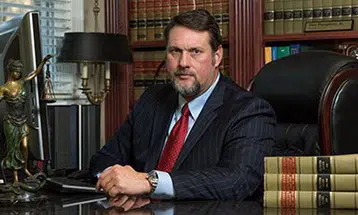
Attorney Don Pumphrey, Jr. is a former prosecutor, former law enforcement officer, and a successful and experienced criminal defense attorney. Don has achieved over 100 not guilty verdicts at trial and over 2,000 dismissals.