- DUI
- Criminal Defense
- Florida DUI
- Traffic Offenses
- Drug Charges
- Marijuana Charges
- Violent Crimes
- Domestic Violence
- Temporary Injunctions
- Weapons Charges
- Theft Crimes
- White Collar Crime
- Juvenile Offenses
- Sex Crimes
- Violation of Probation
- Early Termination of Probation
- Seal or Expunge Criminal Record
- Criminal Appeals
- US Federal Offenses
- Misdemeanor Charges
- Felony Charges
- Co-Defendant Cases
- College Student Defense
- College Student Hearings
- FSU Students
- FAMU Students
- Florida Panhandle Arrests
- Extradition to Florida
- Bench Warrants / Warrants
- Emergency Bond Hearings
- Gambling Charges
- Drone Arrests
- Marsy’s Law
- UAS Infractions
- Introduction of Contraband
- Lying to Police
- Locations
- Case Results
- Our Firm
- Media
- Resources
- Blog
- Contact Us
North FL’s Highest Court Tackles Juror Misconduct, Improper Closing Arguments in Sex Crime Case
April 24, 2026 Don Pumphrey, Jr. Criminal Defense, Sex Crimes Social Share
Florida’s 1st District Court of Appeal reversed the denial of a defendant’s motion for a new trial in a lewd molestation case on the basis that a juror improperly withheld important information during jury selection – but declined to find the prosecutor’s closing argument so improper as to warrant a mistrial.
CASE: Young v. State, 720 So.2d 1101 (Fla. 1st DCA 1998)
Charge(s): Lewd or Lascivious Molestation
Outcome: Denial of Young’s motion for a new trial REVERSED, as a juror’s misconduct may have been grounds for a new trial in his case.
Jury Selection in Florida
In Florida, jury selection (also known as voir dire) is a critical part of any criminal trial. The goal of jury selection is for both parties (State and defense) to evaluate whether potential jurors can be fair and impartial if eventually chosen to hear the case. If not, those potential jurors are likely to be excused and sent home.
If a potential juror gives one or more answers during jury selection that cause either party to the case (e.g. State or defense) to have questions about the ability of that potential juror to be fair and impartial, a CAUSE CHALLENGE may occur. For more, click here.
A cause challenge involves a party advising the judge that they wish to excuse a potential juror from service (e.g. send them home) because there are SERIOUS CONCERNS about their ability to fairly and impartially decide the case. Chester v. State, 737 So.2d 557 (Fla. 3d DCA 1999)
Examples of circumstances where a defendant may move for a cause challenge of a potential juror through an experienced and aggressive Florida criminal defense attorney include:
- A potential juror says they don’t like the way a defendant “looks”
- A potential juror claims they will believe police/victim testimony over all other testimony in the case, including the defendant’s (if the defendant takes the stand)
- A potential juror has a past experience with crime that makes them extremely unlikely to be fair and impartial when rendering their verdict
In these cases, the odds are LOW that the potential juror can be successfully rehabilitated. Rehabilitation occurs when a party to the case (including the judge) “redirects” what appears to be a biased juror through questioning designed to evaluate whether the potential juror can lay aside their bias and follow the law – or if they would be truly unable to do so.
If a potential juror firmly believes their preexisting biases can be cast aside in favor of rendering a verdict based solely on the evidence and testimony presented, the trial judge may determine the potential juror is “rehabilitated” – and accordingly, deny a cause challenge. For more, click here.
But just because a cause challenge fails, this does NOT mean a potential juror will be impaneled on the eventual jury. This is because there is another type of “challenge” – the PEREMPTORY CHALLENGE (also known as a peremptory strike).
A peremptory strike occurs when a party unilaterally excuses a potential juror – without having to give a reason for doing so to the judge or the other party. Walker v. State, 724 So.3d 1232 (Fla. 4th DCA 1999)
Unlike cause challenges (which are unlimited), peremptory strikes are limited in number. The State and defense each receive 3 peremptory strikes in misdemeanor cases, 6 in non-capital/life felony cases, and 10 in capital and life felony cases. A judge has the discretion to grant either side additional peremptory strikes, if requested.
Peremptory strikes can be used for almost any reason. However, they CANNOT be exercised on the basis of a potential juror’s race, gender, or ethnicity. Batson v. Kentucky, 476 U.S. 79 (1986); J.E.B. v. Alabama ex rel. T.B., 511 U.S. 127 (1994). For more on this, click here.
The importance of jurors answering questions honestly during voir dire cannot be overstated. If a potential juror conceals relevant information from the court (and the attorneys) and is later seated on the jury, this may be grounds for the reversal of a guilty verdict against the defendant.
To determine REVERSAL of a conviction and a new trial is required, the use of the De La Rosa test on appeal is required, which has three prongs (De La Rosa v. Zequeria, 659 So.2d 239 (Fla. 1995)):
- Prong #1: The complaining party must show the withheld information was RELEVANT and material to jury service in the case
- Prong #2: The juror concealed that information during questioning
- Prong #3: The failure to disclose the information was not attributable to the complaining party’s lack of due diligence
Sometimes, a defendant will move for a new trial and allege that juror misconduct occurred after discovering information that was withheld by a juror during voir dire. If the trial judge DENIES the defendant’s motion for a new trial on the basis of juror misconduct, the issue is preserved and can be argued to a Florida appellate court (DCA) – which has the power to reverse the judge.
Improper Closing Arguments in FL Criminal Trials
Closing arguments in Florida are an essential part of criminal proceedings. They function as the last word the State and defense get before the jury is sent to deliberate after being instructed on the law by the trial judge.
Closing arguments are NOT to be considered as evidence by the jury. But this does not change the fact that closings can be very effective at shaping how the jury views the case. A powerful closing statement will give the jury a LENS through which they can evaluate the evidence and the testimony they’ve been presented – and encourage them to render a verdict accordingly.
A good closing argument from an experienced and aggressive Florida criminal defense attorney will be made with the following goals:
- Making clear to the jury that REASONABLE DOUBT exists
- Drawing attention to any and all vulnerabilities in the State’s case that provide a basis for reasonable doubt
Many believe that closing arguments involve the State (prosecutor) speaking, before the defense gets the last word. But this is not entirely correct. In Florida, closing arguments operate using a “sandwich” structure (Robbins v. State, 891 So.2d 1102 (Fla. 5th DCA 2004)):
- First, the State gives its initial closing
- Second, the defense gives its closing (which often will involve rebuttals of what the State said during its first argument)
- Finally, the State (e.g. prosecutor) gives a REBUTTAL CLOSING (which is the true “last word” before deliberations) to refute the defense’s closing statement
It can be tempting to think, because of television shows and movies, that closing arguments are “knock-down, drag-out” verbal jousts with few to no rules governing them. However, this is not the case. There are various restrictions governing what can and cannot be said during closings – but this DOES NOT mean the “guardrails” always hold.
Since lawyers are people, “inflammatory” comments during closing may occur. However, if the State (prosecutor) breaks the rules and makes improper remarks, it is critical for the defense to OBJECT and preserve the issue for appellate review (which may lead to REVERSAL if the defendant is convicted).
Some examples of objectionable tactics employed during closing arguments include (Rodriguez v. State, 210 So.3d 750 (Fla. 5th DCA 2017)):
- Impugning the character of opposing counsel by calling them a “liar” or “evil”
- Calling the defendant ugly names/insulting them
- Relying on facts not in evidence or misrepresenting the law
- Commenting on the defendant’s right to remain silent (e.g. “If he wasn’t guilty, he would have said XYZ…”)
- Saying the case is about getting “justice” for the victim (Cardona v. State, 185 So.3d 514, 521 (Fla. 2016))
- GOLDEN RULE arguments (e.g. “Put yourself in the victim’s shoes and think about how scared they were – now find the defendant guilty!”)(Jenkins v. State, 563 So.2d 791 (Fla. 1st DCA 1990))
In one major case heard by Florida’s 1st District Court of Appeal (Tallahassee and North FL’s highest court), a defendant was arrested and charged with lewd or lascivious molestation – a sex offense typically punishable by up to 15 years in state prison and a $10,000 fine (second-degree felony). He was convicted.
On appeal, the defendant raised two issues:
- First he argued that his motion for a new trial was ERRONEOUSLY denied because he made a showing that juror misconduct may have influenced the outcome of his trial
- Next, he claimed that the prosecutor engaged in improper closing argument by mockingly characterizing his defense (e.g. calling the victim a series of names to make the defense look unnecessarily antagonistic and cruel)
The 1st DCA REJECTED the defendant’s argument that the prosecutor’s closing argument was so improper that a new trial was required. However, the 1st DCA AGREED with the defendant that the trial judge erroneously denied his motion for a new trial. The 1st DCA REVERSED the judge and instructed him to reconsider his ruling on remand.
Let’s take a look at that case – Young v. State, 720 So.2d 1101 (Fla. 1st DCA 1998) – and discuss what it means for defendants in Florida who are concerned about violations of their right to a fair trial.
KEY CASE: Young v. State, 720 So.2d 1101 (Fla. 1st DCA 1998)
In Young, the defendant (Young) was convicted of lewd or lascivious molestation. At trial, the following was revealed:
- During jury selection, the State and defense asked questions that elicited responses from several potential jurors regarding their own experiences with sexual abuse
- The trial judge then asked: “Can all of you tell me whether there is anything that has happened in your life, including being molested, that would make it difficult for you to give Mr. Young the presumption of innocence here?
- In response to that question, another potential juror disclosed that she had been a victim of sexual abuse
- The jurors who disclosed their histories of sexual abuse were peremptorily stricken, and a jury of four men and two women was ultimately impaneled
- During closing argument, the prosecutor sardonically remarked of the defense’s argument that the victim was fabricating the allegation: “I’m going to come right out and say what nobody has said: [victim] you are a piece of trash, you are brain dead, you have problems and your [sic] on drugs.”
- The defense objected to this, but it was overruled and no mistrial was granted
- Immediately after trial, one of the female jurors disclosed that she had also been sexually abused in her childhood
- Another juror (a male) disclosed this to the trial court
- That male juror also said that he and another juror only agreed to find Young guilty after concluding this was “probably” his FIRST OFFENSE and he would not receive a heavy sentence
- Young moved for a NEW trial, arguing juror misconduct and the prosecutor’s improper closing arguments deprived him of a fair one
- However, the trial judge denied this motion – and Young was ultimately convicted (and sentenced)
On appeal to the 1st DCA, Young reiterated his claims that the prosecutor’s improper closing and the juror misconduct in the case entitled him to a new trial. Addressing the former, the 1st DCA concluded that although the prosecutor’s remark was NOT appropriate, it did not entitle Young to a new trial:
“During the trial, appellant’s counsel questioned the victim about her history of mental illness and behavioral problems, current use of medication, and knowledge of sexual acts. In response to these legitimate questions reflecting upon the victim’s credibility, the prosecutor opened her closing arguments by saying, “I’m going to come right out and say what nobody has said-[victim] you are a piece of trash-you are brain dead, you have problems and your [sic] on drugs.” Appellant objected to this statement, arguing that it was not a fair comment on the evidence. The trial court overruled the objection but warned the prosecutor to restrict her comments to matters that were introduced into evidence. Although we agree with appellee’s view that the above and other allegedly improper arguments do not rise to the level required for a mistrial, we caution that this kind of hyperbolic expression is to be condemned. In cases “where witness credibility is the pivotal issue, inappropriate prosecutorial comment[,] which might be considered harmless in another context, can become prejudicially harmful.” Pacifico v. State, 642 So.2d 1178, 1184 (Fla. 1st DCA 1994).”
The 1st DCA then turned to Young’s claim about the male juror’s alleged misconduct. Finding his disclosure of the fact that he voted guilty because he thought Young would receive a light sentence DID NOT entitle Young to a new trial, the 1st DCA wrote:
“We find no merit in appellant’s second claim of misconduct. A court cannot look into a jury’s deliberations to show any matter that inheres in the verdict, such as any statements by jurors that may have unduly influenced another juror. See Devoney v. State, 23 Fla. L. Weekly S323, 717 So.2d 501 (Fla. 1998).”
However, the 1st DCA concluded the trial judge ERRONEOUSLY denied Young’s motion for a new trial without conducting a De La Rosa inquiry because the female juror’s failure to disclose the sexual abuse she’d endured in response to repeated questioning about this was a prima facie case of juror misconduct:
“We find merit in appellant’s first claim of juror misconduct. A prospective juror has a duty to answer fully and truthfully all questions asked during voir dire, “neither falsely stating any fact, nor concealing any material matter….” De La Rosa v. Zequeira, 659 So.2d 239, 241 (Fla.1995). Any juror who conceals a material fact that is relevant to the controversy is guilty of misconduct, and this misconduct is prejudicial to at least one of the parties, because it impairs his or her right to challenge the juror. See id. In this case, appellant made a prima facie showing of juror misconduct through the testimony of the juror at the post-trial hearing. Once a party shows that a juror concealed information during questioning that is relevant and material to serving on the jury in that case and that the non-disclosure was not caused by the party’s own lack of diligence, inherent prejudice to the party is presumed, and the party is entitled to a new trial. See Lowrey v. State, 705 So.2d 1367 (Fla.1998); De La Rosa, supra.”
“Here, “[i]t is abundantly clear from the transcript of the voir dire proceedings that no person sufficiently perceptive and alert to be qualified to act as a juror could have sat through voir dire without realizing that it was … her duty to make known to the parties and the court” her own sexual abuse…. We find that the issue of alleged misconduct was preserved for review.”
Reversing the denial of Young’s motion with directions to the trial judge to order a new trial if the relevant information was indeed withheld by the female juror, the 1st DCA wrote:
“It is clear from the above that the trial court concluded that the facts testified to by the juror, if assumed to be true, did not warrant the granting of a new trial; and it is also apparent that the finality of the court’s ruling on the issue eliminated the necessity for further objection, argument or discussion on the part of defense counsel. We conclude that once the court had before it the testimony of the juror who came forward with the allegations of misconduct above related, it was incumbent upon the trial court to pursue the matter further by bringing before it the other jurors for questioning about what was said in the jury room. See Sconyers v. State, 513 So.2d 1113 (Fla. 2d DCA 1987). Accordingly, we reverse the denial of appellant’s motion for a new trial and remand for further juror interviews to determine whether the one juror withheld information of her own experience of sexual abuse. If the trial court finds that the juror did conceal this information, then appellant is entitled to a new trial.”
In sum, Young v. State, 720 So.2d 1101 (Fla. 1st DCA 1998) marks a significant development in Florida’s corpus of case law surrounding juror misconduct and improper closing arguments in FL criminal trials. The 1st DCA (Tallahassee and North FL’s highest court) held that:
- The fact that the jury’s guilty verdict was influenced by improper considerations COULD NOT be used to reverse it, as jury deliberations are confidential (and thus, are not part of the appellate record)
- The prosecutor’s closing argument, while improper, did not warrant a new trial
- However, a new trial was (likely) REQUIRED in the case, as a juror withheld relevant information regarding sexual abuse she’d endured despite being directly asked about this during jury selection
- As this was relevant and material to her jury service in the case, the fact that it was not disclosed violated Young’s right to a fair trial (De La Rosa v. Zequeria, 659 So.2d 239 (Fla. 1995)
Florida’s criminal defense community should take note of Young v. State, 720 So.2d 1101 (Fla. 1st DCA 1998), as it makes clear when misconduct by prosecutors AND jurors is (or is not) a basis for a new trial.
If someone is arrested and formally charged in Florida and concerned about jury selection, it is critical to find experienced and trusted legal representation as soon as possible. This decision could make the difference in whether or not someone faces a lengthy prison term and hefty fines.
Criminal Defense Attorney in Tallahassee, FL
Don Pumphrey, Jr. is a Former Prosecutor, Former State Police Officer, Lifetime Member of the Florida Association of Criminal Defense Lawyers; for over 25 years as a private defense attorney who is Trusted, Experienced, Aggressive in Criminal Defense as a Trial Attorney, Criminal Lawyer, Criminal Defense Lawyer for the accused in Florida State Courts located in Tallahassee, Florida but handling cases throughout the State of Florida.
Don Pumphrey, Jr. and the Tallahassee criminal defense lawyers at Pumphrey Law have decades of experience fighting criminal charges on behalf of clients and winning. Call Pumphrey Law now at (850) 681-7777 to learn more about what we can do for you. Our lawyers will be happy to provide you with a free consultation.
Don Pumphrey, Jr.
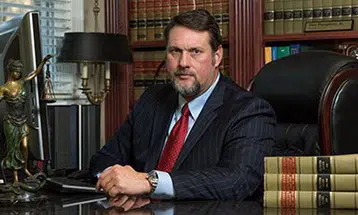
Attorney Don Pumphrey, Jr. is a former prosecutor, former law enforcement officer, and a successful and experienced criminal defense attorney. Don has achieved over 100 not guilty verdicts at trial and over 2,000 dismissals.