- DUI
- Criminal Defense
- Florida DUI
- Traffic Offenses
- Drug Charges
- Marijuana Charges
- Violent Crimes
- Domestic Violence
- Temporary Injunctions
- Weapons Charges
- Theft Crimes
- White Collar Crime
- Juvenile Offenses
- Sex Crimes
- Violation of Probation
- Early Termination of Probation
- Seal or Expunge Criminal Record
- Criminal Appeals
- US Federal Offenses
- Misdemeanor Charges
- Felony Charges
- Co-Defendant Cases
- College Student Defense
- College Student Hearings
- FSU Students
- FAMU Students
- Florida Panhandle Arrests
- Extradition to Florida
- Bench Warrants / Warrants
- Emergency Bond Hearings
- Gambling Charges
- Drone Arrests
- Marsy’s Law
- UAS Infractions
- Introduction of Contraband
- Lying to Police
- Locations
- Case Results
- Our Firm
- Media
- Resources
- Blog
- Contact Us
Tallahassee’s Highest Court REVERSES Murder Conviction Due to Improper Closing Argument
April 23, 2026 Don Pumphrey, Jr. Criminal Defense, Violent Crimes Social Share
Florida’s 1st District Court of Appeal ruled that the prosecutor’s improper closing arguments – which urged the jury to find the defendant guilty because her DENIAL of committing the crime was evidence she was guilty – violated the defendant’s right to a fair trial, requiring reversal.
CASE: Kelly v. State, 842 So.2d 223 (Fla. 1st DCA 2003)
Charge(s): Second-Degree Murder
Outcome: Conviction REVERSED, as improper remarks made by the prosecutor during closing arguments violated the defendant’s right to a fair trial.
Closing Arguments at Florida Criminal Trials
In Florida, closing arguments are a critical aspect of criminal proceedings. Closing arguments are the “last word” that each party (State and defense) gets before the jury is sent to deliberate.
The goal of a good closing argument is to give the jury a “lens” through which to view the case (e.g. the evidence and testimony presented), making it more likely that they will return a verdict in favor of the “arguing party.”
Though many believe the State goes first during closings, followed by the defense, this is NOT the entire story. Closing arguments are structured in the following way (Williams v. State, 673 So.2d 974 (Fla. 1st DCA 1996)):
- First, the State gives its initial closing
- Second, the defense gives its closing (which often will involve rebuttals of what the State said during its first closing statement)
- Finally, the State (e.g. prosecutor) gives a REBUTTAL CLOSING (which is the true “last word” before deliberations) to refute the defense’s closing statement
After the State concludes their rebuttal, the jury is instructed on the law and sent to deliberate. As part of those instructions, the trial judge will remind the jury that the commentary of the lawyers in the case is NOT evidence and should not be treated as such (e.g. they must consider evidence and testimony they’ve been presented in deciding the case).
But that does not mean a closing argument does nothing. In fact, a good closing can be VERY effective in persuading a jury to rule in favor of a particular party. This is because people tend to think in “narratives” – and while a closing argument is not evidence, effective closings improve the odds that the jury will view the evidence/testimony in a light favorable to the arguing party.
During a criminal case, the State may put on the majority of evidence and testimony. Though this is not always true, the jury may initially be inclined to view the State favorably if this occurs.
But if and when an experienced and aggressive Florida criminal defense attorney “pokes holes” in the State’s narrative throughout the trial, a good closing can result in the jury appreciating the fact that the case against the defendant has serious vulnerabilities. This is exactly what provides the basis for the jury’s “reasonable doubt” in many unsuccessful prosecutions.
The defense’s closing argument is particularly important, for a few reasons. The first of these is the fact that the defense only gets one “bite at the apple.” Unlike the State, which gets a FIRST closing argument AND a rebuttal, the defense is “sandwiched.” Thus, it is critical that a closing argument is delivered well – as it can make or break a case.
Moreover, the defense’s closing argument is a critical aspect of the case because it may result in the jury REFRAMING how they view the evidence. If the jury already has “questions” about the State’s case, an experienced, aggressive defense attorney can give voice to their skepticism and explain why it is justified. This can be very effective (if done correctly).
Since closing arguments are often featured on crime shows (like Law & Order), some may think attorneys can effectively say “whatever they want” during closings. But this is not the case – as there are many rules and regulations that prohibit the State and defense from “crossing the line.”
A big “no-no” during closing arguments is the GOLDEN RULE ARGUMENT. This involves attorneys asking the jury to put themselves in the position of the defendant or victim in a case – inviting them to base their verdict on personal sympathy rather than evidence. Examples include:
- “Imagine you were that poor girl getting raped – now find the defendant guilty!”
- “Imagine you were Ms. Jones, facing life in prison – she doesn’t deserve that, so find her NOT guilty!”
- “Put yourself in the shoes of the parents of the victim and think about their pain, then find the defendant guilty as charged!”
- Pointing the gun allegedly used in a crime at members of the jury to make them feel like they are “in the shoes” of a victim (Jenkins v. State, 563 So.2d 791 (Fla. 1st DCA 1990))
Examples of other objectionable tactics employed during closing arguments include (Rodriguez v. State, 210 So.3d 750 (Fla. 5th DCA 2017)):
- Impugning the character of opposing counsel by calling them a “liar” or “evil”
- Calling the defendant ugly names/insulting them
- Relying on facts not in evidence or misrepresenting the law (Pacifico v. State, 642 So.2d 1178 (Fla. 1st DCA 1994))
- Improperly bolstering the testimony of an alleged victim or law enforcement officers (Williams v. State, 673 So.2d 974 (Fla. 1st DCA 1996))
- Saying the case is about getting “justice” for the victim (Cardona v. State, 185 So.3d 514, 521 (Fla. 2016))
- Improperly commenting on the defendant’s right to remain silent
The State – in particular – has a lot to lose by violating the rules surrounding closing arguments. This is because a MISTRIAL may occur, or a conviction may be reversed on appeal if a mistrial is not granted over the defense’s objection.
When necessary, it is important that the defense OBJECT during closing arguments. If the State’s closing veers into “unacceptable” territory (e.g. a prosecutor relies on one or more of the above tactics), an objection from the defense makes it more likely a conviction will be REVERSED on appeal if no mistrial is granted. This is because:
- WITH AN OBJECTION: Courts apply a “harmless error” analysis (e.g. if there was NO reasonable possibility the jury’s verdict was impacted by the comments) – if the improper remarks were not harmless error, a conviction requires reversal (Petruschke v. State, 125 So.2d 274 (Fla. 4th DCA 2013))
- WITHOUT AN OBJECTION: The improper comments are reviewed for fundamental error, which is a far higher standard (e.g. whether improper comments were so unfairly prejudicial that it made the jury’s verdict inherently illegitimate, per Brinson v. State, 153 So.3d 972 (Fla. 5th DCA 2015))
In one major case heard by Florida’s 1st District Court of Appeal (Tallahassee and North FL’s highest court), a defendant was charged with and convicted of second-degree murder. One of the key issues at her trial was whether she had fired both of the shots that killed her husband – or if her teenaged son had fired the second (fatal) shot.
At trial, both the defendant AND her son testified. Though they had a similar recollection of the facts surrounding the incident, they differed on who fired the second shot (the one that killed the victim). According to the defendant, she told law enforcement she shot twice to protect her son, who was a teenager and potentially risking substantial prison time. The son denied this.
During closing arguments, the prosecutor argued that the defendant testifying regarding her son firing the fatal shot was a testament to her lack of character, as she was baselessly throwing her son “under the bus.” The prosecutor said that because of that, alone, the defendant deserved to be convicted of second-degree murder.
The defense objected to this and moved for a mistrial. However, the judge DENIED this, and the defendant was ultimately convicted.
On appeal, the defendant argued to the 1st DCA that a mistrial should have been granted in her case. She claimed that the prosecutor’s comment was so “over the line,” it may have improperly influenced the jury’s verdict.
Conducting a harmless error review (because the defendant objected), the 1st DCA RULED IN HER FAVOR and REVERSED her conviction. Let’s take a look at why by evaluating that case – Kelly v. State, 842 So.2d 223 (Fla. 1st DCA 2003) – and discussing what it means for those in Florida concerned about violations of their right to a fair trial via improper closing arguments.
KEY CASE: Kelly v. State, 842 So.2d 223 (Fla. 1st DCA 2003)
In Kelly, the defendant (Kelly) was convicted of second-degree murder. At trial, the following was revealed:
- Kelly was accused of shooting her husband twice during an incident that occurred in her bedroom
- The shooting followed an argument that stemmed from Kelly slashing her husband’s tires after finding him at a nearby “whore motel”
- Kelly’s son, Levi Brown, was home at the time
- According to Kelly, she shot the victim once out of fear for her life, then left the room
- After she left, Kelly testified that her SON went back into the room, grabbed the gun, and fired a second shot into her husband – killing him
- Kelly’s son testified that she was the one who fired both shots
- During closing arguments, the prosecutor said of Kelly: “[W]ith her words today, ladies and gentlemen, she put murder and responsibility for murder on her teenage son and, ladies and gentlemen, that all by itself ought to convince you that she deserves to be convicted of second degree murder.”
- The prosecutor also claimed that because Kelly “could not look Levi in the eye” when he testified, this was proof of her guilt
- At the end of the State’s closing, this was OBJECTED to by the defense on the basis that it suggested an improper basis for the verdict – and moved for a mistrial
- However, the trial judge overruled this, and Kelly was ultimately convicted
On appeal, Kelly argued that the prosecutor’s improper remarks during closing arguments were a clear basis for a mistrial. Because the judge failed to grant this, and because the comments were NOT harmless error, Kelly claimed that she was entitled to reversal of her conviction and a new trial.
The 1st DCA AGREED, REVERSING her second-degree murder conviction and remanding the matter to the lower court for a new trial. Explaining their basis for doing so, the 1st DCA wrote:
“Rule 4–3.4(e) of the Rules Regulating the Florida Bar, prohibits an attorney from asserting a personal opinion concerning the credibility of a witness. The prosecutor’s statement offering a guarantee that the defendant could not look Levi in the eye was the equivalent of the prosecutor guaranteeing that the defendant was lying. Accordingly, it directly violates Rule 4–3.4(e). … Perhaps more importantly, a very large portion of the prosecutor’s closing remarks appear to be calculated to generate hatred and ill will towards the defendant as a result of her saying that her son fired the second shot. For example, the prosecutor further stated, [you heard the defendant] finally admit that she doesn’t care about Levi Brown because with her words today, ladies and gentlemen, she put murder and responsibility for murder on her teenage son and, ladies and gentlemen, that all by itself ought to convince you that she deserves to be convicted of second degree murder.”
“The emphasized portion of the quoted comment is an express suggestion that the jury should convict the defendant because of her bad character. “It is improper for a prosecutor to refer to the accused in derogatory terms, in such a manner as to place the character of the accused in issue.” Pacifico v. State, 642 So.2d at 1183. As in Pacifico, it is difficult to imagine any other purpose behind the line of argument in this case other than to encourage the jury to base its verdict on ill will and passion, rather than on the evidence and the law. … We find the prosecutor’s remarks in this case invited the jury to make a finding of guilt for a reason other than evidence that demonstrated appellant committed the crime. This is error. In light of the disputed evidence concerning self defense, we cannot determine that the cumulative effect of the errors was harmless. We are, therefore, required to reverse and remand for a new trial.”
Put simply, because the jury’s verdict may have been influenced by the prosecutor’s “invitation” for a guilty verdict to be rendered on an improper basis (e.g. not based on the actual evidence and testimony), Kelly’s conviction required reversal.
In sum, Kelly v. State, 842 So.2d 223 (Fla. 1st DCA 2003) marks a significant development in Florida’s corpus of case law surrounding improper closing arguments when the credibility of the defendant is directly relevant to the outcome of the trial. The 1st DCA (Tallahassee and North FL’s highest court) held that:
- The prosecutor encouraged the jury to decide the case based on Kelly’s conduct during the trial and the fact that she was throwing her son “under the bus,” rather than doing so based on the credibility of the testimony/the State’s evidence
- The “cumulative error” of the prosecutor’s various improper remarks should’ve resulted in a mistrial when the defense requested one
- However, a mistrial did not occur, and Kelly was convicted
- This required REVERSAL of Kelly’s conviction and a new trial in her case
Florida’s criminal defense community should take note of Kelly v. State, 842 So.2d 223 (Fla. 1st DCA 2003), as it makes clear Tallahassee and North FL’s highest court may reverse convictions if objectionable State remarks during closing arguments potentially influenced the jury’s verdict.
Firearm-related offenses often carry lengthy prison sentences and heavy financial penalties. If someone is charged, it is vital to find experienced and aggressive legal representation as soon as possible.
Criminal Defense Attorney in Tallahassee, FL
Don Pumphrey, Jr. is a Former Prosecutor, Former State Police Officer, Lifetime Member of the Florida Association of Criminal Defense Lawyers; for over 25 years as a private defense attorney who is Trusted, Experienced, Aggressive in Criminal Defense as a Trial Attorney, Criminal Lawyer, Criminal Defense Lawyer for the accused in Florida State Courts located in Tallahassee, Florida but handling cases throughout the State of Florida.
Don Pumphrey, Jr. and the Tallahassee criminal defense lawyers at Pumphrey Law have decades of experience fighting criminal charges on behalf of clients and winning. Call Pumphrey Law now at (850) 681-7777 to learn more about what we can do for you. Our lawyers will be happy to provide you with a free consultation.
Don Pumphrey, Jr.
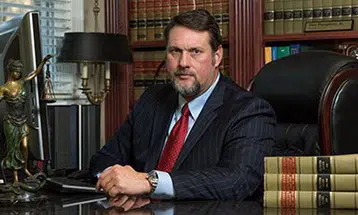
Attorney Don Pumphrey, Jr. is a former prosecutor, former law enforcement officer, and a successful and experienced criminal defense attorney. Don has achieved over 100 not guilty verdicts at trial and over 2,000 dismissals.