- DUI
- Criminal Defense
- Florida DUI
- Traffic Offenses
- Drug Charges
- Marijuana Charges
- Violent Crimes
- Domestic Violence
- Temporary Injunctions
- Weapons Charges
- Theft Crimes
- White Collar Crime
- Juvenile Offenses
- Sex Crimes
- Violation of Probation
- Early Termination of Probation
- Seal or Expunge Criminal Record
- Criminal Appeals
- US Federal Offenses
- Misdemeanor Charges
- Felony Charges
- Co-Defendant Cases
- College Student Defense
- College Student Hearings
- FSU Students
- FAMU Students
- Florida Panhandle Arrests
- Extradition to Florida
- Bench Warrants / Warrants
- Emergency Bond Hearings
- Gambling Charges
- Drone Arrests
- Marsy’s Law
- UAS Infractions
- Introduction of Contraband
- Lying to Police
- Locations
- Case Results
- Our Firm
- Media
- Resources
- Blog
- Contact Us
When Is Someone the Cause of a Victim’s Death in a Florida Vehicular Homicide Case?
April 23, 2026 Don Pumphrey, Jr. Criminal Defense, Violent Crimes Social Share
Florida’s 1st District Court of Appeal affirmed a defendant’s conviction for vehicular homicide after he took part in a three-way drag race that led to a fatal collision with an uninvolved driver.
CASE: Jacobs v. State, 184 So.2d 711 (Fla. 1st DCA 1966)
Outcome: Conviction AFFIRMED, as the defendant’s participation in a drag race that resulted in a fatal collision was a proximate cause of the victim’s death.
Vehicular Homicide in Florida
In Florida, vehicular homicide (Fla. Stat. 782.071) is a very serious felony offense. For someone to be guilty, the State must prove all of the following beyond a reasonable doubt:
- The defendant was operating a motor vehicle
- The operation of the motor vehicle was reckless (in a manner likely to cause death or great bodily harm to another person)
- The operation of the motor vehicle caused the death of another person or their unborn child
Vehicular homicide carries harsh penalties if someone is convicted. It is a second-degree felony (ordinarily), punishable by up to 15 years in prison and a $10,000 fine. Vehicular homicide is a first-degree felony (up to 30 years in prison and a $10,000 fine) if either of the following are true:
- The defendant has a prior conviction for DUI manslaughter, BUI manslaughter, vehicular homicide or vessel homicide (Trenton’s Law)
- The defendant did not stop (e.g. fled the scene), give information or render aid – as Florida law requires if involved in a crash
In the vast majority of Florida vehicular homicide cases, operation is NOT disputed. If someone was behind the wheel of the vehicle at the time of a fatal collision, this element is satisfied. The two most frequently debated issues in vehicular homicide cases are:
- Whether the defendant was RECKLESSLY DRIVING
- Whether the defendant can be considered the CAUSE (proximate cause) of the victim’s death
The first of these, recklessness, is typically the hardest thing for the State to prove in a vehicular homicide case. For someone to have been reckless in a vehicular homicide case, the following must be true of the defendant’s conduct:
the following two things must be proven beyond a reasonable doubt for the element of recklessness to be satisfied:
- The defendant operated their vehicle in a manner they knew or should have known was likely to cause death or great bodily harm (House v. State, 831 So.2d 1230 (Fla. 2d DCA 2002))
- The defendant did more than simply exceed the speed limit, as this is negligence – not recklessness (Luzardo v. State, 147 So.3d 1083 (Fla. 3d. DCA 2014))
Note: Recklessness has the same legal standard in vehicular homicide and vessel homicide (Fla. Stat. 782.072) cases. These two offenses share jury instructions. To learn more, click here.
Although speeding alone does not make a defendant reckless for purposes of vehicular homicide, speeding can be considered alongside other factors used to evaluate recklessness. Per House v. State, 831 So.2d 1230 (Fla. 2d DCA 2002), these include:
- Whether visibility was good or poor at the time of the accident
- Whether the defendant was staying “in their lane” or swerving out of it
- Whether there was signage indicating drivers should pay particular attention or slow down (e.g. school zones)
- Whether the defendant exercised “any degree of care” to avoid collision
- Whether the defendant was traveling in an area with heavy foot traffic (e.g. residential)
- Whether the defendant was familiar with the area in which they were traveling
- Whether the cause of the death (e.g. the hazard that caused it) was foreseeable/perceived by others
The second most commonly disputed element in a vehicular homicide case is CAUSATION (or lack thereof). Though many believe that the State must prove a defendant was mostly or entirely responsible for a collision, this is not the case.
Per Reaves v. State, 979 So.2d 1066 (Fla. 1st DCA 2008), a defendant is considered the cause of a victim’s death in a vehicular homicide case unless either of the following are true:
- The defendant was the SOLE proximate cause (100 percent responsible) for their own death
- A third party’s (e.g. another driver’s) reaction to the defendant’s conduct was “unnatural and unforeseeable,” and directly caused the death of a victim
But where did this standard come from? Why is causation such a “low bar” for the State to clear in vehicular homicide cases – despite the statute (Fla. Stat. 782.071) implying that the defendant must be mostly or entirely responsible for the death of the victim to be found guilty?
The answer lies in a foundational case in Florida vehicular homicide law decided by Florida’s 1st District Court of Appeal (Tallahassee and North FL’s highest court) in 1966. There, the defendant was one of three participants in a high-speed drag race on a Florida road.
During the race, one of the drivers (not the defendant) accelerated in front of the other two. That driver’s vehicle collided with the vehicle of a man that was completely uninvolved in the race, resulting in his death.
The defendant was charged with vehicular manslaughter (Florida’s vehicular homicide law prior to the offense being reclassified as vehicular homicide) and brought to trial. There, he moved for a judgment of acquittal on the grounds that he was NOT THE CAUSE of the victim’s death.
The trial judge DENIED the defendant’s motion, and he was convicted. On appeal, he argued to the 1st DCA that as a matter of law, he was not the cause (proximate cause) of the victim’s death.
The 1st DCA DISAGREED and AFFIRMED the jury’s guilty verdict (conviction). But this was not unanimous – as one 1st DCA judge dissented from the majority opinion.
Let’s take a look at that case – Jacobs v. State, 184 So.2d 711 (Fla. 1st DCA 1966) – and discuss what it means for those in Florida concerned about vehicular homicide charges.
KEY CASE: Jacobs v. State, 184 So.2d 711 (Fla. 1st DCA 1966)
In Jacobs, the defendant (Jacobs) was charged with vehicular manslaughter after he took part in a drag race that led to a fatal collision. At trial, the following was revealed:
- Jacobs took part in a discussion with 2 other men comparing the speed of their cars – leading to a race on a public highway
- Three drivers participated – Jacobs, Carter, and Kinchen
- Due to mechanical issues with his vehicle, Carter received a head start, while Kinchen initially hoped to judge the race but later joined as a participant
- All 3 vehicles were traveling westbound at between 50 and 90 miles per hour – well over the speed limit
- At least one driver who was traveling eastbound was forced to swerve to avoid a crash
- Another driver, Buck, was driving eastbound at a moderate speed (25-40 miles per hour)
- Kinchen entered the wrong lane in an effort to pass another vehicle and hit Buck
- This resulted in the deaths of both Kinchen and Buck
- Jacobs and Carter had already traveled a quarter of a mile past Buck when the collision occurred
At trial, Jacobs moved for a judgment of acquittal (MJOA) on the basis that he COULD NOT be considered the cause of Buck’s death. Jacobs argued Kinchen was entirely responsible for Buck’s death when his lane-change caused them to collide head-on. However, the trial judge denied the MJOA request and Jacobs was convicted.
On appeal to the 1st DCA, Jacobs reiterated his claim that he was not the cause of Buck’s death as a matter of law. But the majority did not agree and AFFIRMED his vehicular manslaughter conviction, writing:
“The evidence clearly shows that appellant, together with others, was engaged in what is commonly known as a ‘drag race’ of motor vehicles on a two-lane public highway in Marion County. The race entailed the operation of three motor vehicles traveling in the same direction at excessive and unlawful rates of speed contrary to the laws of this state. While engaged in such unlawful activity one of the three vehicles actively participating in the race was negligently operated in such manner as to cause the death of the person who drove that vehicle, as well as another innocent party who had no connection with the race. The deaths which proximately resulted from the activities of the three persons engaged in the unlawful activity of drag racing made each of the active participants equally guilty of the criminal act which caused the death of the innocent party. The fact that it was the vehicle driven by the person appointed to judge the outcome of the race which caused the death of the innocent party does not relieve appellant from his responsibility as an active participant in the unlawful event out of which the death arose.”
Put simply, the 1st DCA majority concluded that because Jacobs voluntarily participated in the race that caused Buck’s/Knchen’s deaths, he was sufficiently “connected” to the ensuing crash to be considered one of its proximate causes. Thus, his conviction for vehicular manslaughter (now vehicular homicide) was AFFIRMED.
However, one 1st DCA judge strongly disagreed. Finding the majority established too broad of a rule in Jacobs’s case, Judge Carroll wrote the following in a powerful dissenting opinion:
“I do not see how a reasonable man could lawfully conclude from the evidence adduced at the trial that, beyond a reasonable doubt, the appellant was guilty either of manslaughter or of aiding and abetting the commission of manslaughter. The culpable negligence of Willie Kinchen, as shown by the evidence, was his attempt to pass the two racing cars in the face of oncoming traffic. There is not a scintilla of evidence indicating that the appellant was aware of Kinchen’s intention so to pass, and hence I do not think it reasonable to hold that the appellant aided and abetted the said culpable negligence. As I view the evidence, there was no causal relationship between the appellant’s conduct in engaging in the drag race and Kinchens’ culpable negligence. The only such relationship would have to be the discredited ‘if it hadn’t been for’ reasoning (if it hadn’t been for the race, the collision would not have occurred), but that reasoning has long been discarded by the courts as insufficient to show proximate cause in civil cases or to show liability in criminal cases.”
“If the appellant is to be held criminally liable for manslaughter because he participated in a race during which an act of manslaughter occurred during the race, I would think that by the extension of such reasoning the spectators lined up along the road to watch the race might be legally tried and convicted as aiders and abettors to the manslaughter, simply because the collision might not have occurred if they had not congregated and encouraged the racing. By like reasoning, also, I would think that, if the starter in a foot race at a track meet had with culpable negligence loaded his pistol with live cartridges instead of the usual blanks and shot and killed someone in the grand stand, the sprinters might be held criminally liable as aiders and abettors. Such a result, of course, would be absurd.”
In essence, Judge Carroll found that Jacobs was NOT truly a cause of Buck’s demise – and the mere fact that he was involved in the race was insufficient to sustain a conviction. Unfortunately for Jacobs, however, Judge Carroll’s opinion did not win the day.
In sum, Jacobs v. State, 184 So.2d 711 (Fla. 1st DCA 1966) marks a significant development in Florida’s corpus of case law surrounding causation in vehicular and vessel homicide cases. The 1st DCA (Tallahassee and North FL’s highest court) held that:
- Jacobs participating in a drag race carried with it the risk of a fatal collision
- If it were not for Jacobs agreeing to partake in the race, it would not have occurred
- This made Jacobs’s conduct a proximate cause of the victim’s death
- As a result, his vehicular manslaughter conviction was AFFIRMED
Judge Carroll wrote a dissent in which he argued the causal link between Jacobs’s conduct and the victim’s death was too weak for Jacobs to be held criminally liable.
Florida’s criminal defense community should take note of Jacobs v. State, 184 So.2d 711 (Fla. 1st DCA 1966), as it is a staple of vehicular homicide case law on the issue of causation.
It is critical to find experienced and trusted legal representation as soon as possible if someone is charged with vehicular homicide, DUI manslaughter, BUI manslaughter or vessel homicide. This decision could make the difference in whether or not someone faces a lengthy prison term and hefty fines.
Criminal Defense Attorney in Tallahassee, FL
Don Pumphrey, Jr. is a Former Prosecutor, Former State Police Officer, Lifetime Member of the Florida Association of Criminal Defense Lawyers; for over 25 years as a private defense attorney who is Trusted, Experienced, Aggressive in Criminal Defense as a Trial Attorney, Criminal Lawyer, Criminal Defense Lawyer for the accused in Florida State Courts located in Tallahassee, Florida but handling cases throughout the State of Florida.
Don Pumphrey, Jr. and the Tallahassee criminal defense lawyers at Pumphrey Law have decades of experience fighting criminal charges on behalf of clients and winning. Call Pumphrey Law now at (850) 681-7777 to learn more about what we can do for you. Our lawyers will be happy to provide you with a free consultation.
Don Pumphrey, Jr.
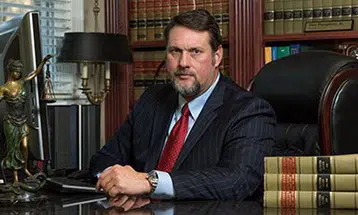
Attorney Don Pumphrey, Jr. is a former prosecutor, former law enforcement officer, and a successful and experienced criminal defense attorney. Don has achieved over 100 not guilty verdicts at trial and over 2,000 dismissals.