- DUI
- Criminal Defense
- Florida DUI
- Traffic Offenses
- Drug Charges
- Marijuana Charges
- Violent Crimes
- Domestic Violence
- Temporary Injunctions
- Weapons Charges
- Theft Crimes
- White Collar Crime
- Juvenile Offenses
- Sex Crimes
- Violation of Probation
- Early Termination of Probation
- Seal or Expunge Criminal Record
- Criminal Appeals
- US Federal Offenses
- Misdemeanor Charges
- Felony Charges
- Co-Defendant Cases
- College Student Defense
- College Student Hearings
- FSU Students
- FAMU Students
- Florida Panhandle Arrests
- Extradition to Florida
- Bench Warrants / Warrants
- Emergency Bond Hearings
- Gambling Charges
- Drone Arrests
- Marsy’s Law
- UAS Infractions
- Introduction of Contraband
- Lying to Police
- Locations
- Case Results
- Our Firm
- Media
- Resources
- Blog
- Contact Us
12-Person Juries in Capital Murder vs. Capital Sexual Battery Cases: Inconsistency in Florida Law?
October 23, 2025 Don Pumphrey, Jr. Criminal Defense, Sex Crimes, Violent Crimes Social Share
In Florida, only six people (not twelve) are required for the impanelment of a jury in most criminal cases. This has been state law for decades, and it was upheld in the U.S. Supreme Court’s 1970 decision, Williams v. Florida, 399 U.S. 78 (1970).
The exception to this is in capital cases. If someone is charged with a capital felony in Florida (punishable by death), they are typically entitled to a twelve-person jury at their trial regardless of whether the State is seeking the death penalty.
Two of Florida’s most well-known capital felonies are first-degree murder (capital murder) and capital sexual battery (defendant over 18, victim under 12). Given these are both punishable by death under state law (capital felonies), most presume that someone is automatically entitled to a twelve-person jury if someone is accused of either crime.
But this is not necessarily the case. This is because, from 1981 to 2023, capital sexual battery was not actually punishable by death (despite its designation as a capital offense). The Florida Supreme Court ruled in Buford v. State, 403 So. 2d 943 (Fla. 1981), which has not yet been reversed, that someone cannot be executed for a sexual battery that did not kill the victim.
The Court reasoned this violated the Eighth Amendment prohibition against cruel and unusual punishment. The U.S. Supreme Court echoed this logic in its landmark 2008 decision, Kennedy v. Louisiana, which barred executions for any crime (including sexual battery) that did not result in the death of the victim.
This has led Florida’s courts to wrestle with an intriguing constitutional question. When a “capital felony” is not actually punishable by death, is a defendant on trial still entitled to a twelve-person jury? Or does the right to a “capital jury” (12 people, not 6) only attach with “capital consequences”?
When it comes to capital murder charges, Florida’s courts have been clear that the twelve-person jury right exists regardless of if the State is seeking the death penalty in the current case.
In Johnson v. State, 289 So.3d 986 (Fla. 1st DCA 2020), Tallahassee and North Florida’s highest court reiterated that defendants charged with first-degree murder are entitled to a twelve-person jury even when the State does not seek the death penalty.
In Johnson, the defendant (Johnson) was convicted of first-degree murder by a jury of six. He raised various issues on appeal, one of which was that he was erroneously tried by a six-person jury despite being accused of a capital crime.
The State at trial offered to stipulate to the impanelment of a twelve-person jury. However, Johnson’s request was denied by the trial court. The court cited a 1984 ruling, State v. Hogan, 451 So. 2d 844 (Fla. 1984), which ruled six-person juries could be impaneled in capital sexual battery cases when the death penalty was not on the table.
However, the 1st DCA reversed the trial court’s ruling. It found Johnson was constitutionally entitled to a twelve-person jury by virtue of being charged with first-degree (capital) murder. Even though he personally was not at risk of being put to death, the 1st DCA ruled Florida law still entitled Johnson to a jury of twelve.
This was an intriguing ruling, as it distinguished Hogan (which applied to capital sexual battery cases) from Johnson’s trial, where a twelve-person jury was required (capital murder case). The logic for this (at the time) was that capital sexual battery is not ever punishable by death, as the Florida and U.S. Supreme Courts held this to be unconstitutional.
But this changed in 2023, when the Florida Legislature overrode Buford and Kennedy. The state amended its sexual battery statute (Fla. Stat. 794.011) to allow the death penalty to be pursued in capital sexual battery cases, in spite of the Florida and U.S. Supreme Court’s current position.
This raises the question: is someone automatically entitled to a twelve-person jury in a capital sexual battery case, now that it is (under Florida law) once again punishable by death? The current answer is – no, because no Florida court has explicitly ruled on this issue and Hogan remains good law.
In essence, even though capital sexual battery is once more punishable by death, courts have refused to treat the impanelment of a six-person jury in a capital sexual battery case as reversible error. This is a sharp contrast to rulings like Johnson, which have treated the use of six-person juries in first-degree murder cases as reversible error.
One such case demonstrating this difference is Bartels v. State, 410 So.3d 21 (Fla. 4th DCA 2025). Bartels was tried and convicted of various offenses, including capital sexual battery. He appealed his conviction by a six-person jury, arguing this was unconstitutional in the wake of Florida’s legislative update to the statute (allowing the crime to be punishable by death).
But the 4th DCA did not agree. Citing Hogan, the court affirmed Bartels’s convictions, arguing that he was not entitled to a twelve-person jury despite being charged with capital sexual battery.
Part of the court’s reasoning stemmed from the fact that Bartels was tried in 2022 — the year before the capital sexual battery statute was amended to “override” Buford and Kennedy. The court held that because the death penalty was not constitutionally an option for punishment in Bartels’s case (when he was tried), the use of a six-person jury was not reversible error.
However, one judge on the 4th DCA disagreed: Judge Artau. Artau wrote an opinion which concurred with the judgment (due to Hogan acting as binding precedent). But he discussed at length his issue with the reasoning of both his own court (4th DCA) and the Florida Supreme Court’s Hogan decision.
Judge Artau expressed his disagreement with Hogan, arguing that it erroneously created a distinction on the issue of jury impanelment that should not exist. Judge Artau asserted that if the crime charged is a “capital felony,” this entitles any defendant charged with such an offense to a twelve-person jury.
In contrast to Hogan, Judge Artau’s position is rooted in the belief that the 12-person jury is required in all capital cases by virtue of their designation. The majority in Bartels and Hogan held that whether the crime was actually punishable by death (or whether the death penalty was being pursued) are also relevant considerations.
But the logic of those rulings seems to run up against Johnson, which explicitly held that it did not matter if the defendant in a capital murder case was eligible for the death penalty. The only relevant fact was that they were facing a charge for a capital crime (punishable by death), so the twelve-person jury right attached.
How can this disparity be reconciled? Some would argue it cannot. Given that both capital sexual battery and first-degree murder are punishable by death under Florida law, why isn’t a six-person jury also considered reversible error if impaneled in a case involving the former charge?
There are a few arguments that could be made in response. One would be to (correctly) observe that the 4th DCA majority in Bartels did not categorically rule Bartels did not have the right to a twelve-person jury. Though they did rule against Bartels on the issue, they threw in the caveat that “alternatively, any error was harmless.”
Essentially, the 4th DCA conceded that the empanelment of a six-person jury in a capital sexual battery case (especially in the wake of the 2023 legislative amendment) could have been error (as was the case in Johnson). But the court declined to explicitly contradict Hogan, as it continues to be binding precedent.
Another argument is that Bartels (and other capital sexual battery defendants) are not entitled to a twelve-person jury because no capital sexual battery defendant can constitutionally be punished by death (at least currently). This differs from capital murder defendants, who may be executed for their crime (even if the State decides not to pursue capital punishment in a particular case).
But under current Florida law, this is not true either. Although Buford and Kennedy may still be considered the law of the land (thus prohibiting execution for capital sexual battery), the state’s legislators have disagreed. So, why has there been no formal recognition of a twelve-person jury right in capital sexual battery cases?
Florida’s courts are right now in a sort of “limbo state,” trapped between the arguably antiquated Hogan ruling and 2023 updates to the law allowing for the death penalty in capital sexual battery cases.
But to Judge Artau’s point, how can the status quo hold? How can some capital felonies require a twelve-person jury, but not others – especially now that all are punishable by death?
The answer likely lies in the fact that the State has not yet pursued execution for any defendant charged with capital sexual battery since 2023. If and when this occurs, it is likely to trigger a flurry of legal challenges.
One of these will be a challenge to Buford and Kennedy, in which the Florida Supreme Court could plausibly rule that execution for capital sexual battery does not violate the cruel and unusual punishment clause of the U.S. Constitution’s Eighth Amendment.
It may take until such a ruling occurs for the Florida Supreme Court to issue a de facto reversal of Hogan. Though the Court may rule in the interim that capital sexual battery defendants have a right to a twelve-person jury, it is unclear when such a decision will be handed down – which would likely echo Judge Artau’s Bartels concurrence.
For now, Florida’s law surrounding twelve-person juries in capital cases seems inconsistent. Given that there is no legal difference in potential penalties between capital sexual battery and first-degree murder, how would it not be reversible error to impanel a six-person jury in a capital sexual battery case post-2023, using the Johnson court’s logic?
It is worth noting that in capital sexual battery cases (especially if the offense occurred after the 2023 statutory updates), the court is likely to grant a request for a twelve-person jury. But the fact that this is not automatic (given Hogan) raises questions about current Florida law that are likely to be answered by courts in the near future.
If someone is arrested and formally charged in Florida and concerned about twelve-person juries and jury selection, it is critical to find experienced and trusted legal representation as soon as possible. This decision could make the difference in whether or not someone faces a lengthy prison term and hefty fines.
Criminal Defense Attorney in Tallahassee, FL
Don Pumphrey, Jr. is a Former Prosecutor, Former State Police Officer, Lifetime Member of the Florida Association of Criminal Defense Lawyers; for over 25 years as a private defense attorney who is Trusted, Experienced, Aggressive in Criminal Defense as a Trial Attorney, Criminal Lawyer, Criminal Defense Lawyer for the accused in Florida State Courts located in Tallahassee, Florida but handling cases throughout the State of Florida.
Don Pumphrey, Jr. and the Tallahassee criminal defense lawyers at Pumphrey Law have decades of experience fighting drug charges on behalf of clients and winning. Call Pumphrey Law now at (850) 681-7777 to learn more about what we can do for you. Our lawyers will be happy to provide you with a free consultation.
Don Pumphrey, Jr.
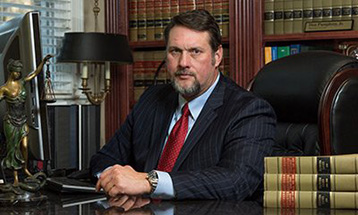
Attorney Don Pumphrey, Jr. is a former prosecutor, former law enforcement officer, and a successful and experienced criminal defense attorney. Don has achieved over 100 not guilty verdicts at trial and over 2,000 dismissals.