- DUI
- Criminal Defense
- Florida DUI
- Traffic Offenses
- Drug Charges
- Marijuana Charges
- Violent Crimes
- Domestic Violence
- Temporary Injunctions
- Weapons Charges
- Theft Crimes
- White Collar Crime
- Juvenile Offenses
- Sex Crimes
- Violation of Probation
- Early Termination of Probation
- Seal or Expunge Criminal Record
- Criminal Appeals
- US Federal Offenses
- Misdemeanor Charges
- Felony Charges
- Co-Defendant Cases
- College Student Defense
- College Student Hearings
- FSU Students
- FAMU Students
- Florida Panhandle Arrests
- Extradition to Florida
- Bench Warrants / Warrants
- Emergency Bond Hearings
- Gambling Charges
- Drone Arrests
- Marsy’s Law
- UAS Infractions
- Introduction of Contraband
- Lying to Police
- Locations
- Case Results
- Our Firm
- Media
- Resources
- Blog
- Contact Us
Can Someone Who Was a Victim of a Similar Crime Sit on a Florida Jury? Major Court Says Yes
December 4, 2025 Don Pumphrey, Jr. Criminal Defense Social Share
Florida’s 3rd District Court of Appeal ruled that a juror who disclosed that she was molested as a child was permitted to sit on a jury that found a defendant accused of lewd molestation guilty, as she said she could be “fair and impartial.”
In Florida, jury selection (also known as voir dire) is an important component of any criminal trial. During jury selection, both prosecutors and defense attorneys have the opportunity to ask members of the venire (potential jurors) questions to identify any potential biases they may have.
If someone is identified by the State or defense to be “of concern,” either may attempt to strike that potential juror “for cause.” A “for-cause” challenge occurs when an attorney wishes to dismiss a particular juror on grounds of potential bias. Each attorney receives an unlimited number of for-cause challenges, which may be granted or denied by the trial judge.
If a for-cause challenge is denied (e.g. the judge finds the potential juror has not shown clear enough bias to be sent home), attorneys of both sides may still strike them using “peremptories” (peremptory strikes). The State and defense are each awarded 10 peremptory strikes in capital (death penalty) cases, 6 in all other felony cases, and 3 in misdemeanor cases.
Note: Though peremptory strikes do not usually require an oral explanation, they may be challenged by the other side if the strike appears not to be race- or gender-neutral (e.g. if race or gender is the reason for the peremptory strike, this is not permitted). Batson v. Kentucky, 476 U.S. 79 (1986); J.E.B. v. Alabama ex rel. T.B., 511 U.S. 127 (1994)
In some cases, a defense attorney will be convinced that a potential juror should be stricken for cause on the basis that impaneling them risks “contaminating” the jury (e.g. making the jury’s verdict not fair/impartial). Occasionally, a for-cause challenge will occur after an attorney runs out of peremptory strikes – yet the challenge will still be denied by the trial judge.
Sometimes, a potential juror divulges the fact that they have a life experience which relates to the subject matter of the case. For example, a potential juror may announce that they’ve experienced sexual abuse, when a defendant has been charged with the same or a similar crime.
Often, this disclosure will lead a defense attorney to move to excuse the potential juror “for cause.” This is because a deeply traumatic personal experience may predispose the potential juror to convict the defendant.
But can a trial judge deny a Florida defense attorney’s for-cause challenge of a potential juror who claims they were the victim of the crime the defendant is being prosecuted for, including in sex abuse cases? The answer is yes.
Florida law does not require that judges excuse a potential juror who makes such a disclosure, even when the defense moves to strike them “for-cause.”
Though the law was not entirely clear on this point until relatively recently, this issue was squarely addressed by Florida’s 3rd District Court of Appeal in Gonzalez v. State, 143 So.3d 1171 (Fla. 3d. DCA 2014). Let’s break down Gonzalez and what it means for jury selection in Florida.
KEY CASE: Gonzalez v. State, 143 So.3d 1171 (Fla. 3d. DCA 2014)
In Gonzalez, the defendant (Gonzalez) was charged with lewd or lascivious molestation. He appealed to the 3rd DCA (Miami area), arguing that the trial court failed to excuse a potential juror “for cause” when this was legally required. The potential juror was ultimately impaneled (seated on the jury), and Gonzalez was convicted.
The potential juror, Ms. Johnson, disclosed during jury selection that she had been a victim of molestation as a child. However, Johnson said she could be fair and impartial in rendering her verdict. Johnson stated that she had been in therapy for years and would not allow what she had been through to dictate her verdict.
After questioning concluded, Gonzalez’s attorney moved to strike Johnson “for cause.” He argued that Johnson’s personal experience would inevitably impact how she saw the case (“She was molested as a child. She suffered as a victim in the same way as the victim in this case.”).
The trial judge informed Gonzalez’s attorney that he heard “nothing” in her answers that would indicate the “for-cause” challenge should succeed (“I didn’t hear anything from her answers that would indicate that she has any challenge for cause.”).
Gonzalez’s attorney then (mistakenly) told the trial judge that case law existed prohibiting a molestation victim from serving on the jury in a molestation case. The judge, unfamiliar with this (because no case said it), held firm and denied the strike request.
On appeal, the 3rd DCA affirmed the verdict against Gonzalez. It held that the trial court had not erred by denying the for-cause challenge.
The court wrote that Gonzalez (through his lawyer) did not challenge Ms. Johnson based on her responses (in which she claimed she could be fair). Instead, they did so based solely on the fact that she was a victim of a similar crime, which was an inadequate basis to strike her:
“The Defendant’s argument on appeal is that the trial court abused its discretion by denying the Defendant’s motion to strike Ms. Johnson for cause based on her responses, which he claims suggest that Ms. Johnson would have been prejudiced against the Defendant. That particular argument was not, however, the basis of the Defendant’s objection to the trial court below.”
“Thus, the Defendant’s objection was based on his argument that the mere fact that Ms. Johnson had been a victim of a similar offense meant she must be stricken for cause, not that Ms. Johnson could not be a fair and impartial juror based on her specific responses. Based on the Defendant’s objection, the trial court correctly noted that there is no case law holding that a juror is automatically disqualified from serving if he or she had been the victim of a similar offense as the one being tried and therefore denied the challenge.”
The 3rd DCA went on to say that even if Gonzalez had objected “correctly” (e.g. alleged that Ms. Johnson could not be fair and impartial based on her actual responses, rather than just the fact that she was a victim of molestation), there was still no basis to grant the request:
“Although the Defendant did not object to Ms. Johnson serving as a juror based on her responses, there was nothing that Ms. Johnson said that would have required that she be stricken for cause even if there had been a proper objection. Ms. Johnson never actually expressed bias or prejudice against the defendant. Rather, she candidly informed the trial court that she had been a victim of molestation herself as a child and maintained throughout the questioning that she could be fair and impartial. Under these circumstances, the trial court did not abuse its discretion by denying the Defendant’s motion to strike Ms. Johnson for cause.”
Gonzalez attempted to compare his case to Matarranz v. State, 133 So.3d 473 (Fla. 2013), which required reversal on grounds of a biased jury. But the 3rd DCA distinguished the two:
“Unlike the prospective juror in Matarranz, who volunteered that she held deep-seated bias against the defendant, Ms. Johnson merely raised her hand when the trial judge asked the panel the generalized question whether anything about the case might potentially cause them to be biased or prejudiced. Unlike the prospective juror in Matarranz, who affirmatively announced her inability to be fair no less than eight times, Ms. Johnson never stated that she could not be fair or impartial … Simply put, this case is not Matarranz.”
In sum, Gonzalez v. State, 143 So.3d 1171 (Fla. 3d. DCA 2014) is an important development in Florida case law surrounding bias in jury selection. According to Gonzalez, the mere fact that a potential juror has been a victim of the same or a similar crime to the one the defendant allegedly committed is not by itself a basis to excuse them from the jury pool “for cause.”
Since Ms. Johnson insisted she could be fair and impartial despite the personal trauma she had endured, the 3rd DCA found that the trial judge did not err by denying Gonzalez’s “for cause” challenge and allowing Johnson to be seated on the jury.
Supporters of Gonzalez v. State are likely to argue that the decision properly places emphasis on what potential jurors actually say while under oath in jury selection (voir dire), rather than trying to second-guess them. Critics may insist that potential jurors are inherently biased if victimized by a similar crime, so a trial judge denying a “for cause” challenge of that juror is a mistake.
Regardless of one’s opinion about the ruling, Gonzalez v. State, 143 So.3d 1171 (Fla. 3d. DCA 2014) is a key case that should make Florida defense attorneys think deeply about what to ask during jury selection – especially when a potential juror has been the victim of the same (or a similar) crime as the one the defendant is accused of.
If someone is arrested and formally charged in Florida and concerned about jury selection, it is critical to find experienced and trusted legal representation as soon as possible. This decision could make the difference in whether or not someone faces a lengthy prison term and hefty fines.
Criminal Defense Attorney in Tallahassee, FL
Don Pumphrey, Jr. is a Former Prosecutor, Former State Police Officer, Lifetime Member of the Florida Association of Criminal Defense Lawyers; for over 25 years as a private defense attorney who is Trusted, Experienced, Aggressive in Criminal Defense as a Trial Attorney, Criminal Lawyer, Criminal Defense Lawyer for the accused in Florida State Courts located in Tallahassee, Florida but handling cases throughout the State of Florida.
Don Pumphrey, Jr. and the Tallahassee criminal defense lawyers at Pumphrey Law have decades of experience fighting drug charges on behalf of clients and winning. Call Pumphrey Law now at (850) 681-7777 to learn more about what we can do for you. Our lawyers will be happy to provide you with a free consultation.
Don Pumphrey, Jr.
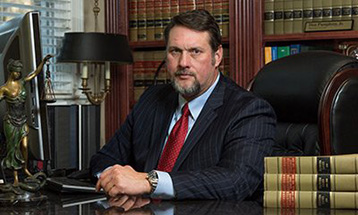
Attorney Don Pumphrey, Jr. is a former prosecutor, former law enforcement officer, and a successful and experienced criminal defense attorney. Don has achieved over 100 not guilty verdicts at trial and over 2,000 dismissals.