- DUI
- Criminal Defense
- Florida DUI
- Traffic Offenses
- Drug Charges
- Marijuana Charges
- Violent Crimes
- Domestic Violence
- Temporary Injunctions
- Weapons Charges
- Theft Crimes
- White Collar Crime
- Juvenile Offenses
- Sex Crimes
- Violation of Probation
- Early Termination of Probation
- Seal or Expunge Criminal Record
- Criminal Appeals
- US Federal Offenses
- Misdemeanor Charges
- Felony Charges
- Co-Defendant Cases
- College Student Defense
- College Student Hearings
- FSU Students
- FAMU Students
- Florida Panhandle Arrests
- Extradition to Florida
- Bench Warrants / Warrants
- Emergency Bond Hearings
- Gambling Charges
- Drone Arrests
- Marsy’s Law
- UAS Infractions
- Introduction of Contraband
- Lying to Police
- Locations
- Case Results
- Our Firm
- Media
- Resources
- Blog
- Contact Us
FL Supreme Court Discusses When Juror ‘Omissions’ Are Grounds to Reverse Guilty Verdict
February 9, 2026 Don Pumphrey, Jr. Criminal Defense Social Share
Florida’s Supreme Court declined to reverse a defendant’s first-degree murder convictions on the grounds that during jury selection, a juror failed to disclose that he was the victim of a battery.
In Florida, jury selection (also known as voir dire) is an essential part of criminal trials. As a jury can “make or break” a case, it is important to ensure that each and every juror selected to hear a case is able to be fair and impartial. This makes it critical to have an experienced and aggressive Florida criminal defense attorney at your side during this process.
During jury selection, the State and defense ask questions of potential jurors to determine if they are the “right fit” for the case. Essentially, the objective is to identify any biases potential jurors may hold, so that they may be excused from service (e.g. sent home) if they are unable to reach a verdict based solely on the evidence and testimony at trial.
As part of jury selection, both parties to the case (State and defense) are awarded an unlimited number of “cause challenges.” A cause challenge is made when a party to the case believes there is a legally sufficient basis to ask for the excusal of a juror “for cause” (e.g. on the basis that they are unable to be fair and impartial in the case).
Examples of cases in which a cause challenge is likely to be used by an experienced Florida defense attorney include:
- A potential juror says they will believe a law enforcement officer over all other witnesses in a DUI case
- A potential juror says they will believe a child automatically who testified as to physical or sexual abuse
- A potential juror says that they will be very likely to vote guilty if the defendant does not testify
All of the above answers would be considered “red flags,” triggering a cause challenge on the basis that the defendant’s jury is likely to be biased against them if the potential juror is selected to hear the case.
In the event that the defense (or State) moves to cause challenge a potential juror, the trial judge can do one of two things:
- Grant the cause challenge, excusing the potential juror from services (e.g. sending them home)
- Deny the cause challenge,
If a cause challenge is denied, the party that moved for the cause challenge has a few options:
- Attempt to elicit additional (biased) answers through further questioning of that potential juror, which strengthen the basis for a cause challenge
- Do not challenge the potential juror again, likely resulting in them being sworn (usually a bad idea)
- Use a peremptory strike (if available) on the potential juror
A peremptory strike occurs when a party to the case unilaterally sends a potential juror home – without having to justify this decision to the judge and opposing party. Unlike cause challenges, peremptory strikes are limited in number – 3 are awarded in misdemeanor cases, 6 in non-capital felony cases, and 10 in capital felony cases.
Though this is the “default” number of peremptory strikes, the trial judge is given discretion to award more peremptories (if requested). Moreover, a peremptory strike cannot be on the basis of someone’s race, sex or ethnicity (and the opposing party is likely to raise a Neil challenge if this is suspected). Price v. State, 538 So.2d 486 (Fla. 3d. DCA 1989)
Given this, a useful heuristic for a Florida criminal defense attorney to use during jury selection involves categorization of potential jurors to be “stricken” in two categories:
- Group “A” jurors: Potential jurors who have displayed clear bias (save cause challenges for these jurors)
- Group “B” jurors: Potential jurors who seem biased, but may have not articulated this so clearly that a cause challenge will be granted (save peremptory strikes for these jurors)
A critical part of jury selection is asking if potential jurors have a criminal history, or if they have been a victim of crime. Questions on these topics may be uncomfortable, but are often important to ensure that potential jurors who are likely to be biased because of their personal experiences are identified and sent home.
In some cases, however, a potential juror may not fail to disclose a relevant fact (e.g. criminal history/history as a crime victim) when asked. This may be a basis for a defendant appealing their conviction on the basis that the jury was biased – but the defendant didn’t know it at the time, because a juror’s omission during voir dire was discovered after the trial.
When a defendant in Florida appeals their conviction on these grounds, courts historically use a three-pronged test established in De La Rosa v. Zequeria, 659 So.2d 239 (Fla. 1995) to examine whether the appeal has merit:
- Prong #1: The complaining party must establish that the information was relevant and material to jury service in the case
- Prong #2: The juror concealed that information during questioning
- Prong #3: The failure to disclose the information was not attributable to the complaining party’s lack of diligence
Put simply, unless a defendant can establish the direct relevance of the information that was not disclosed and establish that they were “diligent” in attempting to discover it, a conviction will not be reversed on the basis that a juror concealed information during voir dire.
One major Florida Supreme Court case that illustrates this principle is Lugo v. State, 2 So.3d 1 (Fla. 2008). Let’s take a look at Lugo and what it means for defendants concerned about jury selection in Florida.
KEY CASE: Lugo v. State, 2 So.3d 1 (Fla. 2008)
In Lugo, the defendant (Lugo) was convicted of first-degree murder and various other offenses. He was sentenced to death.
Lugo’s appeal eventually made it to the Florida Supreme Court. He raised a variety of issues – one of which was that his jury at trial was biased, requiring reversal of his convictions.
Lugo’s “biased jury” argument centered around an omission from one of the jurors chosen to hear his case (Schlehuber). When Schlehuber was asked during jury selection if he had been the victim of a violent crime, he said that he had not.
However, a police report was discovered after Lugo’s trial indicating this was untrue. Schlehuber had been involved in a fight at work, where he had been shoved to the ground and punched many times in the chest with a closed fist.
Lugo asserted that if he had known about this, he would have attempted to excuse Schlehuber from service on the basis that violent crime victims were likely to be biased against him from the start of the proceedings.
Lugo claimed that applying the De La Rosa test, he was entitled to a new trial – as Schlehuber’s omission was material and Lugo’s failure to discover this before trial was not due to his lack of due diligence. However, the Florida Supreme Court disagreed and affirmed Lugo’s convictions.
Despite the State’s argument that Lugo’s claim was barred on appeal (as Lugo did not challenge Schlehuber for cause at trial or object to the jury’s composition), the Court nevertheless applied De La Rosa to determine if Lugo was entitled to a new trial:
“With regard to claims of nondisclosure, this Court has held that [i]n determining whether a juror’s nondisclosure of information during voir dire warrants a new trial, courts have generally utilized a three-part test. First, the complaining party must establish that the information is relevant and material to jury service in the case. Second, that the juror concealed the information during questioning. Lastly, that the failure to disclose the information was not attributable to the complaining party’s lack of diligence. … Lugo has failed to demonstrate that he is entitled to a new trial.”
The Court found that because the battery Schlehuber was a victim of was radically different from the course of conduct Lugo was alleged to have engaged in, Schlehuber’s failure to disclose this was not “relevant and material” to the extent that a new trial was required:
“Schlehuber’s status with regard to that prior event is an extremely tenuous basis upon which to question his service on the jury that evaluated the charges against Lugo. As described by Lugo, the event involving Schlehuber was a one-time isolated incident which occurred at his workplace during a disagreement. Thus, unlike victim Marc Schiller, Schlehuber was not kidnapped, held hostage for approximately one month in a warehouse, tortured by his captors in an effort to extort his assets, placed in a vehicle which was subsequently ignited, and then struck by a motor vehicle after he managed to escape from the burning vehicle. The sheer disparity between the workplace incident and the extended torture and captivity of Schiller causes us to conclude that the workplace incident was not sufficiently material or relevant to service on Lugo’s jury such that a failure to disclose this information requires a new trial.”
Moreover, the Court indicated that Lugo’s “lack of diligence” was partially responsible for Schlehuber’s omission:
“Further, Lugo is not entitled to a new trial because the failure of juror Schlehuber to disclose this workplace event may have been attributable to trial counsel’s limited inquiry. As previously noted, trial counsel did not explore prior experiences as crime victims. During group voir dire by the State, one juror admitted she had failed to state in her questionnaire that she had been the victim of a theft, which she had not reported to the police. We have held that [t]he “due diligence” test requires that counsel provide a sufficient explanation of the type of information which potential jurors are being asked to disclose, particularly if it pertains to an area about which an average lay juror might not otherwise have a working understanding.
“Thus, resolution of this “diligence” issue requires a factual determination regarding whether the explanations provided by the judge and counsel regarding the kinds of responses which were sought would reasonably have been understood by the subject jurors to encompass the undisclosed information. … When trial counsel for Lugo conducted group voir dire, he did not inquire if any of the other jurors had also inadvertently failed to include on their questionnaire altercations, whether reported to the police or whether charges were actually filed. Here, it appears that charges were never pursued against the deliveryman involved with juror Schlehuber, and therefore, at best, an ambiguity may exist which was not explored.”
In essence, the Court found that the De La Rosa test’s first and third prongs were not satisfied by Lugo. Not only was Schlehuber’s omission regarding the battery not “material” – it also may have been discovered before trial if Lugo’s counsel had been more diligent. As a result, Lugo was denied a new trial.
In sum, Lugo v. State, 2 So.3d 1 (Fla. 2008) is a major development in Florida’s corpus of case law on the issue of jury selection – and when a juror’s failure to disclose information during voir dire can serve as the basis for a new trial. The Florida Supreme Court held:
- The juror’s (Schlehuber’s) failure to disclosure he was a battery victim was not relevant and material to his jury service, as the charged crimes were radically different from the one he was a victim of
- Lugo’s counsel could have potentially discovered Schlehuber’s omission if he inquired further during jury selection about this issue
- As a result, Lugo’s convictions did not require reversal on the grounds that his jury was “biased” (due to Schlehuber sitting on it)
Florida’s criminal defense community should take note of Lugo v. State, 2 So.3d 1 (Fla. 2008), as it provides critical information that can be used to shape questioning strategy during jury selection.
If someone is arrested and formally charged in Florida and concerned about jury selection, it is critical to find experienced and trusted legal representation as soon as possible. This decision could make the difference in whether or not someone faces a lengthy prison term and hefty fines.
Criminal Defense Attorney in Tallahassee, FL
Don Pumphrey, Jr. is a Former Prosecutor, Former State Police Officer, Lifetime Member of the Florida Association of Criminal Defense Lawyers; for over 25 years as a private defense attorney who is Trusted, Experienced, Aggressive in Criminal Defense as a Trial Attorney, Criminal Lawyer, Criminal Defense Lawyer for the accused in Florida State Courts located in Tallahassee, Florida but handling cases throughout the State of Florida.
Don Pumphrey, Jr. and the Tallahassee criminal defense lawyers at Pumphrey Law have decades of experience fighting criminal charges on behalf of clients and winning. Call Pumphrey Law now at (850) 681-7777 to learn more about what we can do for you. Our lawyers will be happy to provide you with a free consultation
Don Pumphrey, Jr.
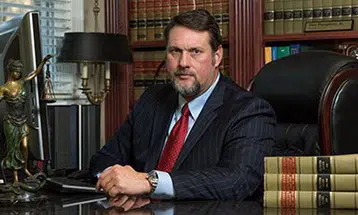
Attorney Don Pumphrey, Jr. is a former prosecutor, former law enforcement officer, and a successful and experienced criminal defense attorney. Don has achieved over 100 not guilty verdicts at trial and over 2,000 dismissals.