- DUI
- Criminal Defense
- Florida DUI
- Traffic Offenses
- Drug Charges
- Marijuana Charges
- Violent Crimes
- Domestic Violence
- Temporary Injunctions
- Weapons Charges
- Theft Crimes
- White Collar Crime
- Juvenile Offenses
- Sex Crimes
- Violation of Probation
- Early Termination of Probation
- Seal or Expunge Criminal Record
- Criminal Appeals
- US Federal Offenses
- Misdemeanor Charges
- Felony Charges
- Co-Defendant Cases
- College Student Defense
- College Student Hearings
- FSU Students
- FAMU Students
- Florida Panhandle Arrests
- Extradition to Florida
- Bench Warrants / Warrants
- Emergency Bond Hearings
- Gambling Charges
- Drone Arrests
- Marsy’s Law
- UAS Infractions
- Introduction of Contraband
- Lying to Police
- Locations
- Case Results
- Our Firm
- Media
- Resources
- Blog
- Contact Us
FL Supreme Court UPHOLDS Death Sentence Despite Biased Juror Challenge
February 9, 2026 Don Pumphrey, Jr. Criminal Defense, Violent Crimes Social Share
Florida’s Supreme Court held that one of a defendant’s two denied “cause challenges” should have been granted by the trial judge – but that because the trial judge awarded the defendant an additional peremptory strike, his conviction and death sentence did not require reversal.
In Florida, jury selection (also known as voir dire) is a critical aspect of any criminal trial. A jury can “make or break” a case – as if one or more jurors is biased against a defendant from the start, this can make it much more likely they will be found guilty. During this process, it is advisable to have an experienced and aggressive Florida criminal defense attorney by your side.
During jury selection, the State and defense are given the chance to ask questions of potential jurors. Many of these questions are designed to evaluate which potential jurors will be able to be fair and impartial if chosen for the jury – and which will likely be biased.
In the event that the State or defense finds a potential juror “objectionable” (e.g. on the basis that they seem unable to be fair and impartial), either may challenge that potential juror for cause. A “cause challenge” occurs when one side asks the judge to excuse a potential juror from service on recognized legal grounds (e.g. bias concerns).
When a trial judge hears a cause challenge, they have two choices:
- Grant the cause challenge, excusing the potential juror from service (sending them home)
- Deny the cause challenge, resulting in that potential juror either being impaneled (seated) or stricken peremptorily
Occasionally, the State or defense may unsuccessfully cause-challenge a potential juror at first, but elicit additional comments from the potential juror that lead to a second cause challenge that is granted (later in jury selection).
If this does not occur, however, the potential juror will either be seated – or a peremptory strike will be used to send them home. A peremptory strike (or peremptory challenge) occurs when one party to the proceeding (State/defense) unilaterally sends a potential juror home, without having to justify this to the trial judge or opposing counsel.
Unlike cause challenges, peremptories are limited. The “default” number of peremptory strikes in Florida for each side is 3 in misdemeanor cases, 6 in serious (non-capital) felony cases, and 10 in capital felony cases (e.g. crimes punishable by death). However, the trial judge has discretion to award additional peremptory strikes if these are asked for.
A peremptory strike may be used for any reason unless the challenge is based upon the race, sex or ethnicity of the potential juror. Batson v. Kentucky, 476 U.S. 79 (1986); J.E.B. v. Alabama ex rel. T.B., 511 U.S. 127 (1994).
If the State or defense suspect the other side is exercising a peremptory challenge on any of those prohibited grounds, they may raise a Neil challenge, which requires that the “striker” provide an explanation for the strike that does not implicate those immutable characteristics.
Sometimes, a trial judge will “abuse their discretion” by denying a defense cause challenge that should have been granted. This is reversible error on appeal if:
- The potential juror who was improperly cause challenged is seated on the jury, or
- The potential juror is peremptorily stricken due to the cause challenge failing, resulting in another objectionable potential juror who would have been peremptorily stricken sitting on the jury, and
- The defendant properly objects to the composition of the jury immediately before trial begins (when the jury is sworn in)
If a trial judge erroneously denies a cause challenge that should have been granted, this error can be cured (e.g. no longer requires reversal of a conviction) if the judge awards as many additional peremptory strikes as wrongly denied cause challenges. In practical terms, this means:
- If the judge wrongly denied 1 cause challenge, they must award the defense at least 1 additional peremptory strike
- If the judge wrongly denied 2 cause challenges, they must award the defense at least 2 additional peremptory strikes
- If the judge wrongly denied 3 cause challenges, they must award the defense at least 3 additional peremptory strikes
Put simply – if a trial judge fails to award the defense an additional peremptory strike for every cause challenge that was wrongly denied, this requires reversal of a defendant’s conviction(s) on appeal in Florida.
One major case in which this principle was illustrated was decided by the Florida Supreme Court in 2001. There, a defendant sentenced to death asked for a new trial, arguing the judge wrongly denied two cause challenges during jury selection and awarded only one additional peremptory strike.
However, the Florida Supreme Court ruled against him and affirmed his death sentence. Let’s take a look at that major case – Overton v. State, 801 So.2d 877 (Fla. 2001) – and evaluate what it means for those concerned about jury selection in Florida.
KEY CASE: Overton v. State, 801 So.2d 877 (Fla. 2001)
In Overton, the defendant (Overton) was charged with and convicted of first-degree murder. He was sentenced to death.
Overton’s appeal eventually made it to the Florida Supreme Court. One of Overton’s arguments was that before trial, the judge wrongly denied cause challenges of two potential jurors – Russell and Heuslein.
Overton objected to the composition of the jury immediately before trial, as one of the jurors he hoped to peremptorily strike As Overton asked for multiple additional peremptory strikes and only received one, he claimed this required reversal of his murder conviction on the grounds
However, the Florida Supreme Court ruled against Overton. The Court found that the trial judge only abused his discretion in denying one of the cause challenges (of Russell), not both. As the trial judge awarded Overton one additional peremptory strike, this “cured” the error of failing to grant the cause challenge of Russell.
Russell was challenged on the grounds he expressed a belief that only defendants who are guilty would not take the stand (e.g. remain silent at trial). When the cause challenge was denied by the judge, Overton was forced to strike Russell peremptorily. Agreeing with Overton that Russell should have been stricken for cause, the Florida Supreme Court wrote:
“We begin our analysis with the premise that the presumption of innocence is defeated if “a juror is taken upon a trial whose mind is in such condition that the accused must produce evidence of his innocence to avoid a conviction.” … The record in this case clearly demonstrates that Mr. Russell admitted during voir dire that he has “always believed” that “when someone doesn’t take the stand … they’ve got something to hide.” As the record also reveals, he reiterated this same sentiment on more than one occasion. He also stated, however, that he could “shut that out” and that he was able to “follow [the court’s] instructions.” The obvious question is whether Russell’s assurances that he would be able to follow instructions sufficiently negate his prior stated beliefs that it was his “honest opinion” that a defendant who does not testify must have something to hide.
“Based on the totality of his responses, we conclude that Russell’s assurance that he would be able to follow the law did not sufficiently negate his prior abiding adherence to the notion that he had “always believed” that defendants should testify if they have nothing to hide. In reaching our conclusion, we rely on our decision in Hamilton v. State, 547 So.2d 630 (Fla.1989), which involved a juror who indicated that she had extreme difficulty with the presumption of innocence and a defendant’s right to remain silent. See 547 So.2d at 632.”
On the other hand, the Court rejected Overton’s argument that the judge abused his discretion by denying a cause challenge of Heuslein. Heuslein initially indicated that he would automatically recommend the death penalty if the defendant was found guilty of first-degree murder.
However, this was due to initial ignorance of the law, not animus towards Overton – which was clarified by the trial judge through further questioning. The Florida Supreme Court wrote:
“When voir dire examination began, Mr. Heuslein did note that he favored the death penalty in cases where the defendant is found guilty of first-degree murder. As the questioning proceeded, however, defense counsel, the State, and the trial court all explained the capital sentencing scheme and its balancing process to Mr. Heuslein. Ultimately, as noted by the trial court, Mr. Heuslein expressed a “great deference” to the trial court’s instructions, and noted, on several occasions, that he would “start from a clean slate,” follow the law, and abide by the sentencing scheme which required him to consider aggravating and mitigating circumstances. In fact, in response to the court’s questioning, Heuslein indicated that he had no doubt that he could entertain the possibility of a life recommendation should the jury find Overton guilty of first-degree murder. Based on this record, we hold that no abuse of discretion occurred.”
The Court concluded that because only one cause challenge (of Russell) was improperly denied, and the trial judge awarded Overton one additional peremptory strike, this “cured” the error of the cause challenge denial:
“As previously noted, because the trial court granted an extra peremptory in this case, it was necessary for Overton to establish that the trial court erred as to both Russell and Heuslein to establish reversible error. See, e.g., Watson, 651 So.2d at 1162; Cook, 542 So.2d at 969. Although we conclude that the trial court should have excused Mr. Russell for cause, we do not reach the same conclusion as to Mr. Heuslein. Accordingly, appellant has failed to demonstrate that any error as to this issue warrants reversal for a new trial.”
In sum, Overton v. State, 801 So.2d 877 (Fla. 2001) marks a significant development in Florida case law on the issue of jury selection. The Florida Supreme Court held that:
- A potential juror who indicated he would assume a defendant’s guilt if they did not testify should have been stricken for cause
- A potential juror who indicated he would be inclined to recommend the death penalty if someone was guilty of first-degree murder – but retracted this statement after learning of the law and indicating he would follow it – did not have to be excused for cause
- The trial judge awarded Overton one additional peremptory strike at the conclusion of jury selection
- As only one cause challenge was wrongly denied, the single additional peremptory strike “cured” the error of the single wrongly denied cause challenge, requiring affirmance of Overton’s conviction and death sentence
Florida’s criminal defense community should take note of Overton v. State, 801 So.2d 877 (Fla. 2001), as it is key to analyzing how courts evaluate cause challenges and when (or whether) they have merit during jury selection.
If someone is arrested and formally charged in Florida and concerned about jury selection, it is critical to find experienced and trusted legal representation as soon as possible. This decision could make the difference in whether or not someone faces a lengthy prison term and hefty fines.
Criminal Defense Attorney in Tallahassee, FL
Don Pumphrey, Jr. is a Former Prosecutor, Former State Police Officer, Lifetime Member of the Florida Association of Criminal Defense Lawyers; for over 25 years as a private defense attorney who is Trusted, Experienced, Aggressive in Criminal Defense as a Trial Attorney, Criminal Lawyer, Criminal Defense Lawyer for the accused in Florida State Courts located in Tallahassee, Florida but handling cases throughout the State of Florida.
Don Pumphrey, Jr. and the Tallahassee criminal defense lawyers at Pumphrey Law have decades of experience fighting criminal charges on behalf of clients and winning. Call Pumphrey Law now at (850) 681-7777 to learn more about what we can do for you. Our lawyers will be happy to provide you with a free consultation
Don Pumphrey, Jr.
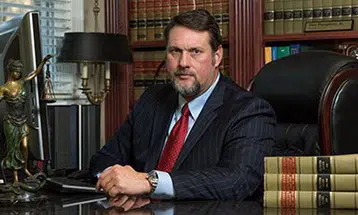
Attorney Don Pumphrey, Jr. is a former prosecutor, former law enforcement officer, and a successful and experienced criminal defense attorney. Don has achieved over 100 not guilty verdicts at trial and over 2,000 dismissals.