- DUI
- Criminal Defense
- Florida DUI
- Traffic Offenses
- Drug Charges
- Marijuana Charges
- Violent Crimes
- Domestic Violence
- Temporary Injunctions
- Weapons Charges
- Theft Crimes
- White Collar Crime
- Juvenile Offenses
- Sex Crimes
- Violation of Probation
- Early Termination of Probation
- Seal or Expunge Criminal Record
- Criminal Appeals
- US Federal Offenses
- Misdemeanor Charges
- Felony Charges
- Co-Defendant Cases
- College Student Defense
- College Student Hearings
- FSU Students
- FAMU Students
- Florida Panhandle Arrests
- Extradition to Florida
- Bench Warrants / Warrants
- Emergency Bond Hearings
- Gambling Charges
- Drone Arrests
- Marsy’s Law
- UAS Infractions
- Introduction of Contraband
- Lying to Police
- Locations
- Case Results
- Our Firm
- Media
- Resources
- Blog
- Contact Us
Florida Supreme Court Discusses When Police Must Clarify Your Miranda Rights
October 23, 2025 Don Pumphrey, Jr. Criminal Defense Social Share
Florida Supreme Court rules that any time someone asks law enforcement officers a question about their Miranda rights before or during interrogation, they must provide an “honest and straightforward” answer.
In Florida (and all 50 U.S. states), someone who is placed into police custody must be notified of their Miranda rights before they are subject to interrogation (or its functional equivalent). These rights include:
- The right to remain silent
- The fact that anything they say can and will be used against them in court
- The right to an attorney, including the right to have one present during police questioning
- The fact that if someone cannot afford an attorney, one will be provided for them
If someone is read their Miranda rights, they should exercise them! Do not get “hooked,” as anything you tell police can and will be used against you in court. Announce that you will be remaining silent and request an attorney.
Often, a person believes they can “outsmart” the police during an interrogation and agrees to speak believing it will benefit them. This is almost never true. Police officers are specifically trained on how to get information from suspects that may seem irrelevant or even beneficial for them to talk about, but can greatly damage their case without them even realizing it.
When you exercise your Miranda rights, actually tell law enforcement that you are remaining silent and want an attorney. The U.S. Supreme Court has ruled that simply sitting there quietly allows police to continue questioning – so exercise your rights, THEN be quiet. Berghuis v. Thompkins, 560 U.S. 370 (2010)
In spite of this, if someone agrees to speak with police without an attorney present, they must first validly waive their Miranda rights. Any such waiver must be knowing, intelligent, and voluntary. In other words, someone must understand both the nature of their rights and the potential consequences of not exercising them. Miranda v. Arizona, 384 U.S. 436 (1966)
Sometimes, a person may not waive their rights immediately, nor exercise them. Instead, a person may ask what is called a “prefatory question” about their Miranda rights. This often occurs right after someone’s rights are first read to them, and may include queries such as:
- “Can I have an attorney right now, or later?”
- “Do these rights kick in now or when I go to trial?”
- “Does this mean I shouldn’t talk to you?”
These are questions designed to improve someone’s understanding of their rights. But are police officers in Florida under any obligation to answer a prefatory question? Or can law enforcement commence (or continue) interrogation because the suspect did not clearly exercise their rights?
This is exactly what the Florida Supreme Court grappled with in a landmark 1999 case, Almeida v. State, 737 So. 2d 520 (Fla. 1999). Let’s break it down:
Major Case: Almeida v. State, 737 So. 2d 520 (Fla. 1999)
In Almeida, the defendant (Almeida) was arrested and charged with murder. Almeida ultimately confessed to his role in the crime after he was taken into custody by law enforcement officers and read his Miranda rights. His statements were used against him at trial, and he was convicted.
At the start of the interrogation of Almeida, police noted that they had read him his Miranda rights and asked Almeida if he could read, write, and understand the English language. Almeida replied in the affirmative.
An interrogating officer then asked whether Almeida wished to speak to law enforcement “now, without an attorney present.” Almeida replied, “Well, what good is an attorney going to do?” The officer did not answer Almeida’s prefatory question – instead, he simply said that Almeida had already “spoken with” police and was just going to do so “again, on tape.”
Almeida agreed to do so. Eventually, he confessed to three murders – one of which he was being investigated for, the others totally unrelated to the probe. Almeida was convicted of first-degree murder and sentenced to death.
On appeal, Almeida argued that his confession was erroneously used against him at trial. He had filed a motion to suppress (preventing his statements from being used in court) on the grounds that he did not validly waive his Miranda rights. However, the trial court denied it. The dispute eventually made its way to the Florida Supreme Court, as Almeida was set to be executed.
The Florida Supreme Court ruled in Almeida’s favor, reversing his conviction and remanding for a new trial. The Court reasoned that Almeida’s prefatory question (“Well, what good is an attorney going to do?”) constituted an equivocal (ambiguous) invocation of his rights requiring clarification by officers before questioning could proceed.
The Court held that under Article I, Section 9 of the Florida Constitution (due process rights), police must stop and clarify when a suspect makes any statement that could reasonably be construed as a request for counsel. Almeida’s question was enough to trigger a duty for the officers to clarify whether or not he wished to have a lawyer present.
The Court noted that Florida law was broader than the federal standard on this issue. Davis v. United States, 512 U.S. 452 (1994). In Davis, the U.S. Supreme Court required an unequivocal invocation (specifically asking to exercise the right to remain silent and/or right to an attorney) for police to cease questioning once interrogation was underway.
In other words, no “clarification” was necessary under Davis. However, Almeida cited the Florida Supreme Court’s broad reading of Article I, Section 9 of the Florida Constitution in Traylor v. State, 596 So.2d 957 (Fla. 1992) to support its imposition of a stricter standard than the U.S. Supreme Court. The Almeida majority wrote:
“The Court in Traylor thus held that if a suspect indicates in any manner that he or she wants the help of a lawyer the interrogation must cease. This proscription necessarily embraces a scenario such as the present, for the defendant here was seeking basic information on which to make an informed decision concerning his right to counsel. No valid societal interest is served by withholding such information.”
“In sum, whenever constitutional rights are in issue, the ultimate bright line in the interrogation room is honesty and common sense. Based on the foregoing, we conclude that the trial court erred in admitting Almeida’s inculpatory statement. On the present record, we are unable to say beyond a reasonable doubt that the error did not contribute to the verdict.”
The dissenters in Almeida strongly disagreed with the majority’s logic, arguing that the “duty to clarify” was found nowhere in the Florida Constitution nor U.S. Supreme Court precedent. They characterized the ruling as “judicial activism” that unnecessarily departed from established law. Chief Justice Harding, for example, wrote:
“The majority makes several attempts at defining the precise content of Almeida’s statement. I question whether the majority’s categorizing is correct, or even necessary. Whatever Almeida’s statement was, I know what it was not—it was not an ‘unequivocal request for counsel.’ Therefore, under Davis … the police were under no obligation to stop the questioning.”
Another dissenting justice, Justice Wells, disputed the characterization of Almeida’s “prefatory question” as a question. He argued that Almeida’s reply to officers was reasonably interpreted to simply be a “statement” rather than an equivocal invocation of the right to counsel. He wrote:
“Furthermore, I point out that neither in this opinion nor in Almeida II does the majority explain the source of its authority to substitute its judgment for that of the trial court on the issue of fact of whether Almeida was making a statement or making an equivocal request for counsel.”
“Detective Mink testified it was considered by him to be merely a statement. The trial judge believed Detective Mink, and the majority has no basis in law or fact to simply discard this determination by the trial judge in order to reach its result.”
In essence, the Almeida dissenters questioned whether his “prefatory question” was even a question at all – rather than simply a lamentation of the fact that an attorney would not be able to “do any good.” And even if it was an “equivocal invocation,” the dissenters argued that under Davis (decided two years after Traylor), officers had no duty to “clarify” anything.
To this day, Almeida v. State remains good law in Florida. If someone is read Miranda and asks a “prefatory question” in an effort to understand their rights (as the Court found Almeida did), law enforcement must give them an “honest and good faith” answer. Otherwise, their Miranda waiver may be considered legally invalid – leading to the suppression of their post-arrest statements.
In sum, Almeida establishes a broad duty on the part of police officers to ensure a suspect fully understands their Miranda rights and the consequences of waiving them before interrogation proceeds. If someone asks a question about the nature of their rights before or during a police interview, this must be answered candidly.
If law enforcement simply tries to “keep someone talking” when they ask about their rights or attempt to exercise them, this is forbidden under Florida law. Police must answer all “prefatory questions” from a suspect about their Miranda rights – and a failure to do so is grounds for that suspect’s post-arrest statements to be rendered inadmissible (unusable) in court.
Almeida is broader than the federal standard set out in Davis v. United States, 512 U.S. 452 (1994). Defense attorneys in Florida should take note of this when filing motions to suppress on the basis of an “equivocal waiver,” and subsequent failure by officers to address a defendant’s prefatory question in a candid manner.
If someone is arrested and formally charged in Florida in a case involving a Miranda waiver that was not knowing, intelligent, or voluntary, it is CRITICAL to find experienced and trusted legal representation as soon as possible. This decision could make the difference in whether someone faces a lengthy prison term and hefty fines.
Criminal Defense Attorney in Tallahassee, FL
Don Pumphrey, Jr. is a Former Prosecutor, Former State Police Officer, Lifetime Member of the Florida Association of Criminal Defense Lawyers; for over 25 years as a private defense attorney who is Trusted, Experienced, Aggressive in Criminal Defense as a Trial Attorney, Criminal Lawyer, Criminal Defense Lawyer for the accused in Florida State Courts located in Tallahassee, Florida but handling cases throughout the State of Florida.
Don Pumphrey, Jr. and the Tallahassee criminal defense lawyers at Pumphrey Law have decades of experience fighting drug charges on behalf of clients and winning. Call Pumphrey Law now at (850) 681-7777 to learn more about what we can do for you. Our lawyers will be happy to provide you with a free consultation.
Don Pumphrey, Jr.
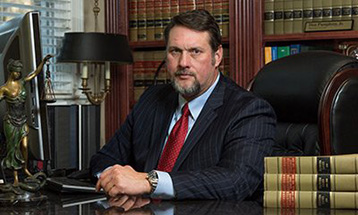
Attorney Don Pumphrey, Jr. is a former prosecutor, former law enforcement officer, and a successful and experienced criminal defense attorney. Don has achieved over 100 not guilty verdicts at trial and over 2,000 dismissals.