- DUI
- Criminal Defense
- Florida DUI
- Traffic Offenses
- Drug Charges
- Marijuana Charges
- Violent Crimes
- Domestic Violence
- Temporary Injunctions
- Weapons Charges
- Theft Crimes
- White Collar Crime
- Juvenile Offenses
- Sex Crimes
- Violation of Probation
- Early Termination of Probation
- Seal or Expunge Criminal Record
- Criminal Appeals
- US Federal Offenses
- Misdemeanor Charges
- Felony Charges
- Co-Defendant Cases
- College Student Defense
- College Student Hearings
- FSU Students
- FAMU Students
- Florida Panhandle Arrests
- Extradition to Florida
- Bench Warrants / Warrants
- Emergency Bond Hearings
- Gambling Charges
- Drone Arrests
- Marsy’s Law
- UAS Infractions
- Introduction of Contraband
- Lying to Police
- Locations
- Case Results
- Our Firm
- Media
- Resources
- Blog
- Contact Us
Florida’s 3rd DCA AFFIRMS Murder Conviction Over Miranda Rights, But One Judge Disagrees
April 23, 2026 Don Pumphrey, Jr. Criminal Defense, Violent Crimes Social Share
Florida’s 3rd District Court of Appeal ruled that law enforcement officers did not violate the defendant’s Miranda rights – and thus, his confession was properly admitted against him at his trial. However, one 3rd DCA judge disagreed with the majority.
CASE: Chaney v. State, 903 So.2d 951 (Fla. 3d DCA 2005)
Charge(s): Second-Degree Murder
Outcome: Conviction AFFIRMED, as the defendant’s Miranda rights were not violated – though one judge disagreed.
Miranda Rights in Florida
In Florida and throughout the U.S., someone must be advised of their Miranda rights before they are subject to custodial interrogation by law enforcement. These rights, per Miranda v. Arizona, 384 U.S. 436 (1966), include:
- The right to remain silent
- The fact that anything they say can and will be used against them in court
- The right to an attorney, including to have one present during police questioning
- The fact that if they cannot afford an attorney, one will be provided for them
If someone is notified of their Miranda rights, the SMART next move is to exercise them! Tell law enforcement that you will be remaining silent and are requesting the presence of an attorney. Do so OUT LOUD – as if you simply sit there quietly, the police have legal permission to keep questioning you. Berghuis v. Thompkins, 560 U.S. 370 (2010)
A common misconception about Miranda rights is that they must be read any time officers put someone in handcuffs. However, Miranda is only required before someone is subject to custodial interrogation. As evidenced by its name, “custodial interrogation” occurs when someone is taken into custody by law enforcement and interrogated.
But what do custody and interrogation actually mean? The former of these, custody, occurs when both of the following are true:
- The suspect’s freedom of movement has been restricted by law enforcement in a manner consistent with a formal arrest
- A reasonable person in the suspect’s position would not feel free to end the encounter and leave (State v. Thompson, 193 So. 3d 916 (Fla. 2d DCA 2016))
Interrogation occurs when law enforcement subjects a suspect to questioning or its “functional equivalent” in a manner that is likely to elicit an incriminating response from a suspect. Rhode Island v. Innis, 446 U.S. 291 (1980). Examples of interrogation, in addition to basic questioning about an alleged offense, may include:
- Law enforcement confronting a suspect with a bloody murder weapon and saying: “Tell me what happened!”
- Law enforcement telling a suspect that witnesses saw them commit the crime/saw them near where the crime occurred
- Law enforcement asking a suspect for seemingly “benign” information that is directly relevant to tying the suspect to the alleged crime
Important: To learn more about custody for Miranda purposes in Florida, click here. For more on interrogation, click here.
In the event that someone is read their Miranda rights, they can do either of the following:
- Invoke their rights immediately, requiring that law enforcement cease questioning and provide them an attorney (DO THIS!)
- Waive their rights and agree to speak with law enforcement (e.g. subject themselves to interrogation) without an attorney present
If someone waives their rights after being read them (e.g. verbally indicates they wish to speak with police or signs a form), there are two important things to know. The first is that this waiver is NOT permanent. Someone retains the right to invoke their Miranda rights at any time during interrogation. Washington v. State, 253 So.3d 64 (Fla. 1st DCA 2018)
The only catch is that if someone wishes to do so AFTER initially waiving their rights, they must tell law enforcement UNEQUIVOCALLY and UNAMBIGUOUSLY that they wish to contact an attorney/remain silent. If someone is unsure about this (e.g. “I think I may want a lawyer”), it is not required that interrogation cease. For more, click here.
The second important thing to know is that just because someone waived their rights, this DOES NOT mean that their statements will automatically be used against them at trial. This is because a Miranda waiver must be KNOWING, INTELLIGENT, AND VOLUNTARY for a suspect’s subsequent statements (including confessions) to be used against them in a court of law.
Pursuant to Miranda v. Arizona, 384 U.S. 436 (1966), this means BOTH of the following must have been true at the time of the defendant’s waiver:
- The defendant understood the nature of their rights (e.g. what they were)
- The defendant understood the potential consequences of giving them up (e.g. that their statements could/would be used against them in court)
Examples of situations where law enforcement acts in a manner that renders a Miranda waiver (and subsequent confession) involuntary include:
- Law enforcement does not read someone their full Miranda rights (e.g. omits one or more rights when notifying a suspect of them, such as not disclosing the right to an attorney)
- Law enforcement fails to read someone their rights at all before custodially interrogating them (Evans v. State, 911 So.2d 796 (Fla. 1st DCA 2005))
- Law enforcement reads someone their rights in a language that is not their own (e.g. reads a clear Spanish-speaker their rights in English)
- Law enforcement uses threats, coercion, or trickery to get someone to waive their rights – even once they have chosen to exercise them
- Law enforcement minimizes Miranda (e.g. “This is all just a formality…”)
If someone believes their post-Miranda statements did not follow a knowing, intelligent, and voluntary waiver of their rights an experienced, aggressive Florida criminal defense attorney can file a MOTION TO SUPPRESS on their behalf. If granted, any statements made during interrogation (including confessions) are inadmissible against them in a court of law.
Important: For more on when a defendant’s Miranda waiver is (and is not) considered knowing, intelligent, and voluntary in Florida, click here.
At the start of custodial interrogation (or once it is underway), the defendant may ask a question about the nature of their rights or whether they should exercise them. This is often referred to as a prefatory question – and examples include:
- “Can I have an attorney right now, or later?”
- “Do these rights kick in now or when I go to trial?”
- “Does this mean I shouldn’t talk to you?”
If officers do not acknowledge and honestly answer prefatory questions, a subsequent confession is inadmissible in court, since it is “contaminated” by a failure to address the prefatory question. Almeida v. State, 737 So. 2d 520 (Fla. 1999).
If a confession is erroneously admitted despite law enforcement’s failure to properly address a prefatory question, a defendant’s conviction must be REVERSED unless it can be said beyond a reasonable doubt that the introduction of the confession at the defendant’s trial DID NOT impact the jury’s verdict. For more, click here.
In one major Florida case, a defendant was in custody and read his Miranda rights prior to the commencement of interrogation. After signing a Miranda waiver, the defendant (then the suspect in a murder investigation) asked the interrogating detective if he needed a lawyer. The detective responded: “Do you think you need a lawyer?”
The interrogation ultimately continued, and the defendant gave a formal, recorded statement that led to his arrest one month later during a traffic stop. He was taken back to the police station and again read his Miranda rights. Law enforcement told the defendant that they “had to go over this again.”
The defendant refused to sign the form, stating that his father was a law enforcement officer and he knew his rights. The interrogating detective proceeded to question the defendant, leading him to make additional incriminating statements. All of these were used against him at his trial (e.g. played for the jury on video) – and he was convicted of second-degree murder.
On appeal, the defendant argued that his Miranda rights were violated twice. He claimed that:
- During the first interrogation, the detective didn’t give a “simple, straightforward” answer to his prefatory question – rendering his subsequent statements inadmissible
- During the second interrogation, he did NOT validly waive his Miranda rights – so the subsequent questioning that produced a confession was inadmissible
Florida’s 3rd District Court of Appeal (Miami’s highest court) REJECTED both arguments and AFFIRMED the defendant’s murder conviction. However, one 3rd DCA judge disagreed.
Let’s find out why by looking at the case – Chaney v. State, 903 So.2d 951 (Fla. 3d DCA 2005) – and discussing what it means for your Miranda rights in Florida.
KEY CASE: Chaney v. State, 903 So.2d 951 (Fla. 3d DCA 2005)
In Chaney, the defendant (Chaney) was charged with (and convicted of) second-degree murder with a firearm. At trial, the following facts were revealed:
- Chaney arrived at the police station on March 17 with blood spatter on his clothes
- He said he had just shot someone in self-defense, and he was placed in a holding cell
- A detective eventually transported Chaney to an interrogation room and read Chaney his Miranda rights
- Chaney asked the detective (Detective Capote): “Do I need a lawyer?”
- Detective Capote responded: “Do you think you need a lawyer?”
- The interrogation continued without a lawyer present, and Chaney provided a statement before being released
- A month later, Chaney was arrested and formally charged with second-degree murder
- When he was taken into custody and brought to the police station, detectives attempted to read him a Miranda form
- Chaney yelled over the detectives, said his father was a police officer, and said he “knew his rights”
- Interrogation proceeded despite Chaney not signing a Miranda form, and he ultimately confessed
Chaney filed a motion to suppress before trial, but this was DENIED. Chaney’s statements from both interrogations were used against him at trial (e.g. shown to the jury), and he was convicted.
On appeal to the 3rd DCA, Chaney argued detectives failed to give a “simple, straightforward” answer to his prefatory question during Interrogation #1 – and did not obtain a valid Miranda waiver from him during Interrogation #2. Chaney claimed this “double violation” of his rights required that his conviction be REVERSED.
However, the 3rd DCA majority disagreed and AFFIRMED Chaney’s conviction. Addressing both of Chaney’s claims, the 3rd DCA wrote:
“Chaney claims error in the trial court’s denial of his motion to suppress the statements he gave to the police. With regard to the statement given during the first interrogation, Chaney argues that Detective Capote failed to make a good-faith effort to give a simple and straightforward answer to Chaney’s question as to whether he needed a lawyer, thus rendering the waiver involuntary. Chaney contends that Detective Capote’s response of “Do you think you need one?” was evasive and intended to steam roll the suspect much as the officers’ response in Almeida v. State, 737 So.2d 520 (Fla.1999). We find that Detective Capote’s question in effect correctly informed Chaney that it was up to Chaney to decide whether or not he needed a lawyer. See State v. Glatzmayer, 789 So.2d 297 (Fla.2001)(telling suspect that decision as to whether he should have a lawyer was not theirs to make was simple, reasonable and true).”
“Chaney additionally contends that he did not validly waive his Miranda rights preceding the second interrogation on April 19, 2001. A careful review of the transcript of the suppression hearing leads to the conclusion that Chaney refused to listen to or sign the Miranda form which was offered to him. Therefore, the trial court did not err in refusing to suppress the statements. Finally, we find that there was overwhelming evidence refuting Chaney’s claim that he was acting in self-defense. The judgment of conviction entered below is therefore affirmed.”
Put simply, the 3rd DCA majority concluded that Detective Capote properly answered Chaney’s “prefatory question,” and that he refused to listen to the Miranda warning during his second interrogation. Because his Miranda rights were not violated in either case, the 3rd DCA affirmed his conviction – as the trial judge properly denied his motion to suppress.
However, one 3rd DCA judge dissented. Judge Ramirez concluded that the majority was correct about Interrogation #2, it erred by finding Detective Capote answered the “prefatory question” (“Do I need a lawyer?”) in a simple, straightforward manner. Judge Ramirez wrote:
“I respectfully dissent. Either during or prior to his first interrogation Chaney asked Detective Capote whether he needed a lawyer. The issue in this appeal is whether the detective’s “response” of “Do you think you need one?” was an honest and fair answer, or whether the detective was being evasive, skipped over the question, or was attempting to override or “steamroll” the defendant. If I were writing on a clean slate, I would agree wholeheartedly with the majority, but in my view, reversal is mandated by the Florida Supreme Court’s decisions in Almeida v. State, 737 So.2d 520 (Fla. 1999) and State v. Glatzmayer, 789 So.2d 297 (Fla.2001).
“It is important to place this exchange between Chaney and the detective in context. Approximately two hours earlier, Chaney had walked into the police station with blood spattered over his forehead and clothes and told the front desk officer that he had just shot someone in self-defense. The testimony regarding this issue was as follows: Q: [by defense counsel] Now, at what point did you ask him if he needed a lawyer? A: [by Detective Capote] I don’t remember exactly when he asked me that. Q: What was your response when he asked you that? A: I asked him: Do you think you need a lawyer. Q: And what did he say? A: He really didn’t say anything. Q: What do you think his response was when you said what do you think— A: I don’t think he said anything. Q: Okay. So you don’t remember exactly what point of sequence this was? A: No. Q: Was it during the time that he was reading the rights? A: I don’t remember. Q: Was it prior to the questioning beginning? A: Again, I don’t remember.
“When Chaney asked Detective Capote whether the detective thought Chaney needed a lawyer, it seems clear that Chaney “was asking the officer for fundamental information concerning his right to counsel.” Almeida, 737 So.2d at 524. It was a question that called for an answer. “It was not a rumination or rhetorical question.” Id. As with Almeida, Chaney was seeking a frank answer. The officer “answered” the question with a question. The holding in Almeida teaches that “if, at any point during custodial interrogation, a suspect asks a clear question concerning his or her rights, the officer must stop the interview and make a good-faith effort to give a simple and straightforward answer.” Id. at 525. Detective Capote failed to do that.”
Put simply, Judge Ramirez found that when considering the context, Detective Capote answered Chaney’s genuine question about his right to a lawyer with a question of his own that DID NOT clarify Chaney’s understanding of his rights. As this constituted a violation of Chaney’s Miranda rights under Almeida v. State, 737 So. 2d 520 (Fla. 1999), Judge Ramirez would’ve reversed.
However, Judge Ramirez’s opinion did not win the day, and Chaney’s conviction was allowed to stand.
In sum, Chaney v. State, 903 So.2d 951 (Fla. 3d DCA 2005) marks a significant development in Florida’s corpus of case law surrounding Miranda rights. The 3rd DCA (Miami’s highest court) found that:
- Chaney’s prefatory question was properly addressed by Detective Capote during the first interrogation
- Chaney’s statement that he “knew his rights” and refusal to listen to Miranda warnings made the second interrogation permissible
- As a result, the trial judge DID NOT err by denying Chaney’s motion to suppress
- Thus, his conviction was AFFIRMED
Judge Ramirez dissented on the grounds that Detective Capote did not answer Chaney’s question about his right to counsel in a “simple, straightforward manner,” as Almeida v. State, 737 So. 2d 520 (Fla. 1999) demands. However, his perspective was not shared by the majority, so Chaney’s conviction was affirmed.
Florida’s criminal defense community should take note of Chaney v. State, 903 So.2d 951 (Fla. 3d DCA 2005), as it provides a framework for how top state courts evaluate potential violations of Miranda rights.
If someone is arrested and formally charged in Florida in a case involving a Miranda waiver that was not knowing, intelligent, or voluntary, it is critical to find experienced and trusted legal representation as soon as possible. This decision could make the difference in whether or not someone faces a lengthy prison term and hefty fines.
Criminal Defense Attorney in Tallahassee, FL
Don Pumphrey, Jr. is a Former Prosecutor, Former State Police Officer, Lifetime Member of the Florida Association of Criminal Defense Lawyers; for over 25 years as a private defense attorney who is Trusted, Experienced, Aggressive in Criminal Defense as a Trial Attorney, Criminal Lawyer, Criminal Defense Lawyer for the accused in Florida State Courts located in Tallahassee, Florida but handling cases throughout the State of Florida.
Don Pumphrey, Jr. and the Tallahassee criminal defense lawyers at Pumphrey Law have decades of experience fighting criminal charges on behalf of clients and winning. Call Pumphrey Law now at (850) 681-7777 to learn more about what we can do for you. Our lawyers will be happy to provide you with a free consultation.
Don Pumphrey, Jr.
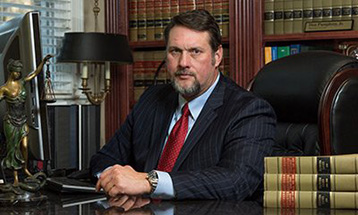
Attorney Don Pumphrey, Jr. is a former prosecutor, former law enforcement officer, and a successful and experienced criminal defense attorney. Don has achieved over 100 not guilty verdicts at trial and over 2,000 dismissals.