- DUI
- Criminal Defense
- Florida DUI
- Traffic Offenses
- Drug Charges
- Marijuana Charges
- Violent Crimes
- Domestic Violence
- Temporary Injunctions
- Weapons Charges
- Theft Crimes
- White Collar Crime
- Juvenile Offenses
- Sex Crimes
- Violation of Probation
- Early Termination of Probation
- Seal or Expunge Criminal Record
- Criminal Appeals
- US Federal Offenses
- Misdemeanor Charges
- Felony Charges
- Co-Defendant Cases
- College Student Defense
- College Student Hearings
- FSU Students
- FAMU Students
- Florida Panhandle Arrests
- Extradition to Florida
- Bench Warrants / Warrants
- Emergency Bond Hearings
- Gambling Charges
- Drone Arrests
- Marsy’s Law
- UAS Infractions
- Introduction of Contraband
- Lying to Police
- Locations
- Case Results
- Our Firm
- Media
- Resources
- Blog
- Contact Us
Major FL Court: Admission of DNA Evidence Without ‘Laying Foundation’ Requires New Trial
March 5, 2026 Don Pumphrey, Jr. News & Announcements Social Share
Case Summary
Florida’s 2nd District Court of Appeal ruled that because the State failed to adequately identify the expertise of a police witness who discussed DNA “matching” probabilities at a defendant’s trial, the defendant’s conviction required reversal.
CASE: Casias v. State, 94 So.3d 611 (Fla. 2d DCA 2011)
Charge(s): Burglary of a Dwelling
Outcome: Conviction REVERSED, as the State did not sufficiently verify the credentials of their DNA “expert” before introducing their testimony.
DNA Evidence in Florida Criminal Cases
In Florida, the use of DNA evidence plays a significant role in many criminal trials. Due to the “CSI Effect,” jurors generally are more likely to convict when DNA evidence is identified as a “match” to the defendant.
However, there are various “myths” about DNA in Florida criminal trials. Just because DNA is present at a particular location, does not mean the defendant is guilty. Whether DNA is actually “inculpatory” should be evaluated based on the totality of the circumstances. For more on this, click here.
Examples of when DNA may be sufficient to convict (e.g. support a guilty finding by a jury as a matter of law)
- B is charged with sexual battery and claims he has never met C, but his semen is found inside C with a 1 in 1 trillion odds of a random match
- G claims he has never been to Florida or owned a gun, but his DNA is found on a murder weapon in Miami with a 1 in 10 trillion chance of a random match
- T is charged with burglary and claims he has never been inside the victim’s home – but his blood is found on broken glass from a window used to gain entry, with a 1 in 100 billion chance of a random match
But there are many examples of cases in which DNA evidence may not be “probative” (e.g. show a defendant’s guilt/innocence) in a Florida criminal case. These may include:
- G legally sells T a firearm. A shooting occurs involving the firearm. Police swab the gun and find DNA that matches G’s. Police suspect G and arrest him.
- L’s DNA is found on a kitchen knife he uses to cook before selling it. The same knife is then used to murder someone. L is charged, as the presence of touch DNA is considered evidence of his guilt.
- Passengers frequently ride in M’s work car, leaving behind their DNA. Later, someone commits a robbery and steals M’s work car to do it. Police find the abandoned vehicle, swab it, and discover M’s DNA on the steering wheel and door handles. Investigators consider this as evidence of M’s involvement, and he is arrested.
In the above hypotheticals, someone would logically “expect” the defendant’s DNA to appear in the location it is found – even if they were not guilty of the underlying offense. In the absence of any other evidence, courts in such cases are likely to reverse a defendant’s conviction as a matter of law. State v. Sephes, 262 So.3d 811 (Fla. 4th DCA 2019)
Before DNA evidence can be admitted at a Florida criminal trial through an expert, the State (or defense) must “lay the foundation” for the expert testimony. Under Fla. Stat. 90.702, a witness qualified as an expert by knowledge, skill, experience, training, or education may testify about the matter they are considered an expert in if all of the following are true:
- The testimony is based upon sufficient facts or data
- The testimony is the product of reliable principles and methods, and
- The witness has applied the principles and methods reliably to the facts of the case
Fla. Stat. 90.702 codified the “Daubert standard” for use of expert testimony. Daubert v. Merrell Dow Pharmaceuticals Inc., 509 U.S. 579 (1993), Before 2019, Florida’s courts relied upon the Frye standard (similar but distinguishable) – which required the following determinations to be made:
- Whether the expert testimony will assist the jury in understanding the evidence or determining a fact in issue
- Whether the expert’s testimony is based on a scientific principle or methodology that is generally accepted within the scientific community
- Whether the particular witness is qualified to present opinion testimony on the subject at issue
Under both Daubert and Frye, the party to a criminal case that intends to rely upon the expert must “lay the foundation” for their testimony to the jury. This requires a colloquy between the lawyer and the witness as to their qualifications to give an expert opinion. In re Amendments to Florida Evidence Code, 44 Fla. L. Weekly S170 (Fla. May 23, 2019)
If the opposing party feels that the party introducing the expert testimony has not elicited enough information from the “expert” to make their qualifications clear, they may decide to object to the introduction of the testimony. At that point, the trial judge can do one of three things:
- Sustain the objection and make an affirmative finding that the witness is not an expert – resulting in that testimony being inadmissible
- Overrule the objection and find that the introducing party has qualified the witness (per Daubert) as an expert – allowing the expert testimony to go forward
- Temporarily overrule the objection to allow for the colloquy between the introducing party and the “expert” to continue, until the trial judge can make a firm decision
Though a judge has broad discretion to apply Daubert (and formerly Frye) in deciding whether to admit expert testimony (Fla. Stat. 90.702), this is not unlimited. If a judge erroneously allows “expert testimony” on a key issue at trial when the foundation for that testimony has not been sufficiently laid by the introducing party, this may be reversible error on appeal.
One such case in which reversal occurred (when Florida still relied upon Frye) on this basis was Casias v. State, 94 So.3d 611 (Fla. 2d DCA 2011). There, the trial judge overruled the defense’s objection to an “expert” Florida Department of Law Enforcement (FDLE) witness who testified as to DNA matching probabilities.
On appeal, Florida’s 2nd DCA found the trial judge erred by overruling the defense’s objection. But why? Let’s take a look at Casias and discuss what it means for defendants in Florida when objecting to “expert” testimony.
KEY CASE: Casias v. State, 94 So.3d 611 (Fla. 2d DCA 2011)
In Casias, the defendant (Casias) was charged with and convicted of burglary of a dwelling. He appealed to Florida’s 2nd District Court of Appeal (Greater Tampa area).
At trial, the State relied entirely upon DNA to tie Casias to the alleged burglary. Regarding the factual background of the case, the 2nd DCA wrote:
“While Sonya Schirmacher was visiting relatives on November 23 and 24, 2006, someone broke into her house through a bathroom window and stole numerous items. There were no eyewitnesses to the crime, and the only evidence available to attempt to identify the perpetrator was a few drops of blood. A sample of this blood was collected, and a DNA test was performed. A national database search identified Casias as a possible contributor of the DNA. Based on this search result, Casias was arrested and charged with burglary of a dwelling. A post-arrest DNA sample was taken from Casias and submitted for further analysis, which confirmed that Casias was a potential contributor of the blood found in Schirmacher’s house. The State had no other evidence linking Casias to the offense.”
The State’s key witness at Casias’s trial was an ostensible “expert” from the Florida Department of Law Enforcement (FDLE), who testified as to the probability Casias’s DNA would “randomly match” that of the alleged burglar.
During the witness’s colloquy with the Assistant State Attorney, the witness noted that she had taken “several statistics courses throughout my college career, as well as received specific DNA analysis statistics training as part of my training with FDLE.” However, she noted that she was not a statistician or mathematician.
When the colloquy ended and the State attempted to elicit testimony from the witness as to the odds of a “DNA match” in Casias’s case, the defense objected. The 2nd DCA wrote:
“At this point, defense counsel objected that the State had failed to lay “an adequate predicate” for Johnson “to opine the statistical frequency basis.” Defense counsel cited Perdomo and Gibson v. State, 915 So.2d 199 (Fla. 4th DCA 2005), and noted that Johnson’s testimony was comparable to the testimony found insufficient in those cases. … In response, the court stated that the expert need not be a statistician or a mathematician and that Johnson had “sufficient knowledge of the authorities pertinent to the database that she’s referred to, the three categories, and she has testified in the past.” On that basis, the court overruled the objection and permitted Johnson to provide the statistical evidence. Casias renewed his objection to Johnson’s statistical analysis when the State offered her report into evidence.”
After the trial judge overruled Casias’s objection, the “expert” was permitted to testify – and Casias was convicted. He appealed to the 2nd DCA, arguing the trial judge erred as a matter of law in finding that the witness was an expert. Under Frye (the standard at the time), Casias said the witness did not qualify as one.
The 2nd DCA agreed – reversing Casias’s conviction. Finding Casias’s case was analogous to Gibson (as the defense argued at trial), the 2nd DCA wrote:
“Here, as in Gibson, Johnson never identified or explained the methodology she used to complete her statistical analysis. And, unlike the expert in Gibson, Johnson did not testify that she knew how the statistical program worked, that she was required to know how it works, or that she was able to do the statistical calculations by hand. Thus, Johnson’s testimony laid an even less sufficient predicate for the admission of the statistical analysis than that found insufficient in Gibson. Because the predicate laid by the State was legally insufficient, the trial court should have sustained Casias’ objection and excluded the evidence. And since the DNA evidence was the sole evidence connecting Casias to this offense, the error in admitting this evidence was not harmless.”
Citing the three-pronged Frye test, the 2nd DCA held that the admission of the testimony was erroneous under Florida law:
“Casias’ challenge to Johnson’s testimony implicates both the second and third threshold (Frye) issues. The record is clear that the State never offered any evidence as to what methodology Johnson used to generate her statistical analysis. Ipso facto, there was no evidence presented to address whether that methodology was generally accepted in the scientific community. Without such evidence, the trial court, whose gatekeeping role required it to determine whether the methodology used to generate the statistical analysis satisfied the Frye test, simply had no basis to do so. Moreover, without evidence concerning the methodology used by Johnson, the trial court had no basis upon which to find that she was qualified, whether by education, experience, or otherwise, to present opinion testimony concerning the population frequency statistics she generated.”
In sum, Casias v. State, 94 So.3d 611 (Fla. 2d DCA 2011) marks a significant development in Florida case law on the issue of the introduction of DNA evidence through expert witnesses at criminal trials. Florida’s 2nd DCA found that:
- The State’s DNA “expert” never offered any evidence or testimony as to the methods she used to generate the “match probabilities” she discussed
- The State’s witness was not a statistician or mathematician by trade
- The State’s witness did not even know how the system she used to generate the “match probabilities” actually worked
- As a result, the State’s witness could not be considered an “expert” on DNA probabilities (pursuant to Frye)
- Since the admission of the DNA evidence (and discussion of “match probabilities”) was central to the State’s case against Casias, his conviction was reversed
Florida’s criminal defense community should take note of Casias v. State, 94 So.3d 611 (Fla. 2d DCA 2011), despite the change to Daubert in 2019. If a “DNA expert” cannot explain methods relied upon to reach their conclusions, Florida courts are likely to reject the use of that testimony (pursuant to 90.702) – so it is important to object at trial!
The admission of testimony without adequate confrontation can change the outcome of a case, so it is critical to find experienced and trusted legal representation as soon as possible if someone is charged with an offense involving a child victim. This decision could make the difference in whether or not someone faces a lengthy prison term and hefty fines.
Criminal Defense Attorney in Tallahassee, FL
Don Pumphrey, Jr. is a Former Prosecutor, Former State Police Officer, Lifetime Member of the Florida Association of Criminal Defense Lawyers; for over 25 years as a private defense attorney who is Trusted, Experienced, Aggressive in Criminal Defense as a Trial Attorney, Criminal Lawyer, Criminal Defense Lawyer for the accused in Florida State Courts located in Tallahassee, Florida but handling cases throughout the State of Florida.
Don Pumphrey, Jr. and the Tallahassee criminal defense lawyers at Pumphrey Law have decades of experience fighting criminal charges on behalf of clients and winning. Call Pumphrey Law now at (850) 681-7777 to learn more about what we can do for you. Our lawyers will be happy to provide you with a free consultation.
Don Pumphrey, Jr.
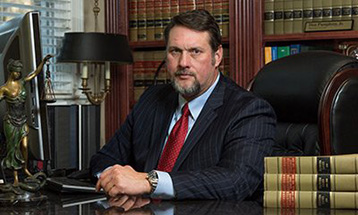
Attorney Don Pumphrey, Jr. is a former prosecutor, former law enforcement officer, and a successful and experienced criminal defense attorney. Don has achieved over 100 not guilty verdicts at trial and over 2,000 dismissals.