- DUI
- Criminal Defense
- Florida DUI
- Traffic Offenses
- Drug Charges
- Marijuana Charges
- Violent Crimes
- Domestic Violence
- Temporary Injunctions
- Weapons Charges
- Theft Crimes
- White Collar Crime
- Juvenile Offenses
- Sex Crimes
- Violation of Probation
- Early Termination of Probation
- Seal or Expunge Criminal Record
- Criminal Appeals
- US Federal Offenses
- Misdemeanor Charges
- Felony Charges
- Co-Defendant Cases
- College Student Defense
- College Student Hearings
- FSU Students
- FAMU Students
- Florida Panhandle Arrests
- Extradition to Florida
- Bench Warrants / Warrants
- Emergency Bond Hearings
- Gambling Charges
- Drone Arrests
- Marsy’s Law
- UAS Infractions
- Introduction of Contraband
- Lying to Police
- Locations
- Case Results
- Our Firm
- Media
- Resources
- Blog
- Contact Us
Major FL Court Finds Defendant Was ENTRAPPED in ‘Loansharking’ Operation: Here’s Why
January 14, 2026 Don Pumphrey, Jr. Criminal Defense Social Share
Florida’s 4th District Court of Appeal ruled that a defendant was entrapped because police induced him to participate in a ‘loansharking’ operation that was entirely government-created, and the defendant had no predisposition to do so.
In Florida, entrapment is a well-known (but often misunderstood) criminal defense. Entrapment occurs when law enforcement (or other government agents) impermissibly induce a defendant to commit a crime that they would not have otherwise committed.
Entrapment can be the product of threats and coercion – or even less “offensive” tactics such as promises of friendship or money. For more, click here.
If someone believes they were entrapped in Florida, there are two potential defenses that they may rely upon – objective entrapment and subjective entrapment. Understanding the difference between these is critical, as someone can develop a comprehensive understanding of when each is more (or less) likely to be an effective defense.
Objective entrapment occurs when law enforcement conduct in inducing the defendant to act unlawfully is so egregious that it violates the defendant’s due process rights – regardless of whether or not the defendant was “predisposed” to commit the offense.
Important: Inducement for entrapment purposes occurs when law enforcement uses tactics which risk someone committing a crime that otherwise would not have done so. Someone is considered “predisposed” if they are “ready and willing, without persuasion” to commit the charged offense. To learn more, click here.
An objective entrapment analysis does not consider the predisposition of the defendant – rather, it is entirely focused on whether the police acted in a manner that violates the defendant’s due process rights.
Typically, objective entrapment involves illegal police activity (not just law enforcement sting operations, which are legal if done properly). Examples include:
- Law enforcement manufactures drugs at the police station to sell to people on the street while undercover, only to arrest people when they try to buy them (State v. Williams, 623 So.2d 462, 466 (Fla. 1993))
- A police task force sends child pornography through the mail to arrest someone for possessing it (Farley v. State, 848 So.2d 393, 397-98 (Fla. 4th DCA 2003))
- Undercover law enforcement officers threaten to kill someone if they do not commit a crime
- A law enforcement officer or informant enters a sexual relationship with the defendant to get them to act criminally (Madera v. State, 943 So.2d 960 (Fla. 4th DCA 2006))
Objective entrapment is generally considered “harder” to prove than subjective entrapment. This is because of the fact that unless police conduct is especially egregious (and potentially illegal), courts are reluctant to dismiss cases on objective entrapment grounds. Dippolito v. State, 275 So.3d 653 (Fla 4th DCA 2019)
The other form of entrapment in Florida is subjective entrapment. Subjective entrapment is also referred to as “statutory entrapment,” as it is codified under Fla. Stat. 777.201.
Subjective entrapment occurs when government agents induce a non-predisposed defendant to commit an offense they would not have otherwise committed but for the inducement. Munoz v. State, 629 So. 2d 90 (Fla. 1993).
Subjective entrapment is a “lower bar” to clear than objective entrapment, as once inducement is shown, the State must prove a defendant’s predisposition beyond a reasonable doubt.
If someone raises a subjective entrapment defense before trial (in the form of a pretrial motion) or at trial (or both), they must first establish by a preponderance (majority) of the evidence that the State used impermissible inducement tactics to get them to act unlawfully. Per Gennette v. State, 124 So.3d 273 (Fla 1st DCA 2013), prohibited inducement methods include:
- Coaxing, cajoling, or harassment (e.g. “You’re a chicken if you don’t do it…”)
- Promises of friendship with the defendant (e.g. “I’ll be your best friend if…”)
- Promises of monetary reward (e.g. “I’ll pay you $100 if…”)
If a defendant proves that law enforcement “induced” them to act criminally, the burden shifts to the State to establish beyond a reasonable doubt that the defendant was predisposed (ready and willing, without the inducement) to commit the crime.
If the State fails, the charges against the defendant must be dismissed (if the issue is raised in a pretrial hearing), or the defendant must be found not guilty due to entrapment (if it is used as a trial defense).
Courts have been clear that when the State effectively orchestrates a crime by planting the idea of committing an offense in a non-predisposed defendant’s head, this is the textbook definition of entrapment. Farley v. State, 848 So.2d 393, 397-98 (Fla. 4th DCA 2003)
One of the major Florida cases that reinforces this principle is State v. Finno, 643 So.2d 1166 (Fla. 4th DCA 1994). Let’s look at Finno and discuss what it means for defendants seeking to rely upon an entrapment defense in Florida.
KEY CASE: State v. Finno, 643 So.2d 1166 (Fla. 4th DCA 1994)
In Finno, the defendant (Finno) was arrested and charged with “loansharking.” Loansharking involves illegally lending money to individuals who are struggling financially at exorbitantly high rates of interest, then using illegal collection methods (threats, etc.) to attempt to extort borrowers.
Finno initially was suspected to have been involved in a plot to kill a local sheriff. However, an investigation revealed no evidence of any sort of plot, let alone Finno’s involvement in one.
After law enforcement did not find any evidence supporting the allegations against Finno, two confidential informants (Wasco and Russo) continued to have discussions with Finno. During those conversations, Finno made a remark that he was unbothered by certain “victimless” crimes.
Seizing on this as an opportunity to continue pursuing Finno (despite no evidence of criminality), the government (Florida Department of Law Enforcement) created a fake loansharking scheme, which informants convinced Finno to join. The scheme was entirely bankrolled by FDLE, and all of the borrowers were undercover government agents.
One of the informants (Wasco) taught Finno how to do loansharking, as Finno had no knowledge of what it was and had never participated in such a scheme before. Finno was eventually charged with participation in the “loansharking” scheme. However, the case was dismissed on entrapment grounds before trial.
The State appealed the trial judge’s decision to Florida’s 4th District Court of Appeal (Southeast Florida), arguing that no entrapment had occurred. But the 4th DCA affirmed the judge’s ruling, dismissing the charges against Finno and finding that he had been objectively and subjectively entrapped.
The 4th DCA wrote that the government in this case had manufactured the crime despite Finno’s total lack of predisposition to commit “loansharking”:
“Although in State v. Glosson, 462 So.2d 1082 (Fla.1985), our supreme court rejected the narrow application of the due process defense of the federal courts, the conduct of the government in this case is outrageous even under the stricter federal standard of review. See United States v. Twigg, 588 F.2d 373 (3d Cir.1978); Greene v. United States, 454 F.2d 783 (9th Cir. 1971). Where the government supplies all of the instrumentalities of a crime, controls all of its aspects, and teaches the intended target how to commit the crime for the purpose of arresting him, as the trial court found here, there is no crime at all without the government involvement. No legitimate objective of the government is accomplished by prosecuting a crime so totally and completely orchestrated by the government. We conclude that this activity violates due process. Twigg. We affirm the trial court’s dismissal.”
After concluding that the government’s conduct violated Finno’s due process rights (objective entrapment), the 4th DCA found that even if objective entrapment had not occurred, there was no doubt that Finno had established subjective entrapment. The 4th DCA noted:
“Even if the conduct of the government did not violate due process, we think that this case must still be resolved by affirming the trial court in light of Munoz on subjective entrapment grounds. In order to prove the subjective test of entrapment, Munoz establishes three questions to be asked: (1) did an agent of the government induce the accused to commit the offense charged; (2) was the accused predisposed to commit the offense charged; and (3) should the case of entrapment be submitted to the jury.”
“In the instant case, there is no question that the government induced the appellees to commit the offense. The state does not dispute this. As to the second point, the trial court mentioned appellee Ralph Finno’s “philosophical remark … as to his thoughts on what are classically considered ‘victimless crimes.’ ” That the defendant may philosophically or theoretically think that some act should not be criminal cannot amount to predisposition to commit the crime. To claim that is to say that a newspaper editor, for instance, is predisposed to commit drug crimes because the editor has argued for legalization of drugs. Such advocacy does not amount to criminal predisposition. Thus, appellee’s lack of concern for victimless crimes does not amount to predisposition.”
In essence, because Finno was clearly not predisposed to commit financial crimes (loansharking) and law enforcement pushed him to participate in a government-orchestrated scheme, this was a textbook case of subjective entrapment (inducement of a non-predisposed defendant).
In sum, State v. Finno, 643 So.2d 1166 (Fla. 4th DCA 1994) is a significant development in Florida case law on the issue of objective and subjective entrapment. The 4th DCA found:
- The government created a loansharking scheme to entrap Finno despite no evidence he was engaged in criminal activity or interested in committing the charged offenses, which violated his due process rights (objective entrapment)
- Even if Finno was not objectively entrapped, he clearly was not predisposed to commit the underlying alleged crime(s) and was induced to do so, meaning he was subjectively entrapped under Munoz v. State, 629 So. 2d 90 (Fla. 1993) and Fla. Stat. 777.201
- Because the charges against Finno were the product of entrapment, the trial judge’s decision to dismiss the case was affirmed
Florida’s criminal defense community should take note of State v. Finno, 643 So.2d 1166 (Fla. 4th DCA 1994), as it is a major, defendant-friendly case on the issue of entrapment. If police orchestrate a scheme that ensnares a person who was not “ready and willing” to commit the crime(s) charged, they are entitled to dismissal of the charges against them.
If someone is arrested and formally charged in Florida in a case and has a potential entrapment defense, it is critical to find experienced and trusted legal representation as soon as possible. This decision could make the difference in whether or not someone faces a lengthy prison term and hefty fines.
Criminal Defense Attorney in Tallahassee, FL
Don Pumphrey, Jr. is a Former Prosecutor, Former State Police Officer, Lifetime Member of the Florida Association of Criminal Defense Lawyers; for over 25 years as a private defense attorney who is Trusted, Experienced, Aggressive in Criminal Defense as a Trial Attorney, Criminal Lawyer, Criminal Defense Lawyer for the accused in Florida State Courts located in Tallahassee, Florida but handling cases throughout the State of Florida.
Don Pumphrey, Jr. and the Tallahassee criminal defense lawyers at Pumphrey Law have decades of experience fighting drug charges on behalf of clients and winning. Call Pumphrey Law now at (850) 681-7777 to learn more about what we can do for you. Our lawyers will be happy to provide you with a free consultation.
Don Pumphrey, Jr.
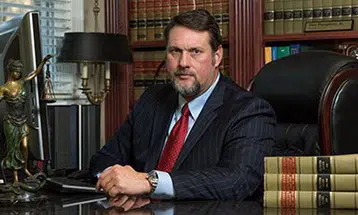
Attorney Don Pumphrey, Jr. is a former prosecutor, former law enforcement officer, and a successful and experienced criminal defense attorney. Don has achieved over 100 not guilty verdicts at trial and over 2,000 dismissals.