- DUI
- Criminal Defense
- Florida DUI
- Traffic Offenses
- Drug Charges
- Marijuana Charges
- Violent Crimes
- Domestic Violence
- Temporary Injunctions
- Weapons Charges
- Theft Crimes
- White Collar Crime
- Juvenile Offenses
- Sex Crimes
- Violation of Probation
- Early Termination of Probation
- Seal or Expunge Criminal Record
- Criminal Appeals
- US Federal Offenses
- Misdemeanor Charges
- Felony Charges
- Co-Defendant Cases
- College Student Defense
- College Student Hearings
- FSU Students
- FAMU Students
- Florida Panhandle Arrests
- Extradition to Florida
- Bench Warrants / Warrants
- Emergency Bond Hearings
- Gambling Charges
- Drone Arrests
- Marsy’s Law
- UAS Infractions
- Introduction of Contraband
- Lying to Police
- Locations
- Case Results
- Our Firm
- Media
- Resources
- Blog
- Contact Us
Major FL Court: Juror Who Knew Victim Should’ve Been Excused For Cause
January 14, 2026 Don Pumphrey, Jr. Criminal Defense Social Share
Florida’s 3rd District Court of Appeal ruled that a potential juror, who once hosted the victim of the murder the defendant was charged with committing at her home, should have been excused for cause. Failure of the judge to excuse the juror required reversal of the defendant’s conviction.
In Florida, jury selection (also referred to as voir dire) is a key aspect of any criminal trial. The composition of a jury can “make or break” a case, so it is important to ensure an experienced and aggressive Florida criminal defense attorney is at your side during jury selection.
During jury selection, the State and defense received an unlimited number of “cause challenges” and a limited number of “peremptory challenges.” A cause challenge occurs when one of the parties to the proceeding believes a potential juror has answered one or more questions in a manner that indicates they are unable to be fair and impartial in rendering a verdict.
If the State or defense challenges a juror for cause, they will argue to the trial judge that there is a legally adequate basis (e.g. the juror will be unable to give the defendant/the State a “fair shake”) for excusing the potential juror from service. The judge has two options:
- Rule in favor of the cause challenge and excuse the potential juror
- Deny the cause challenge, leading the potential juror to “stick around” for now
If a cause challenge is denied by the judge, the State or defense (depending on who initiated the cause challenge) will usually choose (if one is available) to exercise a peremptory challenge of the previously cause-challenged juror.
A peremptory challenge occurs when a party to the proceeding (e.g. State or defense) unilaterally excuses a potential juror – without having to argue why they chose to do so to the trial judge or the other party.
Note: Though peremptory challenges are typically used without objection, a potential juror can’t be the subject of a peremptory challenge on the basis of their race, sex, or ethnicity. If the other party to the proceeding suspects that a potential juror is being peremptorily stricken on any of those grounds, they can “challenge” the peremptory strike (known as a Neil challenge).
Unlike cause challenges, peremptory strikes are limited in number. Typically, both sides receive 3 peremptories in misdemeanor cases, 6 in non-capital felony cases (e.g. those not punishable by death), and 10 peremptories in capital felony cases. The trial judge has discretion to award each side additional peremptory challenges, if requested.
A useful heuristic for a defense attorney, if they suspect a juror may not be fair and impartial in a case, is to divide these “objectionable” potential jurors into two categories:
- Group “A” jurors: Potential jurors that are likely to be successfully cause-challenged due to clear indications of bias (e.g. “I could not be fair…”)
- Group “B” jurors: Potential jurors that may not be successfully cause-challenged, but that the defense has reason to believe (other than race, sex or ethnicity) that they would not be a fair and impartial juror in the case
The “smart” move is to reserve peremptory challenges for Group B jurors while successfully exercising as many cause challenges as possible on Group A jurors (as cause challenges are unlimited in number).
Sometimes, however, a trial judge will deny a cause challenge of what the defense believes to be a Group A juror. This leaves the defense with two options:
- Exercise a peremptory challenge on the Group A juror, potentially resulting in a Group B juror that may have been peremptorily stricken being seated on the jury
- Fail to exercise a peremptory challenge (usually due to having run out/the trial judge not awarding any more), resulting in the Group A juror sitting on the jury
If the defendant puts on the record that he objects to the composition of the jury (e.g. would’ve stricken one or more potential jurors) immediately before the jury is sworn and the trial begins, this issue is preserved for appeal. To learn more, click here.
Sometimes, a trial judge will deny a cause challenge when this should have been granted. This is called an “abuse of discretion,” and the proper remedy is the reversal of a defendant’s conviction on appeal if they objected to the composition of the jury immediately before trial (preserving the issue).
One such case that resulted in the reversal of a defendant’s murder conviction is Price v. State, 538 So.2d 486 (Fla. 3d. DCA 1989). Let’s take a look at Price and what it means for defendants concerned about jury selection in Florida.
KEY CASE: Price v. State, 538 So.2d 486 (Fla. 3d. DCA 1989)
In Price, the defendant (Price) was charged with first-degree murder, burglary, kidnapping, robbery, and grand theft. He was convicted on all counts.
Price appealed his convictions, arguing he was wrongly forced to use a peremptory challenge to send home a potential juror after his cause challenge was denied. This led to an objectionable juror being seated who would have otherwise been peremptorily challenged (e.g. a “Group B” juror), as the judge failed to award Price any additional peremptory challenges.
The potential juror (Grink) who Price claimed should have been excused “for cause” knew the victim of the murder (a police officer) through her husband. Grink’s husband was a friend of the victim, and the victim had been to Grink’s home multiple times.
During a colloquy with Price’s defense attorney, Grink admitted she was “a little” concerned that she would be automatically biased against Price because of her relationship with the victim. The trial judge then attempted to “rehabilitate” Grink, asking her a series of questions to determine if she’d be able to put aside her relationship with the victim, and still be fair and impartial.
Grink’s responses to the judge’s questions were “feeble and conditional” (e.g. “I think so”). As a result, Price (through his attorney) cause-challenged Grink, asserting that Grink’s ability to be fair and impartial was compromised by her relationship to the victim. Price noted that Grink’s answers indicated that she didn’t strongly believe she could be unbiased.
However, the trial judge denied the cause challenge. This required Price to exhaust his final peremptory strike on Grink, which he intended to use on another (“Group B”) objectionable juror. Price asked for an additional peremptory challenge to strike the objectionable juror, but this was denied.
Price objected to the composition of the jury immediately before trial commenced, but the judge held firm on his decision to deny Price any additional peremptories. The trial began – and Price was found guilty on all counts.
Price appealed on the grounds that the trial judge erred (“abused his discretion”) by denying the cause challenge of Grink. Price claimed Grink’s personal relationship with the victim, combined with her “unsure” answers as to whether she could truly be impartial, provided an adequate legal basis for her to be excused from service.
Since Price was forced to use a peremptory strike on Grink that should have been used on the final objectionable juror (who was ultimately seated), Price argued the judge’s decision biased the proceedings against him, requiring reversal of the verdict (since he properly objected to preserve the issue for appeal).
Florida’s 3rd District Court of Appeal agreed and reversed Price’s convictions, remanding the matter to the lower court for a new trial. The 3rd DCA pointed out Grink was asked “leading” questions by the judge (e.g. “You can be fair, can’t you?”) – making it more likely for her to indicate she could be fair and impartial even if this wasn’t the case:
“We have no doubt but that a juror who is being asked leading questions is more likely to “please” the judge and give the rather obvious answers indicated by the leading questions, and as such these responses alone must never be determinative of a juror’s capacity to impartially decide the cause to be presented.”
Finding that Grink should have been excused from service for cause, the 3rd DCA ruled that Price being forced to strike her peremptorily (leading to the seating of an objectionable juror) was reversible error, requiring a new trial:
“As noted above, defendant had to use a peremptory challenge to exclude Grink. He was then forced to accede to an objectionable juror because he had by then exhausted his remaining peremptory challenges. Because such error is reversible, defendant’s convictions must be reversed and the cause remanded for a new trial.”
In sum, Price v. State, 538 So.2d 486 (Fla. 3d. DCA 1989) marks a significant development in Florida’s corpus of case law on the issue of jury selection. Florida’s 3rd District Court of Appeal (Miami area) found:
- Grink had a fairly strong personal relationship with the victim of the murder at the center of the case (through her husband)
- Grink’s answers to “leading” questions from the trial judge and defense counsel were “feeble and conditional” – raising serious concern about her fairness and impartiality
- This was an adequate legal basis for the trial judge to grant Price’s cause challenge of Grink
- Because the trial judge erroneously denied the cause challenge, resulting in the seating of an objectionable (“Group B”) juror who would’ve otherwise been peremptorily stricken, a new trial was required in Price’s case
Florida’s criminal defense community should take note of Price v. State, 538 So.2d 486 (Fla. 3d. DCA 1989), as it indicates appellate courts are especially likely to scrutinize a court’s denial of cause challenges if the challenged juror had a personal relationship with the victim of the crime.
It also speaks to the fact that if a judge’s “leading questions” are the basis of a potential juror’s
“rehabilitation” (e.g. promise that they can be unbiased despite previous concerns), this generally will not overcome a cause challenge that is based on the potential juror’s prior comments.
If someone is arrested and formally charged in Florida and concerned about jury selection, it is critical to find experienced and trusted legal representation as soon as possible. This decision could make the difference in whether or not someone faces a lengthy prison term and hefty fines.
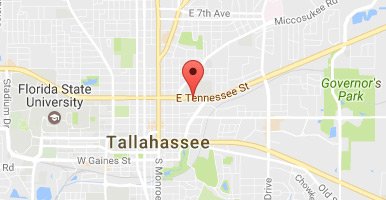
Criminal Defense Attorney in Tallahassee, FL
Don Pumphrey, Jr. is a Former Prosecutor, Former State Police Officer, Lifetime Member of the Florida Association of Criminal Defense Lawyers; for over 25 years as a private defense attorney who is Trusted, Experienced, Aggressive in Criminal Defense as a Trial Attorney, Criminal Lawyer, Criminal Defense Lawyer for the accused in Florida State Courts located in Tallahassee, Florida but handling cases throughout the State of Florida.
Don Pumphrey, Jr. and the Tallahassee criminal defense lawyers at Pumphrey Law have decades of experience fighting drug charges on behalf of clients and winning. Call Pumphrey Law now at (850) 681-7777 to learn more about what we can do for you. Our lawyers will be happy to provide you with a free consultation.
Don Pumphrey, Jr.
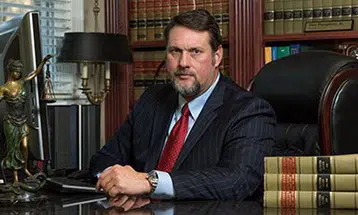
Attorney Don Pumphrey, Jr. is a former prosecutor, former law enforcement officer, and a successful and experienced criminal defense attorney. Don has achieved over 100 not guilty verdicts at trial and over 2,000 dismissals.