- DUI
- Criminal Defense
- Florida DUI
- Traffic Offenses
- Drug Charges
- Marijuana Charges
- Violent Crimes
- Domestic Violence
- Temporary Injunctions
- Weapons Charges
- Theft Crimes
- White Collar Crime
- Juvenile Offenses
- Sex Crimes
- Violation of Probation
- Early Termination of Probation
- Seal or Expunge Criminal Record
- Criminal Appeals
- US Federal Offenses
- Misdemeanor Charges
- Felony Charges
- Co-Defendant Cases
- College Student Defense
- College Student Hearings
- FSU Students
- FAMU Students
- Florida Panhandle Arrests
- Extradition to Florida
- Bench Warrants / Warrants
- Emergency Bond Hearings
- Gambling Charges
- Drone Arrests
- Marsy’s Law
- UAS Infractions
- Introduction of Contraband
- Lying to Police
- Locations
- Case Results
- Our Firm
- Media
- Resources
- Blog
- Contact Us
Major FL Court: Marijuana Found in Car, Studio, Apartment Was Not Constructively Possessed
January 14, 2026 Don Pumphrey, Jr. Criminal Defense, Drug Charges Social Share
Florida’s 2nd District Court of Appeal ruled a defendant could not be guilty of constructively possessing marijuana allegedly found inside his car studio, and apartment as a matter of law.
In Florida, possession of a controlled substance and possession of drug paraphernalia are very serious charges. Possession of controlled substances is typically charged as a third-degree felony (up to 5 years in prison and a $5,000 fine) or higher. Possession of drug paraphernalia is typically a first-degree misdemeanor (up to 1 year in jail and a $1,000 fine).
For more on possession of controlled substances in Florida, click here. For more on possession of paraphernalia charges, click here.
If someone is accused of possessing drugs, paraphernalia or other contraband (e.g. illegal guns), there are two ways they can be proven guilty. The State may proceed on a theory of either actual or constructive possession. The difference between these is critical to understand.
Per Sanders v. State, 210 So. 3d 246, 248 (Fla. 2d DCA 2017), actual possession of contraband occurs when the State proves any of the following beyond a reasonable doubt:
- The contraband was found in the defendant’s hand(s) or directly on their person
- The contraband was found in a container in the defendant’s hand(s) or on their person
- The contraband was discovered within the defendant’s “ready reach” and exclusively under his dominion and control
Actual possession is generally “easier” for the State to establish than constructive possession, if there is clear evidence of this. Since actual possession is determined by the physical location of the contraband when it was discovered by law enforcement, police testimony or video evidence may “seal the deal” for the prosecution at trial.
The State may also proceed with a prosecution on a theory of constructive possession. However, proving constructive possession is often more complicated. Constructive possession is typically argued when the contraband is heavily suspected to belong to the defendant, but they were not found to be in actual, physical possession of it by police.
Constructive possession can only be proven if the State can show all of the following beyond a reasonable doubt:
- The defendant knew about the contraband (found in their presence, on their property, etc.)
- The defendant knew that the contraband was illegal (e.g. if a gun, they knew they were prohibited from owning one)
- The defendant was able to exercise dominion and control over the contraband (T.W. v. State, 666 So.2d 1001, 1002 (Fla. 5th DCA 1996))
If contraband is recovered from jointly occupied premises, constructive possession cannot be “inferred” by a jury. This must be supported by independent proof that the illegal item(s) belonged to the defendant, not others who may have owned or had access to the contraband.
Independent proof of constructive possession can come in various forms, such as:
- A defendant’s incriminating statements (e.g. “The drugs were mine…”)
- Witness testimony (e.g. someone else in the home/vehicle or an uninvolved witness claiming the contraband belongs to the defendant)
- Scientific evidence (e.g. DNA or fingerprints) tying the defendant to the illicit item(s) in question
For a comprehensive breakdown of actual possession and constructive possession under Florida law, click here.
If the State does not have any independent proof, someone may not be found guilty as a matter of law of constructive possession of contraband on jointly occupied premises. Santiago v. State, 991 So. 2d 439, 442 (Fla. 2d DCA 2008)
Note: Florida’s courts are consistent that “mere proximity” to contraband is legally insufficient for someone to be found guilty on a theory of constructive possession. Someone found near an illegal item cannot be guilty of possessing it in the absence of any other evidence that it was theirs. Brown v. State, 428 So. 2d 250 (Fla. 1983)
Critically, someone may be found guilty on a theory of constructive possession if the State can prove they had exclusive access to the area in which contraband is discovered, and nobody else has been there. This is an exception to the “independent proof” requirement.
But this exception is extremely narrow. This was made clear in a major case decided by Florida’s 2nd District Court of Appeal. Let’s look at Ford v. State, 69 So.3d 391 (Fla. 2d. DCA 2011) and what it means for defendants prosecuted under a theory of constructive possession in Florida.
KEY CASE: Ford v. State, 69 So.3d 391 (Fla. 2d. DCA 2011)
In Ford, the defendant (Ford) was charged with constructively possessing marijuana in various locations. These included his vehicle and a studio that he had access to. He was found guilty and appealed.
Ford was on probation when officers began to suspect he was engaged in unlawful drug activity. Law enforcement pulled over a vehicle in which Ford was a back seat passenger (the driver and a front seat passenger were also inside). When they conducted a search of the car, they discovered marijuana on the back seat floorboard.
Officers also conducted a search of a studio Ford was seen entering. Marijuana was found in a blue bag in plain view on the floor in a back room. They also searched Ford’s apartment, where he lived with at least one other person, and found marijuana there.
At his violation of probation (VOP) hearing, the trial judge linked marijuana found at all three locations to Ford. The judge found this constituted a willful and substantial violation of Ford’s probationary conditions. Ford appealed to the 2nd District Court of Appeal (Tampa area).
On appeal, Ford asserted that each of the locations had others on the premises at the time of the search, or were known to have hosted other people. Ford claimed that because the State did not have “independent proof” the marijuana was his (that he knew about it and was able to exercise dominion and control) and the premises were jointly occupied, the judge erred as a matter of law.
The 2nd DCA agreed, reversing the trial judge’s ruling that Ford constructively possessed the marijuana. The 2nd DCA found that none of the marijuana was proven to have been Ford’s, because the State failed to provide independent proof other than Ford’s “mere proximity” to the contraband.
Beginning with the marijuana in the car, the 2nd DCA noted that Ford claimed to officers that the driver told Ford to place the marijuana in the back seat. Ford admitted to momentarily touching it, but nothing more. Though the State argued this was the dominion and control required to establish constructive possession, the 2nd DCA disagreed – writing:
“Despite Mr. Ford’s admission that the driver tossed the marijuana to him to hide, this momentary possession did not establish Mr. Ford’s dominion and control over the contraband. See Campbell v. State, 577 So.2d 932, 935 (Fla.1991) (holding defendant’s temporary possession of kilo of cocaine in owner’s presence to inspect it before (unconsummated) purchase did not infer dominion or control); Roberts v. State, 505 So.2d 547, 549 (Fla. 3d DCA 1987) (holding defendant’s transitory touching of bale of marijuana when he weighed it to be purchased by third party did not establish dominion and control for possession charge). Therefore, Mr. Ford did not have actual possession when stopped by Officer Schlemmer.”
“To prove constructive possession of the contraband, the State must show that Mr. Ford knew of its presence and “had the ability to exercise dominion and control over it.” Wagner v. State, 950 So.2d 511, 512 (Fla. 2d DCA 2007). The fact that the car did not belong to him weighs against a finding of constructive possession. See Martoral v. State, 946 So.2d 1240, 1243 (Fla. 4th DCA 2007); Harris v. State, 647 So.2d 206, 208 (Fla. 1st DCA 1994) (citing Poitier v. State, 525 So.2d 472, 473 (Fla. 5th DCA 1988)). And, as described above, the momentary possession by Mr. Ford does not equate to dominion and control.”
The 2nd DCA turned next to the marijuana discovered at the recording studio Ford was seen entering. The court ruled that because the State failed to provide any evidence that the marijuana was Ford’s (as opposed to others who had been in the studio), constructive possession could not be established as a matter of law:
“Here, the officers failed to submit any fingerprint analysis, no testimony placed the drugs in Mr. Ford’s possession, he denied knowledge of the drugs, and at least two other people were in the studio in Mr. Ford’s absence. See Wagner, 950 So.2d at 512–13 (citing Law, 559 So.2d at 188). Thus the State failed to establish by a preponderance of the evidence that Mr. Ford constructively possessed the marijuana in the studio because the studio was jointly occupied and the State did not submit independent proof of Mr. Ford’s knowledge of the marijuana’s presence or his ability to exercise control over the marijuana.”
Finally, the 2nd DCA discussed the marijuana and paraphernalia found in Ford’s residence. The 2nd DCA noted that because Ford’s bedroom was jointly occupied and the contraband was not in plain view, the lack of independent evidence that the items belonged to Ford defeated the State’s constructive possession allegation:
“The State failed to prove constructive possession of the marijuana-filled jar and scale. The bedroom in which they were found was jointly occupied. The contraband was concealed from view in the bedroom closet. The State did not present any independent proof of Mr. Ford’s knowledge of the presence of or his ability to exercise control over the marijuana and scale discovered in the apartment, and thus the circuit court erred in finding a violation of community control condition (7) based upon Mr. Ford’s possession of this contraband.”
In sum, Ford v. State, 69 So.3d 391 (Fla. 2d. DCA 2011) marks a significant development in Florida’s corpus of case law surrounding constructive possession – and specifically, the State’s inability to establish constructive possession on jointly occupied premises in the absence of independent evidence. The 2nd DCA found that:
- The marijuana discovered in the vehicle was not constructively possessed by Ford, as it was jointly occupied and Ford only admitted to briefly touching the bag containing the marijuana (which he claimed was the driver’s)
- The marijuana discovered in the recording studio was not constructively possessed by Ford, as there were multiple other people who had been seen going inside the studio and there was no “independent proof” (e.g. confession, DNA evidence) the drugs specifically belonged to Ford
- The marijuana discovered at Ford’s apartment was not constructively possessed by him, as multiple others lived at his residence, the contraband was not in plain view, and there was no independent proof he owned or knew about it
Florida’s criminal defense community should take note of Ford, as it reiterates the time-honored maxim that “mere proximity” is insufficient to prove someone guilty on a theory of constructive possession. It also clarifies that even in VOP hearings, the legal standard for proving constructive possession remains the same.
If someone is concerned about a charge of possession of drug paraphernalia, it is crucial to find experienced and aggressive legal representation as soon as possible. This vital decision could make the difference in whether or not a person is subject to a lengthy prison term and hefty fines.
Criminal Defense Attorney in Tallahassee, FL
Don Pumphrey, Jr. is a Former Prosecutor, Former State Police Officer, Lifetime Member of the Florida Association of Criminal Defense Lawyers; for over 25 years as a private defense attorney who is Trusted, Experienced, Aggressive in Criminal Defense as a Trial Attorney, Criminal Lawyer, Criminal Defense Lawyer for the accused in Florida State Courts located in Tallahassee, Florida but handling cases throughout the State of Florida.
Don Pumphrey, Jr. and the Tallahassee criminal defense lawyers at Pumphrey Law have decades of experience fighting drug charges on behalf of clients and winning. Call Pumphrey Law now at (850) 681-7777 to learn more about what we can do for you. Our lawyers will be happy to provide you with a free consultation.
Don Pumphrey, Jr.
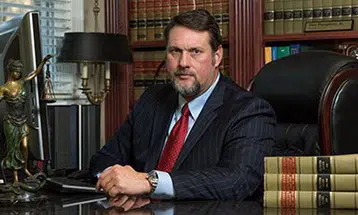
Attorney Don Pumphrey, Jr. is a former prosecutor, former law enforcement officer, and a successful and experienced criminal defense attorney. Don has achieved over 100 not guilty verdicts at trial and over 2,000 dismissals.