- DUI
- Criminal Defense
- Florida DUI
- Traffic Offenses
- Drug Charges
- Marijuana Charges
- Violent Crimes
- Domestic Violence
- Temporary Injunctions
- Weapons Charges
- Theft Crimes
- White Collar Crime
- Juvenile Offenses
- Sex Crimes
- Violation of Probation
- Early Termination of Probation
- Seal or Expunge Criminal Record
- Criminal Appeals
- US Federal Offenses
- Misdemeanor Charges
- Felony Charges
- Co-Defendant Cases
- College Student Defense
- College Student Hearings
- FSU Students
- FAMU Students
- Florida Panhandle Arrests
- Extradition to Florida
- Bench Warrants / Warrants
- Emergency Bond Hearings
- Gambling Charges
- Drone Arrests
- Marsy’s Law
- UAS Infractions
- Introduction of Contraband
- Lying to Police
- Locations
- Case Results
- Our Firm
- Media
- Resources
- Blog
- Contact Us
Major FL Court: Police Couldn’t Keep Talking to Suspect After He Asked for Lawyer
December 19, 2025 Don Pumphrey, Jr. Criminal Defense Social Share
Florida’s 2nd District Court of Appeal ruled that a defendant’s convictions required reversal because law enforcement pressured him to waive his Miranda rights after he clearly asked for an attorney.
In Florida and throughout the U.S., Miranda warnings are a critical procedural protection for suspects in criminal investigations.
Per the U.S. Supreme Court’s landmark Miranda v. Arizona, 384 U.S. 436 (1966) decision, your Miranda rights include:
- The right to remain silent
- The fact that anything you say can and will be used against you in court
- The right to an attorney, including to have one present during questioning
- The fact that if you cannot afford an attorney, one will be provided for you
If someone is read their Miranda rights, the smart next move is to exercise them. Tell the police that you will be remaining silent and would like an attorney, then be quiet. If you simply do not say anything at all (do not exercise your rights “out loud”), this can be viewed as permission to keep questioning you. Berghuis v. Thompkins, 560 U.S. 370 (2010)
Miranda rights must be read before someone is subject to custodial interrogation. Custody for Miranda purposes occurs when a reasonable person in a suspect’s position would not feel free to terminate questioning and leave. Interrogation occurs when police engage in questioning (or its functional equivalent) that’s reasonably likely to elicit an incriminating response from a suspect.
For more on custody (including Florida and U.S. Supreme Court case law on this issue), click here. For more on interrogation, click here.
If a person is notified of their rights (this is called a “Miranda warning”), they have one of two options:
- #1 – Invoke their rights to remain silent/to an attorney (Good move!)
- #2 – Waive their Miranda rights and agree to speak with law enforcement without an attorney present
Though law enforcement says “anything you say can and will be used against you” during a Miranda warning, this is not always true. This is because if a Miranda waiver (e.g. decision to talk to police) is not knowing, intelligent, and voluntary, statements that result from subsequent interrogation (including confessions) are inadmissible in court.
When evaluating whether a Miranda waiver is valid, courts generally consider factors such as:
- The defendant’s age, intelligence, background, and experience with the justice system (or lack thereof)
- Whether the defendant was read Miranda in their native language
- The presence (or absence) of a signed Miranda form
- Whether officers “minimized” the rights (e.g. read them very quickly or referred to them as a “formality,” etc.)
- Whether the Miranda warning adequately advised the defendant of their rights pursuant to Miranda v. Arizona, 384 U.S. 436 (1966)
For more on when a Miranda waiver in Florida is considered knowing, intelligent, and voluntary, click here.
But just because someone understands their Miranda rights, does not mean that their statements can automatically be admitted into evidence. There is more than one way to violate someone’s Miranda rights.
These include:
- Misleading someone as to when their rights apply (e.g. “You only get a lawyer once you get to court.”)
- Failing to read Miranda warnings at all
- Continuing to engage with a suspect (e.g. try to get them to “talk”) after they have clearly exercised their rights
One major case in which the last of these occurred is Green v. State, 69 So.3d 351 (Fla. 2d. DCA 2011). There, officers violated Green’s Miranda rights by deliberately continuing to engage with him in an effort to get him to not exercise his right to an attorney (after he clearly asked for one).
But what is the proper legal remedy when this occurs? Let’s break down Green v. State and what it means for Miranda rights in Florida.
KEY CASE: Green v. State, 69 So.3d 351 (Fla. 2d. DCA 2011)
In Green, the defendant (Green) was charged with a string of felonies – mostly burglaries. He was ultimately convicted after his confession to the crimes without an attorney present (during post-arrest interrogation at the police station) was played for the jury at his trial.
When Green became the primary suspect in the police investigation surrounding the burglaries, two detectives brought him into the station and had him sign a Miranda form notifying him of his rights. A detective also read his rights at loud.
As Green began examining the Miranda form, a detective (Detective Freeman) asked if Green agreed to be “interviewed” without counsel present (“If you agree to be the interviewee, just initial right here and sign right here”).
In reply, Green unambiguously told Detective Freeman he wished to have an attorney present during the questioning (“I’d like to have my attorney questioning—my attorney present during questioning. I’d like to have an attorney present during questioning.”).
Nevertheless, Detective Freeman continued to engage with Green, stating that the police could not bring in an attorney immediately (“Okay, so you don’t wanna talk to us right now? ‘Cause we—we can’t produce an attorney right this minute.”). When Green asked why this was the case, Detective Freeman replied that “it just doesn’t work that way.”
After hearing this, another detective (Detective Williford) asked what Green wanted to do next. Green elected to speak with the detectives, and confessed. The tape of Green’s confession was played at his trial, and he was convicted.
On appeal, Green argued that his Miranda rights were violated when the detectives continued engaging with him in spite of his clear ask for an attorney to be present. The 2nd DCA (Tampa area) agreed and reversed Green’s convictions, remanding to the lower court for a new trial. The 2nd DCA noted:
“Under Miranda, when a suspect who is subject to a custodial interrogation makes an unequivocal request indicating that he wishes to exercise his right to counsel, the interrogation must cease. … Here, it is undisputed that Green was subjected to a custodial interrogation. Moreover, Green’s statement that he would “like to have an attorney present during questioning” is an unequivocal invocation of the right to counsel. … After Green made this unequivocal request for counsel, the detectives should have ceased interrogation until counsel was provided unless Green himself initiated further communication with the detectives.”
In essence, the 2nd DCA held that the detectives were not allowed to continue “interrogating” Green after he unequivocally invoked his right to counsel. The 2nd DCA acknowledged that interrogation is not just formal questioning – it includes any police behavior that is reasonably likely to elicit an incriminating response from the suspect. The court continued:
“The record reflects that, instead of ceasing interrogation until counsel was provided, Detective Freeman continued with the interrogation and undermined Green’s request for counsel by stating that there was a lot to talk about, that counsel could not be provided “right this minute,” and that “it doesn’t work that way.” … Green did not pursue communication with the detectives after invoking his right to counsel. Rather, the detectives simply continued their efforts to get Green to answer their questions.”
“The State argues that the detectives’ actions were proper under Serrano v. State, 15 So.3d 629, 635 (Fla. 1st DCA 2009) … Serrano is distinguishable because the detectives’ comments to Green were not harmless questions made for the purpose of clarifying his request for counsel but were designed to get him to change his mind about obtaining counsel.”
Finding that Green’s confession was “illegally obtained” in violation of his Miranda rights, the 2nd DCA concluded:
“Based on the detectives’ failure to cease questioning when Green unequivocally requested counsel, Green’s confession was illegally obtained. Thus, the trial court erred in denying Green’s motion to suppress. We therefore reverse Green’s judgments and sentences in case nos. 09–CF–15453, 09–CF–15586, 09–CF–15588, and 09–CF–15589.”
In sum, Green v. State, 69 So.3d 351 (Fla. 2d. DCA 2011) is a significant development in Florida case law on the issue of Miranda rights – and the consequences of law enforcement not honoring suspects attempting to exercise their rights.
The 2nd DCA found:
- Green unambiguously asked for a lawyer to be present during the interrogation, requiring the detectives to immediately disengage (e.g. stop talking to him) under Miranda
- Instead of disengaging (which they were legally required to do), the detectives made various comments in an attempt to get Green to change his mind – resulting in him eventually confessing without a lawyer present
- Because his confession was illegally obtained and used against him at trial, this required the guilty verdicts against Green to be reversed
Florida’s criminal defense community should take note of Green, as it is a pro-defendant case on Miranda that makes clear police cannot continue to engage a suspect when they clearly indicate their desire to remain silent or request an attorney (or both). Doing so for any purpose other than to clarify intent (if it is unclear) is a Miranda violation.
If someone is arrested and formally charged in Florida in a case involving a Miranda waiver that was not knowing, intelligent, or voluntary, it is critical to find experienced and trusted legal representation as soon as possible. This decision could make the difference in whether or not someone faces a lengthy prison term and hefty fines.
Criminal Defense Attorney in Tallahassee, FL
Don Pumphrey, Jr. is a Former Prosecutor, Former State Police Officer, Lifetime Member of the Florida Association of Criminal Defense Lawyers; for over 25 years as a private defense attorney who is Trusted, Experienced, Aggressive in Criminal Defense as a Trial Attorney, Criminal Lawyer, Criminal Defense Lawyer for the accused in Florida State Courts located in Tallahassee, Florida but handling cases throughout the State of Florida.
Don Pumphrey, Jr. and the Tallahassee criminal defense lawyers at Pumphrey Law have decades of experience fighting drug charges on behalf of clients and winning. Call Pumphrey Law now at (850) 681-7777 to learn more about what we can do for you. Our lawyers will be happy to provide you with a free consultation.
Don Pumphrey, Jr.
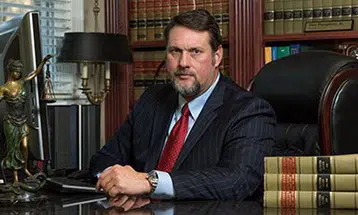
Attorney Don Pumphrey, Jr. is a former prosecutor, former law enforcement officer, and a successful and experienced criminal defense attorney. Don has achieved over 100 not guilty verdicts at trial and over 2,000 dismissals.