- DUI
- Criminal Defense
- Florida DUI
- Traffic Offenses
- Drug Charges
- Marijuana Charges
- Violent Crimes
- Domestic Violence
- Temporary Injunctions
- Weapons Charges
- Theft Crimes
- White Collar Crime
- Juvenile Offenses
- Sex Crimes
- Violation of Probation
- Early Termination of Probation
- Seal or Expunge Criminal Record
- Criminal Appeals
- US Federal Offenses
- Misdemeanor Charges
- Felony Charges
- Co-Defendant Cases
- College Student Defense
- College Student Hearings
- FSU Students
- FAMU Students
- Florida Panhandle Arrests
- Extradition to Florida
- Bench Warrants / Warrants
- Emergency Bond Hearings
- Gambling Charges
- Drone Arrests
- Marsy’s Law
- UAS Infractions
- Introduction of Contraband
- Lying to Police
- Locations
- Case Results
- Our Firm
- Media
- Resources
- Blog
- Contact Us
Major FL Court Reverses Conviction After Judge Excuses Defense-Friendly Jurors
February 9, 2026 Don Pumphrey, Jr. Criminal Defense Social Share
Florida’s 4th District Court of Appeal ruled that a trial judge’s immediate excusal of 2 potential jurors who indicated potential favorability to the defense, without giving the defendant a chance to “rehabilitate” those potential jurors, was reversible error.
In Florida, jury selection (also known as voir dire) is a critical part of any criminal trial. The objective of jury selection is to ensure that the individuals who are eventually seated to hear a case (e.g. render a verdict) will be truly fair and impartial, basing their decision off the evidence and testimony rather than personal biases.
During jury selection, each party (e.g. State and defense) has the opportunity to ask potential jurors questions that are relevant to their service on the jury. If a potential juror gives one or more responses that indicate they are likely to be biased, either party may conduct a “cause challenge” of that potential juror.
Cause challenges are unlimited in number, and involve one party arguing that the potential juror should be excused from service “for cause” (e.g. sent home) because they are likely to be unable to set their personal feelings aside and evaluate the evidence and testimony objectively. A cause challenge will sometimes be stipulated to (e.g. agreed to) by both parties.
Examples of cases where a cause challenge is likely to succeed during jury selection in a Florida criminal trial include:
- A potential juror says they will trust law enforcement testimony more than any other testimony automatically
- A potential juror says they know the victim in a case and that their verdict would likely be the product of personal sympathy
- A potential juror says they have been the victim of a similar crime and will likely be influenced by this experience
If a party moves for a cause challenge of a potential juror on the basis that they will be unable to evaluate the evidence and testimony fairly and impartially, the trial judge has a choice to either:
- Grant the cause challenge, sending the potential juror home (e.g. excusing them from service), or
- Deny the cause challenge, keeping the potential juror seated (for now)
In the event that a cause challenge is denied, the moving party may choose to use a peremptory challenge (or peremptory strike) on the objectionable juror. A peremptory strike occurs when a party to the case unilaterally decides to excuse a potential juror from service, without having to disclose why this is being done to the trial judge or other party.
Unlike cause challenges, peremptory strikes are limited in number. The State and defense each receive 3 peremptory strikes in misdemeanor cases, 6 in non-capital/non-life felony cases (e.g. first-degree felonies and below), and 10 in capital and life felony cases.
Though peremptory strikes can be used for almost any reason, this is impermissible if done on the basis of a potential juror’s race, sex, or ethnicity. Batson v. Kentucky, 476 U.S. 79 (1986); J.E.B. v. Alabama ex rel. T.B., 511 U.S. 127 (1994)
If an experienced and aggressive Florida criminal defense attorney (or defendant) is participating in jury selection, a useful heuristic can be used to categorize jurors that they wish to strike:
- Group A jurors: Potential jurors that have made one or more comments that serve as the basis for a cause challenge (e.g. a cause challenge is likely to succeed)
- Group B jurors: Potential jurors that the defense wishes to strike on a non-racial, sexual or ethnic basis – but that have not yet said anything that would lead the judge to grant a cause challenge
A key aspect of jury selection is rehabilitation. It is commonly believed that when a potential juror says something that indicates bias, this is automatically grounds for a cause challenge. However, one or more comments by a potential juror indicating a lack of fairness/impartiality will not guarantee a successful cause challenge – if the potential juror is rehabilitated.
Rehabilitation occurs when the judge (or party not moving for a cause challenge) asks a potential juror a series of questions designed to restore faith in the idea that they can be fair and impartial.
A common example would be a juror expressing initial trust in law enforcement. However, if the trial judge questioned the potential juror and they indicated they would weigh police testimony the same as any other testimony (in terms of its credibility), there is no longer a strong basis to excuse that potential juror “for cause” (as they have indicated fairness/impartiality).
Much of the time, the defense will be the one to move for a cause challenge – arguing that the potential juror has said things that cast serious doubt on their ability to be fair and impartial. But this is not always the case. Sometimes, a potential juror will make one or more comments that appear “defense-friendly” on the service. Examples include:
- A potential juror says their son has been falsely accused of similar crimes before
- A potential juror says they do not trust the police
- A potential juror says that they would not trust an alleged victim’s testimony when given a hypothetical by the prosecutor (e.g. “If there’s no DNA, they’re lying…”)
In some cases, the trial judge will excuse a defense-friendly potential juror for cause before the defense is given the opportunity to rehabilitate them. However, a failure to “keep the potential jurors around” for rehabilitation (e.g. ensuring the potential juror would not be biased) when the defense requests this is occasionally reversible error if the defendant is found guilty at trial.
In one major case decided by Florida’s 4th District Court of Appeal (Southeast Florida), the 4th DCA reversed a defendant’s convictions for burglary and attempted sexual battery after a judge prematurely excused two potential jurors who appeared favorable to the defense – without giving the defense the chance to rehabilitate them.
Let’s take a look at that case – Melendez v. State, 700 So.2d 791 (Fla. 4th DCA 1997) – and what it means for defendants concerned about jury selection in Florida.
KEY CASE: Melendez v. State, 700 So.2d 791 (Fla. 4th DCA 1997)
In Melendez, the defendant (Melendez) was convicted of burglary and attempted sexual battery. He appealed to the 4th DCA, raising various issues.
At trial, it was revealed that Melendez entered the home of his neighbor and attempted to rape her while she slept on the couch. The victim identified Melendez as she testified to the fact that Melendez jumped on top of her and attempted to penetrate her. When she screamed, he ran out of the house.
During jury selection, the State informed the potential jurors of the charges against Melendez and asked them if they would have a problem sitting as a juror on the case. One potential juror stated that his son was charged with similar crimes approximately 7 years prior.
The State asked the potential juror if he thought this would impact his ability to be an objective juror on Melendez’s case. The potential juror replied – “I think so.” Before the defense had the opportunity to rehabilitate him, the trial judge immediately excused the potential juror. Defense counsel objected, saying the judge’s decision was premature – but this was overruled.
Later in voir dire, the State (e.g. the prosecutor) engaged another potential juror in a colloquy, which read the following:
State: Do you agree with the premeses [sic] that some people do some things to put themselves in risk of harm?
Juror: They do things.
State: Like the example I used before walking around with money.
Juror: Well, that’s life. You do what you got to do.
State: And would you agree just because I would do something like that doesn’t mean I want to get robbed?
Juror: I would think you’re an asshole but I mean I won’t hold that—excuse me.
State: Go ahead.
The Court: Excuse me, thank you, Mr. (Juror). You may go on back down to the jury room.
Defense Counsel: For the record I would ask the Court to note my objection.
As you can see, the trial judge immediately excused the potential juror after the vulgar remark, without giving Melendez’s counsel the opportunity to rehabilitate the juror. Ultimately, the jury was seated without the two excused potential jurors – and Melendez was convicted.
Appealing the verdict, Melendez argued that the trial judge excused the two potential jurors too early. Specifically, Melendez claimed that unless it is “conclusively clear” that after questioning, a potential juror cannot be fair and impartial, the defense must be given the chance to rehabilitate the potential juror.
As Melendez was deprived of this, he urged the 4th DCA to give him a new trial. The 4th DCA agreed with Melendez and reversed his convictions, remanding to the lower court for a new trial. The 4th DCA wrote:
“The trial court has considerable discretion in determining the extent of counsel’s examination of prospective jurors. See O’Connell v. State, 480 So.2d 1284 (Fla. 1985). In Stano v. State, 473 So.2d 1282 (Fla. 1985), cert. denied, 474 U.S. 1093, 106 S.Ct. 869, 88 L.Ed.2d 907 (1986), the Florida Supreme Court set out the test for determining a juror’s competency as “whether that juror can lay aside any prejudice or bias and decide the case solely on the evidence presented and the instructions given.” Under most circumstances, that determination is made by allowing “counsel … an opportunity to ascertain latent or concealed prejudgments by prospective jurors….”
“The court’s failure to allow counsel to inquire into a prospective juror’s potential biases amounts to an abuse of discretion warranting reversal unless it becomes “conclusively clear to the court after questioning, that there was no reasonable basis to anticipate that the juror could return a verdict against the defendant.” Fleckinger v. State, 642 So.2d 35 (Fla. 4th DCA 1994), rev. denied, 650 So.2d 989 (1994); see also Green v. State, 575 So.2d 796 (Fla. 4th DCA 1991)(trial court erred in striking two jurors who expressed doubt that they could be impartial due to their feelings about alcohol and drug use.) In this case, we hold that the trial court abused its discretion by not affording appellant’s counsel an opportunity to question or attempt to rehabilitate the two excused prospective jurors.”
In essence, the judge in Melendez’s case “abused his discretion” by failing to allow the defense to attempt to rehabilitate the two potential jurors through additional questioning. As it was not totally clear that the potential jurors were unable to be fair and impartial if instructed on the law, this “screw-up” by the judge entitled Melendez to a new trial.
In sum, Melendez v. State, 700 So.2d 791 (Fla. 4th DCA 1997) marks a significant development in Florida’s corpus of case law on the issue of jury selection – and in particular, when the defense must be given the chance to rehabilitate potential jurors before they are excused. The 4th DCA found:
- Though both of the potential jurors may have been biased, it was not clear that they were unable to be rehabilitated if instructed as to the law (e.g. the fact that their verdict must arise only from evidence/testimony)
- Because of this, Melendez’s counsel should have been given the chance to “rehabilitate” the potential jurors
- This did not occur because the trial judge, sua sponte, excused both of the potential jurors for cause
- Since the trial judge “abused his discretion” by doing so, Melendez’s jury trial right was abridged, requiring reversal of his convictions and a new trial
Florida’s criminal defense community should take note of Melendez v. State, 700 So.2d 791 (Fla. 4th DCA 1997), as it provides intriguing insight into the importance of objecting to a trial judge excusing potential jurors prematurely, without the defense being given the chance to rehabilitate them.
If someone is arrested and formally charged in Florida and concerned about jury selection, it is critical to find experienced and trusted legal representation as soon as possible. This decision could make the difference in whether or not someone faces a lengthy prison term and hefty fines.
Criminal Defense Attorney in Tallahassee, FL
Don Pumphrey, Jr. is a Former Prosecutor, Former State Police Officer, Lifetime Member of the Florida Association of Criminal Defense Lawyers; for over 25 years as a private defense attorney who is Trusted, Experienced, Aggressive in Criminal Defense as a Trial Attorney, Criminal Lawyer, Criminal Defense Lawyer for the accused in Florida State Courts located in Tallahassee, Florida but handling cases throughout the State of Florida.
Don Pumphrey, Jr. and the Tallahassee criminal defense lawyers at Pumphrey Law have decades of experience fighting criminal charges on behalf of clients and winning. Call Pumphrey Law now at (850) 681-7777 to learn more about what we can do for you. Our lawyers will be happy to provide you with a free consultation.
Don Pumphrey, Jr.
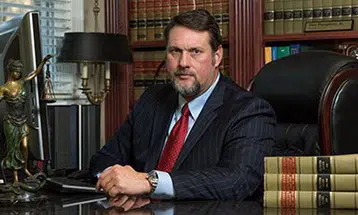
Attorney Don Pumphrey, Jr. is a former prosecutor, former law enforcement officer, and a successful and experienced criminal defense attorney. Don has achieved over 100 not guilty verdicts at trial and over 2,000 dismissals.